

Sherwin-Williams has been my go-to paint brand for longer than I want to admit.
There’s a reason I keep coming back, because their neutrals work.
And when it comes to versatile, livable colors, Sherwin Williams Natural Tan (SW 7567) and Accessible Beige (SW 7036) are the ones I get asked about.
But Sherwin Williams Natural Tan vs Accessible Beige, look similar on the small paint swatches.
Both are warm and neutral.
Both make homeowners second-guess while staring at paint samples on their walls.
The problem is their undertones look different depending on your lighting, and picking the wrong one can make your planned room feel off.
Here in this post, I’m breaking down everything I’ve learned from using Sherwin Williams Natural Tan Vs Accessible Beige, in real spaces, the good, the bad.
We’re talking color breakdowns, how lighting affects both of them, room-by-room recommendations, and comparisons with other colors.
Here are my other blogs that you can also read:
- Agreeable Grey Vs Accessible Beige
- Shoji White Vs White Dove
- Swiss Coffee Vs Benjamin Moore
- City Loft Vs Alabaster
- Alabaster Vs Shoji White
Color Overview of Sherwin Williams Natural Tan (SW 7567)
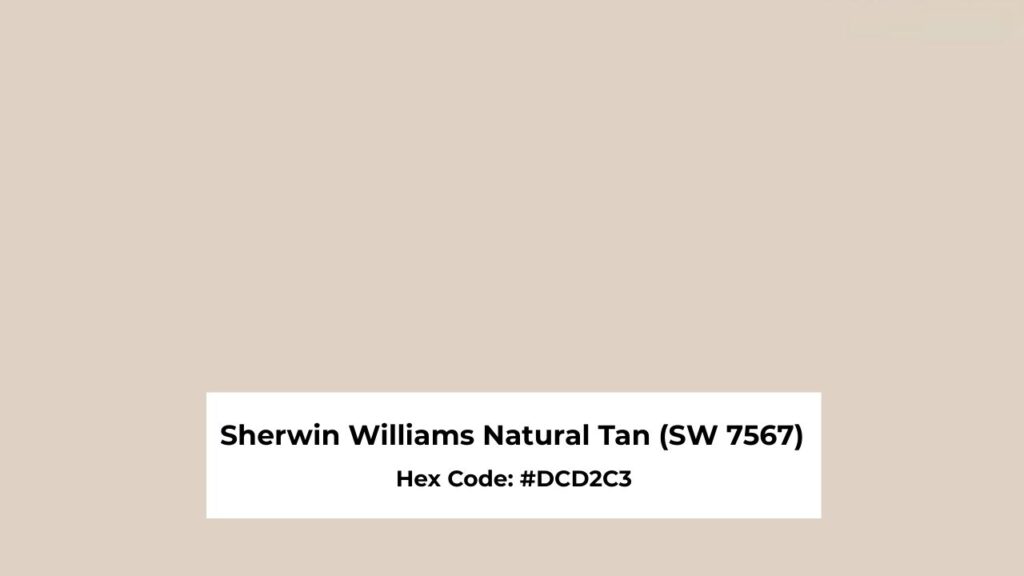
Natural Tan is what I call a “traditional warm tan with commitment issues”, it wants to be the cozy, earthy neutral but then shows yellow-golden undertones.
The LRV is at 36, which means it is less light than Accessible Beige.
It appears deeper and richer on the walls, which sounds great until you’re in a north-facing room and it feels like you’re living in a cave.
Here’s what happens with Natural Tan: You test it in your sunny living room and it looks perfect, warm and inviting. You paint the whole room.
Then you walk in on a cloudy Tuesday morning and wonder if you grabbed the wrong color because it looks deep and saturated.
The yellow and golden base is strong.
It looks a bit orange under warm lighting.
I’ve used Natural Tan in spaces with warm hardwood floors, and it creates a cohesive, enveloping warmth that works well for traditional interiors or anyone going for that Tuscan-ish vibe.
But Natural Tan needs the right supporting cast.
Put it next to cool whites or gray trim and it’ll look yellow than you wanted.
It’s not playing well with others in that scenario.
I learned this in a client’s dining room because we had to repaint the trim in Alabaster instead of Pure White to calm down the yellowish look.
Designers and homeowners pick Natural Tan when they want a room that feels warm, mainly bedrooms.
Living rooms too, if you’re going for cozy over air.
Bathrooms are the ones I’m cautious about because if you don’t have great lighting, it can make everything look muddy.
Color Overview of Sherwin Williams Accessible Beige (SW 7036)
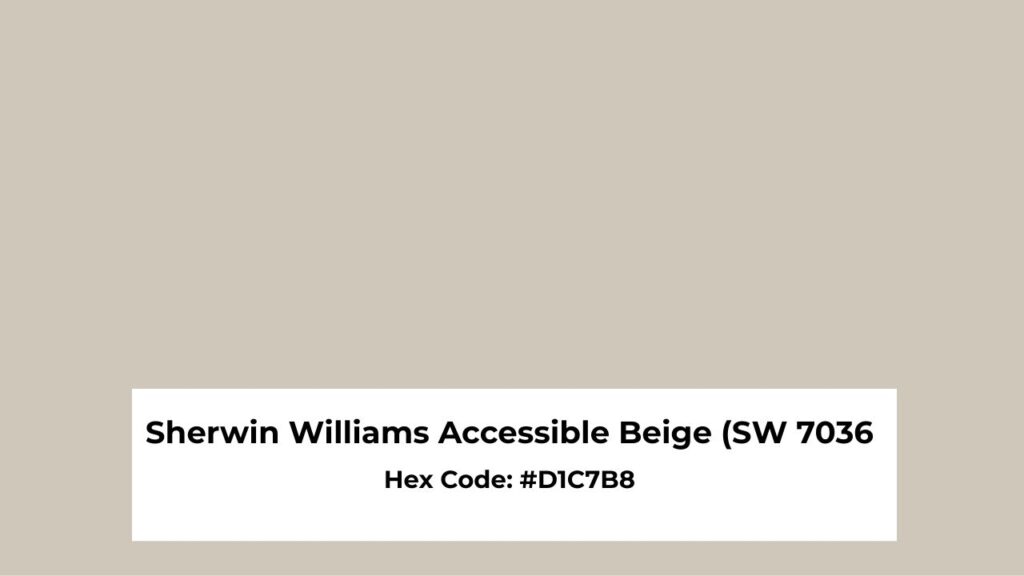
Now Accessible Beige, this is the color that made me understand what greige means.
Not gray, not beige, but that perfect in-between that stays neutral without being boring.
LRV of 58 means it’s reflecting more light than Natural Tan.
The room feels light, airy, and open.
I’ve used Accessible Beige in many spaces, it’s one of Sherwin-Williams’ best-selling paint colors for a reason.
The gray undertones with a beige base give it a grounded, calm quality.
It doesn’t fight for attention like other colors, Instead, it only exists.
There’s sometimes a subtle green cast depending on your lighting, but it’s not the aggressive green you get from some greiges.
What I love about Accessible Beige is how it stays stable.
In the North-facing room, it’ll look cool and show gray, but it doesn’t transform into a different color.
In the South-facing room with afternoon sun, it warms up and goes with more beige.
The warmth is there, it’s a warm greige, not a cool gray situation.
But it’s balanced and controlled.
It feels cozy and moderate without committing hard to either warm or cool.
And for anyone who is trying to create a whole-home color, this adaptability is why it works.
I’ve specified Accessible Beige for living rooms where people want flexibility with their decor.
Bedrooms where they want calm but not cold.
Bathrooms where it adds softness without the yellow overtones that can make skin look weird in mirrors.
Kitchens, as a wall color when you’re keeping white or cream cabinets.
Why do designers love it, because it doesn’t fight you.
You can pair it with oak cabinets, with gray floors, with white trim, with wood tones.
What is the Difference Between Natural Tan and Accessible Beige?
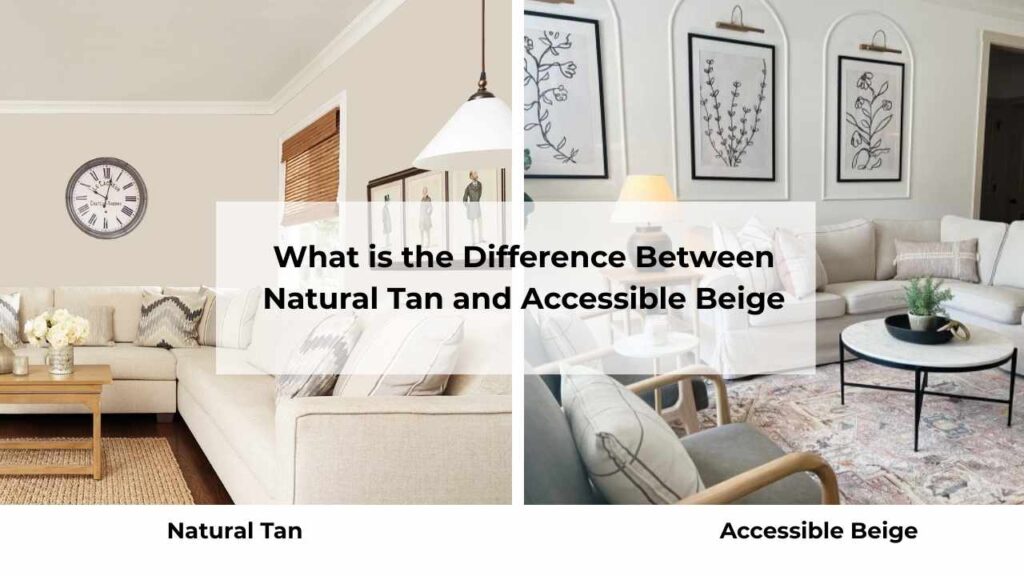
Side by side, Sherwin Williams Natural Tan Vs Accessible Beige, look related but not identical.
But have some family resemblance but have different personalities.
Natural Tan is warm, deep and golden.
Accessible Beige is light, gray and flexible.
LRV
The Light Reflectance Value tells you how much light a color reflects, and this is where these two split.
Natural Tan has an LRV of 36, it’s absorbing more light than it’s giving back.
This makes it feel intimate, cozy, but also dark.
In a small room or one with limited windows, this can work against you.
I’ve seen it make a 10×10 bedroom feel like a cave.
Accessible Beige is at 58, almost double the light reflection.
This makes spaces feel open and airy.
You’re getting brightness back into the room, which is why it works well in the open-concept spaces where you want flow without feeling flat.
The LRV difference is the big factor between these two.
If you’re working with low light, Accessible Beige is what works best for you.
If you have natural light and want to bring the room in a bit, Natural Tan will work.
Undertones
Natural Tan has strong yellow and golden undertones with some earthy warmth mixed in.
In warm lighting, it can look slightly orange.
Not pumpkin orange, but that much that you will notice.
Next to cool whites, gray furniture, or modern finishes, the yellow undertones pop out.
Accessible Beige brings gray undertones to the table with that beige base creating the greige effect.
There’s sometimes a subtle green cast depending on light, but it’s minimal.
The gray keeps it from being too yellow or too pink.
If you’re someone who hates yellow in paint colors, Natural Tan is going to frustrate you.
If you want warmth without the yellow commitment, Accessible Beige is what you should consider.
Lighting Affect
Lighting changes everything with paint colors.
Natural Tan in different lighting:
- North-facing rooms: Goes dark, loses some of the golden glow, can feel heavy
- South-facing rooms: Becomes rich and golden, shows off the warmth
- Artificial warm lighting: Can push orange, mainly with old LED bulbs
- Low light situations: Feels darker than expected
I had Natural Tan in an east-facing bedroom, and mornings were gorgeous like all warm and glowy.
But by afternoon, it became dark and kind of dull.
The room felt different depending on time of day.
Accessible Beige in different lighting:
- North-facing rooms: Shows gray, stays cool, but doesn’t go depressing
- South-facing rooms: Warms up, leans more beige than gray, stays balanced
- Artificial lighting: Stable across different bulb types
- Low light: Maintains its character better than Natural Tan
The stability of Accessible Beige in different lighting conditions is why I recommend it because it’s easy.
Warmth
Both colors are warm, but they’re warm in different ways.
Natural Tan creates warmth through depth and saturation.
It’s an enveloping, cozy warmth, the kind that makes you want to rest.
It has weight to it. In the right space, this is beautiful. In the wrong space, it’s suffocating.
Accessible Beige creates warmth through tone while maintaining lightness.
It’s a soft, gentle warmth.
The gray undertones keep it from going too cozy, which means it works in spaces where you want warmth without too much weight.
If I’m designing a bedroom that needs to feel like a retreat, Natural Tan may be what you look for.
If I’m doing a living room that needs to function during day and night, Accessible Beige is the better choice.
Styling and Best Uses
Natural Tan styling:
- Trim colors: Creamy whites, Alabaster, warm off-whites
- Furniture: Works with warm wood tones, traditional pieces, earthy textiles
- Accent colors: Terracotta, rust, warm greens, cream
- Best uses: Bedrooms, cozy living rooms, dining rooms, spaces with controlled warm lighting
- Flooring: Honey oak, warm hardwoods, beige tile
Accessible Beige styling:
- Trim colors: Alabaster, Shoji White, even Pure White in modern spaces
- Furniture: Flexible, works with warm or cool tones, wood or metal
- Accent colors: Navy, sage green, blush, charcoal, brass accents
- Best uses: Home color, living rooms, bedrooms, bathrooms, kitchens, open concepts
- Flooring: Medium to dark wood floors, greige tile, mixed materials
The flexibility difference is big.
Natural Tan needs you to commit to a warm palette.
Accessible Beige lets you change your mind.
Comparison Table
| Feature | Natural Tan (SW 7567) | Accessible Beige (SW 7036) |
| LRV | 36 (dark, less reflective) | 58 (light, more reflective) |
| Undertones | Yellow-golden, earthy | Gray-beige (greige) |
| Color Family | Warm tan | Warm neutral greige |
| Warmth Level | Very warm | Warm-neutral balanced |
| Lighting Behavior | Darkens in low light | More stable across lighting |
| Best Trim Pairing | Alabaster, creamy whites | Alabaster, Shoji White, Pure White |
| Design Style | Traditional, Tuscan, rustic | Transitional, modern farmhouse, contemporary |
| Whole-Home Use | Not recommended | Highly recommended |
| Flexibility | Needs warm palette support | Works with warm or cool accents |
Sherwin Williams Natural Tan Vs Accessible Beige: Room-By-Room Suitability
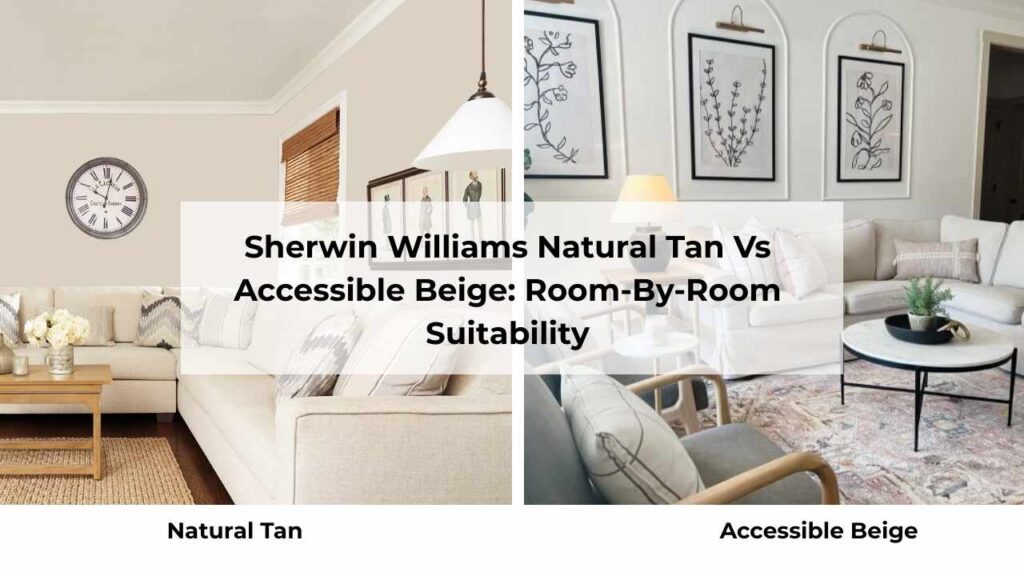
Choosing between these two comes down to the specific room and what you need it to do.
Not every space needs the same thing, and that’s where knowing how each color looks matters.
Living Room
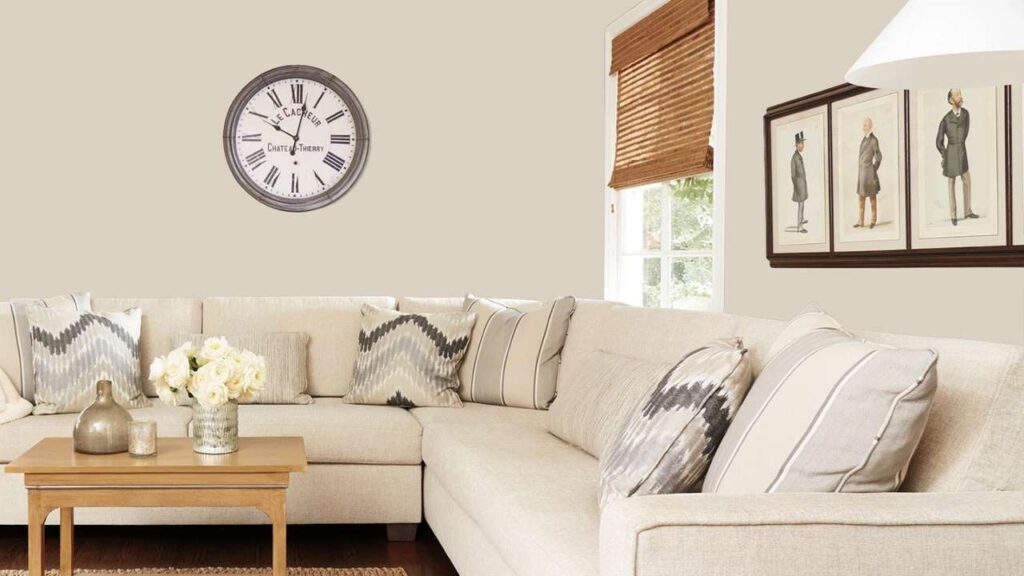
Natural Tan in living rooms works when you’ve good natural light and want the room to feel like a warm, enclosed space.
If your living room has south or west-facing windows, gets afternoon sun, and you’re furnishing with warm wood tones and traditional pieces, Natural Tan creates a cohesive envelope of warmth.
But here’s what goes wrong: Living rooms that connect to other spaces can feel disconnected when Natural Tan is dark and more saturated than adjacent rooms.
Also, if you’re someone who uses your living room day and night, the way Natural Tan changes from morning to evening can be out of place.
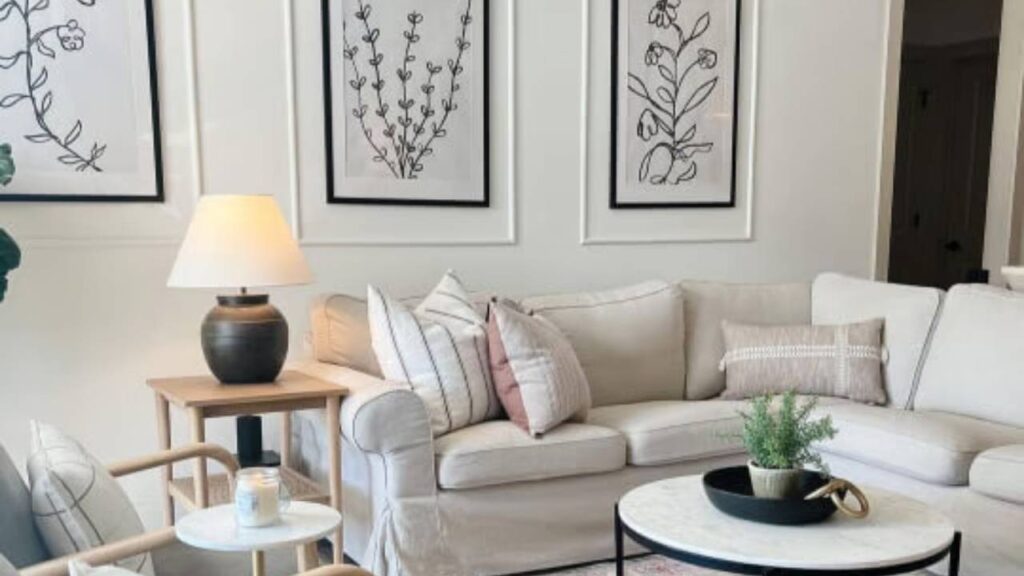
Accessible Beige in living rooms is my frequent recommendation.
It works in open concepts without creating the cramped feeling.
You get warmth without the room feeling small or dark.
It functions well with both table lamps and overhead lighting.
And if you’re someone who likes to change decor, Accessible Beige gives you the flexibility like warm throws and pillows in winter, light linens in summer, and the wall color supports both.
I used Accessible Beige in a living room with north-facing windows, and the homeowner was worried it would feel cold, but it didn’t.
The warmth in the beige base kept it cozy even with the cool light.
Bedroom
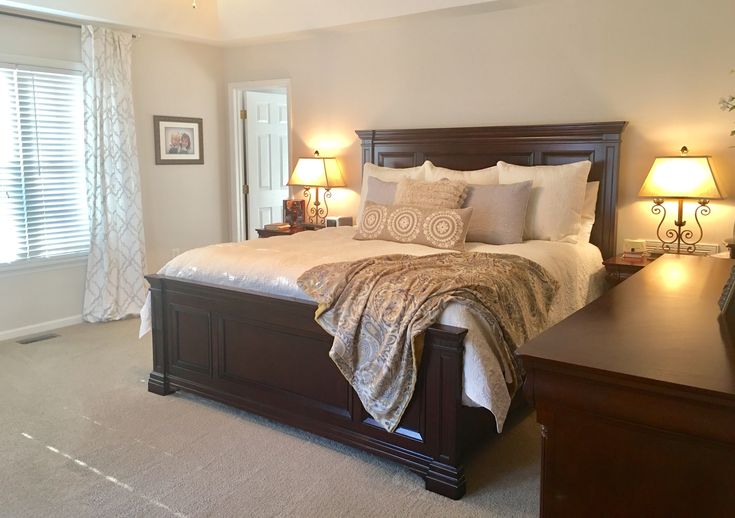
Natural Tan in bedrooms can be gorgeous if you’re going for the cocooning, retreat feeling.
Bedrooms are personal spaces where the deep, rich warmth can shine.
You’re there during mornings and evenings when the lighting is soft.
I painted my own bedroom Natural Tan, and mornings were beautiful.
The color looks rich and enveloping.
But the problem was, my bedroom only gets morning light, so by afternoon it felt cave-like.
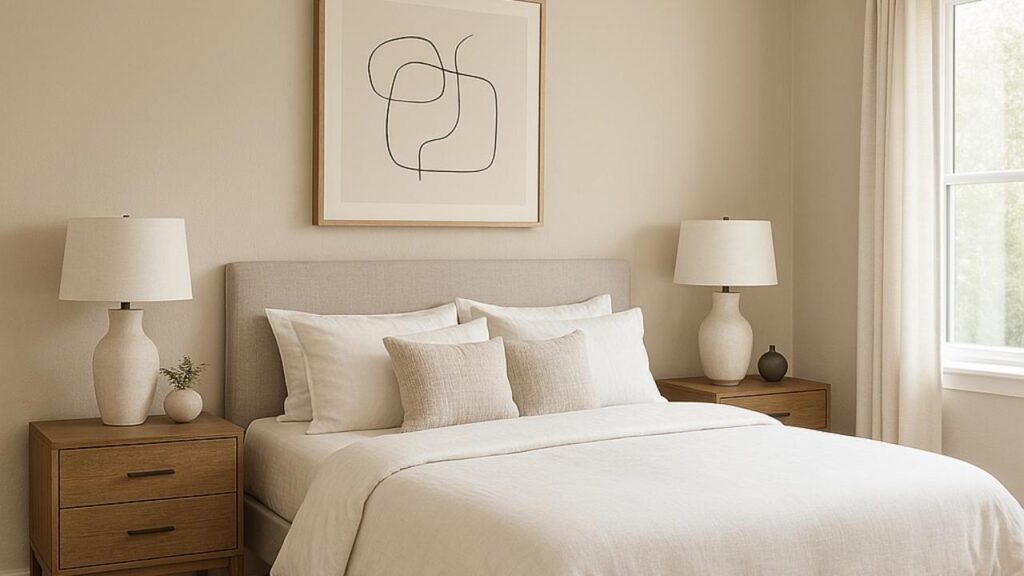
Accessible Beige in bedrooms gives you calm without the weight.
It’s warm to feel cozy, light to not feel oppressive.
If you’re someone who works from your bedroom during the day, Accessible Beige maintains better visibility and feels less heavy during daytime.
For guest bedrooms, Accessible Beige is safe.
You don’t know everyone’s preferences for color intensity, and this one tends to make people feel comfortable without overwhelming.
Bathroom
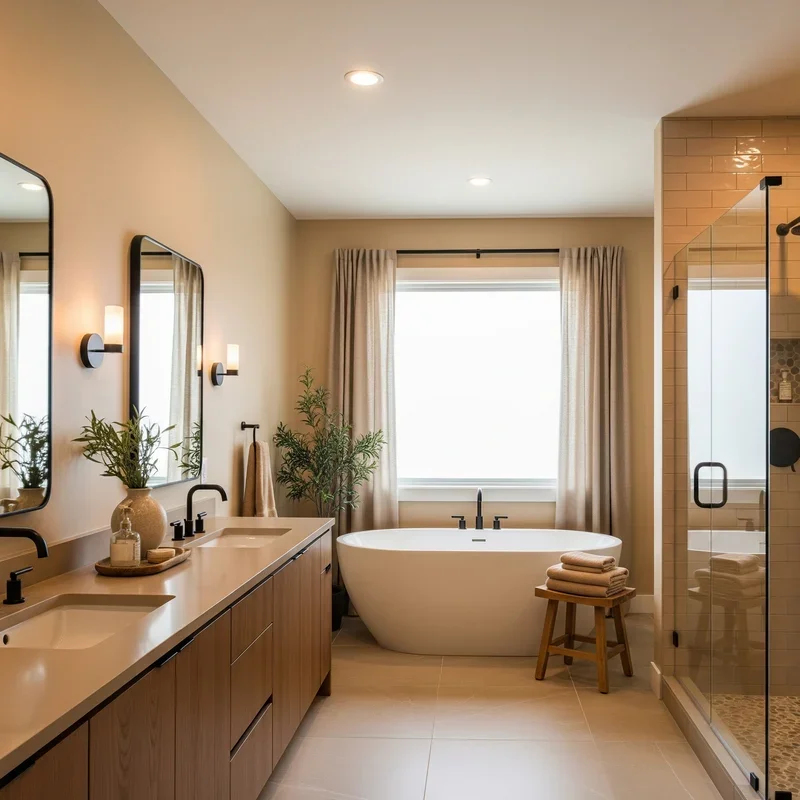
Bathrooms are tricky with any beige because of skin tones and mirror lighting.
Natural Tan in bathrooms needs to be approached carefully.
If you have a bathroom with great natural light, Natural Tan can work and feel warm and spa-like.
But in bathrooms with artificial lighting, mainly the LED vanity lights, Natural Tan can pull yellow.
I’ve used Natural Tan in a powder room with a large window and warm brass fixtures.
The whole space leaned traditional and it worked.
But for primary bathrooms where you’re getting ready in the morning, it is hesitant.
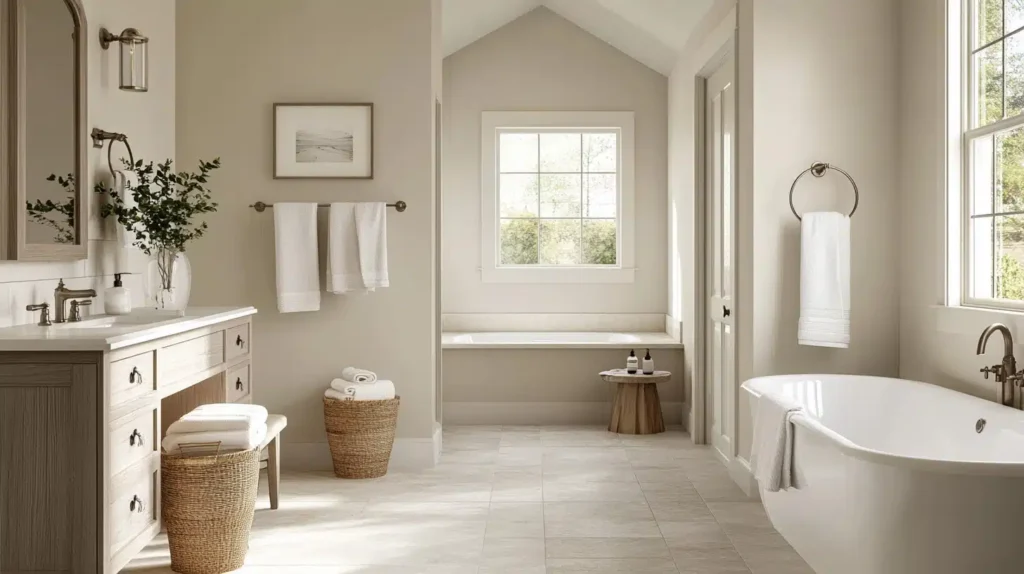
Accessible Beige in bathrooms performs better in different lighting situations.
The gray undertones prevent the yellow cast.
It feels soft and spa-like without the color temperature working against you.
With white tile, white fixtures, it creates a serene, clean feel while being warm.
I’ve suggested Accessible Beige for many bathrooms, and I haven’t had anyone regret it.
Kitchen
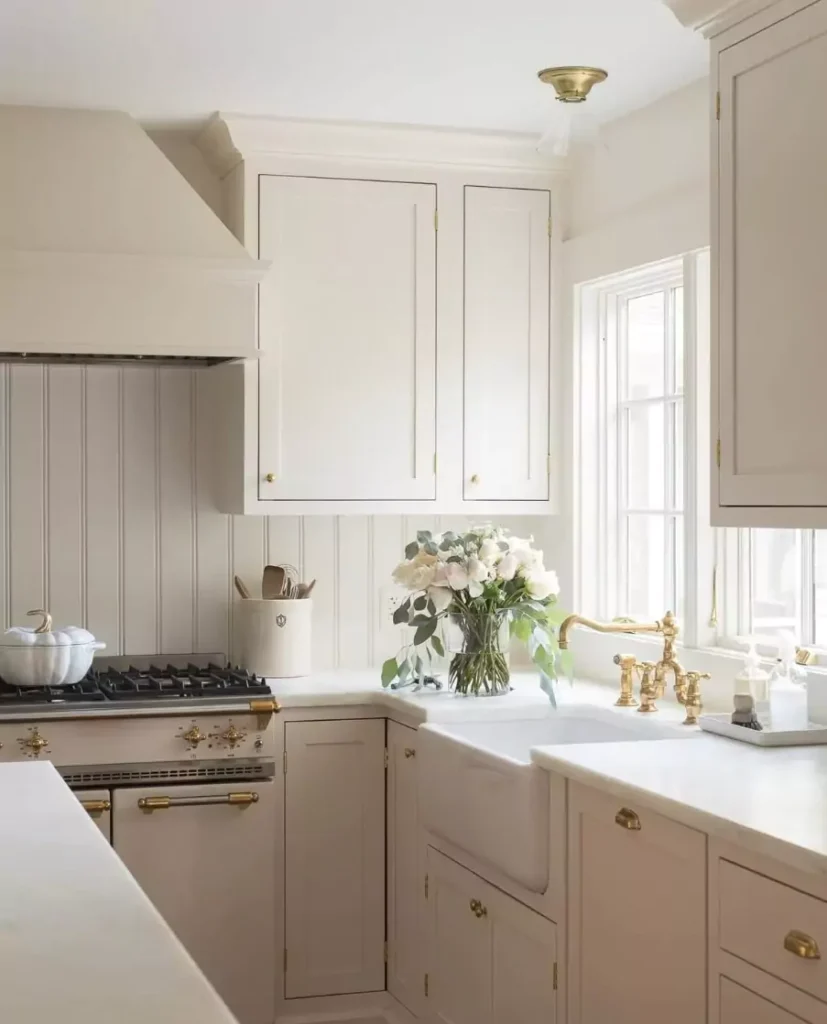
Kitchens have so many other color elements like cabinets, countertops, backsplash, flooring.
Natural Tan in kitchens can work if you have cream or warm-toned cabinets, warm countertops, and good natural light.
It creates warmth and coziness in a kitchen, which sounds nice.
But if you have white cabinets, mainly cool-toned whites, the yellow in Natural Tan can make the cabinets look out of place.
I saw this happen in a kitchen with Natural Tan walls and Benjamin Moore Simply White cabinets.
The white looked almost grayish-blue next to the warm tan walls.
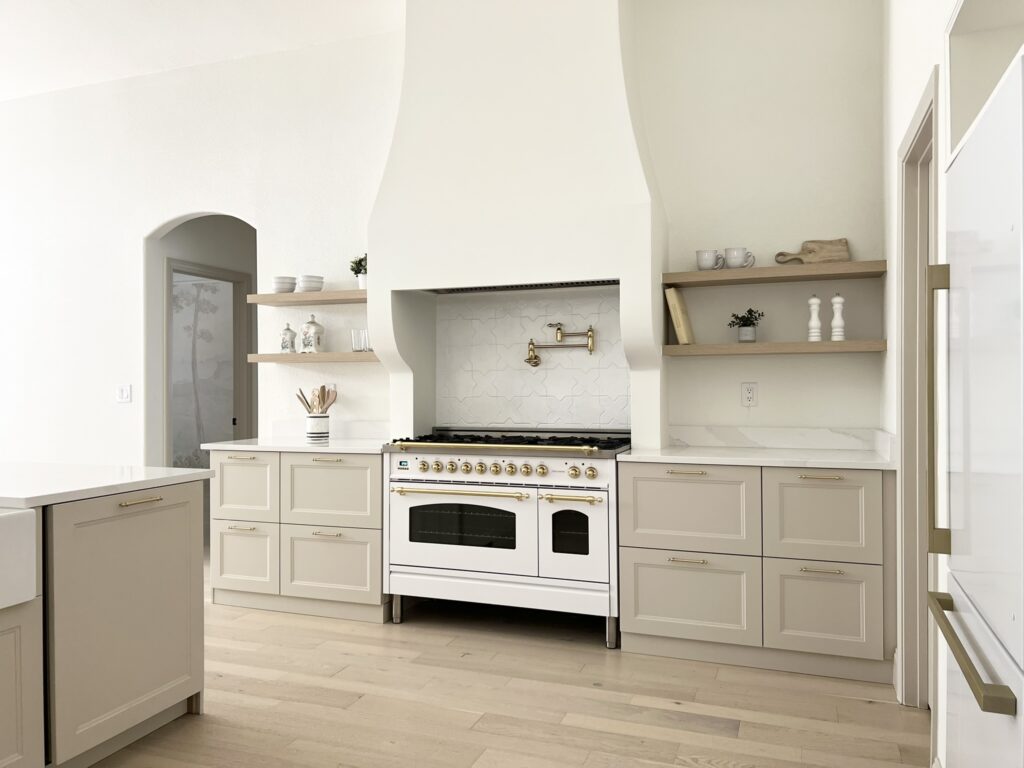
Accessible Beige in kitchens is forgiving.
It works with white cabinets, cream cabinets and light gray cabinets.
If you’re keeping your cabinets and painting walls, Accessible Beige is safe.
It adds warmth without competing with your other finishes.
For kitchen cabinets, Accessible Beige is a popular choice.
It gives you a warm neutral cabinet without going beige.
Natural Tan on cabinets feels saturated for many people.
Sherwin Williams Natural Tan Vs Accessible Beige Vs Other Colors
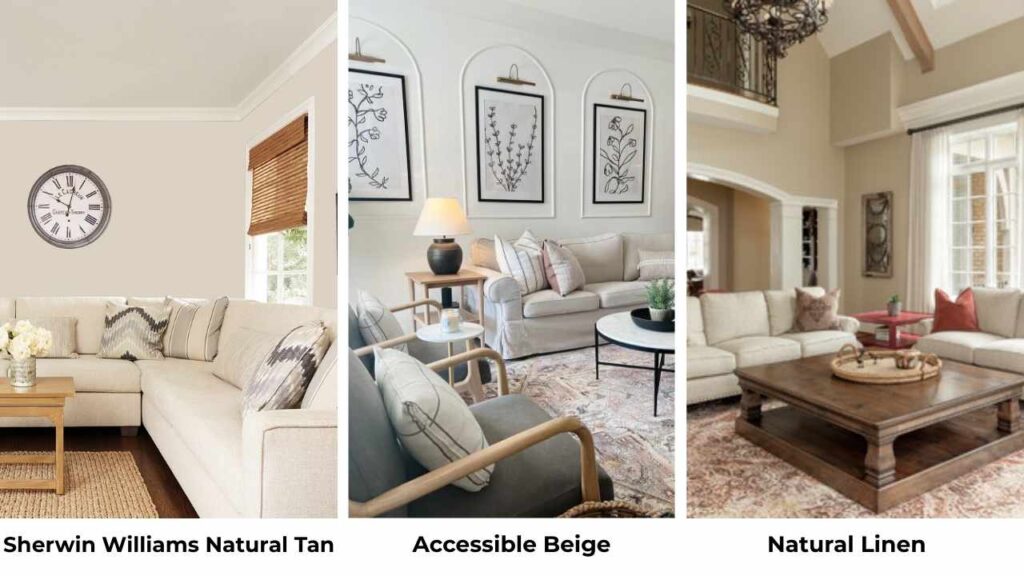
People always want to know how these compare to other popular neutrals.
Fair, because the neutral paint market is crowded.
Natural Tan Vs Natural Linen
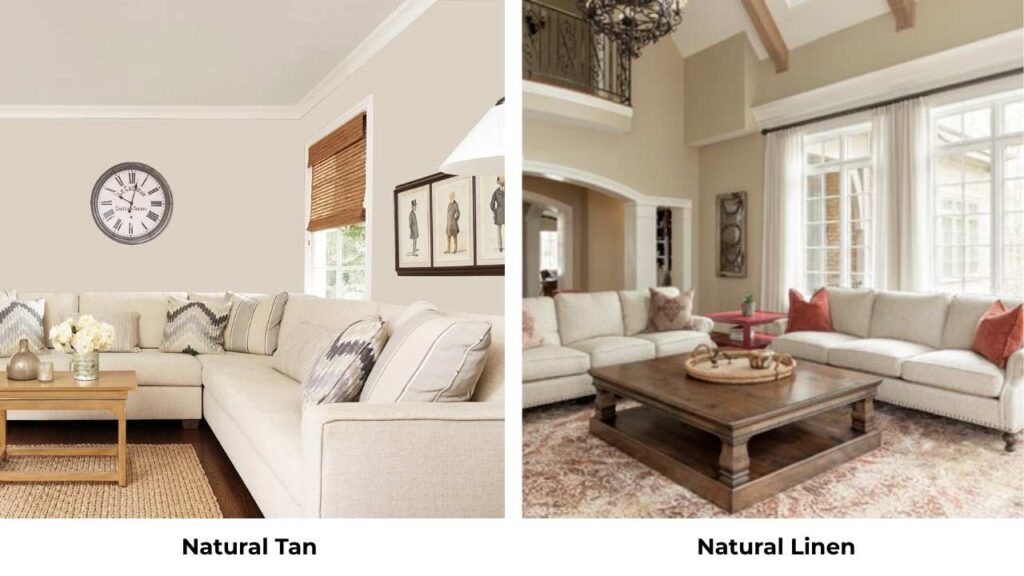
Natural Linen is lighter and softer than Natural Tan.
It has an LRV around 62, so it’s reflecting more light.
The undertones are more muted, less golden and less saturated.
If you like the warmth of Natural Tan but find it too dark or too yellow, Natural Linen may be your middle ground.
Natural Tan Vs Alabaster
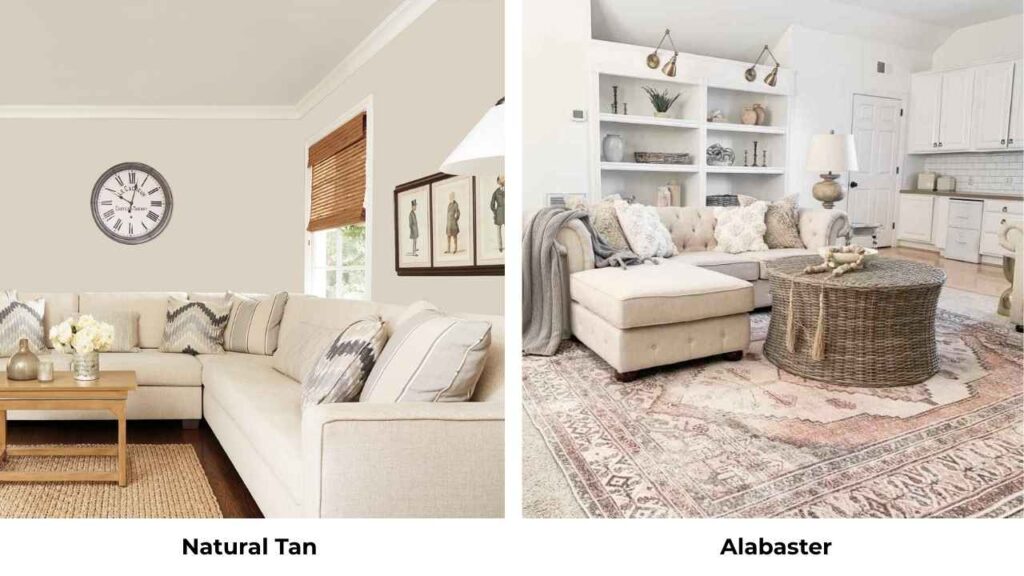
This comparison comes because people use Alabaster as trim with Natural Tan, then wonder if they should paint everything Alabaster.
Here’s the thing: Alabaster is a warm white with an LRV of 82.
It’s lighter than Natural Tan.
It’s not beige or tan but it’s white with warm undertones.
If you want a warm white, choose Alabaster.
Edgecomb Gray Vs Accessible Beige
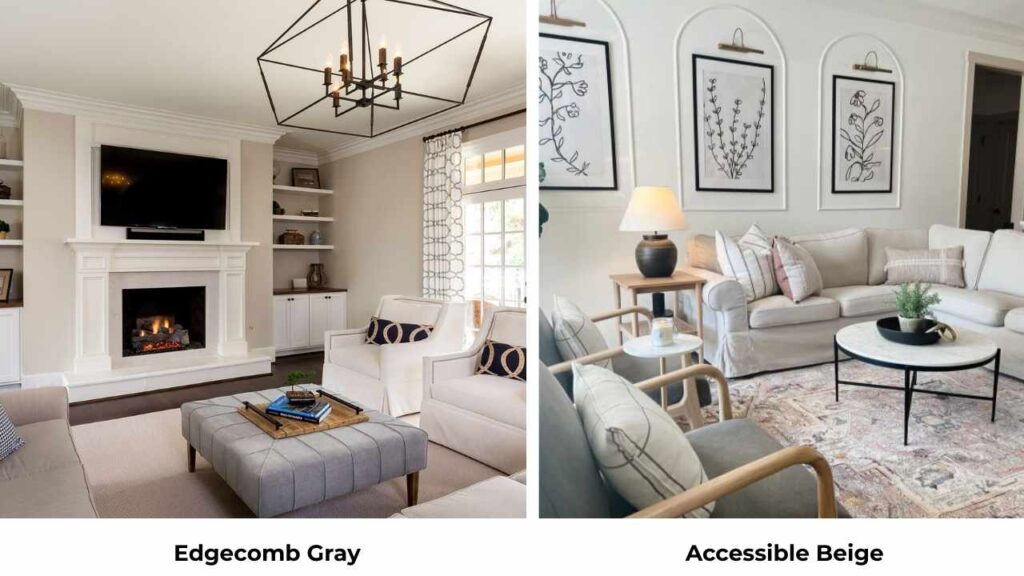
Edgecomb Gray is a Benjamin Moore color that gets compared to Accessible Beige constantly.
Both are warm greiges, both popular, both versatile.
Edgecomb Gray has an LRV around 63 and shows more beige in warm light and gray in cool light and it shifts more than Accessible Beige.
Accessible Beige is stable and warm.
Natural Tan Vs Canvas Tan
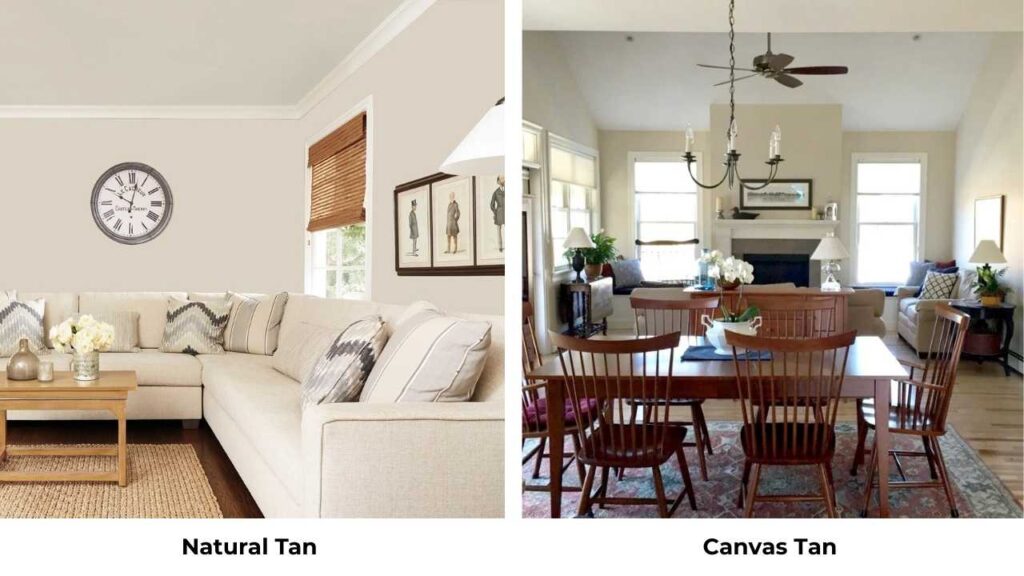
Canvas Tan is less saturated than Natural Tan, with muted undertones.
It’s warm, tan, but it doesn’t have the golden hint.
Canvas Tan has an LRV around 50, so it’s lighter than Natural Tan but darker than Accessible Beige.
If Natural Tan feels rich and Accessible Beige feels gray, Canvas Tan can be worth sampling.
Accessible Beige Vs Balanced Beige
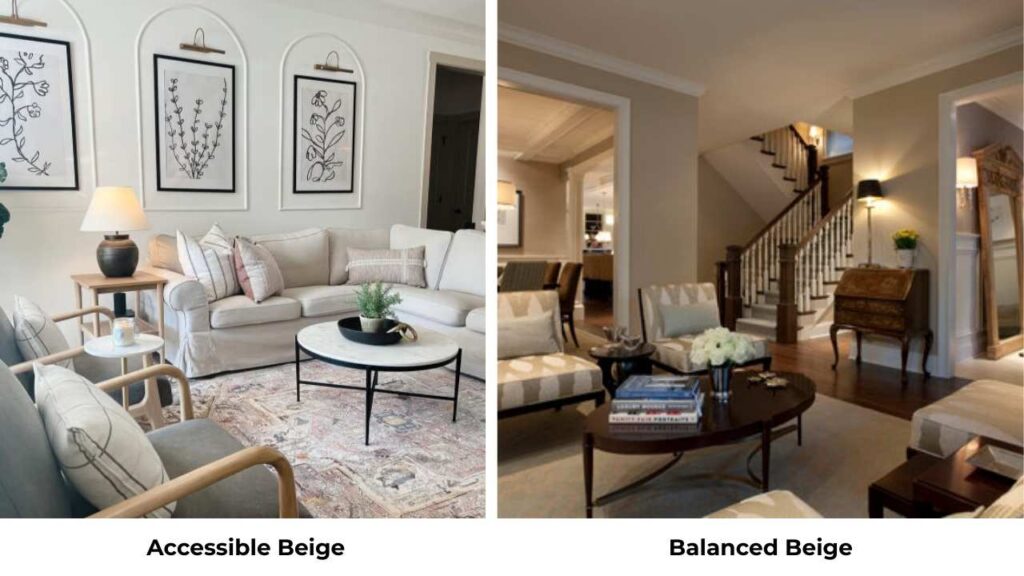
Balanced Beige has an LRV of 48 and is warm and more traditionally beige than Accessible Beige.
It is less gray, more straight-up beige and it’s also darker.
If you want beige without the greige element, Balanced Beige is traditional.
Natural Choice Vs Accessible Beige
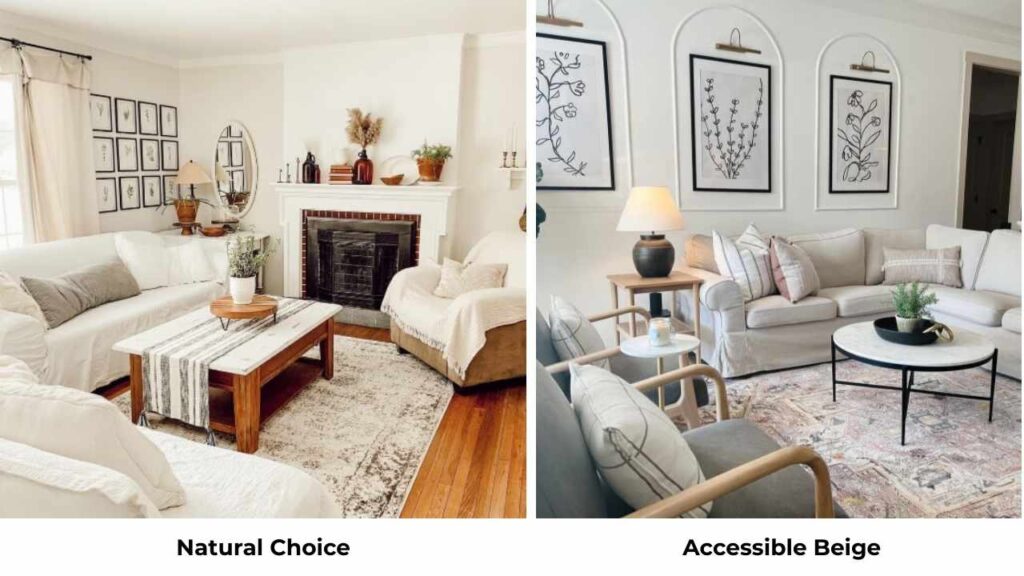
Natural Choice is light (LRV around 61) and shows different undertones than Accessible Beige.
It can flash pink or yellow depending on lighting.
Accessible Beige is more greige.
Natural Choice is a good alternative to Accessible Beige and I want something similar but different.
Comparison Table: Natural Tan & Accessible Beige Vs Others
| Comparison | Key Difference | Choose If… |
| Natural Tan vs Natural Linen | Natural Linen is lighter, less golden | You want warmth without the depth |
| Natural Tan vs Alabaster | Alabaster is a warm white, not a tan | You want white, not color |
| Edgecomb Gray vs Accessible Beige | Edgecomb shifts more dramatically | You like changeable colors |
| Natural Tan vs Canvas Tan | Canvas Tan is lighter, less saturated | Natural Tan feels too intense |
| Accessible Beige vs Balanced Beige | Balanced is warmer, less gray | You want traditional beige |
| Natural Choice vs Accessible Beige | Natural Choice can flash pink/yellow | You want slight variation on AB |
Sherwin Williams Natural Tan Color Palette
If you’re committing to Natural Tan, you need to build a warm palette around it or it’ll look disconnected from your other choices.
Colors that pair well with Natural Tan:
- Alabaster (SW 7008): Your best trim option, warm white that doesn’t compete
- Tricorn Black (SW 6258): For dramatic contrast on doors or accents
- Shoji White (SW 7042): Ceiling color that keeps warmth flowing
- Urbane Bronze (SW 7048): Deep, warm brown for accent walls or cabinets
- Evergreen Fog (SW 9130): Muted sage that works with Natural Tan’s warmth
- Rustic Red (SW 7593): Accent color for textiles or small doses
- Warm Stone (SW 7032): Lighter warm neutral for adjacent rooms
Keep your accent colors in the warm element like rusts, terracottas, warm greens, creams, warm browns.
Cool grays and blues will go against Natural Tan’s golden base.
Sherwin Williams Accessible Beige Color Palette
Accessible Beige gives you more flexibility because it plays well with both warm and cool tones.
Colors that pair well with Accessible Beige:
- Alabaster (SW 7008): Classic trim pairing, creates soft contrast
- Pure White (SW 7005): Crisp trim option for more modern spaces
- Shoji White (SW 7042): Warm white trim that’s slightly softer than Pure White
- Snowbound (SW 7004): Warmest white option for trim
- Urbane Bronze (SW 7048): Popular for islands, doors, accent furniture
- Mindful Gray (SW 7016): Cooler gray that balances without clashing
- Naval (SW 6244): Rich navy for accent walls or cabinetry
- Evergreen Fog (SW 9130): Soft sage that’s popular right now
- Aesthetic White (SW 7035): Slightly cooler wall color for adjacent rooms
- Repose Gray (SW 7015): If you want to go cooler in other spaces
You can go warm with brass fixtures, warm wood, and earthy textiles.
Or cool with black fixtures, gray furniture, and linens.
Accessible Beige supports both directions, which is why it’s a strong home color.
Conclusion
So, Sherwin Williams Natural Tan vs Accessible Beige.
It depends on what you need.
I know that’s not the best answer you wanted, but it’s the true one.
Choose Natural Tan if:
- You have great natural light (south or west-facing)
- You want a cozy, enveloping warmth
- You’re committed to a traditional, warm color palette
- You’re painting a bedroom or small space that should feel intimate
- You love warm wood tones and want your walls to amplify them
Choose Accessible Beige if:
- You want versatility and flexibility with decor
- You’re painting a whole home or open-concept space
- You have varied lighting
- You want warmth without heavy yellow undertones
- You might change your mind about accent colors and furniture
- You want the most popular and proven option
For me personally, I recommend Accessible Beige when someone asks me to choose between these two, because it’s easier.
Few surprises, more flexibility, works in more situations, but that doesn’t make Natural Tan bad, it makes it more specific.
Test both, get samples.
Look at them morning, afternoon, evening.
Look at them with your furniture, your floors, your lighting.
The color that makes you feel good in your space at all times of day because it helps you consider Sherwin Williams Natural Tan Vs Accessible Beige, which will work best in your space.
FAQs on Sherwin Williams Natural Tan Vs Accessible Beige
Yes, Natural Tan can look yellow, mainly in rooms with warm lighting or south/west-facing sun. The yellow-golden undertones are strong in this color. If you put it next to cool whites or gray tones, the yellow undertones become more obvious. In north-facing rooms with cool light, it tones down a bit, but the yellow base is there.
Accessible Beige (SW 7036) is one of Sherwin-Williams’ best-selling beige/greige colors. It’s popular because it’s versatile, warm without being too yellow, and works as a whole-home color. Other popular Sherwin Williams beiges include Balanced Beige and Kilim Beige.
Natural Tan has yellow and golden undertones with some earthy warmth mixed in. Under warm lighting, it can be slightly orange. These undertones make it a true warm tan rather than a neutral greige. The undertones are strong and they affect how the color looks on your walls.
Accessible Beige is popular because it’s versatile. The gray-beige balance (greige) means it doesn’t commit hard to either warm or cool, so it works with different decor styles, lighting situations, and adjacent colors. It has an LRV of 58 which makes spaces feel light and airy without being harsh white. It’s warm to feel cozy but not so saturated that it overwhelms.