

My entire home has been a white base for 5-6 years, which was chipping away and was collecting a lot of dust and dirt. So obviously, it was a makeover time.
I checked out the White Paints collection from Sherwin Williams, and Alabaster vs Shoji White were the two main white colors that were coming up.
While both are technically white colors, Alabaster (SW 7008) is a brighter, creamier white with a yellow undertone, whereas Shoji White (SW 7042) is a softer, warmer off-white with really subtle green or greige undertones.
We can say as if Alabaster is a tried-and-tested classic, then Shoji White will be an upcoming color.
In this Alabaster vs Shoji White guide, I will be going through all the basics – what the colors are, their basic differences, how they interact with light, and what undertones they have.
I will also mention how they will appear in each room, along with other colors that will complement them.
Alabaster SW 7008 Paint Review: Undertones, LRV & Best Uses

Sherwin Williams Alabaster 7008 is a popular, warm off-white color with a soft, creamy look.
It has an LRV of 82, which makes it on the warmer side of the color spectrum.
It can be used on the exterior, interior, wall trims, cabinets, and ceilings.
Because of its warmth, it has yellow undertones, which give it a pale yellow look in bright, natural light.
But I was unsure how it would look in my basement. Thank Lord for samples!
I was able to snag a few of them for my home.
Without them, I would not have been able to make a proper decision.
Because of its neutral tone, a high-end LRV, the undertone of light gray kept coming up while I painted it in my basement.
Primarily because that place does not have any natural lighting, and under artificial, white light, the gray shines.
The versatility of this color impressed me – under natural light, it shows a hint of pale yellow, and under artificial light, the gray comes out.
Sherwin Williams Alabaster is one of those colors that everyone seems to love, and it makes sense why – it is an easy-going off-white that feels calm, warm, and more inviting than other sharper off-white shades.
What makes it such a go-to shade for home interiors is how well it fits into almost every style.
It has a soft, creamy look that works from classic homes to modern spaces.
If you want to update your look to a more sophisticated space, use Alabaster as the backdrop and pair it with a bold, accent color.
It will give the room a personality without making Alabaster the centre stage.
I would choose Alabaster when you want a soft, warm off-white that instantly makes a room feel calm and welcoming.
It works on walls, trims, cabinets, and it looks especially good in spaces with plenty of natural light.
Whether you have a farmhouse-style home, a traditional home, or a modern space, this color will fit right into them.
| Feature | Alabaster – SW 7008 |
| Hex Code | #EDECE3 |
| RGB Values | R: 237, G: 234, B: 224 |
| LRV (Light Reflectance Value) | 82 |
| Undertones | Soft creamy yellow, subtle greige/gray in low light |
| Color Family | Warm Off-White / Soft Cream |
| Light Response | Pale yellow in natural light; soft gray in low or artificial light |
| Best Use | Interiors, exteriors, trims, cabinets, ceilings, bright natural-light rooms |
| Finish Impression | Calm, warm, inviting, adaptable, timeless |
Shoji White (SW 7042) Paint Review: Undertones, LRV & Best Uses
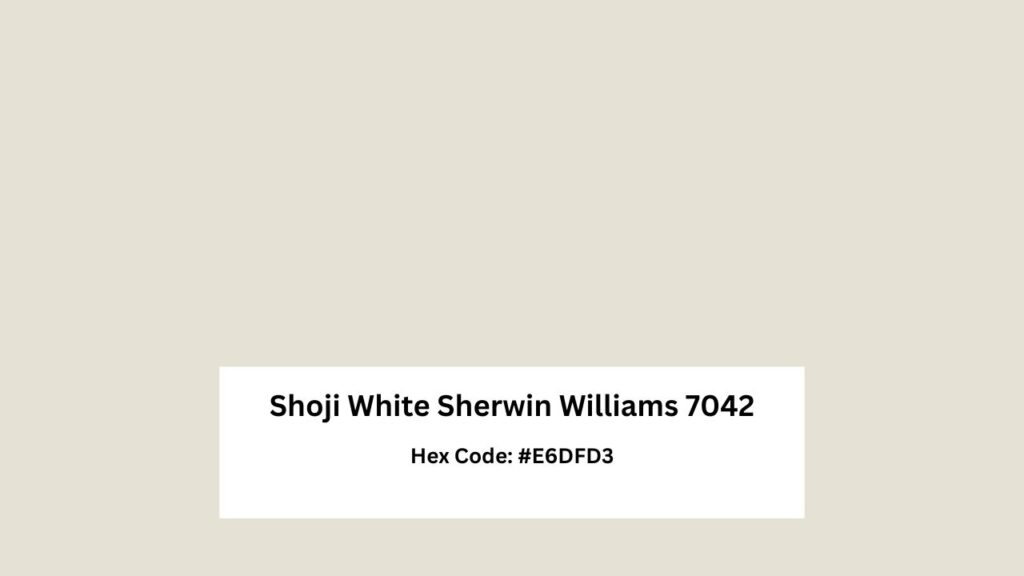
Sherwin Williams Shoji White (7042) is another versatile, warm off-white shade that has subtle greige, yellow, and green undertones.
The greige and green come with the ratio of the main RGB colors – 230 (red), 223 (green), and 211 (blue).
With the LRV of 74, Shoji White falls more into the range of an off-white – cream shade category. Under natural lighting, a very slight hint of pink can also show up, although it mostly depends on where the light comes from.
It is this very quality that makes this color so adaptable.
Similar to Alabaster, Shoji White comes under one of those warm, off-white shades of white that can easily uplift the room without looking too stark.
The undertones can shift according to the light, so it is a great neutral shade if you want something cozy yet polished.
One word of advice – keep an eye out for any strong, fixed elements like dark cabinets or earthy colors, as those can bring out the slight pink undertone in this shade.
Shoji White Sherwin Williams is a great pick for when you want a warm, off-white shade that feels cozy yet fresh.
It works beautifully in bedrooms, living rooms, and is also a solid option for exteriors because it can look brighter without being harsh.
I would recommend using it as a calm backdrop, or you can also let this shade tie together a space filled with earthy tones for a warm, welcoming look.
| Feature | Shoji White – SW 7042 |
| Hex Code | #E6DFD3 |
| RGB Values | R: 230, G: 223, B: 211 |
| LRV (Light Reflectance Value) | 74 |
| Undertones | Greige, beige, subtle yellow, green (may show slight pink in natural light) |
| Color Family | Warm Off-White / Creamy Greige |
| Light Response | Shifts with lighting — warmer in south/west light, cooler in north light |
| Best Use | Bedrooms, living rooms, kitchens, exteriors, warm-toned homes |
| Finish Impression | Cozy, grounded, soft, and subtly warm without looking stark |
Sherwin Williams Alabaster vs Shoji White Comparison: How They Differ in Light, Style & Mood

Although both Shoji White and Alabaster are off-white shades, the former is a softer, warmer off-white with a beige/greige undertone, almost giving off a ‘khaki-esque’ look to the room; while the latter is a brighter, slightly more yellow-toned off-white.
Choosing between these colors comes down to how you want your room to feel. Side by side, they look really similar, but their behaviour in natural and artificial lighting sets them apart.
In this part, we will break down how each color shifts in brightness, undertones, and mood across the rooms.
Brightness Test: Alabaster LRV vs Shoji White LRV
LRV (Light Reflectance Value) tells you how much light a paint color bounces in a room.
It is a very important number to check when you are trying to figure out if a color will brighten your space or make it edgier or moodier.
Alabaster Sherwin Williams has an LRV of 82, so it bounces back a lot of natural light, instantly brightening the room.
In spaces with plenty of natural light, it feels open and airy.
Its creamy tone adds warmth without blinding your eyes.
Sherwin Williams Shoji White has an LRV of 74, which also places it in the off-white category, as this color also bounces off a lot in a room.
With this kind of moderate LRV, it is well-suited for both brighter and darker rooms, providing warmth in bright areas and displaying a cool, inviting feel in dark rooms.
Color Character & Undertone Breakdown
We read about the LRV of both colors previously.
Now, let us come to the undertones.
Undertones are basically colors that are mostly hidden but shine through when light (natural and artificial) bounces off the surface.
Shoji White Sherwin Williams is a warm, creamy, off-white color that has subtle greige, yellow, and green undertones.
Because of these undertones and being placed in the correct kind of natural lighting, this shade is extremely adaptable.
Alabaster Sherwin Williams is a warm off-white color with a soft, creamy look.
In rooms with a lot of natural light, this shade appears as a crisp, white color, without being too harsh on the eyes.
This makes the space more cozy.
Visual Appearance Comparison: Alabaster vs Shoji White
Alabaster SW looks like a creamy, soft white on walls, but it can shift appearances depending on the lighting and surroundings.
In a well-lit space, it can appear like a creamy, balanced white color, while in dark rooms, this shade can appear as a very to have soft yellow tones.
Shoji White SW leans warm, creamy, giving you a soft glow, without slipping into the yellow territory.
Due to its greige undertones and depending on the lighting in the space it inhabits, it can give off a subtle beige, greige look to the space.
Think of it as a very light greige that feels modern and grounded.
With the LRV of 74, it brightens the room but doesn’t hit you with its stark whiteness.
Lighting Effect: How These Colors Shift in Different Rooms
Sherwin Williams Shoji White shifts a lot with changing light, so what you see in one room will look different in the other room.
Southern light pulls out its warm, creamy, beige side, while Northern light pulls out the cooler gray side of it.
East-facing rooms feel warm in the morning and turn beige towards the evening, while West-facing rooms give the opposite effect.
Alabaster Sherwin Williams, too, shifts quite a lot depending on the light around it.
Natural light keeps it looking bright and creamy, while warm artificial light can push it toward yellow or beige.
North-facing rooms can soften the yellow undertones a little, while South-facing rooms can make the room look warm and inviting; the East-facing rooms can look slightly golden in the morning, while West-facing rooms turn richer and warmer as the day winds down.
Style Match Guide: Farmhouse, Modern, Traditional & More
Sherwin Williams Alabaster works well in almost any style because it sits in that sweet spot between warm and clean.
It suits modern and traditional houses with wood, as it can freshen up traditional places without losing their character.
It can also give contemporary homes a calm, neutral backdrop for sharper lines or bold accents.
Whether it’s on walls, trims, cabinets, or exteriors, it ties different elements together and creates a bright, cohesive look throughout the house.
Shoji White Sherwin Williams fits a wide range of styles because it balances warm, creamy softness with a hint of greige.
In bright rooms, it reads like a gentle white, and in dimmer spaces, it can go towards a warm, subtle neutral.
This makes it easy to use across living rooms, the kitchen, and even exteriors.
It works well with modern farmhouses, classic trim, natural wood, and sleek contemporary finishes, giving each space a grounded, cohesive look.
Which Spaces Suit These Colors Best?
Shoji White is a color that works for interiors and exteriors alike.
For the interiors, it’s a soft, steady neutral for the walls, a warm choice for the kitchen cabinets, and can also be used for the wall trims.
For the exteriors, it can look clean and refined paired with bricks.
It also pairs nicely with darker colors used on the trims, shutter, or doors.
This flexibility makes it an easy pick when you want a warm, elegant look without going too creamy or too stark.
Best Rooms for Alabaster and Shoji White: Complete Guide

Both Alabaster and Shoji White behave differently from room to room, so the choice completely depends on you, where you want to place them.
Alabaster brings a softer, creamier glow that usually works well in bright, open spaces, while Shoji White leans a bit more grounded with its greige feel.
Both colors can shine or fall flat depending on the light, finishes, and the room’s function.
In this section, we will go through each space – living rooms, kitchen, bedroom, bathrooms, exterior – interior, and front door, to see how well they can suit your space.
Alabaster vs Shoji White in Living Rooms
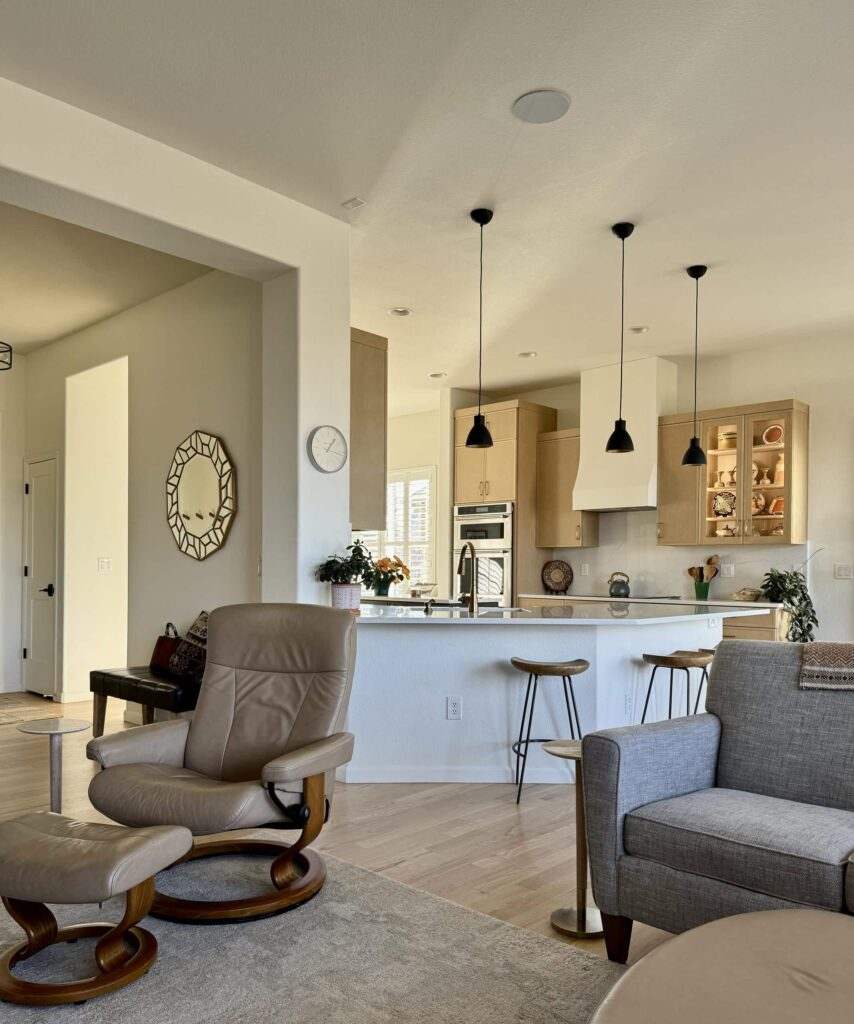
Alabaster: Alabaster is one of those whites that you can almost use anywhere because it stays warm, calm, and easy to live with.
It brightens up a room without being too stark, makes furniture stand out, and gives you plenty of freedom to layer the room with rugs, throws, and pillow covers with darker colors.
This color works across styles and makes a solid backdrop for most rooms in the home.
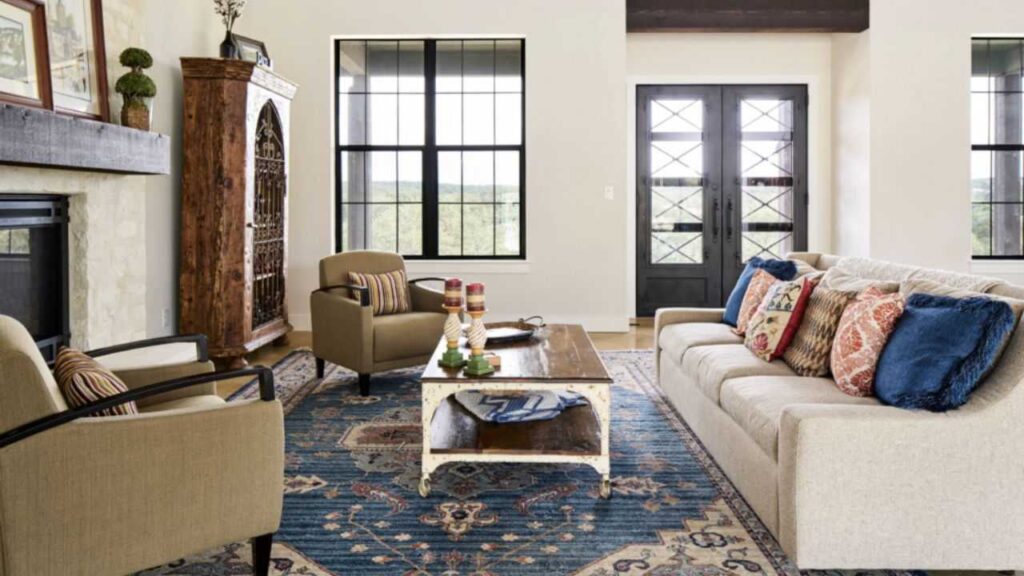
Shoji White: Shoji White is a great pick for living rooms, because it stays light and bright while still feeling warm.
It works nicely with wood floors, natural tile, and natural greenery.
This helps in creating an easy backdrop for stone fireplaces and neutral furniture. The room feels soft and welcoming without looking too stark or cold.
There’s just enough tint to Shoji White to give the walls a character while keeping the space open and comfortable.
Personal Recommendation: If I had to pick, I would choose Shoji White Sherwin Williams for the living room.
It keeps the space light but adds a gentle, greige warmth that works with almost any flooring, furniture, or natural element.
It has more personality than a standard, soft white, which makes the room feel cozy without losing its brightness.
Best Kitchen White: Alabaster or Shoji White?
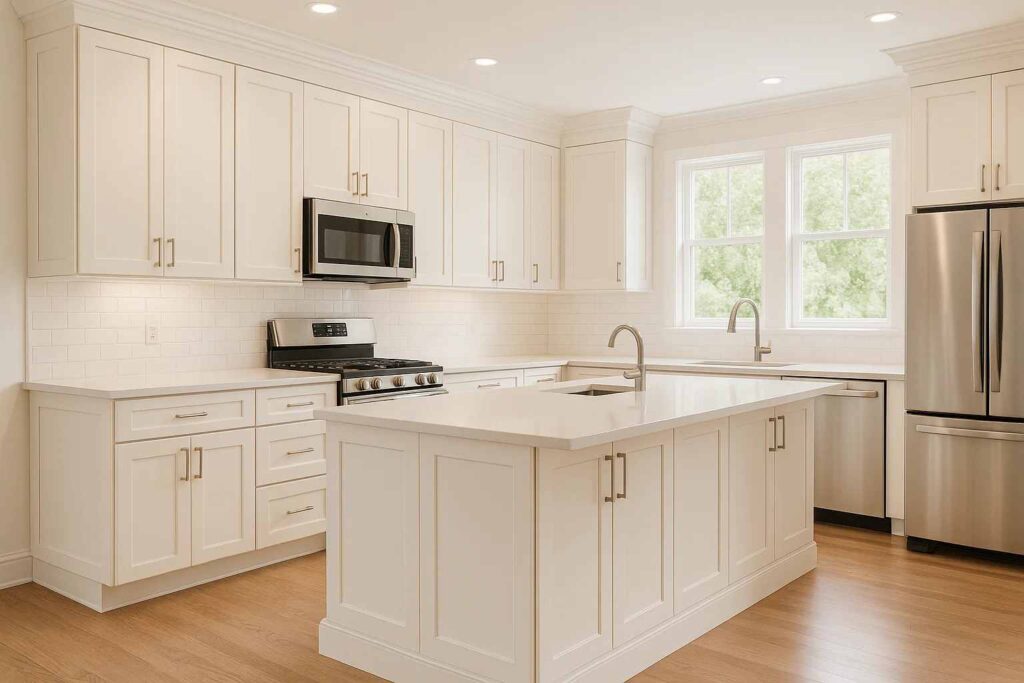
Alabaster: Alabaster is a lovely choice for kitchen walls or cabinets if you want a space that is bright, clean, and open.
It makes the room look larger while still giving you a soft, warm backdrop that plays well with most materials.
On cabinets, it works across full kitchens, islands, and two-tone layouts, pairing easily with darker shades or bolder accents.
It is an easy way to get a timeless look to the kitchen without the starkness.
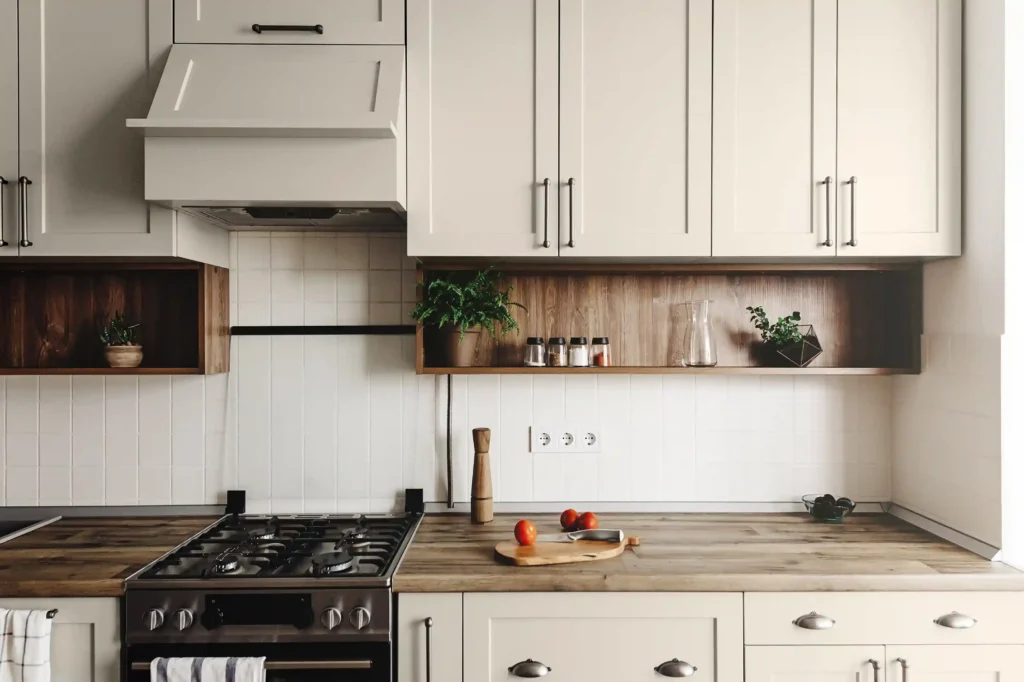
Shoji White: Shoji White works beautifully in a kitchen because it gives you that warmth, soft backdrop, without the starkness of a pure white.
It pairs well with deep, moody cabinet colors, and warm white stone, creating a cozy twist in a palette.
This color can also work well on cabinets too.
It softens the wood tones, balances black accents, and looks amazing with handmade tiles and with natural elements.
Personal Recommendation: I personally feel that kitchens usually need a bright, open feel to them, and Alabaster Sherwin Williams works perfectly for that.
It keeps the room feeling clean and spacious, and works beautifully with warm metals and natural wood.
It also stays consistent in most lighting.
If you want a kitchen that feels fresh, welcoming, and easy to pair with any backsplash or cabinet finish, Alabaster is the safer, friendlier choice.
Which White Works Best for Bedrooms?
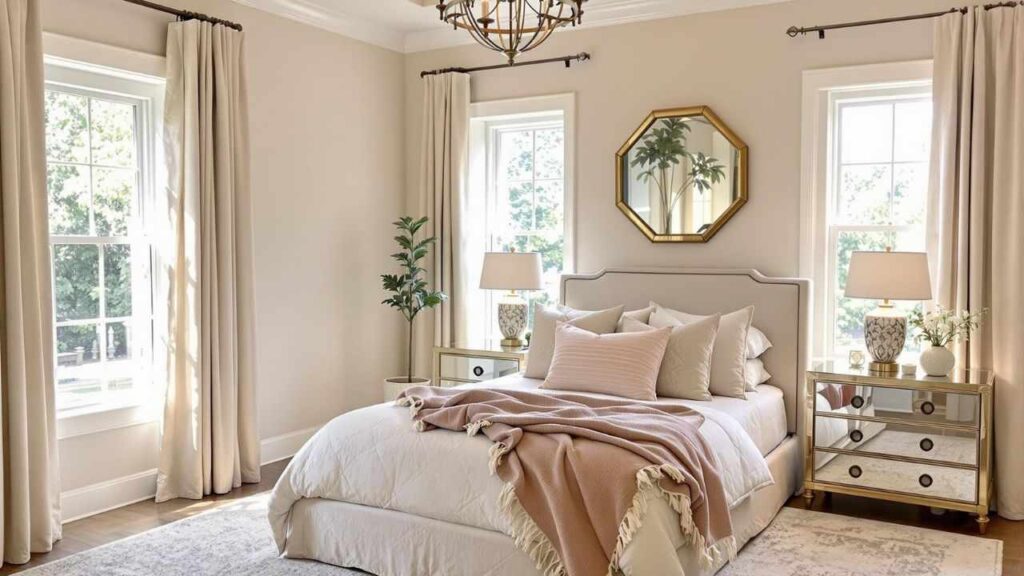
Alabaster: Alabaster is one of my go-to picks for a master bedroom because it instantly sets a calm, polished mood.
Its warm, soft white keeps the room feeling relaxed without turning yellow, and works with everything – from textiles to wood furniture.
It reflects light well, so even low-light bedrooms feel open and restful.
The best part of this color is that it pairs well with bold accents or quite neutrals, giving you plenty of room so that you can switch your style later.
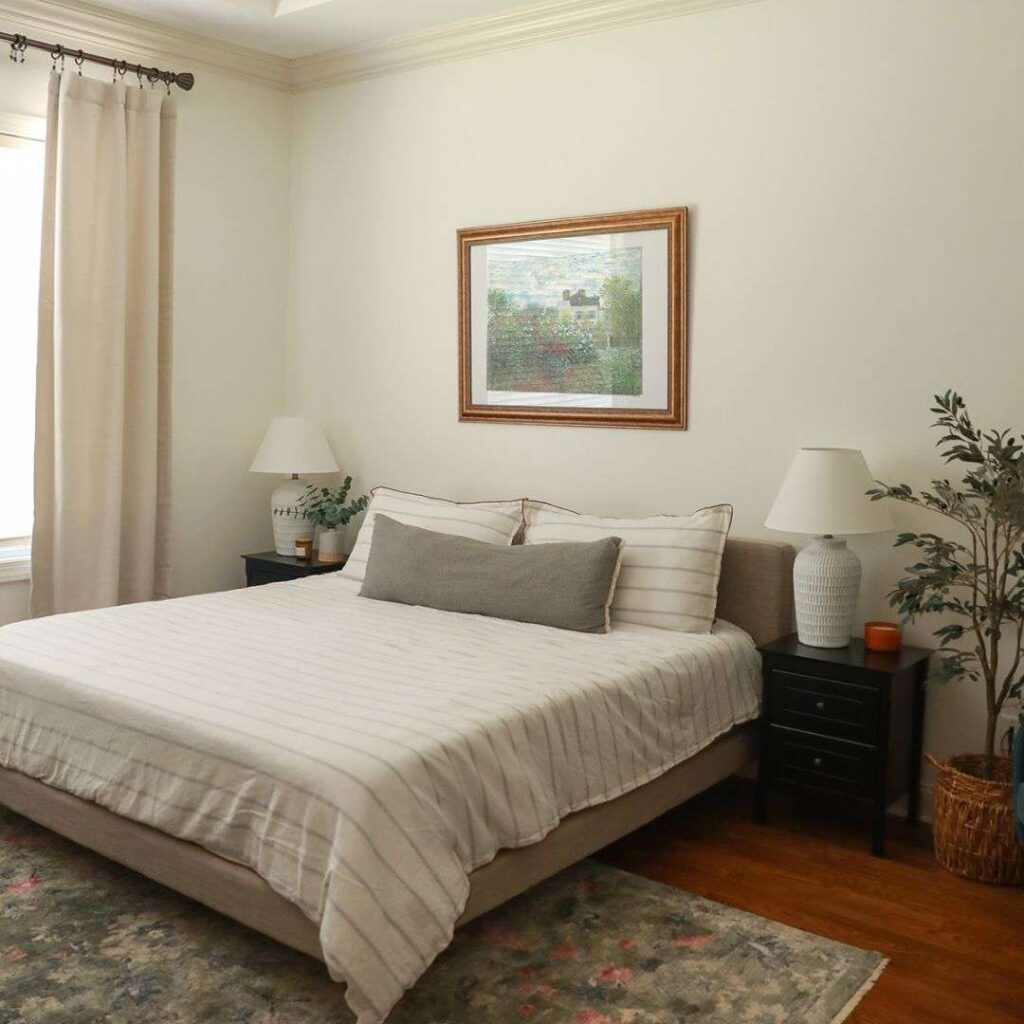
Shoji White: This color works beautifully in bedrooms if you want a soft, warm look without drifting into the starkness of pure white.
Its creamy, greige undertones keep the space cozy, and it plays well with almost any decor.
In natural light, the color feels light and grounded.
This subtle depth gives the bedroom a peaceful, lived-in feel while still being modern and polished.
Personal Recommendation: If I had to pick one, I would choose Alabaster Sherwin Williams.
If you are still debating between alabaster vs shoji white interior, Alabaster would hands down win this.
Because in a bedroom setting, it instantly softens the space and makes it feel calm, bright, and restful.
It also looks really great on interior doors, giving you a clean, warm finish.
Best Bathroom White Paint: Shoji or Alabaster?
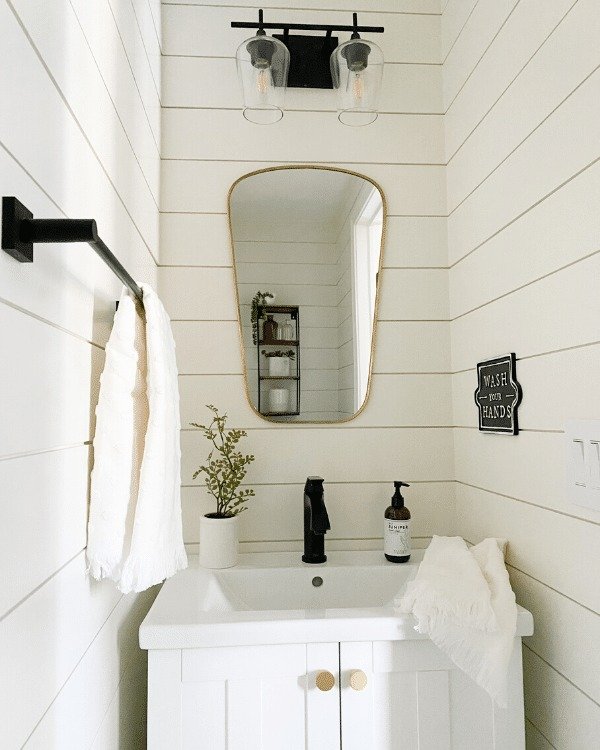
Alabaster: This color works surprisingly well in bathrooms, especially if you are aiming for a calm, spa-like feel.
Its warm undertones keep the space from looking cold, and the high light reflectance helps brighten rooms with limited natural light.
It pairs easily with crisp counters, mosaic floors, warm gray vanities, and neutral tile, pulling everything together without feeling stark.
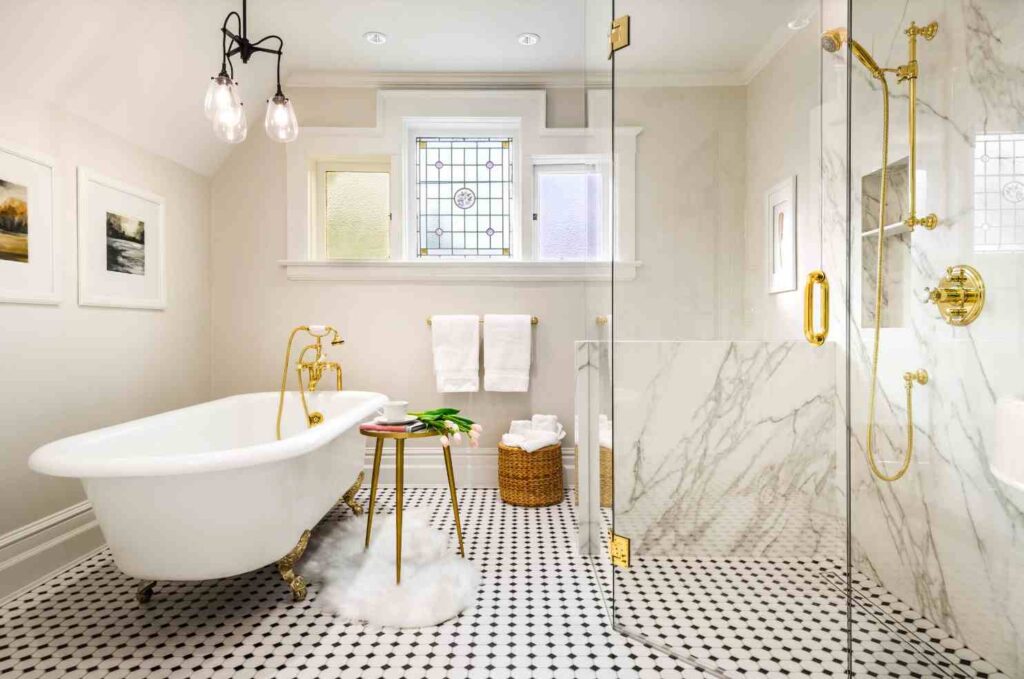
Shoji White: This color works nicely in bathrooms if you want something soft but still modern.
Light brings out its creamy glow, while the greige base keeps it from feeling stark.
It creates a clean, relaxed backdrop for fixtures and looks great with warm wood, greenery, or soft accents.
Even in an all-white setup, it adds a cozy, lived-in feel instead of that cold, clinical look.
Personal Recommendation: From the two of them, I would choose Alabaster Sherwin Williams for bathrooms and interiors.
In spaces that usually have low light and a lot of hard surfaces, its soft warmth makes the room feel calm.
It brightens the room without going too icy, and it plays well with tile, stone, and wood.
On the interior doors, it gives a very clean, subtle contrast that feels cohesive.
Best Front Door White: Shoji White or Alabaster?
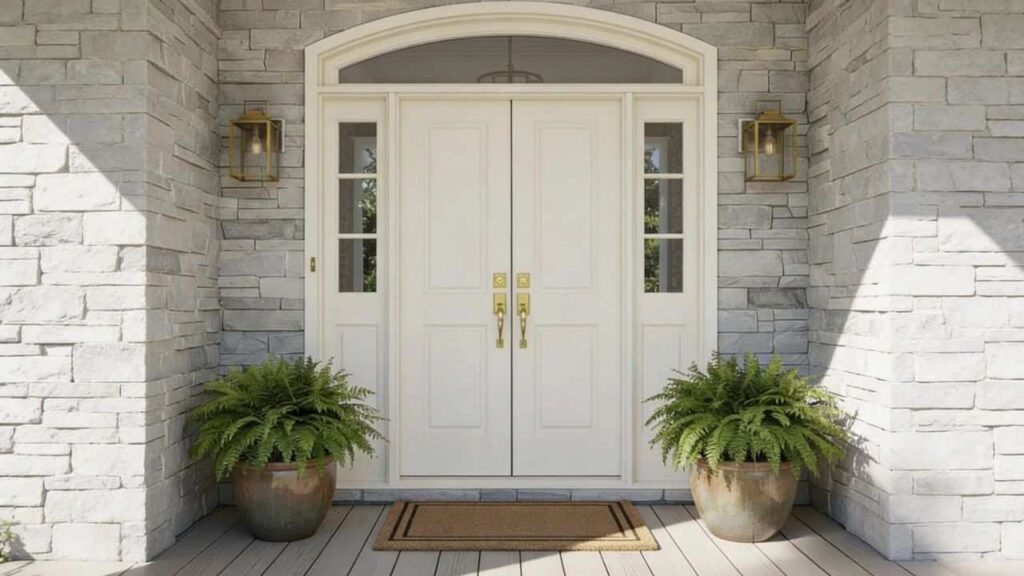
Alabaster: This color can work really well on a front door if you want something soft, warm, and welcoming without the sharpness of a cool white.
Its creamy undertones add depth, helping it sit nicely with brick, siding, and a range of architectural styles.
The high reflectance keeps the entry bright, but the warmth stops it from feeling harsh.
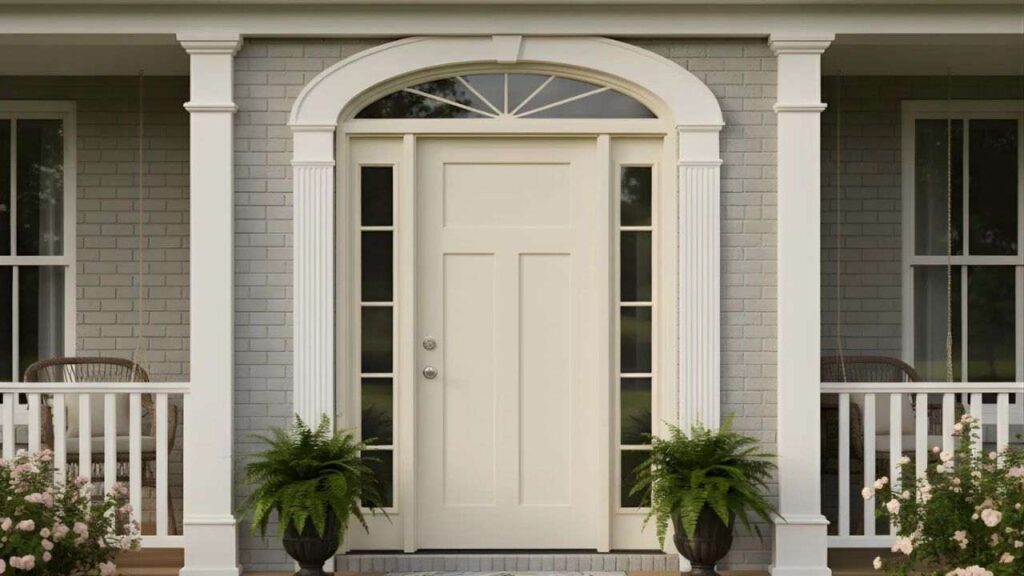
Shoji White: This color can be a lovely choice for a front door if you want something soft, warm, and welcoming without going stark.
Its creamy greige base adds just enough depth to stand out against lighter trim, while still pairing nicely with deeper neutrals for contrast.
It brings a relaxed, natural feel to both modern and classic exteriors.
Personal Recommendation: For a front door, I would go with Shoji White Sherwin Williams.
It has a softer, grounded feel that reads warm and inviting without tipping into yellow, and it holds its own better against changing outdoor light.
It pairs beautifully with darker hardware and trim, giving the entry a crisp, modern edge while still feeling natural and approachable.
Shoji White brings that subtle depth and quiet charm that makes a front door look intentionally styled.
Exterior Comparison: Alabaster vs Shoji White

Alabaster: For exteriors, this warm off-white gives a soft, welcoming look that never feels harsh.
Outdoors, it usually reads lighter and less yellow than it does inside, which makes it a strong fit for farmhouse, traditional, and even modern styles.
Its higher reflectance keeps the house bright without looking blinding, though you’ll still want to sample it since sunlight and shadows can shift its warmth.
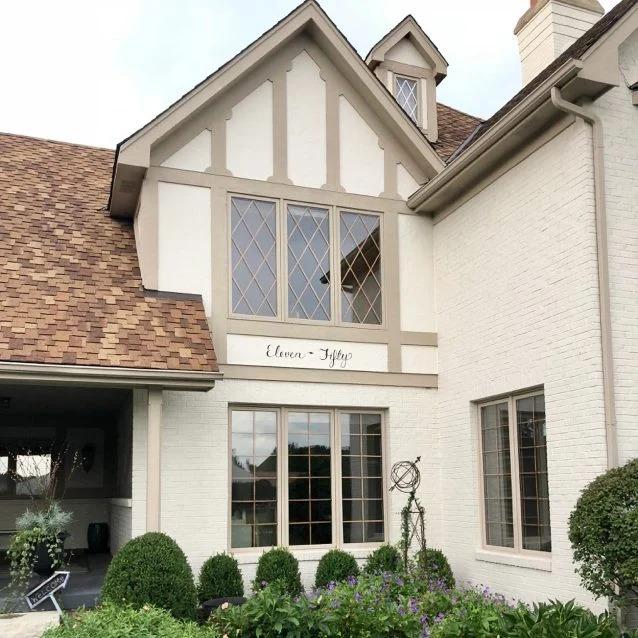
Shoji White: Shoji White is a creamy, neutral color that works on the interiors and the exteriors of the house.
For the exteriors, it creates that soft, farmhouse-style white that flatters natural materials like wood, brick, and stone.
In bright sunlight, its subtle gray undertones soften, giving you a clean, inviting look that pairs well with deeper accent colors.
Personal Recommendation: If you are torn between Alabaster vs Shoji White Exterior, I would personally pick Shoji White Sherwin Williams.
It delivers a softer, grounded look that works well with natural elements like wood, stone, etc.
It stays bright without turning stark, which helps give the home a very inviting, warm feel.
How Shoji White Compares to Similar Warm Whites
When you are hunting for the correct shade of white for your home, the choices can feel endless, and you feel stuck.
In this section, we will discuss and compare Shoji White to other white colors available in the market.
Trust me on this, we are going to cover a whole lineup of popular whites – running from neutral, to crisp, some lean warm to the others who stay cool.
As an interior designer, I have seen homeowners panic and choose the wrong shade of white in the specific surroundings, and how the undertones behave in certain lighting, etc.
So consider this as your mini-guide to picking the white that will actually behave on your wall.
Shoji White vs Alabaster vs Greek Villa
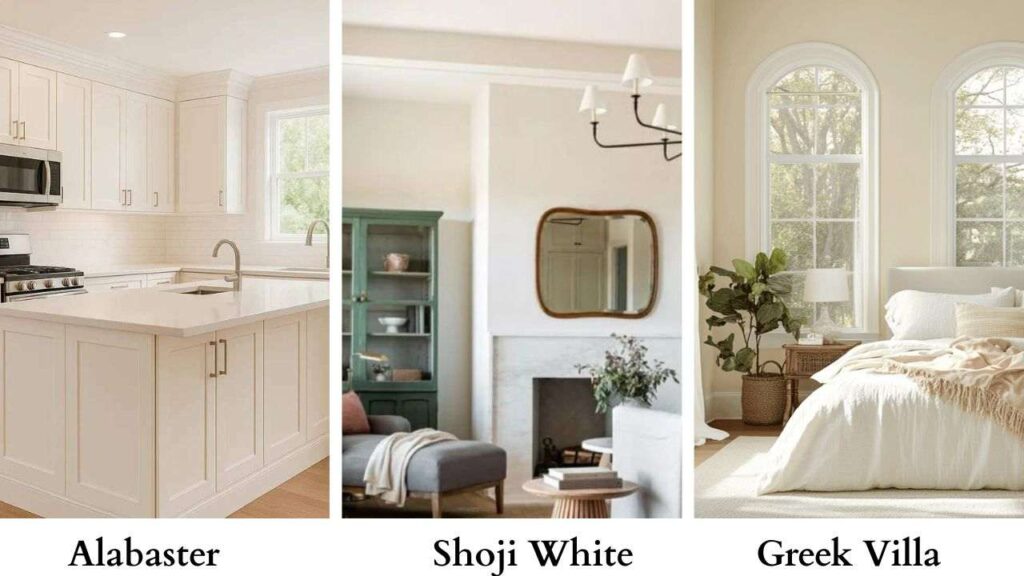
Shoji White, Alabaster, and Greek Villa all sit in the warm-white family, yet they behave very differently once placed on the walls.
Sherwin Williams Shoji White is the most grounded of them all, with its earthy green-yellow undertones that sometimes can also show a hint of beige.
Sherwin Williams Alabaster is brighter and creamier, giving you a warm white that doesn’t feel harsh.
Greek Villa sits in between with a soft, creamy warmth.
When I swatched Shoji White for my north-facing hallway, I could see the subtle, earthy undertones that gave the space a calm, muted look.
Alabaster and Greek Villa, on the other hand, look more lifted and bright in similar lighting.
Seeing them placed side-by-side made it clear to me how different these warm whites can feel.
Shoji White vs Greek Villa
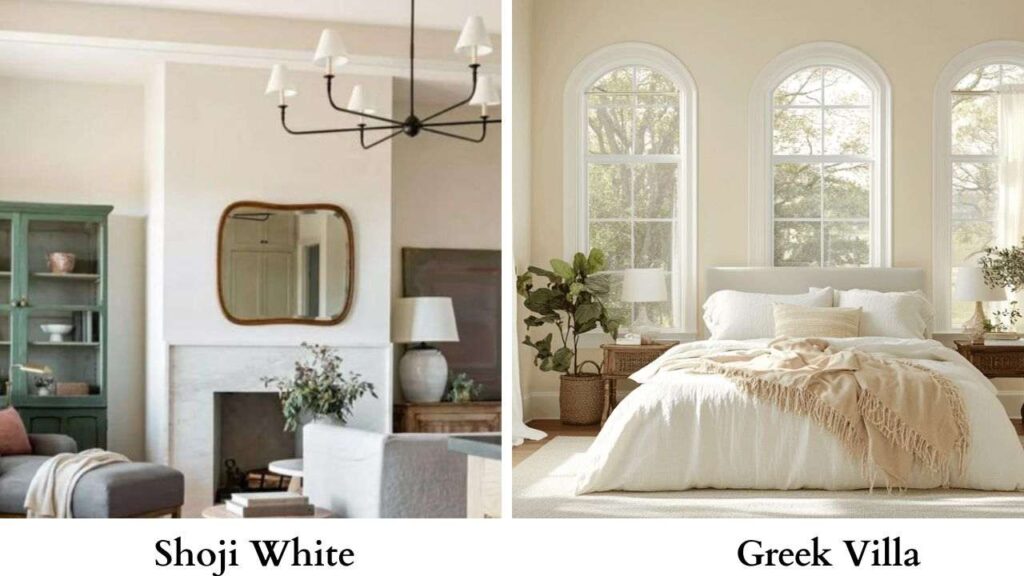
Now, if I compare only these two, Greek Villa gives you a bright, creamy warmth that stays soft without going into the stark territory.
Due to its LRV of 84, the room feels open and lifted, and its yellow-cream undertones make it a warm white.
Shoji White Sherwin Williams sits on the lower side of the brightness scale and brings out the earthy, greige tone with subtle hints of green.
Greek Villa looks lighter and more classic, while Shoji White feels cozier and more grounded.
Shoji White vs Accessible Beige
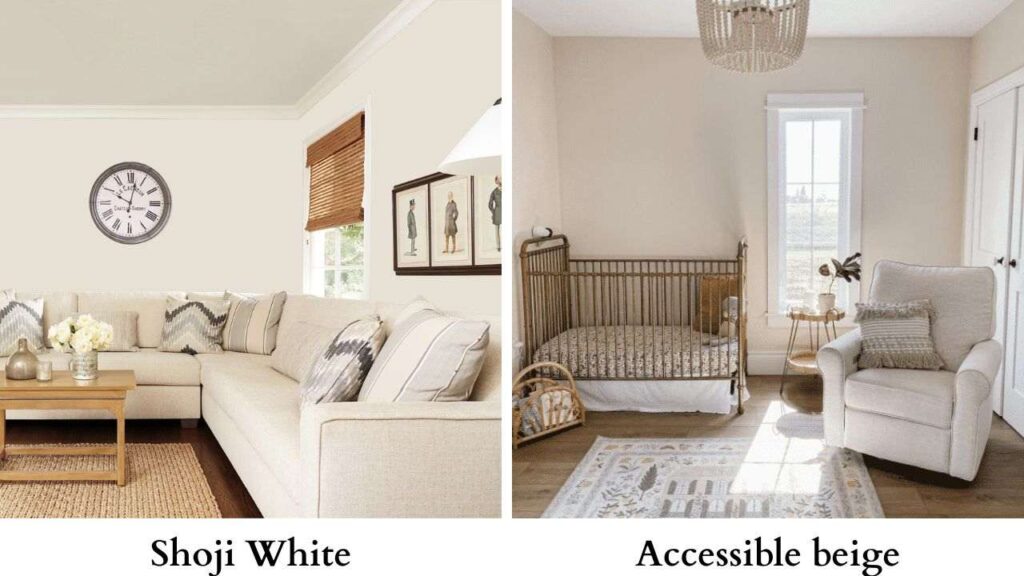
Shoji White brings a light, creamy warmth with subtle undertones that can shift slightly toward the green or beige side, depending on the source of light.
This can feel bright without looking too harsh. Accessible Beige, on the other hand, sits deeper on the scale due to its greige ratio.
It looks more neutral and grounded, often cooler than Shoji White, and can appear a bit tan in dimly lit rooms.
Painted side-by-side, Shoji White looks more airy while Accessible Beige offers more weight and stability.
Shoji White vs White Duck
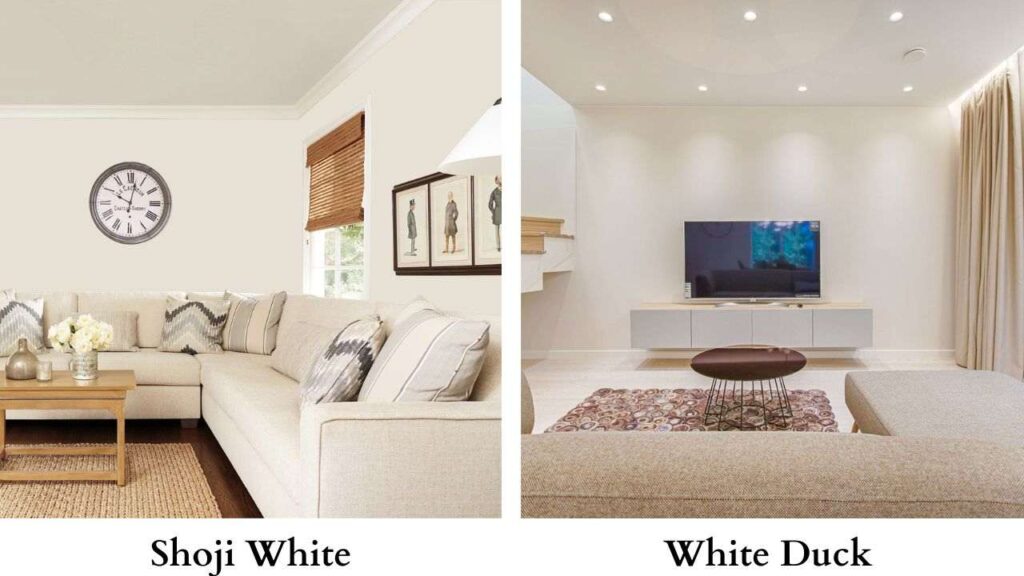
Shoji White and White Duck are twins on the LRV spectrum (74 for both), but they do not behave the same once they hit the wall.
Sherwin Williams Shoji White carries soft yellow-greige undertones that give it a clearer, sunnier look.
White Duck leans toward a creamier, muted look, thanks to its gray undertone.
This gives the overall finish a gentler beige look. Side-by-side, Shoji White looks warmer while White Duck looks steadier.
Shoji White vs Oyster White
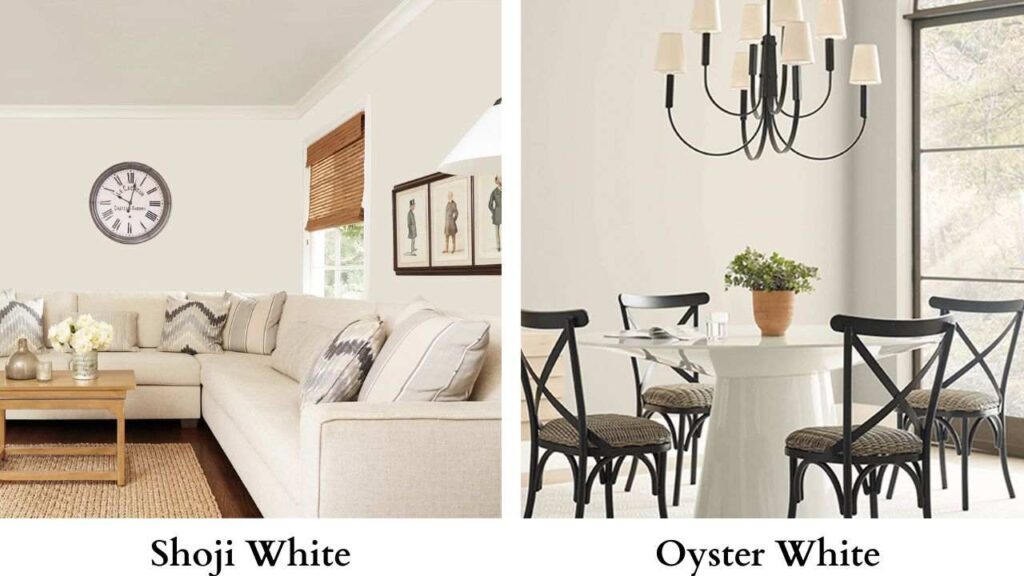
Sherwin Williams Shoji White and Oyster White are like fraternal twins on the LRV (74 for Shoji, 72 for Oyster), but due to their different undertones, they behave differently on walls.
Oyster White pulls in a gentle green-gray cast that gives it a cooler, slightly muted personality.
Shoji White moves the other way with warm beige and taupe notes, which makes it feel softer, friendlier, and easier to pair.
Even with similar LRVs, Oyster reads cooler and moodier, while Shoji leans warm and welcoming.
| Color | LRV | Undertones | Overall Look | How It Compares to Shoji White |
| Shoji White (SW 7042) | 74 | Greige, beige, subtle green/yellow | Warm, grounded, creamy off-white | — Base reference shade — |
| Alabaster (SW 7008) | 82 | Soft creamy yellow | Brighter, cleaner white | Brighter & creamier than Shoji White; Shoji feels more muted and earthy |
| Greek Villa (SW 7551) | 84 | Warm creamy yellow | Light, airy, classic warm white | Lighter & more uplifting than Shoji; Shoji looks cozier and more grounded |
| Accessible Beige (SW 7036) | 58 | Greige (gray + beige) | Deeper, more neutral, slightly cool | Darker & more stable; Shoji appears lighter, softer, and more airy |
| White Duck (SW 7010) | 74 | Creamy beige with gray | Muted, soft, subtle cream | Both share LRV 74, but White Duck is creamier, Shoji is warmer + sunnier |
| Oyster White (SW 7637) | 72 | Green-gray | Cooler, muted, soft neutral | Cooler & moodier; Shoji is warmer, friendlier, and easier to pair |
Choosing the Right White: Alabaster vs Shoji White Guide
Selecting the correct type of white from alabaster vs shoji white can be a daunting task if you don’t know what colors work in which parts of the house or what type of house.
Choosing white as the base for your home can create a versatile, timeless, and airy foundation.
It makes spaces feel brighter by reflecting light, and any kind of home style can be used for this base.
Let us quickly go through where we can use alabaster vs shoji white.
I will also put in places where not to use these colors.
Where Alabaster Works Best & Where It Doesn’t
Alabaster Sherwin Williams is a smart choice when you want a warm, creamy white without drifting into the yellow overload.
It is a solid pick for farmhouse-style, traditional, and transitional homes, especially in places with good, natural lighting.
It pairs well with warm woods, darker accent colors, and brass details.
It also looks good on cabinets, wall trims, and walls when you want a gentle, welcoming look.
I would recommend choosing Alabaster when you want warmth without the heaviness, when you have classic and cozy decor in your room, and if your room has enough natural light to make the color feel fresh.
I would not recommend Alabaster if your home has a lot of cool-toned colors, stark white trims, and South-facing or West-facing rooms.
These conditions highlight the yellow undertones a lot, making them look very dark.
Where Shoji White Works Best & Where It Doesn’t
Shoji White Sherwin Williams is a great pick when you want a warm, grounded off-white that doesn’t feel bright or stark.
I would recommend South-facing or West-facing rooms, as the beige-greige base shines in such kind of rooms, creating a soft glow.
It also works well in open layouts with natural elements like wood, stone, etc.
This makes the room look cohesive without overwhelming the eyes.
I would recommend using it when you want a neutral white that adds a quiet warmth without being too heavy on the beige.
It is flexible enough for walls, trims, kitchen cabinets, and even exteriors.
Just ensure the surroundings don’t clash much with its greige undertone.
I would skip Shoji White if you prefer a true, crisp white, or if you have cool gray floors and existing cream tones. In such scenarios, the warm white can look dingy and a dirty yellow.
Also skip this color when you want a bright, white trim, as these two shades can clash while making the room look harsher.
Conclusion
Now that you have seen how both Sherwin Williams Alabaster and Shoji White behave differently with rooms and lighting, the difference becomes really clear.
When I first compared them, I didn’t expect such shifts in the undertones to change a room’s mood so quickly.
Testing them in a few spots in each room made everything clear to me.
Shoji White brings a grounded, creamy warmth that feels soft without being too yellow.
Alabaster stays brighter & cleaner, giving the rooms a calmer feel.
Put them in spaces that have natural elements, and their personalities show up even more clearly.
If you’re still torn between the two, think about what your space is missing.
If the room needs a touch of softness and quiet warmth, Shoji White will settle in beautifully.
If what you want is brightness, clarity, and a warm white that stays steady throughout the day, Alabaster is the easier fit.
FAQs on Alabaster vs Shoji White
What is the difference between Sherwin Williams Alabaster and Shoji?
The key difference is depth and complexity – Alabaster is a creamy white, while Shoji leans toward a muted, warm greige.
Will shoji white look yellow?
Because of these factors, it can shift its tones a bit depending on the lighting and surrounding colors. It is a chameleon color offering warmth without being too traditional, but it surely has a yellow base to it.
Does Alabaster look good with shoji white?
I would recommend using them if you want a seamless, calming effect on the room. Skip the combination if you want a strong-wall trim contrast, as these two together won’t give much definition. I would highly suggest using samples before painting them.
Does Sherwin Williams Alabaster look yellow?
I would always suggest sampling the color in spaces with specific lighting to understand if it fits the space or not.