

I’ve seen these two paint colors at paint swatches many times. Both are warm, off-white neutrals from Sherwin Williams that are into the space where they’re not quite white but not beige either.
When someone asks me about Aesthetic White vs Shoji White, these two look almost identical but on walls they are different.
They both share the same Light Reflectance Value which is why they both look soft and approachable, and they both work beautifully in almost any architectural style.
But the way they shift in different lighting conditions and existing finishes can make or break your room. Because going with the wrong choice can make your space feel off.
So, I’m breaking down what makes Aesthetic White Vs Shoji White the best, the LRV numbers, the undertones, how lighting turns them into different colors, and which rooms benefit from each one.
We’re also comparing them to other popular whites because you’re considering other options too.
Here are my other blogs that you can also read:
- Classic Gray Vs Pale Oak
- Pale Oak Vs Revere Pawte
- Swiss Coffee Vs Shoji White
- Shoji White Vs White Dove
- Egret White Vs Alabaster
Color Summary of Aesthetic White (SW 7035)
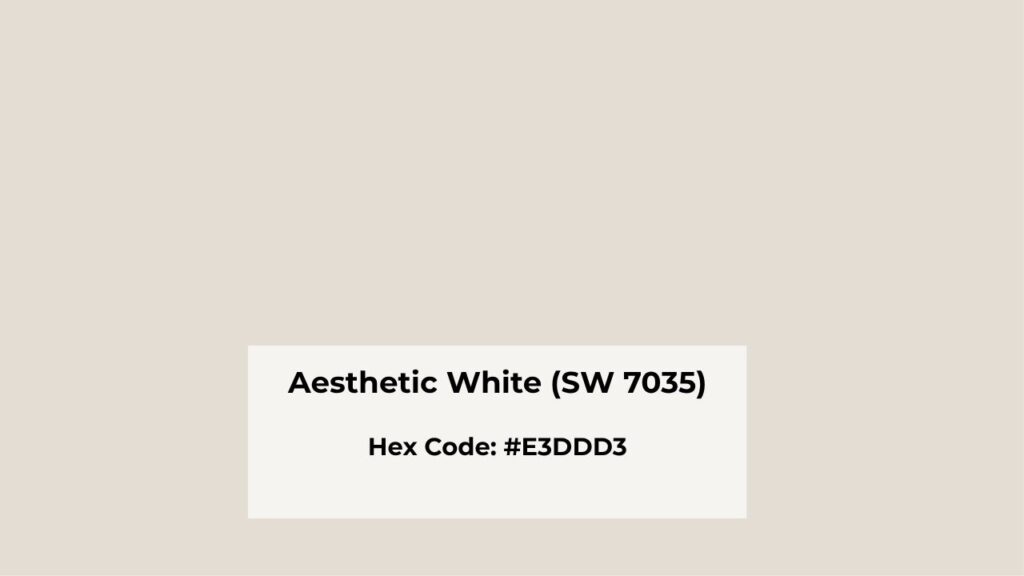
Aesthetic White is the one color who gets along with everyone but doesn’t commit to anything.
It’s a soft, warm off-white with greige undertones by Sherwin Williams without making it look muddy.
It has an LRV of 73, it reflects a good amount of light but stays grounded so that it doesn’t feel flat or cold.
What I love about this color is how it is right in the spot between white and light neutral. It is in a muted, understated zone that works when you want color on your walls.
The greige undertones keep it from looking yellow or pink, which is different because the cream-based whites can feel outdated.
I’ve used Aesthetic White in many homes, mostly in open-concept living rooms where it needs to flow into kitchens and hallways without creating harsh feelings.
It’s a soft, muted, neutral-leaning color that handles mixed finishes well.
Homeowners and designers consider this for living rooms, bedrooms, and bathrooms because it creates a cozy but clean backdrop.
It doesn’t compete with your furniture or art, but it also doesn’t disappear like some whites do.
On exteriors, it looks light and pairs beautifully with warm stone, brick, or dark siding as an accent.
But know that in north-facing rooms with limited natural light, the gray undertones can get pronounced and the space feels cool.
Color Summary of Shoji White (SW 7042)
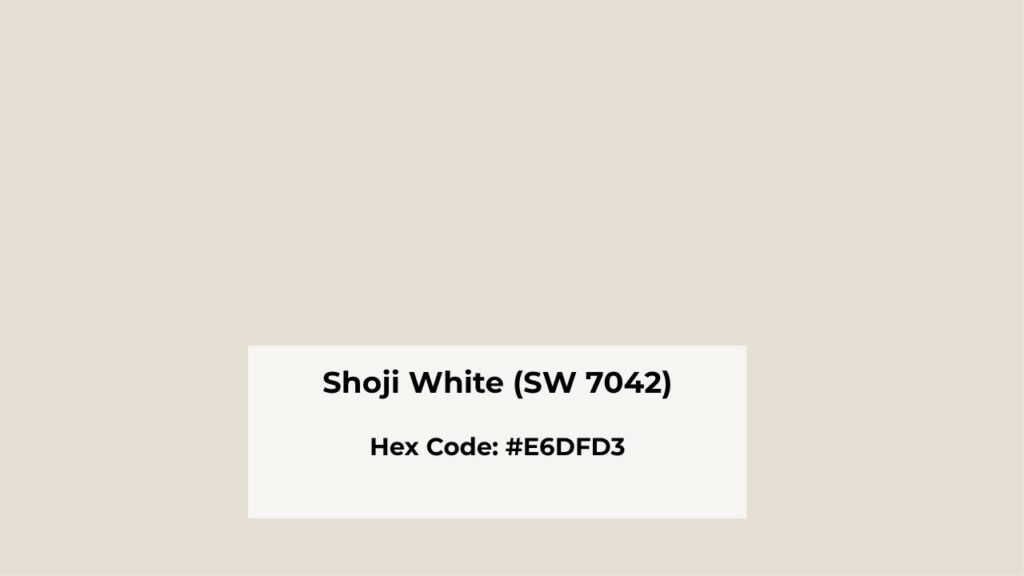
Shoji White is warm and full. It’s a warm white, but the subtle gray and greige undertones come with a visible creamy quality that Aesthetic White doesn’t have.
The LRV of 74 makes it a bit bright, but you won’t be able to see the difference in LRV.
This shade has a personality. It can shift between soft white and light greige depending on what the light is doing in your space.
Morning light in an east-facing bedroom is soft, warm, inviting. Afternoons in a south-facing living room can almost glow with warmth.
The north-facing room with minimal windows is warm.
Shoji White works well in traditional and farmhouse interiors where you want warmth without going cream or beige.
I’ve spec’d it for kitchen cabinets more because it doesn’t have the harsh white cabinet look without the yellowish undertones.
It’s also great on trim and molding when you want the trim to feel integrated rather than contrasting.
Designers love this for bedrooms because the creamy warmth makes spaces feel restful.
Pair it with warm wood furniture, linen bedding, and some soft lighting and it creates a space that feels calm.
Aesthetic White Vs Shoji White: Key Differences
These two colors look almost the same on a paint swatch, and on a sample card. But the differences are real and they matter when you paint them on your walls.
The LRV is almost identical, but the undertones are completely different, the lighting will make or break your choice, and what you style around them. Let’s get specific.
LRV
Light Reflectance Value is the number that matters. Aesthetic White is at an LRV of 73, while Shoji White comes in at 74.
The single point difference can be nothing while you are looking at it but it is visible. You will not see a brightness difference between these two.
Both come in the off-white range, they reflect light but maintain depth so that they don’t look like true whites.
This is why both of them work as main wall colors rather than trim colors. They’ve substance to hold a room without disappearing, but reflectance to keep spaces open and airy.
Where LRV helps you is knowing that both are high to work in medium to well-lit rooms without feeling heavy. But the LRV tells you nothing about warmth or undertones, which is why people get confused.
Undertones Comparison
Aesthetic White has greige undertones, a blend of gray and beige. It’s what I call a “bridge color” because it can be both warm and cool without looking wrong.
The beige keeps it from being cold, the gray keeps it from being creamy. It has minimal yellow presence and there is no pink or purple.
Shoji White has cream and beige undertones with a subtle gray and it has warmth too. There’s a softness to Shoji White that looks less neutral and more warm.
It doesn’t have strong yellow undertones, but there’s cream in there that can appear yellow-toned in some lighting.
Put them side by side on the same wall and Aesthetic White will look gray and more neutral.
Shoji White will look creamy and warm. Put Aesthetic White next to a cool white and it looks warm.
Lighting Impact
Lighting will change these colors. In the North-facing rooms, Aesthetic White will become more into its gray undertones and can feel flat or slightly cool.
Shoji White has its warmth better but loses some of the creamy glow and looks more as a neutral greige.
If you’re working with a dark north-facing room, both of these may disappoint you if you need something with warmth or depth.
South-facing rooms with natural light, Aesthetic White looks beautiful here and stays balanced but in bright southern exposures it can wash out and look like a true white.
Shoji White in south-facing rooms gets WARM. The cream undertone intensifies and the room feels cozy and sun-filled.
East and west-facing rooms shift throughout the day. Morning light brings different tones than afternoon light. Aesthetic White stays consistent. Shoji White will feel warm in the evening and neutral in morning light.
And in artificial lighting, the warm LED bulbs or incandescent lighting will make Shoji White look creamy. Aesthetic White stays composed.
Cool-toned LED lighting can make Aesthetic White feel gray and make Shoji White lose its warmth.
Style and Best Uses
The way you style around these colors changes how they look in a space. Trim color matters, pairing Aesthetic White walls with Pure White trim is where it creates a clean contrast without it feeling harsh.
Shoji White walls can handle Pure White trim too, or you can go with Alabaster or Creamy if you want the trim to feel integrated and soft.
Furniture and finishes shift the perception. Aesthetic White with cool-toned gray furniture and black accents creates a modern and bright look.
Shoji White with warm wood furniture and brass hardware looks traditional and inviting.
For ceilings, both work beautifully, but I use a bright white on ceilings. Accent colors look different with each, Aesthetic White pairs well with blues, blue-greens, and cool grays.
Shoji White loves warm pinks, terracotta, warm grays, and earthy greens.
| Feature | Aesthetic White (SW 7035) | Shoji White (SW 7042) |
| LRV | 73 | 74 |
| Undertones | Greige (gray + beige, neutral) | Cream + beige (warmer) |
| Warmth Level | Muted, soft warmth | Noticeable warmth |
| Best Lighting | Average natural light, south-facing | South/west-facing, warm light |
| Best Trim Pairing | Pure White, Extra White | Pure White, Alabaster, Creamy |
| Style Fit | Modern, transitional, mixed finishes | Traditional, farmhouse, warm modern |
| Reads As | Light greige off-white | Warm creamy white |
Aesthetic White Vs Shoji White: Room-By-Room Use
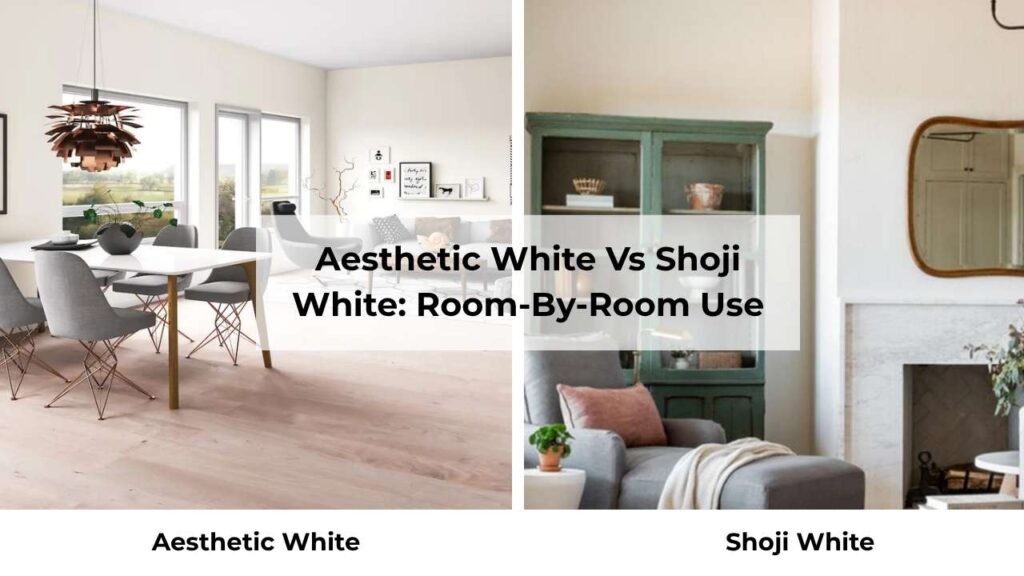
So you’ve understood all the things that should be understood before committing to one.
Let me walk you through how these look in real spaces because it needs to be understood in your home.
Every room has different lighting, different purposes, and different finishes in place that’ll either make these colors look nice or flat. So, let’s get into it and see the different rooms and layouts.
Living Room
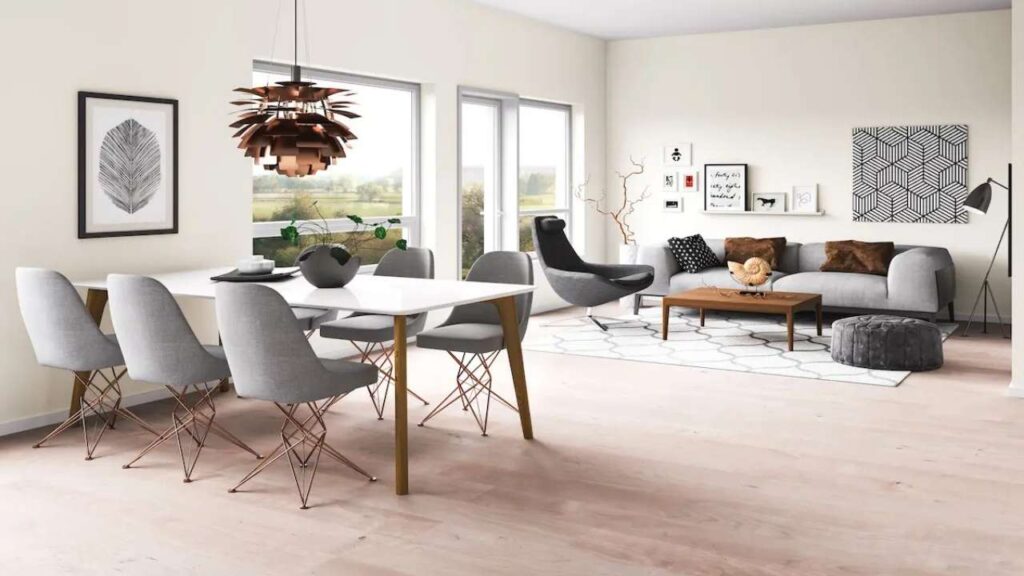
Aesthetic White in a living room is safe if you’ve mixed finishes. If you’ve some cool gray tile around the fireplace but warm hardwood floors or your furniture is a mix of modern and traditional.
Aesthetic White doesn’t force you to commit to warm or cool, it looks calm, neutral backdrop that lets your furniture and decor shine.
In open-concept spaces where the living room flows into the kitchen and dining area, Aesthetic White creates continuity.
Your living room feels clean but not cold, warm but not creamy. It’s great if you’re using bold accent colors or art on the walls because it won’t compete or create weird color reflections.
Shoji White in a living room works when you want the walls to contribute to the warmth.
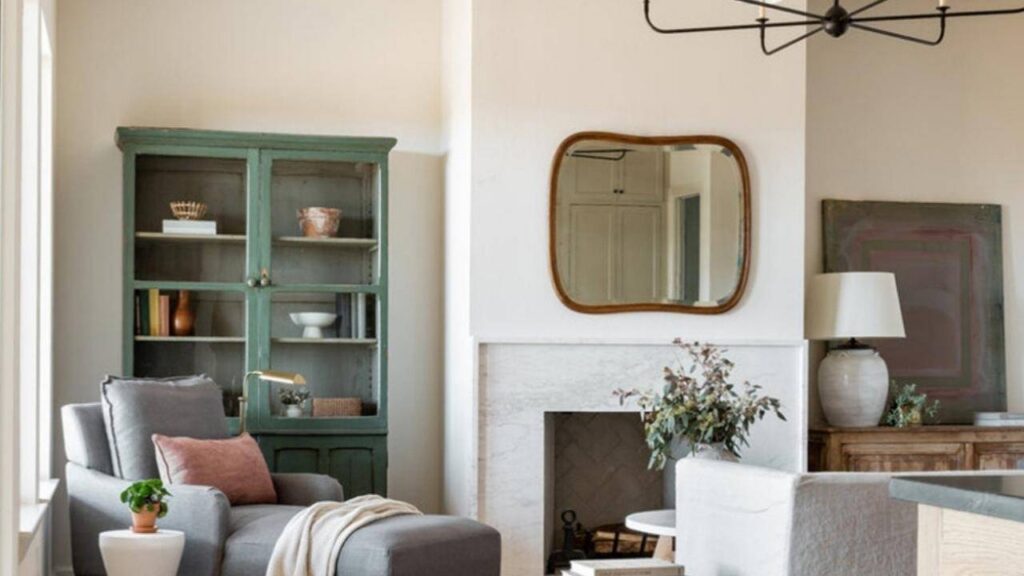
If your living room has natural wood like wood beams, wood furniture, wood floors then Shoji White enhances the warmth instead of looking cool.
The impact it makes is a soft, enveloping feeling. Your living room won’t feel as bright or modern as it would with Aesthetic White, but it’ll feel comfortable and lived-in.
Bedroom
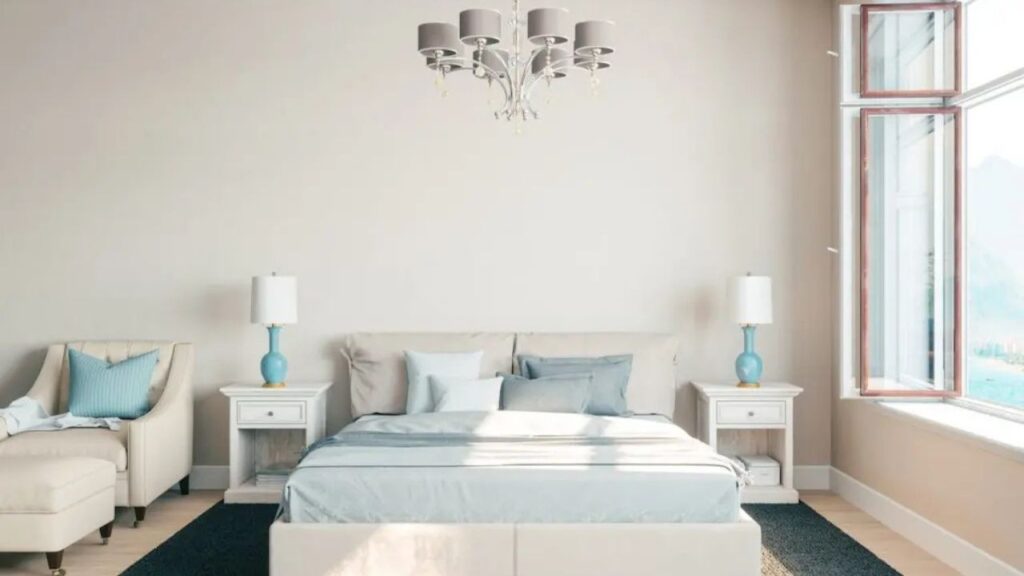
Aesthetic White in a bedroom is a calming feeling, everything feels fresh, clean, uncluttered.
If you’re someone who needs a serene space to decompress, Aesthetic White won’t disappoint and it’s muted that it fades into the background.
I’ve used this in primary bedrooms where clients wanted a neutral palette with cool-toned linens and minimal decor.
The room feels restful and uncomplicated and balanced. It’s nice in bedrooms with natural light where you don’t want the walls to add extra warmth.
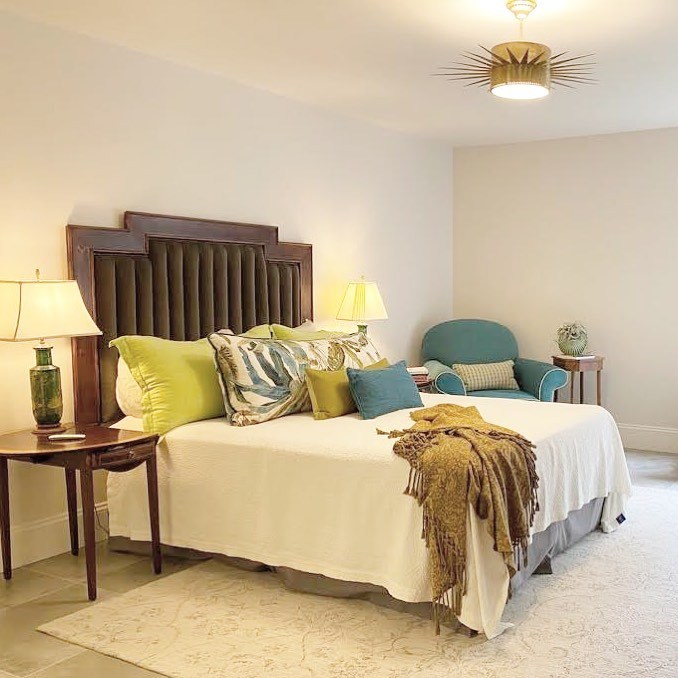
Shoji White in a bedroom brings the warmth that makes you want to stay in bed. If you’re layering in warm wood furniture, linen or cream bedding, and soft ambient lighting, Shoji White amplifies it.
The room feels cocoon-like and comforting, in the evening when artificial lighting brings the creamy quality.
Your bedroom becomes a retreat rather than a place to sleep. It’s warm, soft, and feels cozy.
It is great for bedrooms that don’t get natural light because it won’t feel as flat as Aesthetic White.
Bathroom
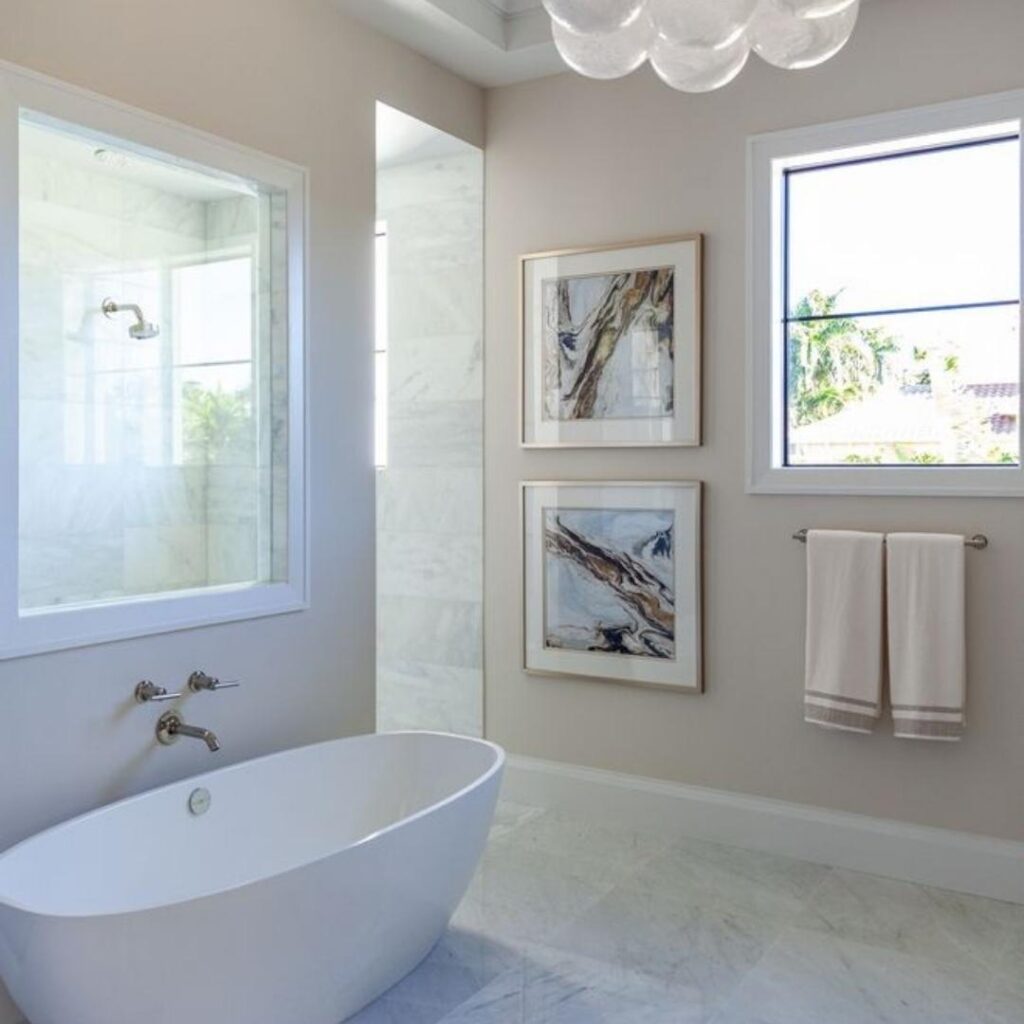
Aesthetic White in a bathroom keeps things feeling spa-like and modern. If you’ve white subway tile, marble, or any cool-toned stone, Aesthetic White works with the finishes.
It’s clean without being harsh, and it doesn’t add warmth where you do not want it.
The bathroom feels polished and fresh. It’s the color you want if your goal is clean modern bathroom energy.
It doesn’t compete with colorful towels or decor if you like switching out seasonally.
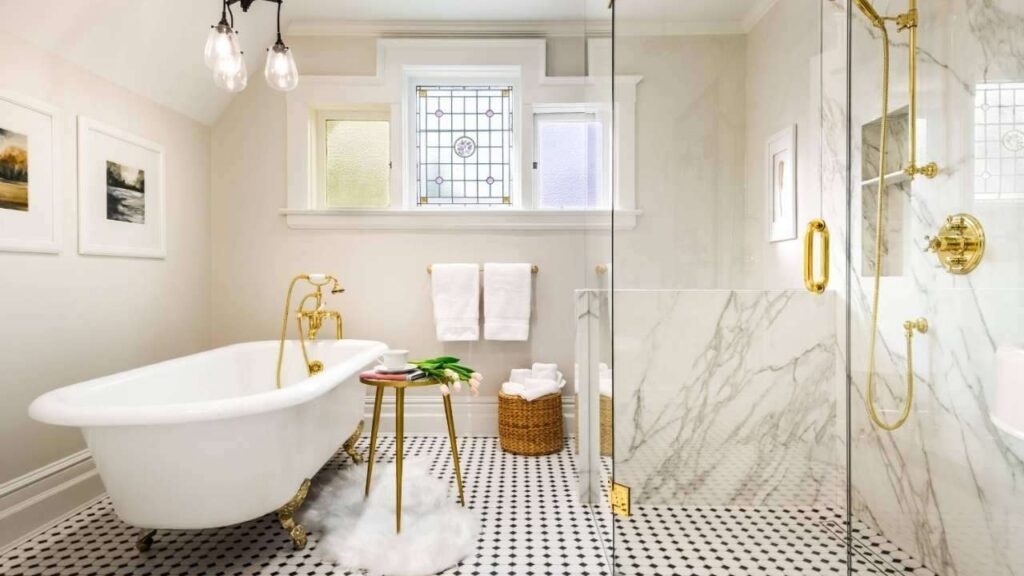
Shoji White in a bathroom softens the hard tile and porcelain. Bathrooms can feel cold with the reflective surfaces, and Shoji White adds warmth to counteract that without turning the space beige.
If you’ve warm-toned wood vanities or brass or gold fixtures, Shoji White ties it all together.
The bathroom feels less cold and more spa-like in a cozy way rather than a minimalist way. It’s nice in powder baths or guest baths where you want people to feel comfortable.
Kitchen
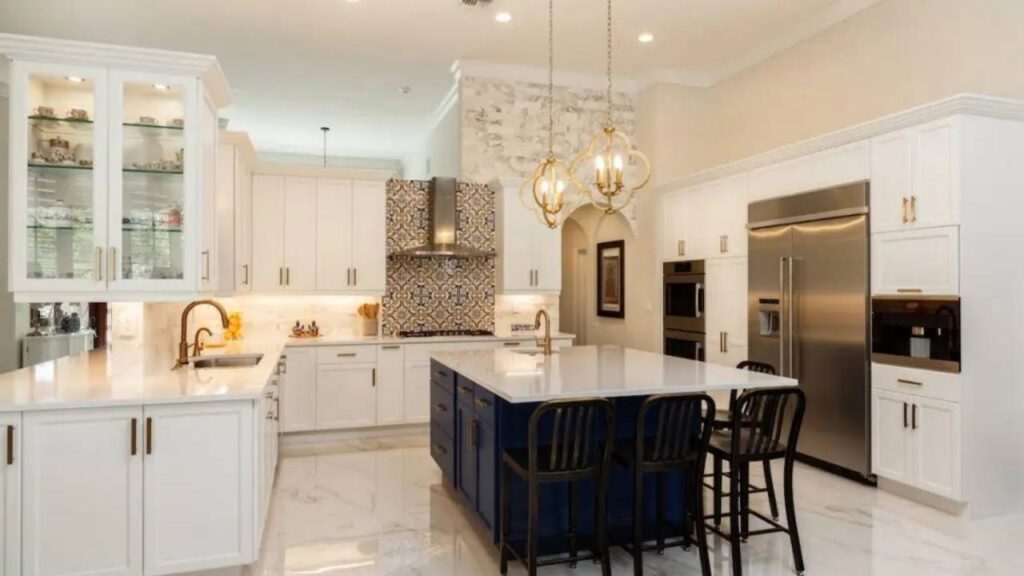
Aesthetic White in a kitchen is fantastic for cabinets. It’s soft so it doesn’t feel harsh next to stainless appliances or butcher block countertops, but it’s white cabinets.
On walls, it works well in kitchens with competing finishes because it doesn’t add another strong color element.
Your kitchen feels current and fresh but not trendy in a way that’ll feel outdated. Aesthetic White cabinets look elevated and intentional.
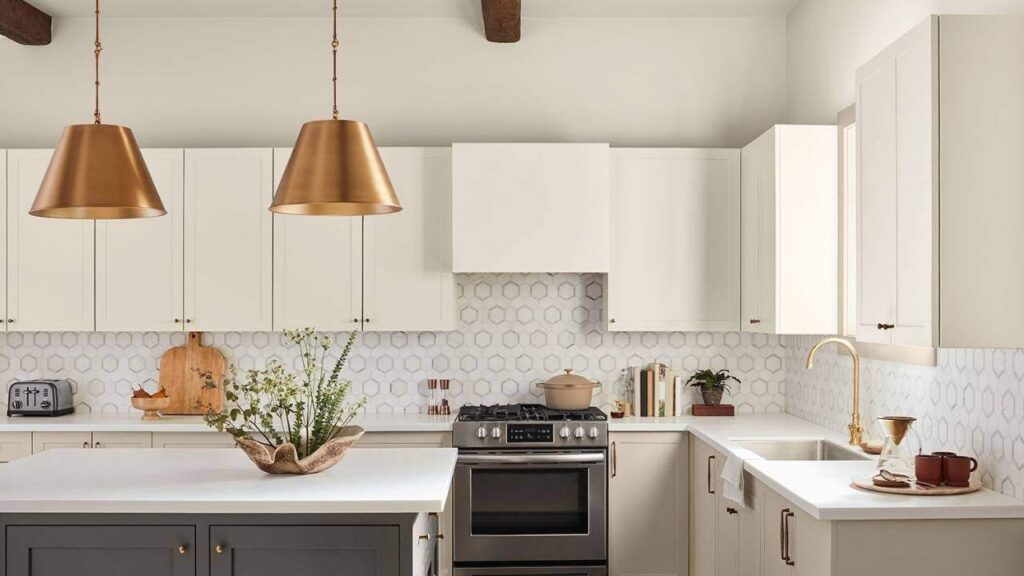
Shoji White in a kitchen brings warmth that’s nice if you’re going for a farmhouse, traditional, or warm transitional style.
On cabinets, it’s the off-white but white look that pairs with warm countertops like butcher block or warm quartz.
On walls, it makes the kitchen feel less utilitarian and like a gathering space.
The kitchen feels lived-in and welcoming. Shoji White cabinets with warm brass hardware looks nice.
Aesthetic White Vs Shoji White Vs Other Colors
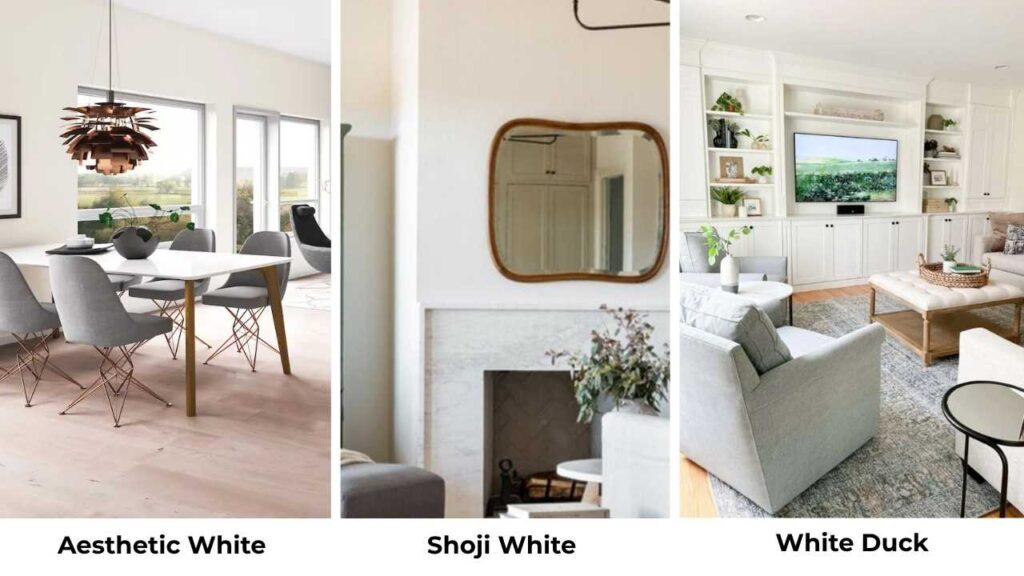
So let’s talk about how these two are against the other popular whites and neutrals that are also on your list.
Some of these comparisons will make you look at the right colors, and some will make you realize you should be looking at something completely different. Either way, it’s useful.
Aesthetic White Vs White Duck
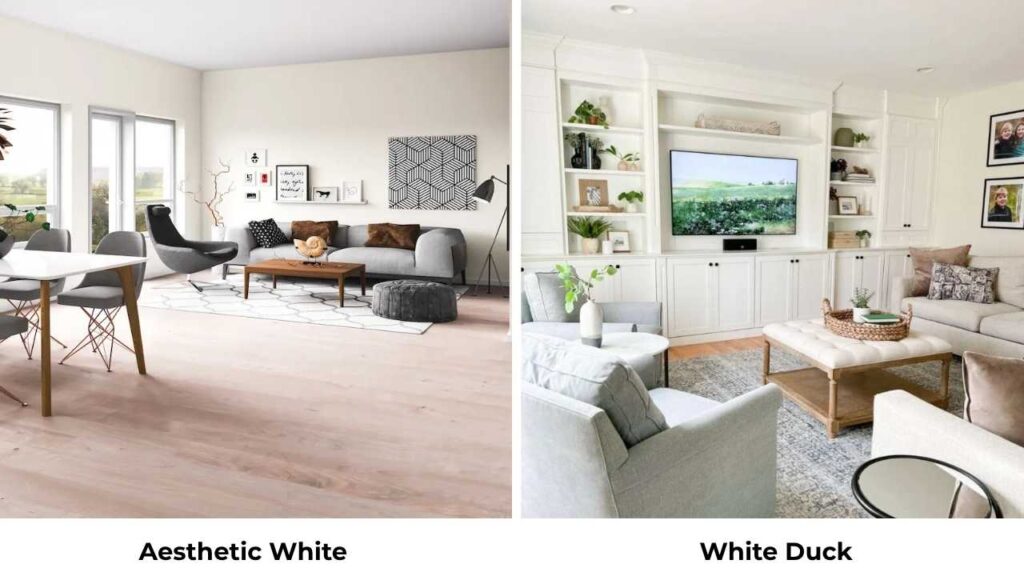
White Duck SW 7010 is warm and creamier than Aesthetic White, it has yellow-based warmth where Aesthetic White stays neutral-greige.
If you put them side by side, Aesthetic White will look gray and muted, White Duck will look like it has color and cream.
White Duck works better if you want a warm off-white that looks white.
Aesthetic White works better if you need something neutral that plays well with both warm and cool finishes.
Aesthetic White Vs Accessible Beige
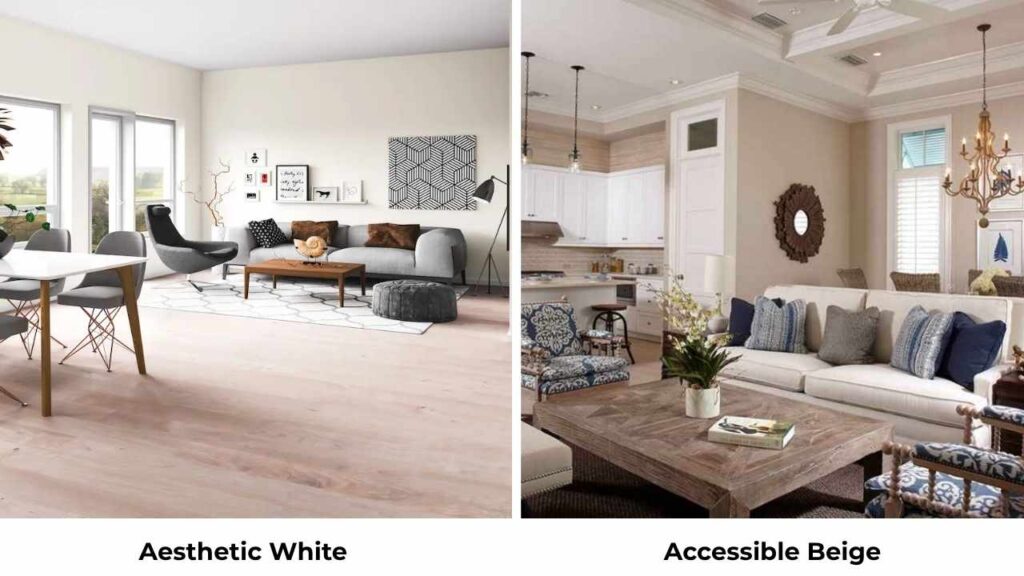
Accessible Beige SW 7036 is dark and looks like a true greige with beige presence. It has color depth where Aesthetic White stays in the off-white zone.
These two can be paired together like Accessible Beige on an accent wall or lower cabinets with Aesthetic White on the main walls or uppers.
Aesthetic White Vs Alabaster
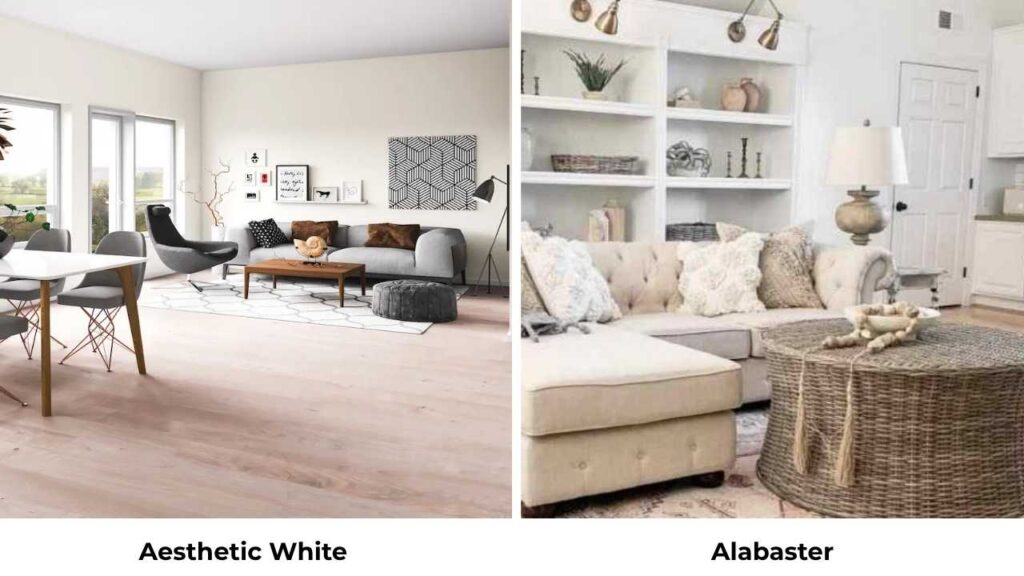
Alabaster SW 7008 is Sherwin Williams’ most popular white and it’s light and warmer than Aesthetic White.
Alabaster has soft yellow and gray undertones but looks more like a true warm white. Aesthetic White has visible color and is more in the greige family.
Alabaster works as a bright warm white for trim or walls where you want maximum light.
\Aesthetic White works when you want something with substance and a greige quality.
Shoji White Vs White Duck
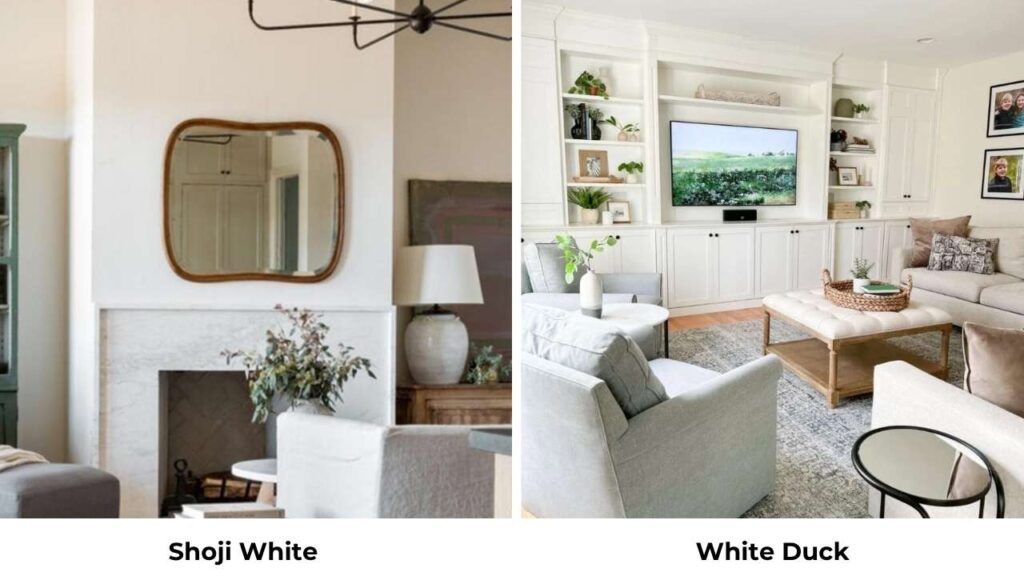
White Duck and Shoji White are similar in warmth level, but White Duck is more yellow-cream where Shoji White keeps the greige component.
Shoji White looks slightly bright and clean. If you’re trying to avoid any yellow undertones, go with Shoji White.
If you want more traditional cream warmth, White Duck has that.
Shoji White Vs Alabaster
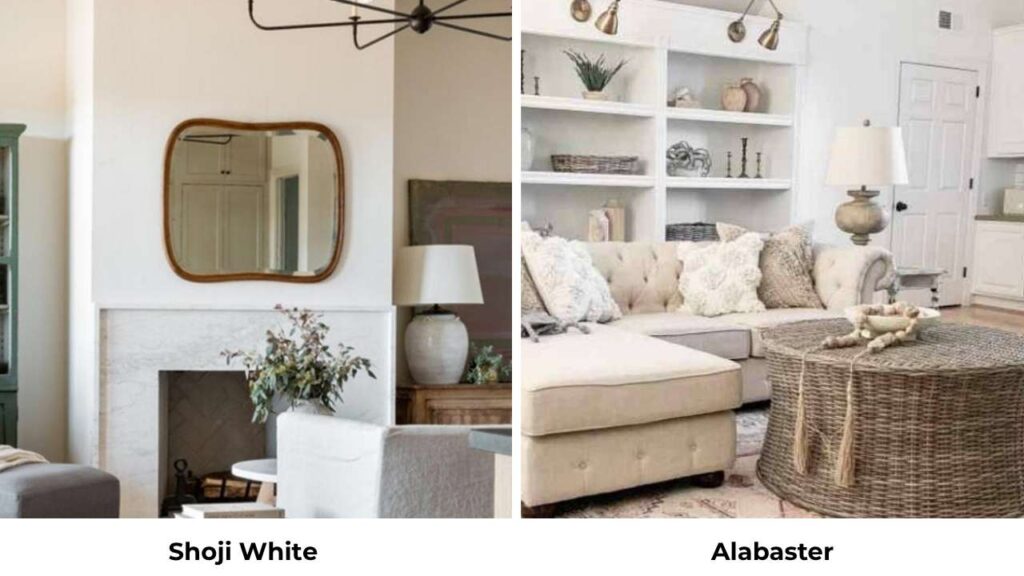
Alabaster is light and bright and looks as a warm white with a hint of yellow. Shoji White is dark and looks more as a warm off-white with cream and greige.
Alabaster works better as trim or in spaces where you want a true white feel. Shoji White works better as a main wall color when you want warmth but not brightness.
Shoji White Vs Swiss Coffee
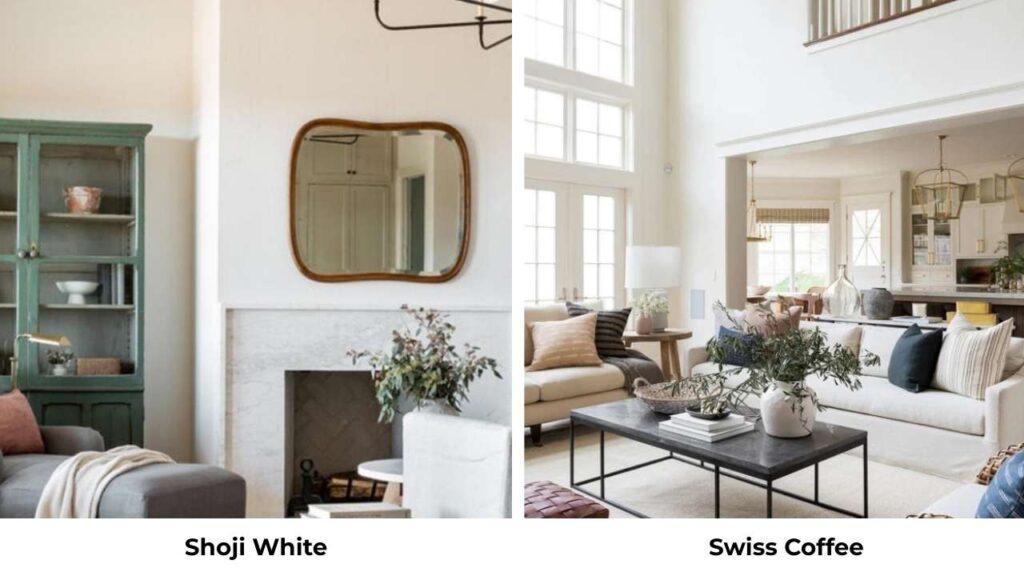
Swiss Coffee SW 7012 is warm, creamy, and has more yellow than Shoji White. It’s a true cream color where Shoji White is a warm white.
If you want something that looks cream rather than white, Swiss Coffee is the best. If you want something that looks white but with warmth, go with Shoji White.
Shoji White Vs Oyster White
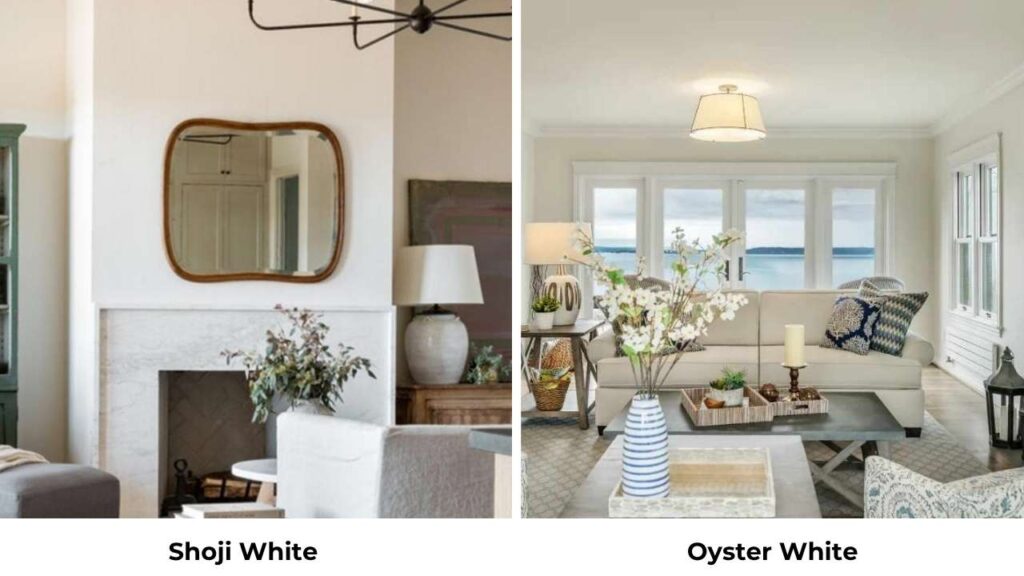
Oyster White SW 7637 has pink and purple undertones that Shoji White doesn’t have.
Oyster White can look different depending on lighting and looks complex. Shoji White is straightforward, warm, creamy, and predictable.
Shoji White Vs Pure White
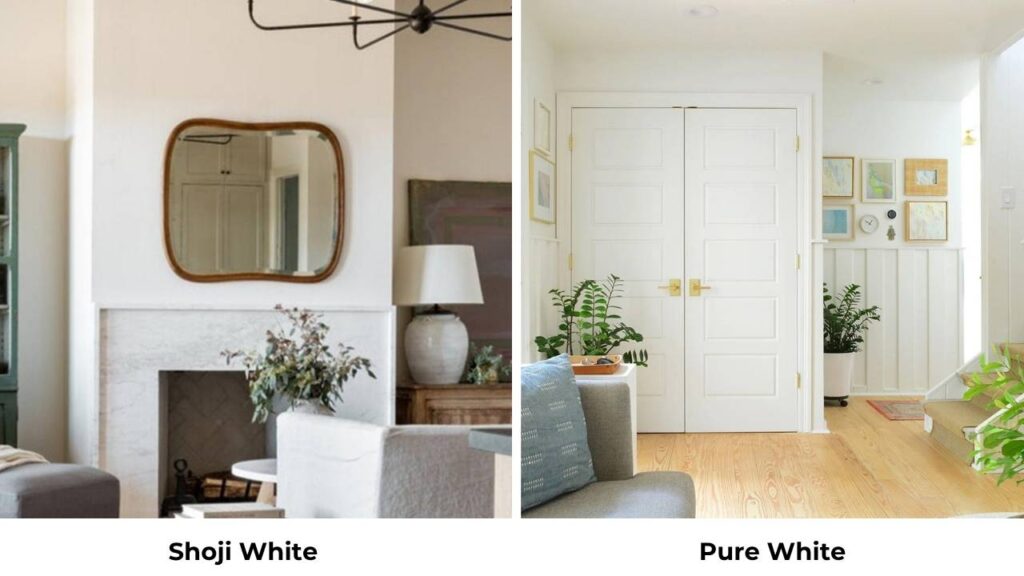
Pure White SW 7005 is a true bright white with minimal undertones, it’s clean and fresh. Shoji White has visible warmth and color by comparison.
Pure White is what you’d use for trim with Shoji White walls, not as a substitute for Shoji White. They serve different purposes.
| Comparison | Key Difference | When to Choose First Color | When to Choose Second Color |
| Aesthetic White vs White Duck | Aesthetic = grayer/neutral, White Duck = creamier | You need neutral that works with mixed finishes | You want warmer off-white with cream tones |
| Aesthetic White vs Accessible Beige | Accessible Beige much darker, more beige | You want light off-white | You want actual greige with color depth |
| Aesthetic White vs Alabaster | Alabaster lighter and warmer | You want greige off-white substance | You want bright warm white |
| Shoji White vs White Duck | Similar warmth, Shoji cleaner, White Duck more yellow | You want to avoid yellow undertones | You want traditional cream warmth |
| Shoji White vs Alabaster | Alabaster brighter, reads as white | You want warm off-white with depth | You want true warm white |
| Shoji White vs Swiss Coffee | Swiss Coffee much creamier | You want white with warmth | You want cream color |
| Shoji White vs Pure White | Pure White bright true white | You want warmth and softness | You want crisp bright white (trim) |
What Colors Go With Shoji White?
Shoji White goes nice with other colors because that warm undertone creates a cozy base without being yellow or cream. Here’s what works:
- Pure White (SW 7005) – for trim when you want clean contrast
- Alabaster (SW 7008) – for trim when you want soft, integrated contrast
- Accessible Beige (SW 7036) – as an accent wall or for low cabinets
- Agreeable Gray (SW 7029) – for a soft greige accent that shares the warmth
- Naval (SW 6244) – rich navy blue that looks stunning with Shoji White’s warmth
- Evergreen Fog (SW 9130) – soft green-gray that enhances the warmth
- Urbane Bronze (SW 7048) – for dramatic dark contrast with doors or cabinetry
- Warm terracotta and rust tones – like clay pots and earthy accents
- Soft blush and warm pinks – creates a soft, romantic palette
- Warm wood tones – oak, walnut, natural wood all look beautiful
- Brass and gold fixtures – the warm metals enhance Shoji White’s cream undertones
What Colors Go With Aesthetic White?
Aesthetic White’s neutral greige quality means it can handle both warm and cool pairings, which gives you flexibility:
- Pure White (SW 7005) – the go-to trim color for clean contrast
- Extra White (SW 7006) – if you want even bright, fresh trim
- Accessible Beige (SW 7036) – as a warm accent in the same space
- Repose Gray (SW 7015) – soft true gray that pairs beautifully
- Cityscape (SW 7067) – charcoal gray for modern dramatic contrast
- Sea Salt (SW 6204) – soft blue-green that looks great with Aesthetic White
- Comfort Gray (SW 6205) – another soft blue-gray option
- Tricorn Black (SW 6258) – for bold black accents and trim
- Cool blues and blue-greens – the gray undertone in Aesthetic White supports these
- Black, white, and gray color schemes – Aesthetic White works perfectly in monochromatic palettes
- Mixed metals – chrome, brushed nickel, black, brass
Conclusion
Aesthetic White is a neutral gray off-white that refuses to commit to warm or cool, and honestly, that’s its superpower.
It works in mixed-finish spaces, it doesn’t go against your furniture choices, and it stays consistent across different lighting.
It’s the color you choose when you want a soft white which is more interesting than Pure White.
Shoji White is warm, creamy, and intentional about creating a cozy vibe.
It has more personality than Aesthetic White and it wants you to pair it with warm woods, soft textiles, and traditional or farmhouse styling.
It’ll shift in different lighting, but the warmth holds up in darker spaces than Aesthetic White’s gray undertones do.
If you’ve mixed finishes, modern or transitional style, and you need something that goes well with everything, then go with Aesthetic White.
If you’ve warm wood, traditional or farmhouse style, and you want the walls to have a cozy factor, then go with Shoji White.
Test samples in your space before you commit because no one can predict how these will look with your specific lighting and finishes.
FAQs On Aesthetic White Vs Shoji White
Shoji White has cream and beige undertones with subtle gray. It’s a warm white that is into that greige family but with visible warmth than something like Aesthetic White. It doesn’t have strong yellow undertones, but there’s cream that looks soft and warm.
The main difference is in the undertones and warmth level. Aesthetic White has greige undertones and looks neutral. Shoji White has cream and beige undertones and looks visibly warm. Both are almost identical, but Aesthetic White looks gray and more muted than Shoji White looks creamy and soft.
Don’t use Aesthetic White in dark north-facing rooms where you need warmth, the gray undertones can make the space feel flat and dull. Also do not consider it if you’re going with a traditional or farmhouse style where you want warm, cozy walls.
No, Aesthetic White does not look yellow. It has greige undertones with minimal yellow presence. If anything, it can look gray in some lighting, especially in north-facing rooms. If you’re seeing yellow in Aesthetic White, it’s a reflection of the finishes in the room.
Aesthetic White Vs Shoji White: Here's How to Decide Between Warm Whites