

I’ve tested shoji white vs white dove on many walls.
Both are safe warm whites not harsh or bright.
Picking the right white paint feels like it should be simple but then you’re standing in the paint aisle having a crisis over whether you want “creamy” or “soft” white.
Here’s the thing about Shoji White (SW 7042) and White Dove (OC-17), they are both labeled as warm, versatile whites.
The undertones are different, the brightness levels aren’t close, and they shift throughout the day.
I’ve seen Shoji White look like a cozy greige in a north-facing bedroom.
White Dove stays consistent, which sounds great until you realize you wanted the warmth to show up.
These two get compared in modern homes, farmhouse renovations and in traditional spaces.
Designers and homeowners keep putting them side-by-side because they’re close in theory but apart in reality.
So, I’m breaking down what Shoji White Vs White Dove looks like, how their undertones and LRV affect rooms, which spaces they work best in, and how they compare to other whites you’re considering.
Here are my other blog posts that you can also read:
- Alabaster Vs Shoji White
- City Loft Vs Alabaster
- Tricorn Black Vs Iron Ore
- Eider White Vs Alabaster
- Ballet White Vs White Dove
What You Need To Know About Shoji White (SW 7042)
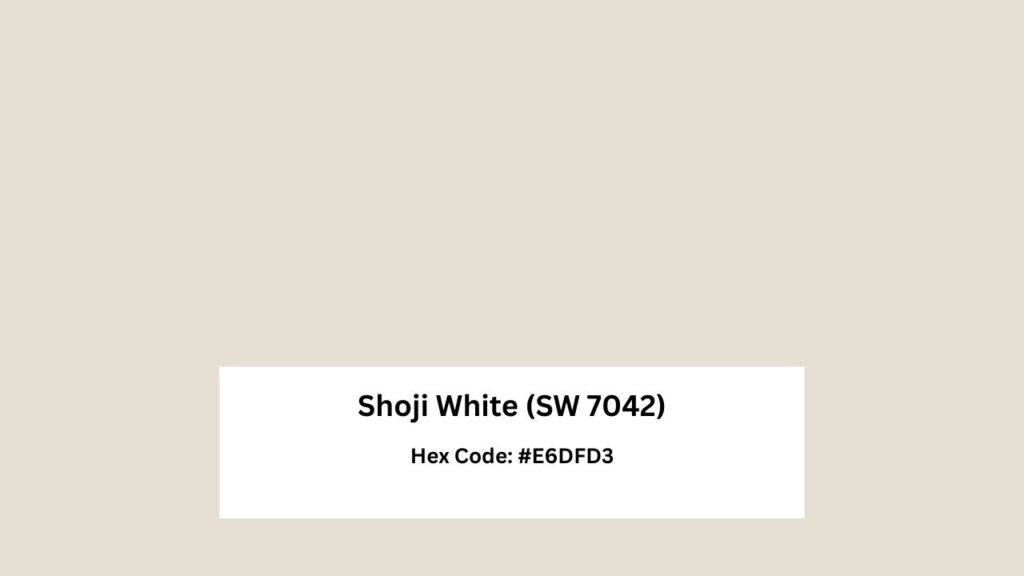
Shoji White is Sherwin Williams’ for who wants warmth without going into yellow territory.
It’s an off-white with a beige and greige undertone which means it has the modern neutrality but is warm.
The LRV is around 74. It has depth.
This color shifts depending on your lighting.
I painted a client’s hallway in Shoji White, and in the morning with natural light, it looked like a soft white with a hint of warmth.
Shoji White works well in living rooms where you want a cozy, lived-in vibe.
I’ve used it in bedrooms too, when paired with warm wood furniture.
The beige undertone picks up the wood tones and the whole room feels cohesive.
For exteriors, Shoji White is solid if your home has warm brick, stone, or wood elements.
It won’t go against the materials.
But if you have cool gray stone or modern black windows, it looks creamy next to them.
Bathrooms are tricky with Shoji White.
The beige undertone can be dull in a small bathroom without great lighting.
I’ve seen it work well in bathrooms with natural light and white fixtures, but in a windowless powder room it looks dingy.
The best thing about Shoji White is it works in modern farmhouse spaces, transitional homes, and organic modern designs when you’re layering in natural textures.
What You Need To Know About White Dove (OC-17)
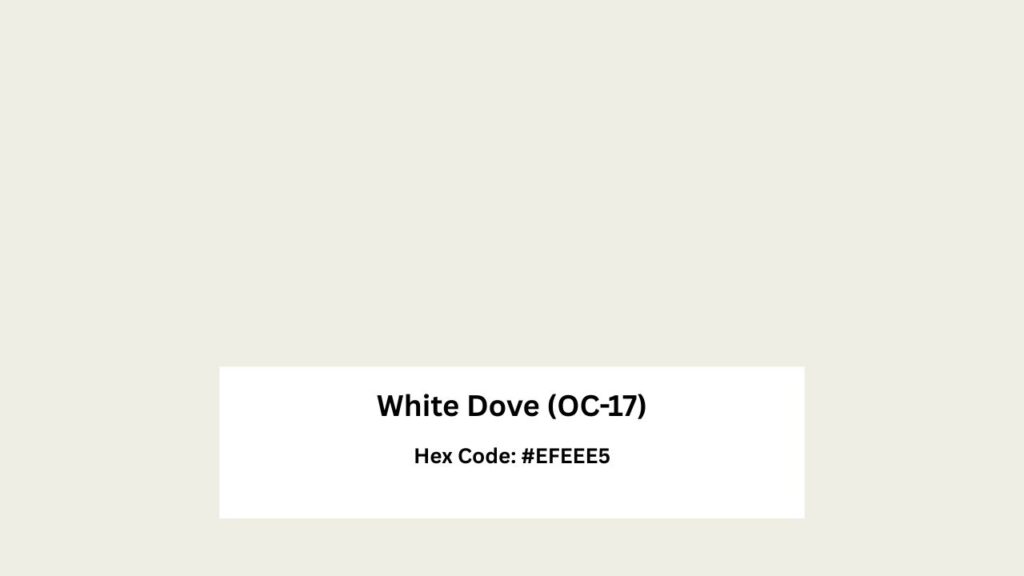
White Dove is Benjamin Moore’s popular white.
It’s a perfect soft warm-neutral that doesn’t commit. The undertone is a subtle gray with a touch of warmth.
It’s hard to describe until you see it next to other whites.
The LRV is around 85, which is brighter than Shoji White.
This makes White Dove feel more open and airy in spaces.
When I use White Dove, I know the room is going to feel light.
It reflects natural and artificial light.
In natural light, White Dove maintains a clean, fresh look. It doesn’t shift as much as Shoji White.
Under artificial lighting, it stays consistent.
This consistency is what makes it so popular.
I’ve used White Dove in living rooms when clients want bright and clean but not sterile.
It works. It pairs well with gray furniture, greige walls in adjacent rooms, and with any accent color you throw at it.
Bedrooms with White Dove feel calm and open.
If you have a small bedroom or one without great natural light, White Dove is going to perform better than Shoji White because of the high LRV.
I use White Dove in bathrooms more than any other white.
It stays clean-looking in small spaces.
The subtle gray undertone works perfectly with white subway tile, marble, and chrome fixtures.
In kitchens, White Dove is my default for cabinets.
I’ve painted many kitchen cabinets White dove.
It’s bright to make the kitchen feel fresh but warm so that it doesn’t feel cold or clinical.
It works with butcher block countertops, quartz, marble.
For exteriors, White Dove is versatile.
It works with both warm and cool color palettes because of that balanced undertone.
I’ve seen it on modern homes with black trim, traditional homes with warm brick, craftsman-style homes with wood details. It adapts.
Shoji White Vs White Dove: Key Differences
Let me be clear about this, these two whites are NOT interchangeable even though they’re both labeled as warm-neutral whites.
The differences are big enough that choosing the wrong one will make you feel regret.
LRV
Light Reflectance Value is how much light a color reflects on a scale of 0 to 100.
Shoji White has an LRV of 74. White Dove has an LRV of 85.
The 11-point difference is big. White Dove is going to make your space feel bright and open.
Shoji White has depth and feels cozy, but it also absorbs light.
If you have a dark room or a space with limited natural light, that LRV difference matters.
White Dove will help bounce light around.
Shoji White will make the space feel small and intimate.
Undertones Comparison
This is where they really split. Shoji White has beige and greige undertones.
It’s warm but in a modern, muted way.
The greige keeps it from looking too traditional or too cream-colored.
White Dove has a soft gray undertone with a hint of warmth.
It’s neutral. The gray keeps it clean and fresh, but the warmth prevents it from feeling cold.
When you put them side-by-side, Shoji White looks more beige.
White Dove looks bright and cool.
Lighting Impact
Lighting changes everything with these two colors and they behave differently.
Shoji White is moody. Morning light makes it look soft and white.
Afternoon sun brings out the beige and greige.
Evening artificial light makes it more beige, sometimes taupe-ish depending on your bulb color temperature.
In north-facing rooms, Shoji White can look flat or gray.
In south-facing rooms, the warmth shines.
White Dove is stable. It stays consistent across different lighting conditions.
Natural light makes it look fresh and clean. Artificial light may warm it up, but it doesn’t transform.
Style and Best Uses
Shoji White works best when you want warmth and coziness.
It’s perfect for whole-home wall color in modern farmhouse or transitional spaces.
Pair it with warm wood furniture, greige accent walls, or soft beige tones.
For trim, you’ll want something bright like Pure White (SW 7005) or White Dove works as trim with Shoji White walls.
White Dove is the best trim color. It also works well on cabinetry, especially kitchen cabinets.
When you want a bright, clean wall color, White Dove delivers.
It pairs well with any wall color like grays, greiges, beiges, soft blues and greens.
| Feature | Shoji White SW 7042 | White Dove OC-17 |
| LRV | 74 | 85 |
| Undertone | Beige + greige | Soft gray + warmth |
| Warmth Level | Noticeably warm | Soft warm-neutral |
| Best Use | Wall color | Trim, cabinetry, walls |
| Lighting Behavior | Shifts significantly | Stays consistent |
| Style Fit | Modern farmhouse, transitional, organic modern | Traditional, transitional, modern classic |
| Room Feel | Cozy, intimate, enveloping | Clean, bright, airy |
How Do Shoji White and White Dove Look in Different Rooms?

Paint color looks completely different depending on the room.
Natural light, room size, ceiling height, adjacent colors, it changes how these whites perform.
Let me walk you through what I’ve seen in spaces.
Living Room
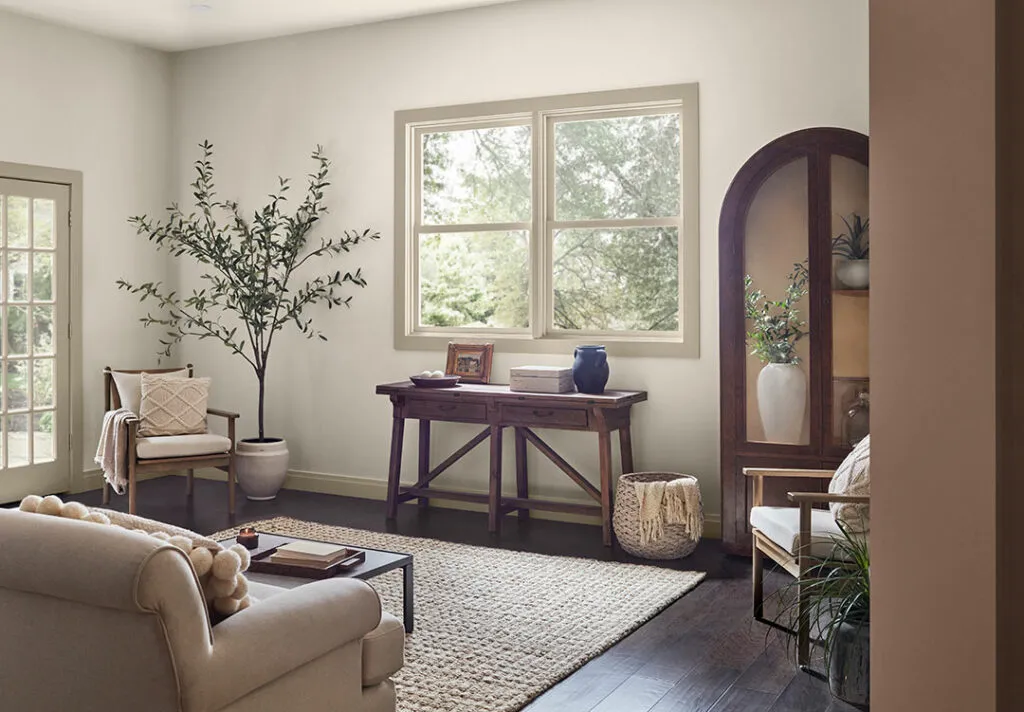
Shoji White in the living room creates a warm, inviting atmosphere.
I used it in a living room with west-facing windows and the evening light made the space glow.
The beige undertone picked up the hardwood floors and the linen sofa looked perfect against it.
But the room had good natural light.
In a dark living room with small windows, Shoji White can feel heavy.
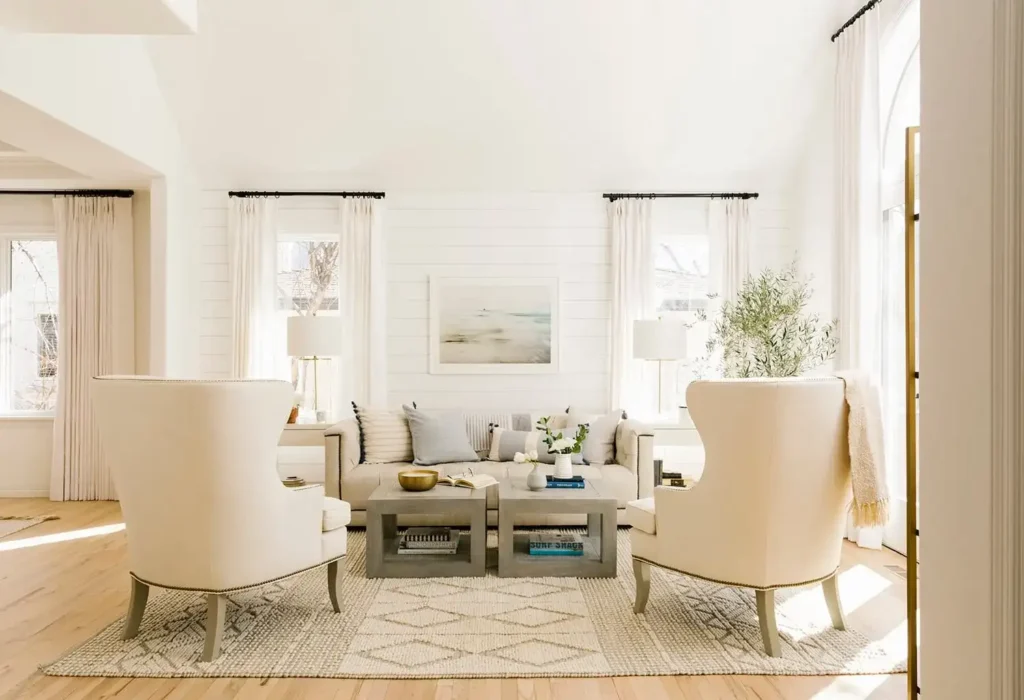
White Dove in the living room feels bright and open.
I’ve used it in living rooms that flow into dining rooms and kitchens because it works as a cohesive color that doesn’t feel too warm or too cool.
It looks good in open-concept spaces where you need one color to work in multiple areas with different lighting.
Bedroom
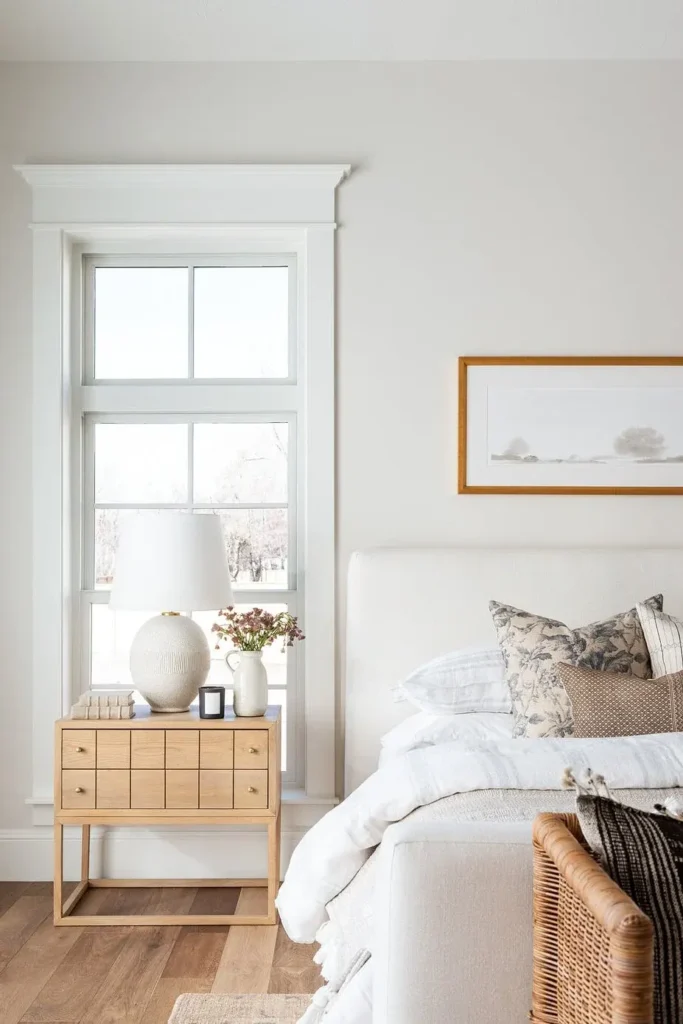
Shoji White in the bedroom is lovely.
The warmth makes bedrooms feel cozy and restful.
I painted my own bedroom Shoji White and it’s perfect at night with bedside lamps, warm and enveloping.
The beige-greige undertone works well with white bedding, natural wood nightstands, and warm-toned textiles.
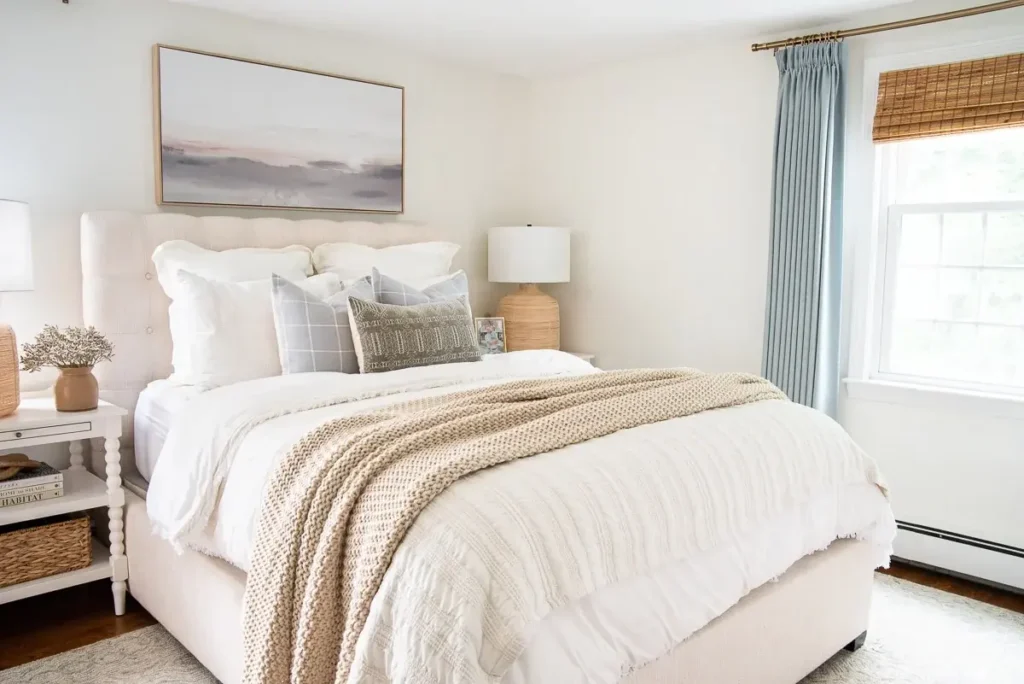
White Dove in bedrooms feels calm and clean.
If you like a bright, refreshed feel in your bedroom, White Dove is the better choice.
I’ve used it in small bedrooms where the high LRV helps the space feel less cramped.
It also works well if you have cool-toned bedding or gray furniture.
Bathroom
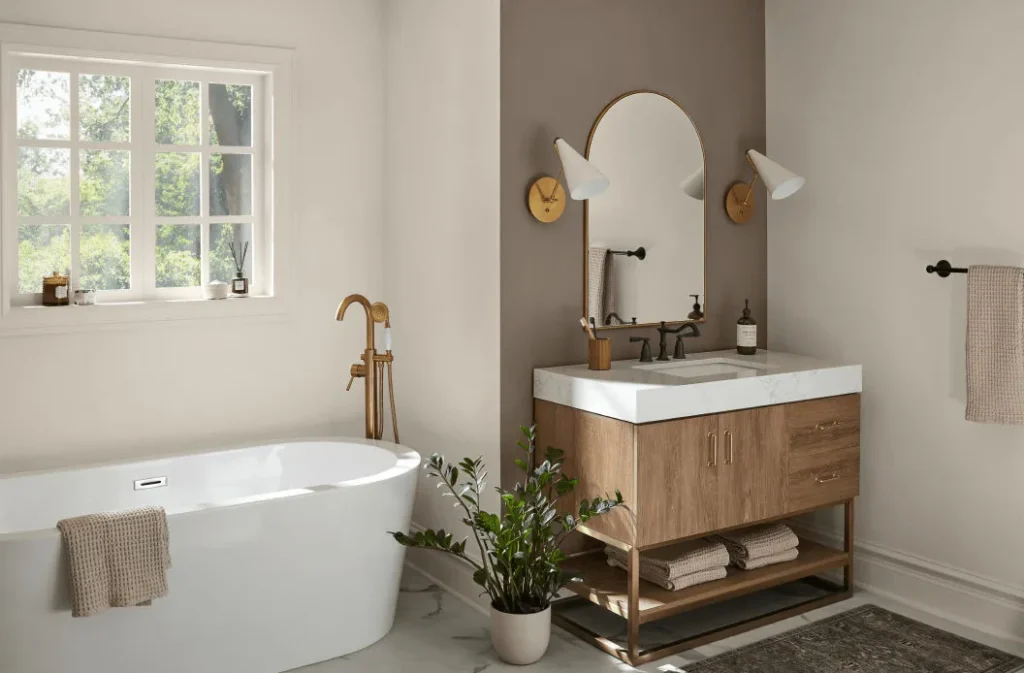
Shoji White in bathrooms is hit or miss.
In a large bathroom with great natural light and white fixtures, it can look beautiful.
Soft and warm without being yellow.
But in small bathrooms or powder rooms without windows, the beige undertone can look dull or dirty.
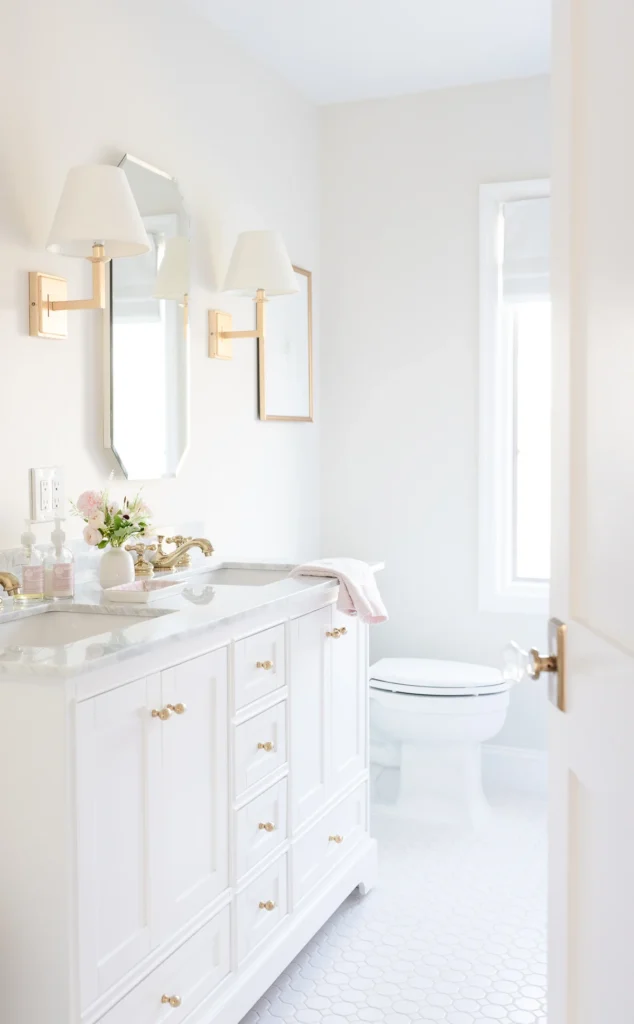
White Dove is my default bathroom white.
It stays clean and bright in any lighting situation.
Works well with white subway tile, marble countertops, chrome or brushed nickel fixtures.
The high LRV keeps small bathrooms from feeling cave-like.
Kitchen
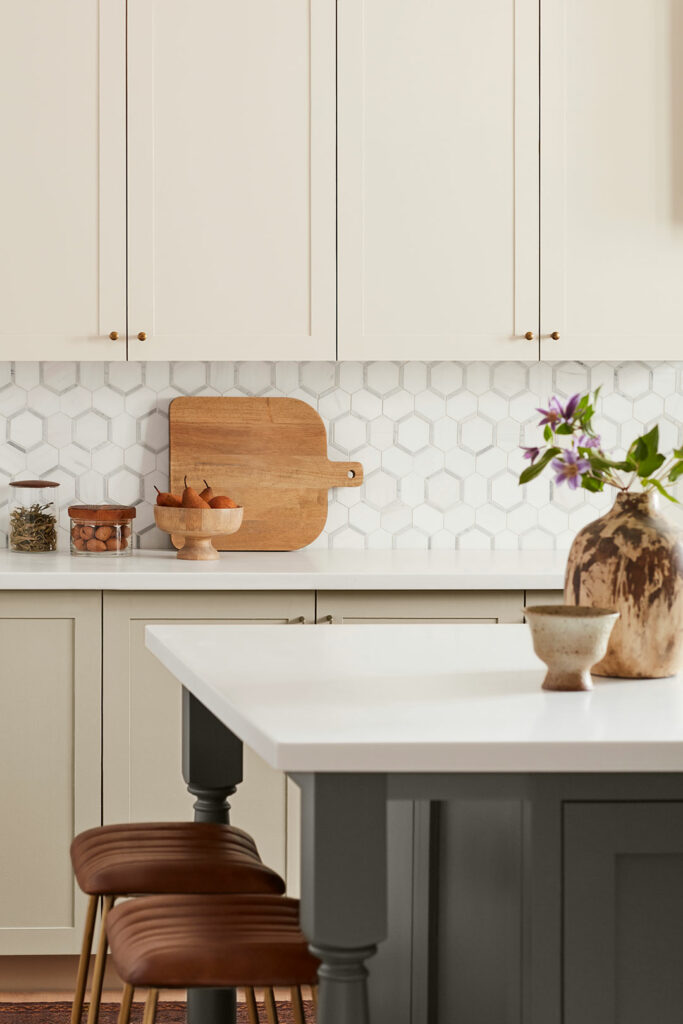
Shoji White in kitchens works when you have natural light and warm-toned finishes.
I’ve used it on kitchen walls with white cabinets and butcher block countertops and it looked great.
The warmth complemented the wood tones.
But with all-white kitchens, Shoji White on the walls can feel beige.
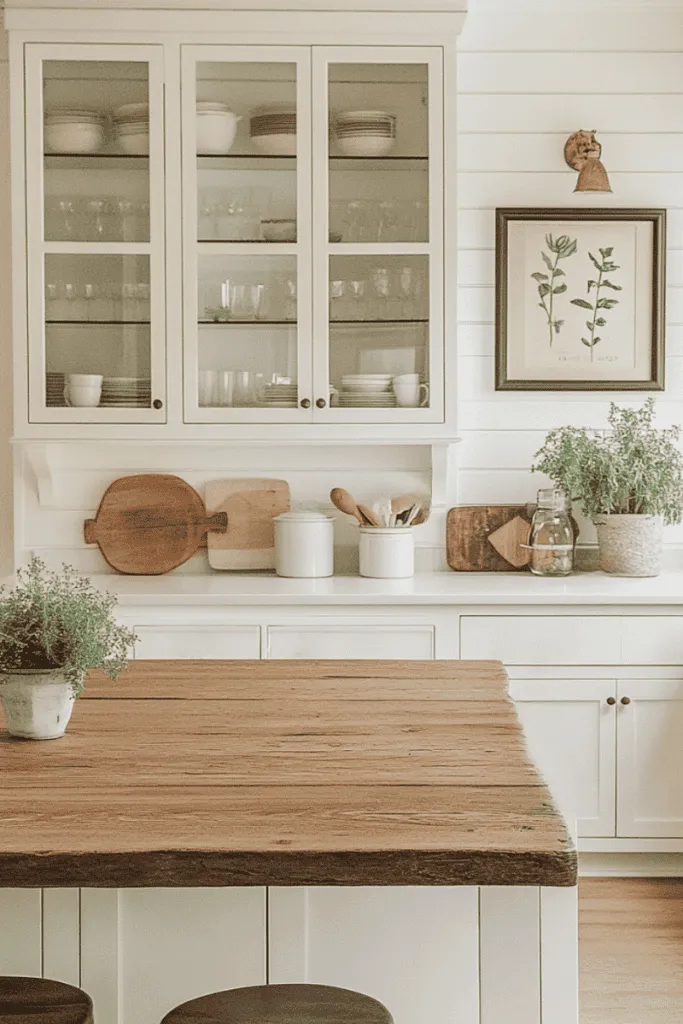
White Dove on kitchen cabinets is what I do for a living.
It’s the perfect cabinet white – bright to feel clean, warm to not feel sterile.
It works with every countertop material I’ve paired it with.
Quartz, granite, marble, butcher block, concrete.
Exterior
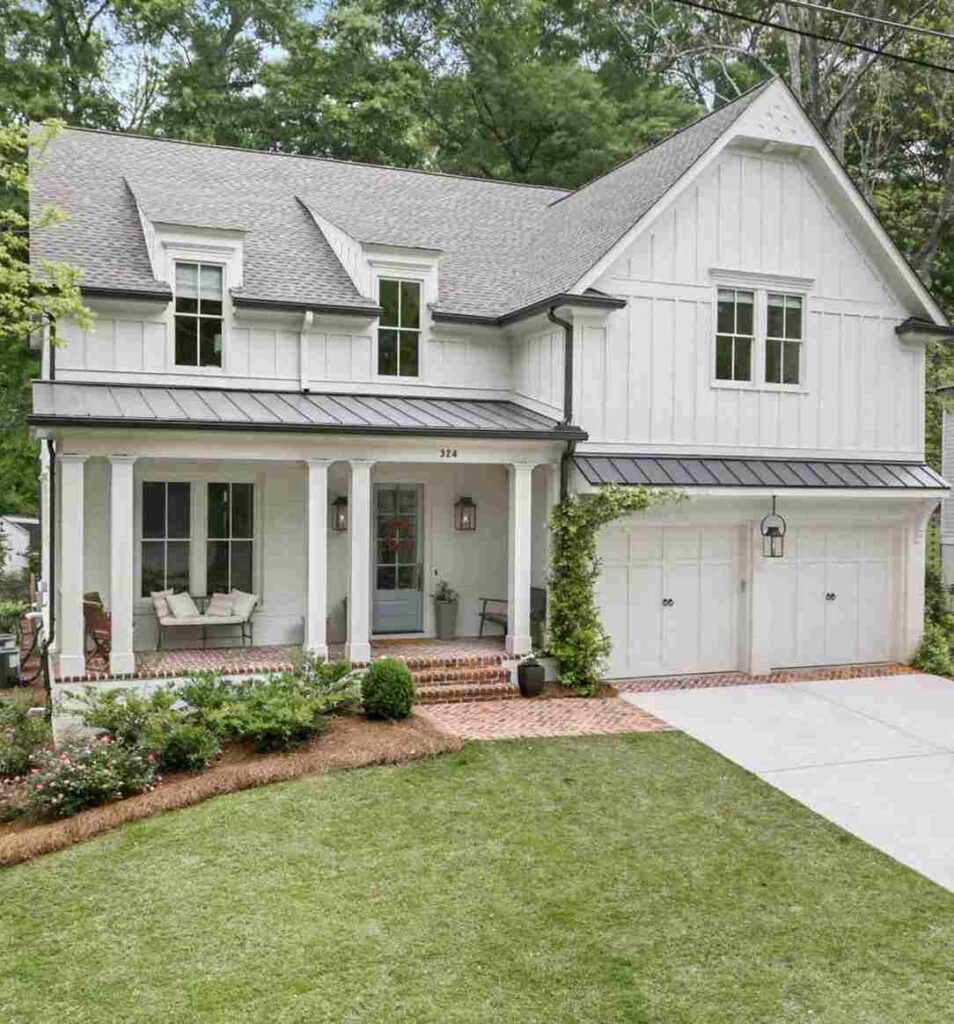
Shoji White on exteriors looks best with warm materials.
Brick, wood siding, warm stone, it all works.
The beige undertone complements the natural warm tones.
I’ve seen beautiful modern farmhouses with Shoji White siding and white trim.
But next to gray materials or modern black windows, it can look creamy and yellow.
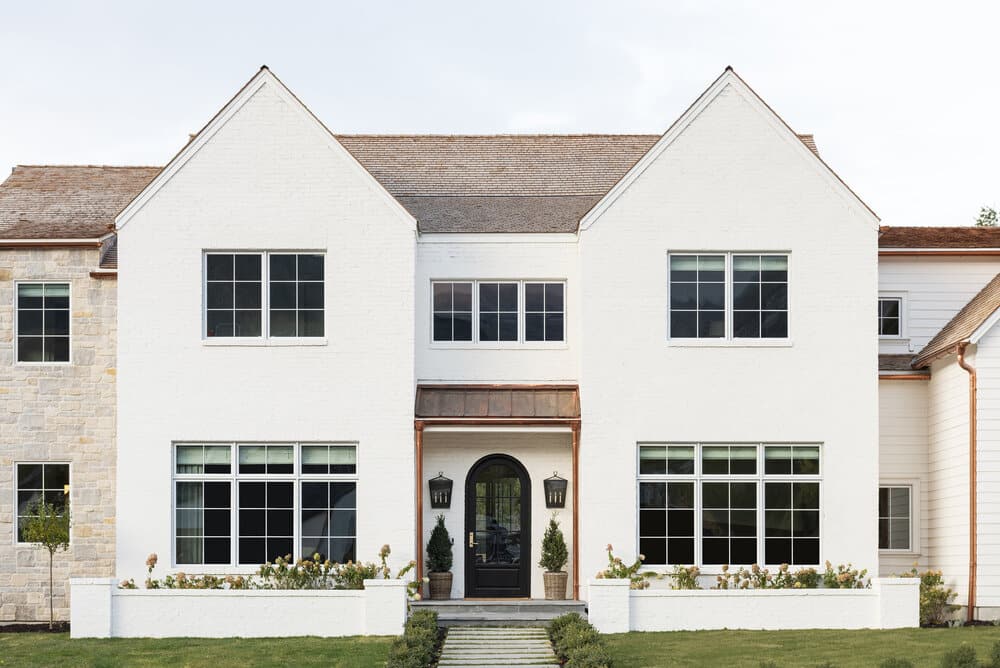
White Dove on exteriors is versatile because of the neutral-warm undertone.
It works with warm AND cool elements.
Traditional homes, modern homes, craftsman style, White Dove adapts.
The high LRV also means it stays looking clean.
Shoji White Vs White Dove Vs Other Colors
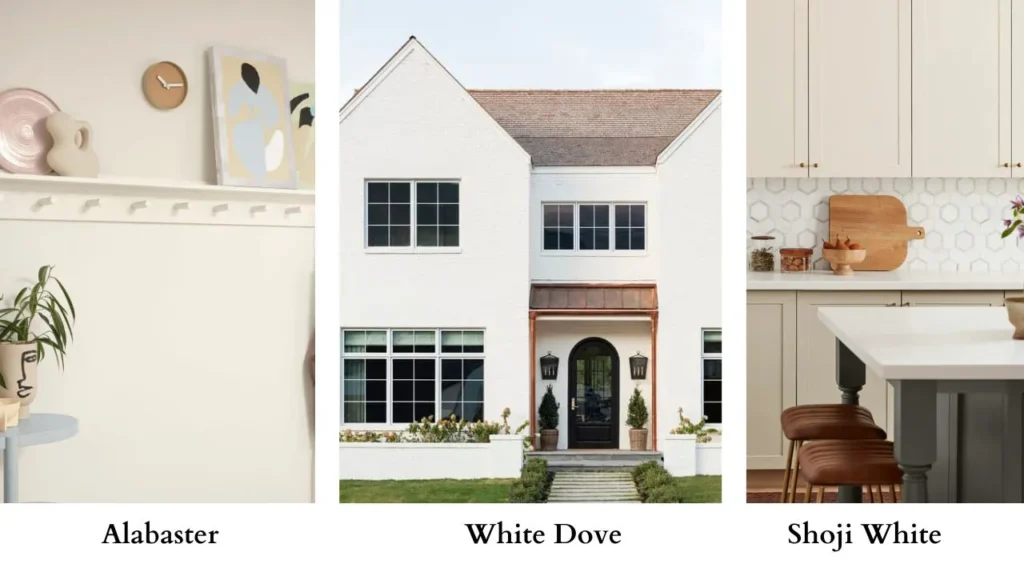
Because of course you’re not only looking at these two whites.
You’re also considering Alabaster, Swiss Coffee, and others.
Let me break down how Shoji White and White Dove compare to other popular whites.
Shoji White vs Swiss Coffee
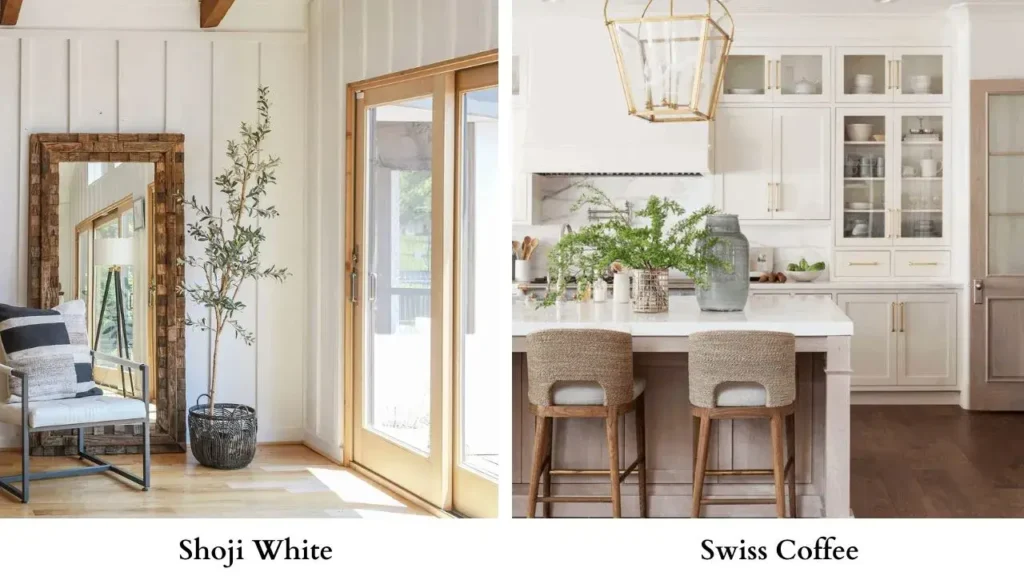
Swiss Coffee (Benjamin Moore) is warmer than Shoji White.
It has a visible yellow-cream undertone.
The LRV is similar to Shoji White, but Swiss Coffee is more traditional and more warm.
If you want maximum warmth, go for Swiss Coffee.
If you want modern warmth, Shoji White is better.
I use Swiss Coffee in traditional homes with warm wood trim and honey oak floors.
Shoji White vs Alabaster
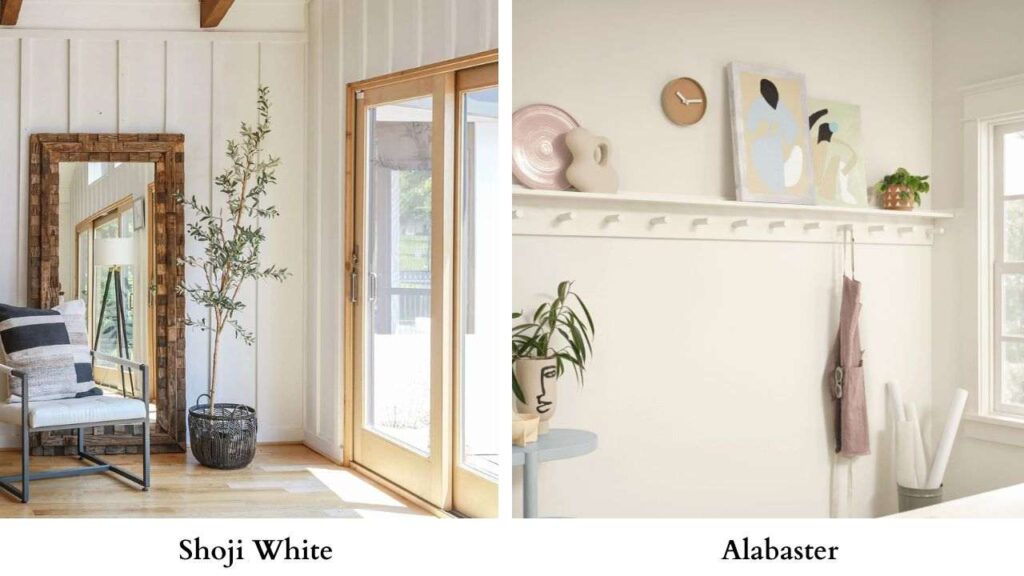
Alabaster (SW 7008) is more creamy than Shoji White with a higher LRV around 82.
Alabaster is also warm, the cream undertone is obvious.
Alabaster works when you want a soft, creamy white that’s bright.
Shoji White has depth and gray influence from that greige undertone.
Alabaster is popular for trim when you want the trim to disappear into warm walls.
Shoji White vs Dove Wing
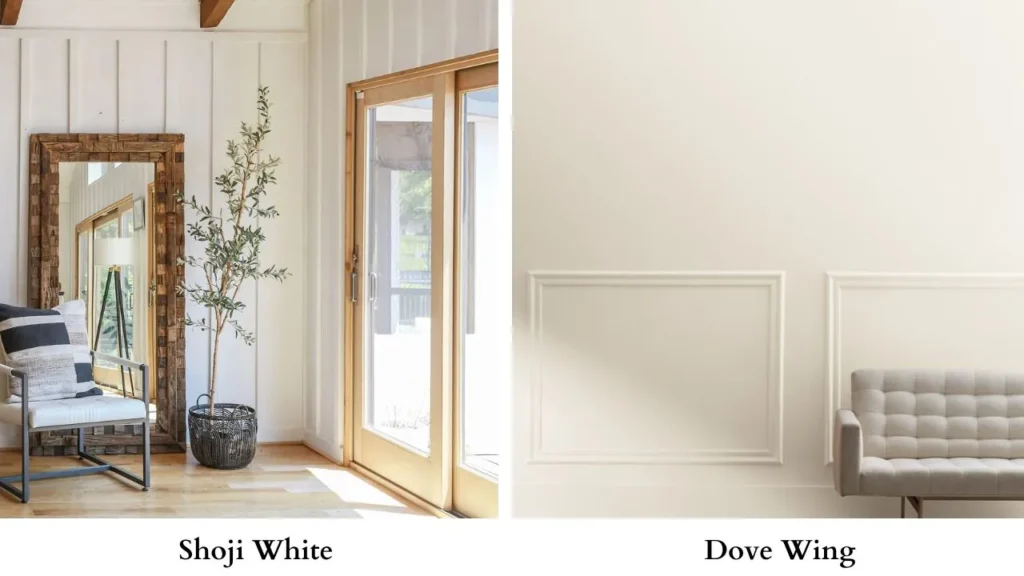
It’s similar to Shoji White but more cool and gray.
If you take Shoji White and remove the beige warmth, you get Dove Wing.
It’s a good option if Shoji White feels too warm but you want something softer than a bright white.
Alabaster vs White Dove
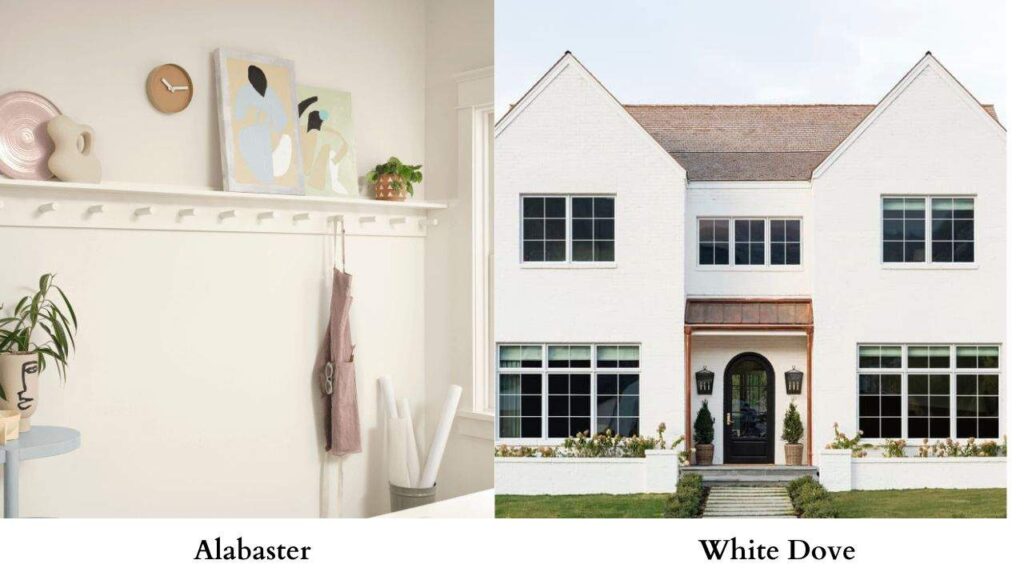
Alabaster is warm and less bright than White Dove.
Alabaster has that cream undertone while White Dove has gray.
They’re both popular and they’re both versatile, but Alabaster will give you warmth and White Dove will give you brightness.
On trim, I prefer White Dove because it stays clean.
On walls when you want warmth, go for Alabaster.
Shoji White vs Greek Villa
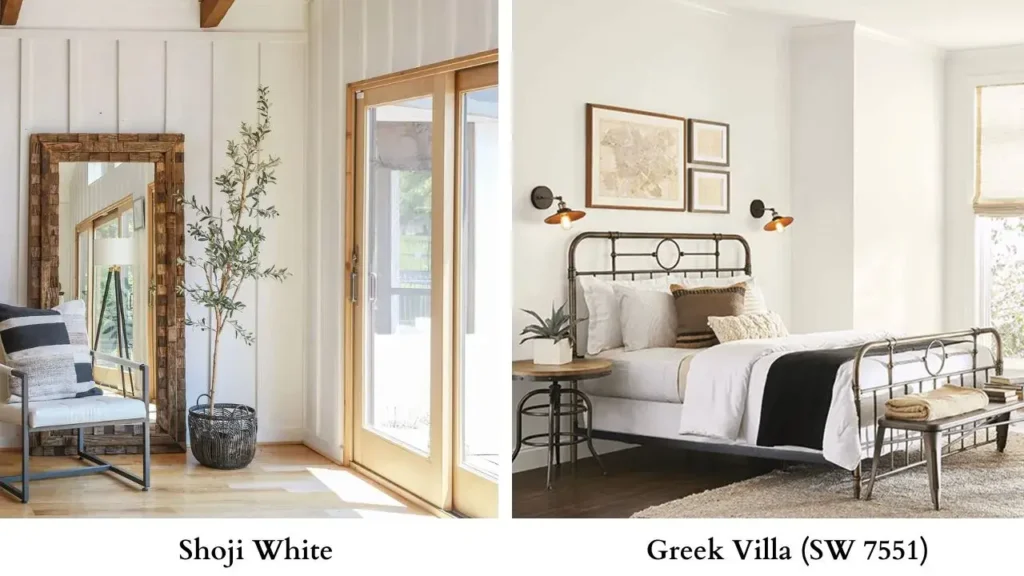
Greek Villa (SW 7551) is brighter and cooler than Shoji White.
It’s a warm white, but the warmth is subtle.
Greek Villa works well as trim with Shoji White walls if you want the trim to pop.
Greek Villa also works in spaces where you want white-white but not bright.
Shoji White vs Aesthetic White
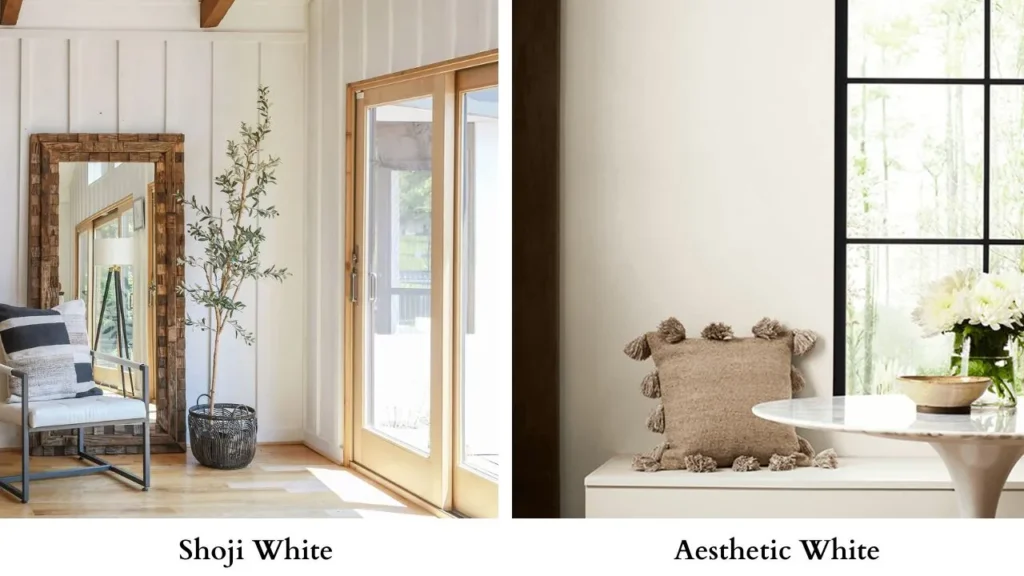
Aesthetic White is similar to Shoji White but a bit cool.
The undertones are more gray, less beige.
If you like the general vibe of Shoji White but it’s too beige in your space, try Aesthetic White. It’s like Shoji White’s cooler version.
| Color | Brand | LRV | Undertone | Compared to Shoji White | Compared to White Dove |
| Shoji White | Sherwin Williams | 74 | Beige + greige | — | Warmer, less bright |
| White Dove | Benjamin Moore | 85 | Soft gray + warmth | Cooler, brighter | — |
| Swiss Coffee | Benjamin Moore | ~76 | Cream + yellow | Warmer, more traditional | Warmer, less bright |
| Alabaster | Sherwin Williams | 82 | Cream | Warmer, brighter | Warmer, similar brightness |
| Greek Villa | Sherwin Williams | ~84 | Soft warm-neutral | Cooler, brighter | Similar, slightly warmer |
| Aesthetic White | Sherwin Williams | ~75 | Gray-white | Cooler, similar depth | Cooler, less bright |
Conclusion
Look, choosing between Shoji White Vs White Dove isn’t about which one is better.
Shoji White gives you warmth and coziness with that beige-greige undertone.
It’s perfect when you want a space to feel inviting and you have decent natural light to keep it from looking dark.
White Dove gives you brightness and versatility with the soft gray-warm undertone.
It’s perfect for trim, cabinetry, and spaces where you need consistent, clean brightness.
You can use them together too like White Dove on trim, Shoji White on walls or White Dove cabinets with Shoji White kitchen walls.
They’re not competing colors but they’re complementary.
Remember to test these in your space. Paint samples on multiple walls.
Look at them morning, afternoon, and evening.
Live with them for a few days. The paint swatch.
Your lighting conditions are unique.
Comparing Shoji White Vs White Dove is not that much difficult but according to your space you should consider first before going.
FAQs on Shoji White Vs White Dove
Yes, they work together. I pair them like White Dove as trim with Shoji White walls, or White Dove cabinets with Shoji White kitchen walls. The brightness difference creates nice subtle contrast and the undertones don’t go against each other.
The main differences: Shoji White is warm with beige-greige undertones and an LRV of 74. White Dove is bright with soft gray undertones and an LRV of 85. Shoji White shifts in different lighting while White Dove stays consistent.
For trim: White Dove, Pure White, or Greek Villa. For accent colors: warm grays, greiges, soft beiges, warm woods, and Urbane Bronze, if you want drama. Shoji White works with warm-toned everything like woods, textiles, metals like brass or bronze.
Don’t use Shoji White in rooms with limited natural light because it’ll look dull and flat. Skip it if you’re going for a bright, airy feel. Also avoid it next to cool gray materials or if you hate any hint of beige.
Don’t use White Dove if you want maximum coziness and warmth. Skip it as a wall color if your room gets harsh direct sunlight and you want something with depth. And if you have cool-toned grays in your space, White Dove may feel warm as a contrasting trim color.