

I’ve seen the confusion between White Dove vs Chantilly Lace many times in my career, but I still get excited about these two because they’re so different.
Both are Benjamin Moore classics, both are white, but side by side in a home they look like living in a different universe.
Someone will come to me and say “I want white cabinets” and I’ll ask which white, and they look at me.
But Chantilly Lace is what people call a “pure white” or a true white, clean and bright, while White Dove is the “soft white” with warmth and a greige hint.
The difference is visible when you’re standing in your kitchen and your cabinets either feel cold or warm and welcoming.
Choosing the wrong undertone doesn’t only affect one wall, but it affects the whole space.
So, I’m breaking down the color profiles of White Dove Vs Chantilly Lace, LRV, undertones, how they look in different rooms, how lighting changes them, and which one is right for your space.
I’m also putting in comparisons with other whites too.
Here are my other blogs that you can also read:
- Oatmeal Color Vs Beige
- Hunter Green Vs Emerald Green
- Olive Green Vs Forest Green
- Pale Oak Vs Revere Pewter
- Sherwin Williams White Duck Vs Alabaster
Color Profile of White Dove (Benjamin Moore OC-17)
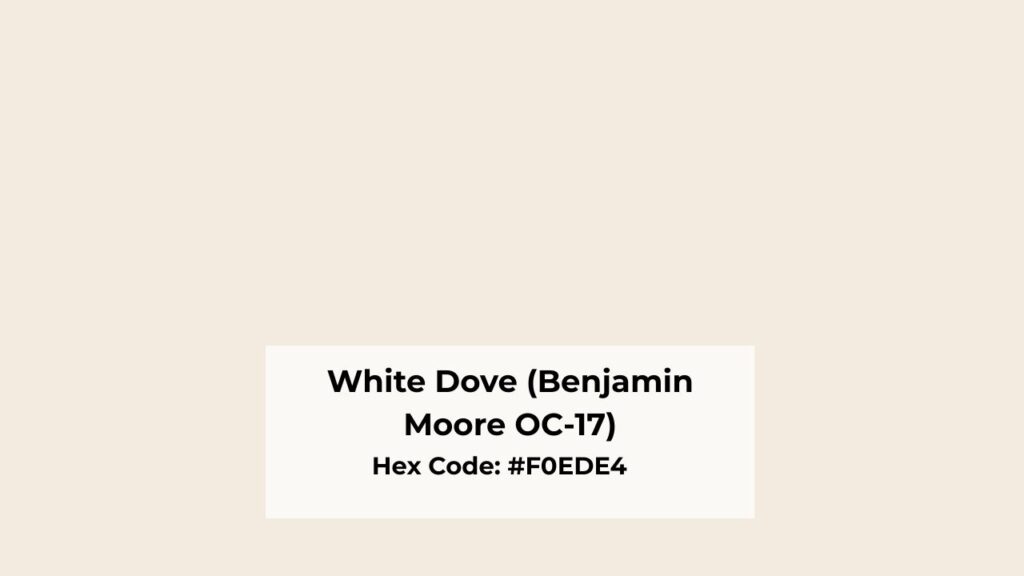
White Dove has been around and there’s a reason it’s one of the specified colors from the Benjamin Moore collection.
It’s a soft, creamy white with this beautiful greige undertone, but a perfect in-between that is warm without looking yellow.
The LRV (Light Reflectance Value) is around 85.38, which puts it in the soft white wheel, it is not too bright, not too muted.
It has enough presence to feel like paint color instead of nothingness.
What I love about White Dove is how it shifts depending on your light. In natural light, mainly south-facing rooms, it gets warm and shows the soft greige undertone.
But in a north-facing room it’ll look slightly gray, which works because it doesn’t go against the cool light.
White Dove is less yellow than you think. If you’re coming from builder beige, then it’s going to feel fresh and clean.
It doesn’t have the cream-soup thing which some warm whites have. It appears fresh and balanced.
I’ve specified White Dove for living rooms where people want the soft, welcoming vibe. It’s perfect for bedrooms because it’s not harsh.
In Bathrooms, if you have warm wood vanities or brass fixtures. And I’ve seen it on exteriors where it gives the classic, timeless look without being boring.
The versatility is unmatched, it works on walls, works on trim, works on cabinets if you want a soft approach.
It pairs well with warm woods, works with both warm and cool accent colors because the undertone is balanced.
Color Profile of Chantilly Lace (Benjamin Moore OC-65)
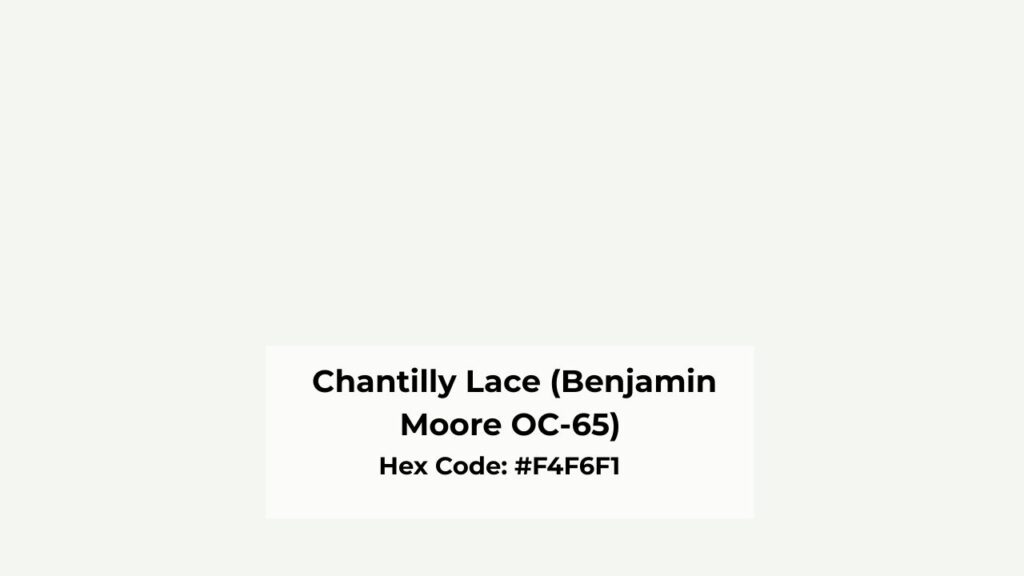
Chantilly Lace is by Benjamin Moore. Its LRV is around 90.04 which is BRIGHT and reflects-almost-all-the-light.
Chantilly Lace is a true, clean white with minimal undertones.
When people say it has a slight cool lean, they mean it has barely-there gray or cool undertone.
It’s not blue. It doesn’t have warmth. No visible yellow, no beige, nothing that looks creamy or soft.
In real homes, Chantilly Lace looks fresh, modern.
This color is popular for kitchen cabinets, mainly in modern kitchens with cool-toned quartz countertops and white subway tile backsplashes.
It doesn’t look dirty or creamy next to the materials. It stays TRUE.
For living rooms, I prefer Chantilly Lace if you’re going for a modern, minimalist vibe or you have warm finishes that need balancing.
In bedrooms, it can feel cold unless you have south or west light warming it up throughout the day. Bathrooms with white tile and chrome fixtures are perfect.
Exteriors look stunning if you want the fresh, clean, attentive look.
What is the Difference Between White Dove and Chantilly Lace?
So, White Dove Vs Chantilly Lace, both are white, both are Benjamin Moore, both are popular.
But the differences are what matter when you’re making a decision and have to live with it for a long time.
Light Reflectance Value
LRV is how much light a color reflects on a scale from 0 to 100.
This matters because a high LRV is a bright space, and it affects everything from how big your room feels.
White Dove is at 85.38 LRV. It’s bright, but softly bright.
It reflects light to make spaces feel open and airy without the sharp brightness that can feel cold.
Chantilly Lace is at 90.04 LRV. This is bouncing light all over the place, making rooms feel big and bright. In a small, dark room this is great.
But in a bright room, sometimes it’s too much.
Undertones
White Dove has a soft greige undertone, the gray-beige blend that makes it look warm but not yellow. It’s muted, it’s sophisticated, it’s forgiving.
This undertone is what makes White Dove work in many different lighting and with various design styles.
Chantilly Lace has minimal undertones, like a hint of cool gray. Some call it neutral but leaning cool. But what it DOESN’T have is warmth like no cream, no beige, no yellow.
This is what keeps it looking clean and true next to bright white tiles and cool countertops.
Your undertone choice should match your fixed materials. If you have warm oak floors, then go with White Dove. But if you have cool gray tile, then go with Chantilly Lace.
Lighting Affect
Lighting changes everything and if you don’t test your paint in your space with your light then maybe it won’t enhance the look of the space because paint swatches will not justify the color.
White Dove in south-facing rooms looks warm and glowy. The greige undertone comes out and it feels welcoming and soft.
In north-facing rooms, it cools down and looks gray, but it works because it’s not fighting the light. In east-facing spaces you’ll see warmth in the morning, cool by afternoon.
West-facing brings warmth in the afternoon and evening when you’re using the space.
Chantilly Lace in south-facing rooms stays clean but gives warmth too, this is when it looks best because the warm light prevents it from feeling cold.
In north-facing rooms, it can feel cold and harsh. East and west light help balance it but you want to test it.
Here’s what I tell people: if your room has warm, abundant natural light, you can consider Chantilly Lace.
If your room is dim or gets cool light, White Dove is what you can go with.
Style and Best Uses
White Dove works for traditional, transitional, farmhouse and modern too, if you’re going with warm-modern.
It’s the perfect trim color when you have colored walls but want soft contrast, not harsh. On cabinets it gives you the soft-white look that feels custom and expensive.
Pair it with warm woods, brass hardware, greige walls and some cool blues and greens.
Chantilly Lace is for modern, contemporary, minimalist spaces. It’s THE trim color when you want bright contrast against wall colors.
On cabinets it looks great if you have cool countertops and backsplashes.
Pair it with cool grays, black accents, stainless steel, white oak with cool undertones.
The furniture and accent colors you choose will either work with or go against your white.
White Dove is more forgiving. Chantilly Lace demands you commit to a cool palette.
| Feature | White Dove (OC-17) | Chantilly Lace (OC-65) |
| LRV | 85.38 | 90.04 |
| Undertone | Soft greige (warm gray-beige) | Minimal, slight cool gray |
| Warmth | Warm and soft | Cool and crisp |
| Best Light | Works in all directions, great in north light | Best in south/west light, can feel cold in north light |
| Best Style | Traditional, transitional, farmhouse, warm-modern | Modern, contemporary, minimalist |
| Best Use | Walls, trim, cabinets – extremely versatile | Trim, cabinets, modern interiors |
| Pairs With | Warm woods, brass, greiges, warm and cool accents | Cool countertops, chrome/steel, modern finishes |
White Dove Vs Chantilly Lace: Room-By-Room Comparison
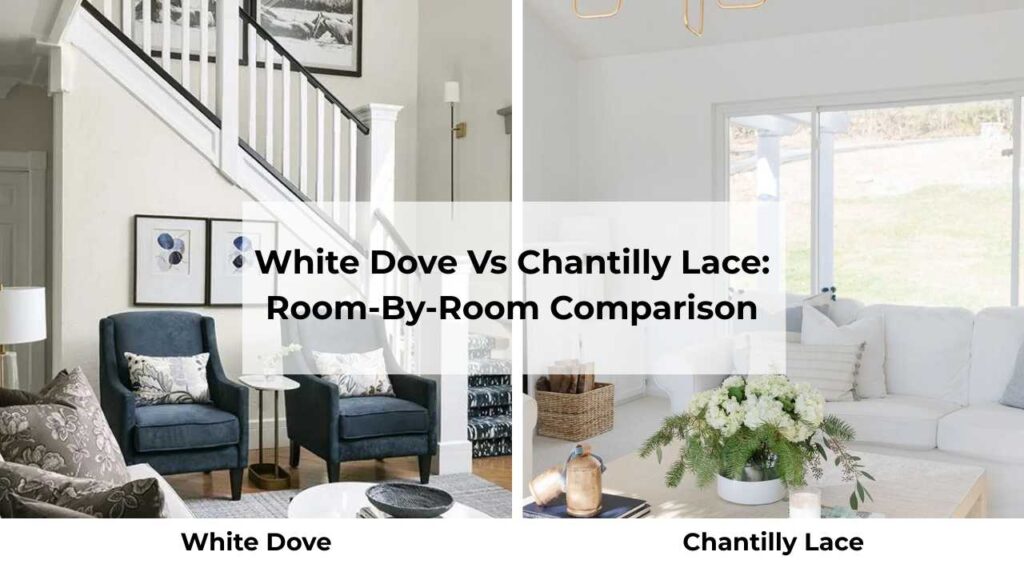
Looking at these whites in real rooms is where theory meets reality and you figure out what works for how you live.
Living Room
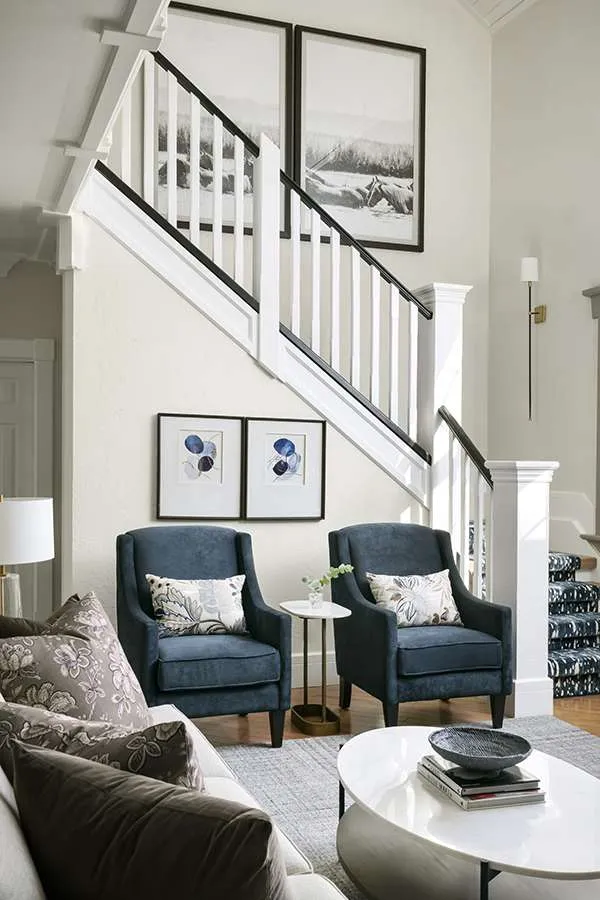
White Dove in a living room creates a soft, inviting backdrop that doesn’t go against your furniture or art.
I’ve used it in living rooms with big sectionals, texture, warm wood media consoles, and it lets everything breathe.
It makes the space feel collected and lived-in. If you have a fireplace with brick or stone, White Dove on the walls won’t look bad.
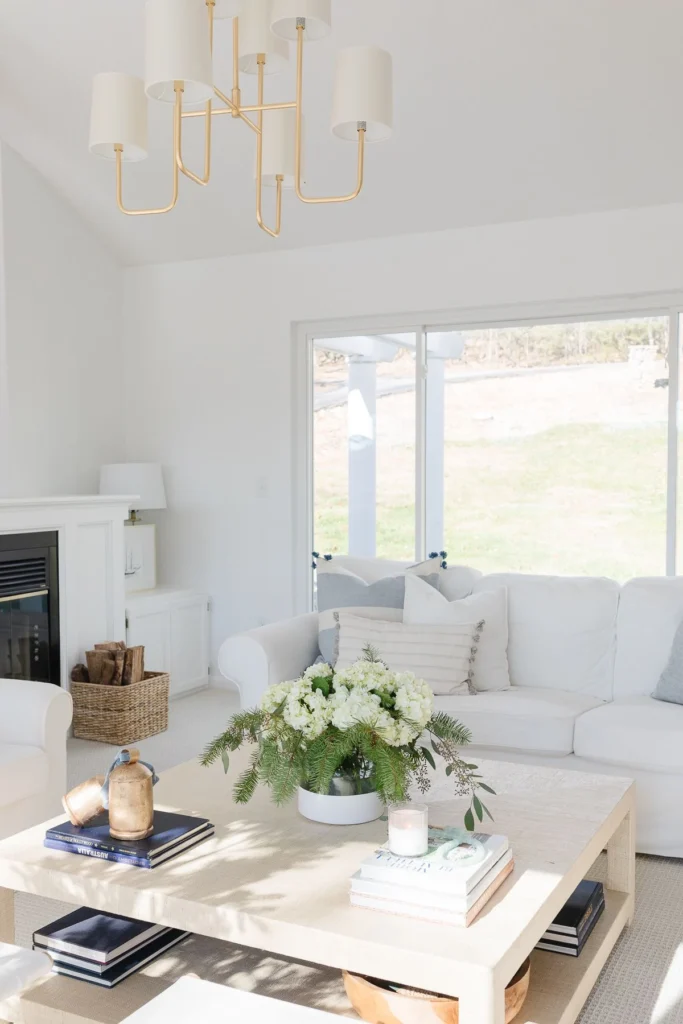
Chantilly Lace in a living room is for who wants clean lines and modern vibes.
I did a living room with Chantilly Lace walls, black window frames, and a cool gray sectional and it was STUNNING.
But it needed strong contrasts and modern elements. If you tried to do cozy-traditional Chantilly Lace walls you’d be working against.
Bedroom
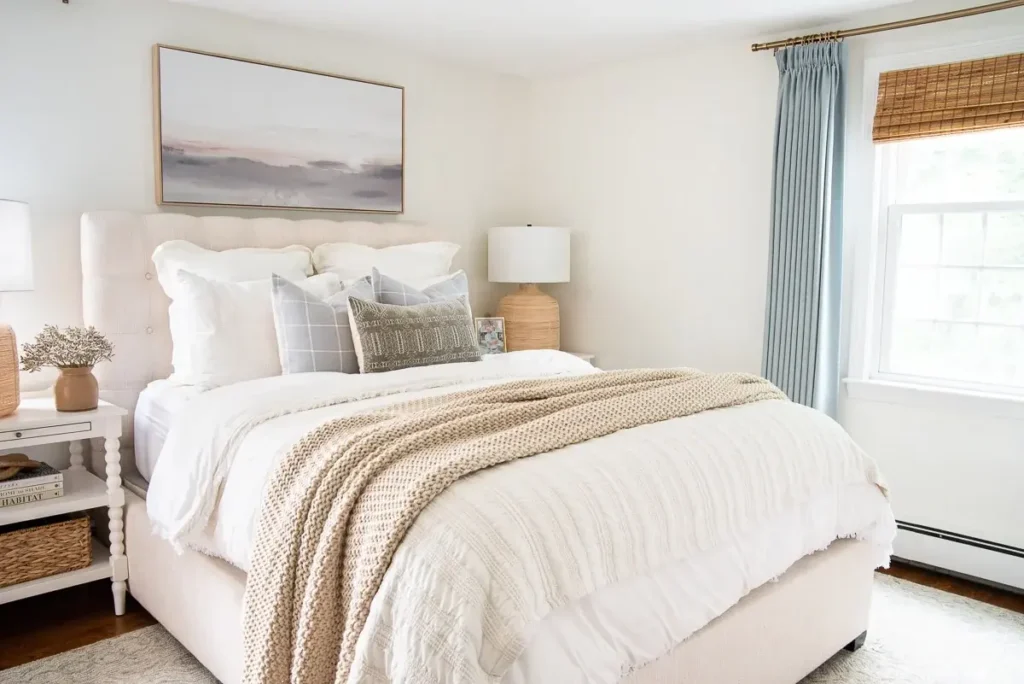
White Dove in bedrooms is where this color shines. Bedrooms should feel restful and White Dove’s warmth and softness make it perfect for it.
I’ve done it on walls with white bedding and warm wood furniture and it creates a serene, expensive-hotel feeling without being cold.
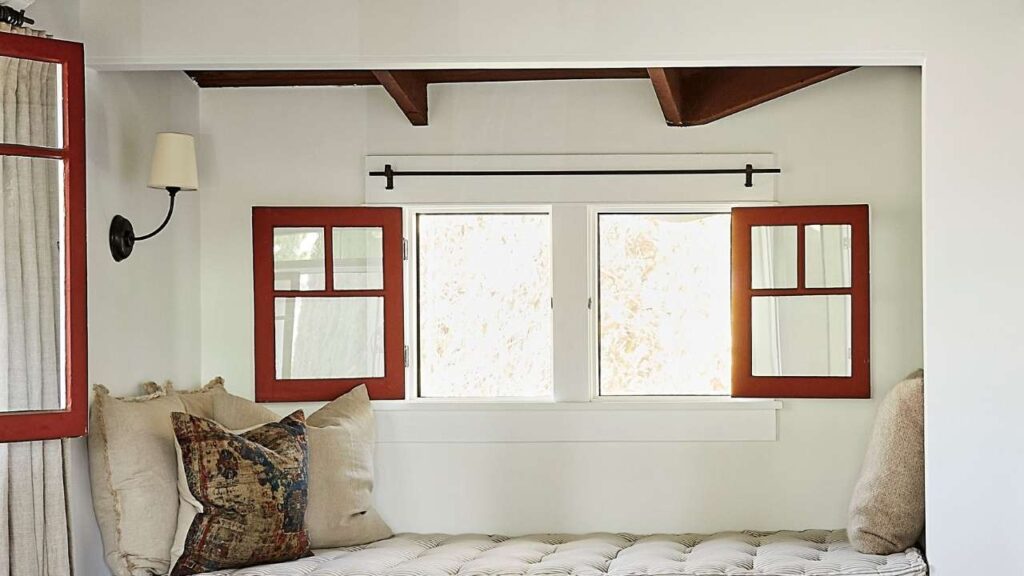
Chantilly Lace in bedrooms can work but you need the right light and the right styling.
I did it in a modern primary bedroom with south-facing windows and it was bright and fresh.
But I’ve also seen it in bedrooms with north light and limited windows and it felt unwelcoming.
Bathroom
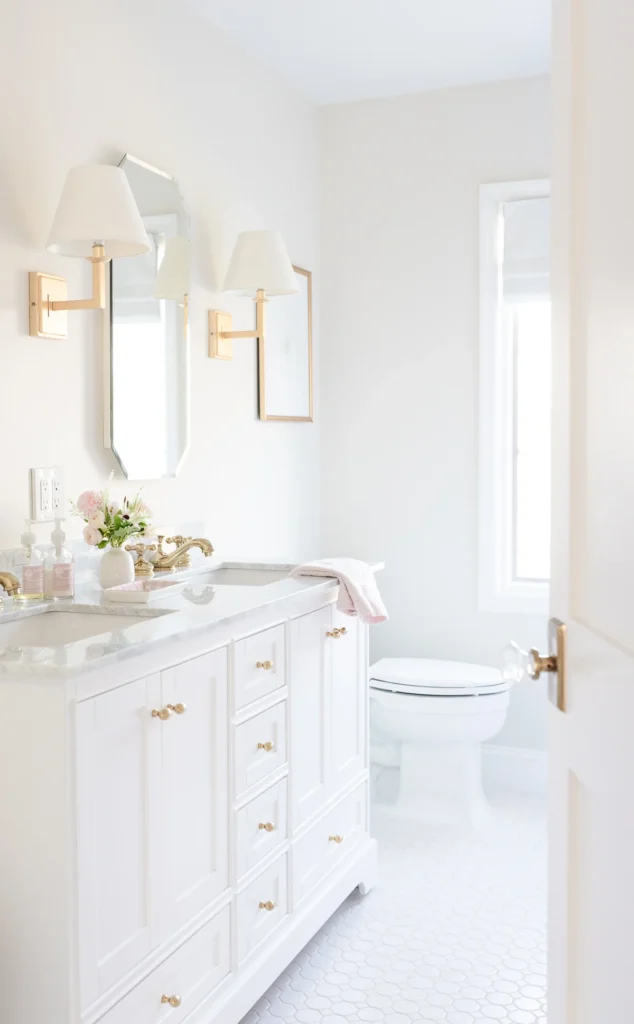
White Dove in bathrooms works well if you have warm wood vanities, brass or gold fixtures, warm-toned tile.
It keeps the space feeling clean without the cold vibe. I prefer it in powder rooms or primary bathrooms that are spa-like rather than cold.
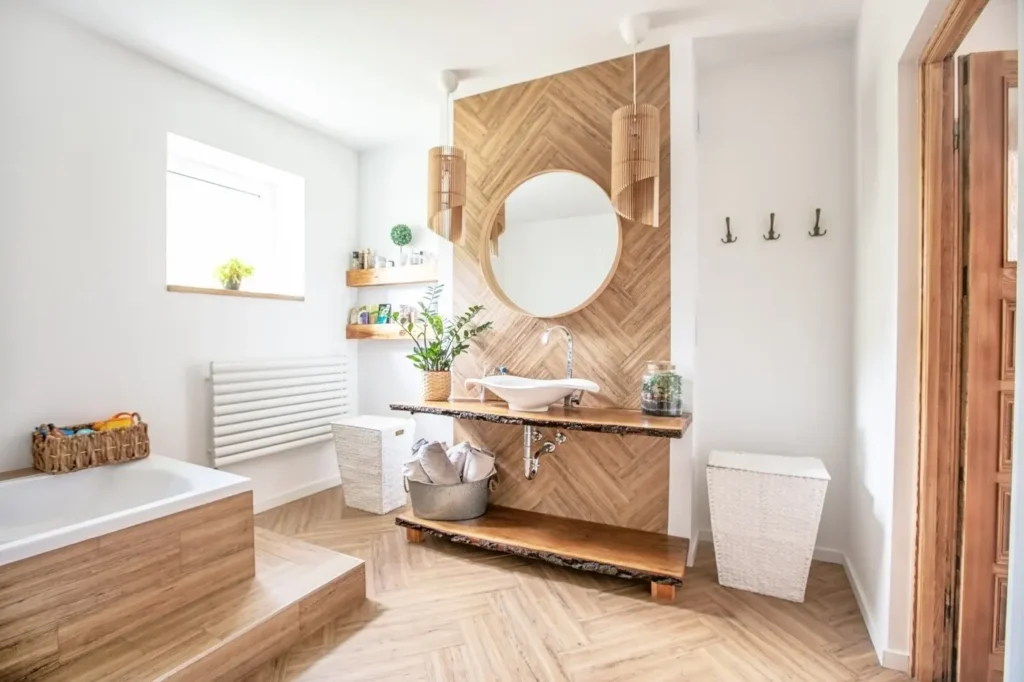
Chantilly Lace in bathrooms is unbeatable if you have white subway tile, cool quartz countertops, and chrome fixtures.
It stays true white next to the materials and creates a fresh, clean, modern bathroom.
I use it for bathroom trim paired with colored walls, or for all-white bathrooms that need to feel fresh.
Kitchen
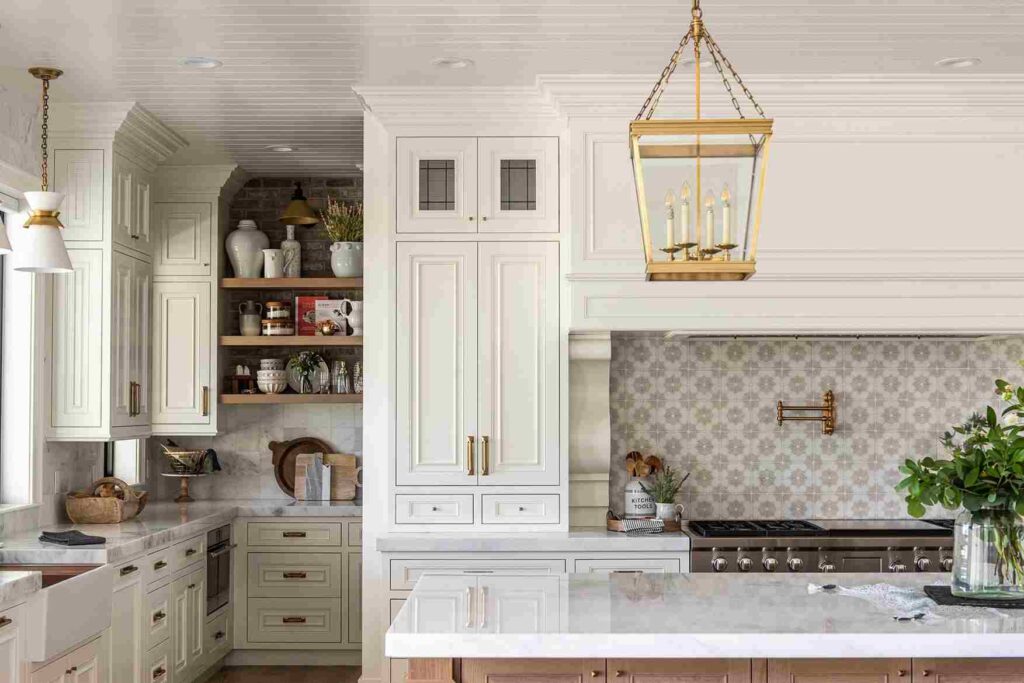
White Dove on kitchen cabinets gives you the soft-white custom look that feels warm and approachable.
If you have granite countertops with warm tones, warm backsplash tile, or wood floors with yellow undertones, White Dove won’t go against it.
It’s not my first choice for modern kitchens with bright finishes.
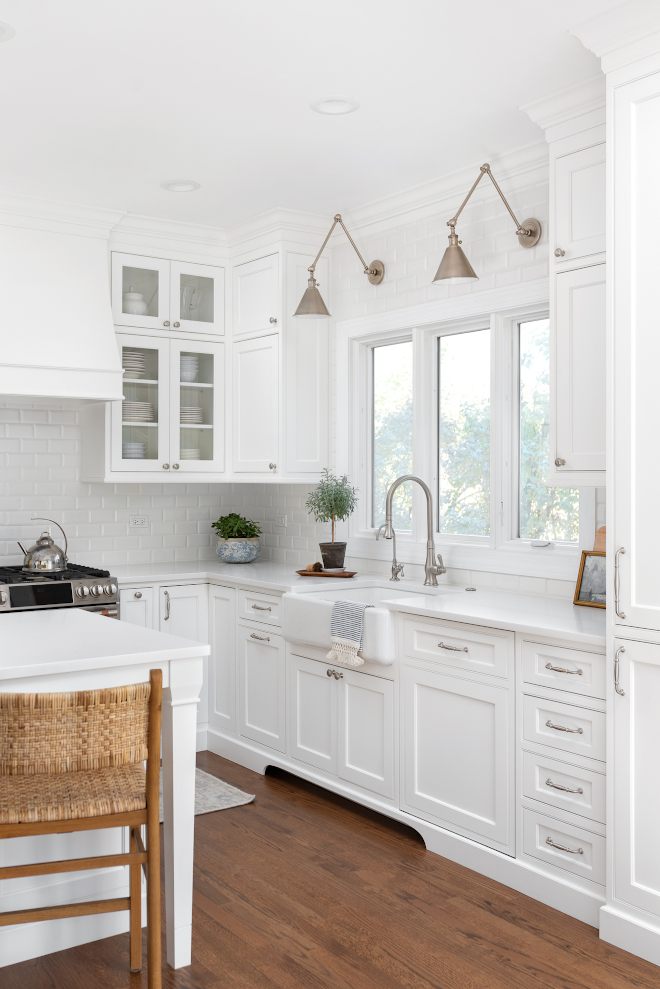
Chantilly Lace on kitchen cabinets is the most popular use of this color, and for good reason.
It looks INCREDIBLE with white quartz, cool gray quartz, white subway tile, any cool-toned backsplash.
It stays white-white and doesn’t take on yellow or cream tones that can make your kitchen feel outdated.
Every modern kitchen renovation includes Chantilly Lace.
Exterior
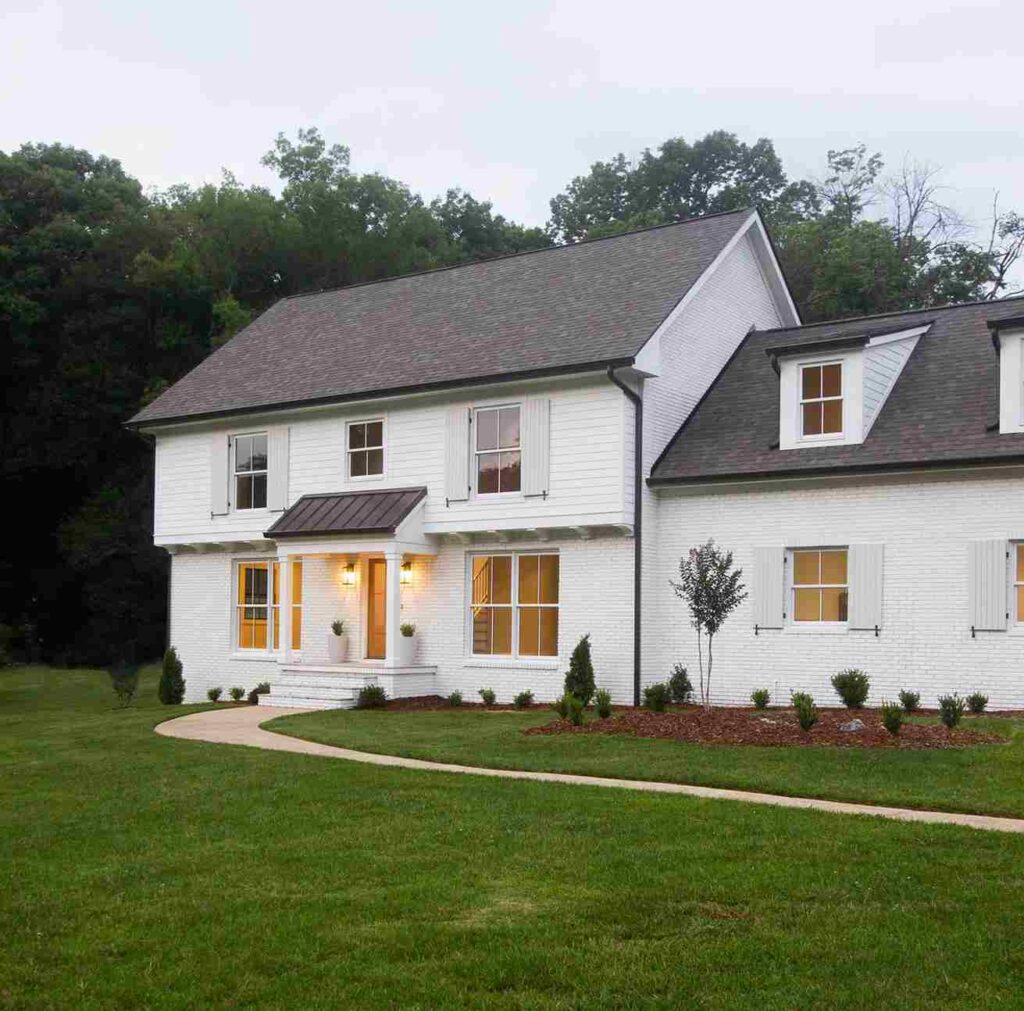
White Dove on exteriors gives you a classic, elegant look that’s timeless without being boring.
I’ve seen it on traditional colonials, modern farmhouses and on craftsman homes.
The soft warmth prevents it from looking flat or dull.
It looks beautiful and expensive. Pair it with black or dark gray shutters and it creates a visual appeal.
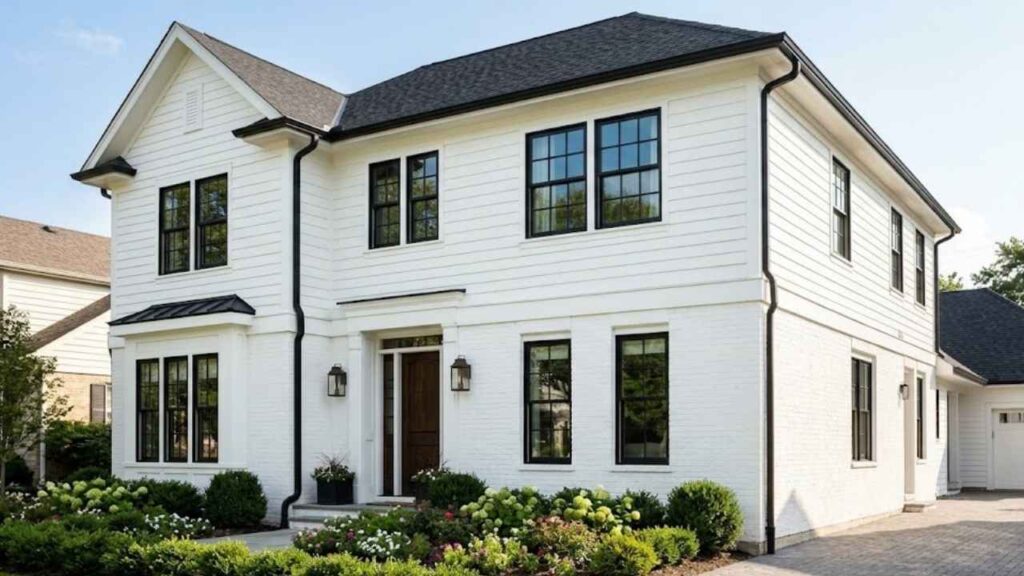
Chantilly Lace on exteriors makes a STATEMENT.
It’s bright, it’s fresh, it demands attention. I love it on modern architecture with clean lines, or on traditional homes where you want sharp contrast with dark trim.
It stays clean longer because it’s so bright. But it’s bolder than White Dove and not everyone wants their house to be the bright one.
White Dove Vs Chantilly Lace Vs Other Colors
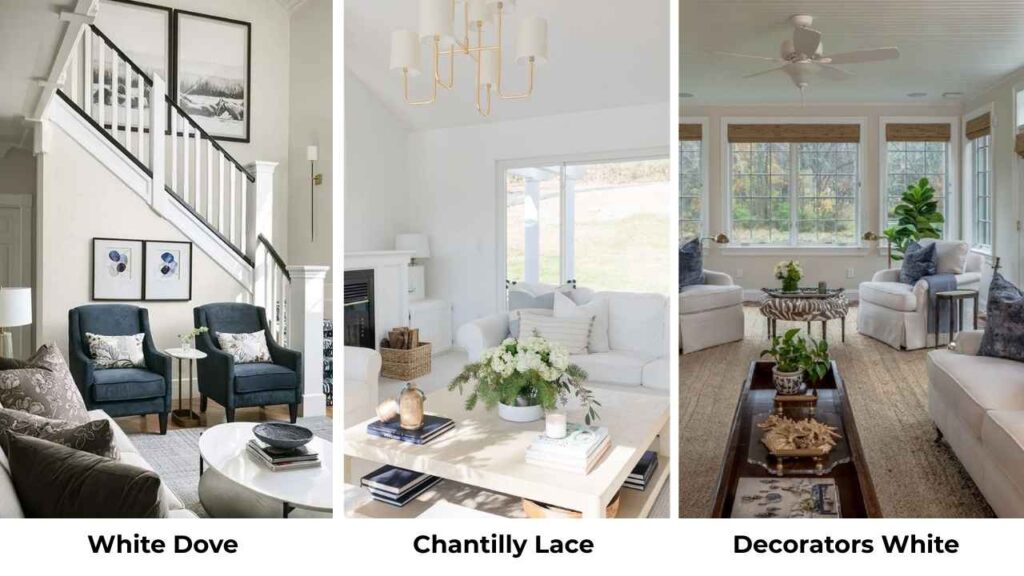
Because everyone is considering other whites at this point. Let me break down how these two compare to the other popular options.
White Dove Vs Chantilly Lace Vs Simply White
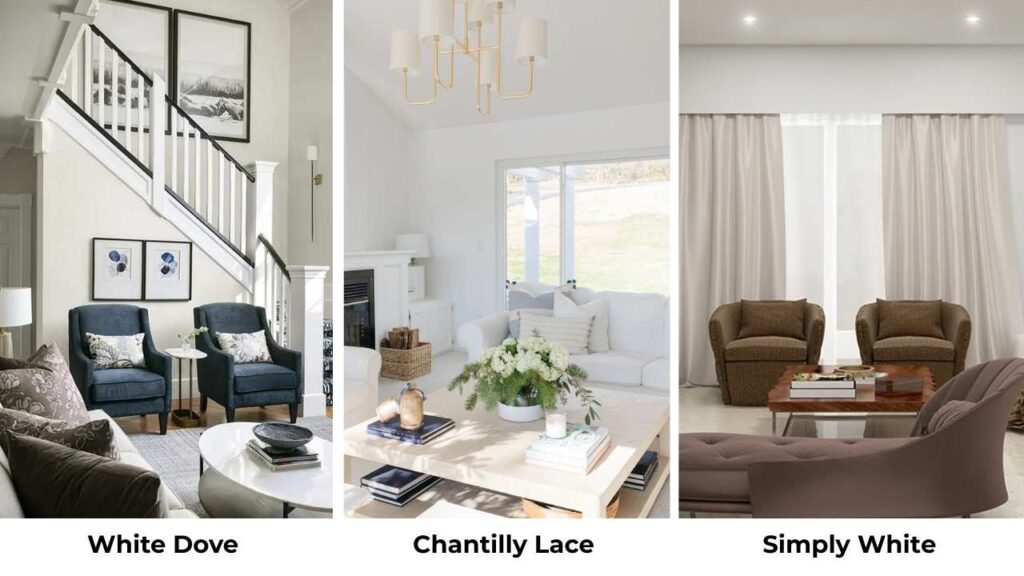
Simply White (OC-117) has an LRV around 89.52, so it’s brighter than White Dove but not quite as bright as Chantilly Lace.
It has a clean yellow undertone compared to White Dove’s muted greige warmth. Simply White is warmer than Chantilly Lace but fresher than White Dove.
If you want warmth but more brightness and less softness, Simply White is what you need.
Chantilly Lace Vs Decorators White
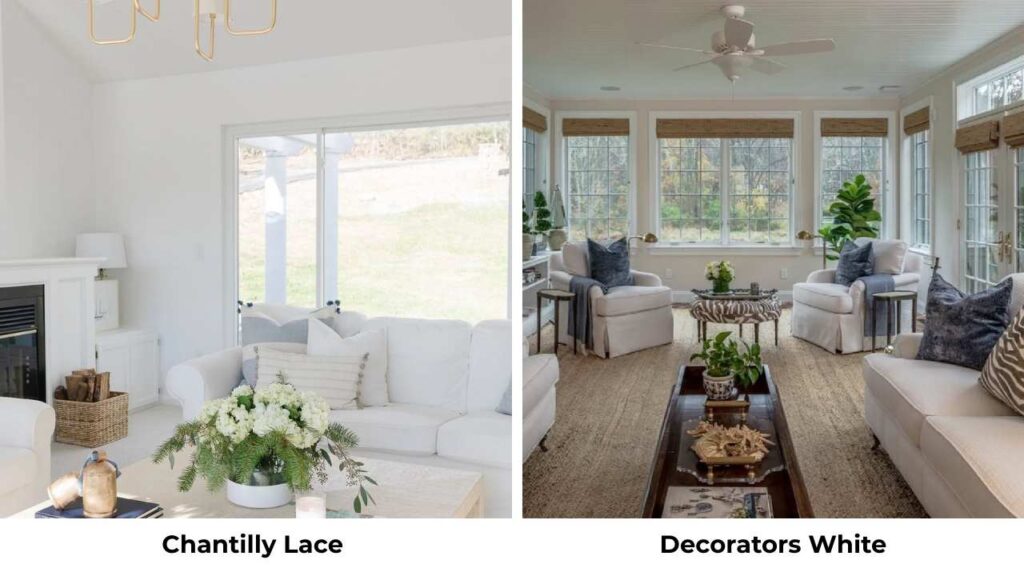
Decorators White (CC-20) is warmer than Chantilly Lace with cream undertones.
It’s less bright and looks soft. If Chantilly Lace feels harsh but you want a clean white, Decorators White is worth going for.
But it’s more similar to White Dove than to Chantilly Lace according to warmth.
Chantilly Lace Vs Cloud White
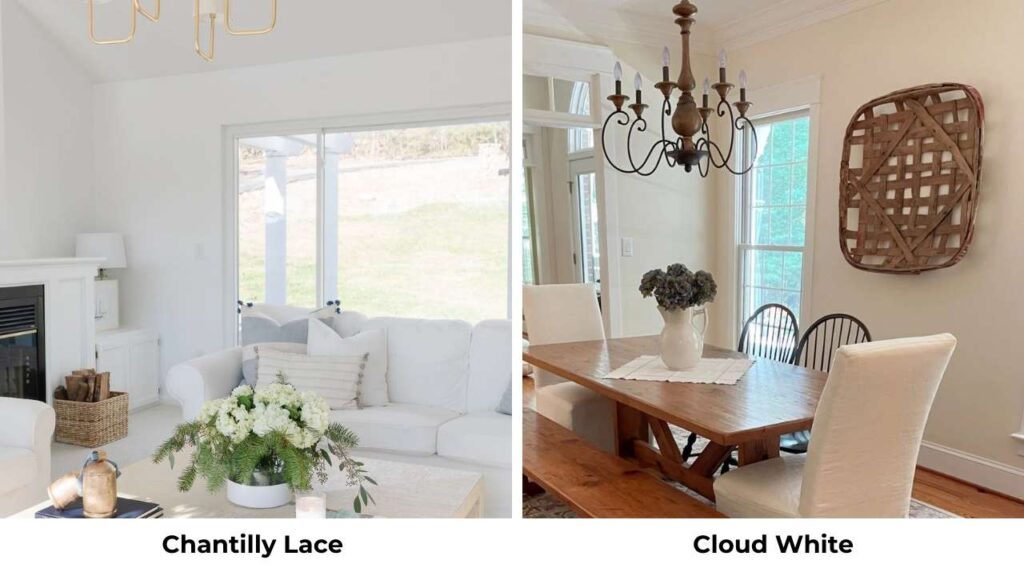
Cloud White (CC-40) is around 87 LRV and has a creamy yellow undertone and it is warmer than Chantilly Lace.
This is for people who want softness and traditional warmth. It’s warmer than White Dove.
Chantilly Lace is fresh and cool, Cloud White is cozy and warm.
White Dove Vs Chantilly Lace Vs Alabaster
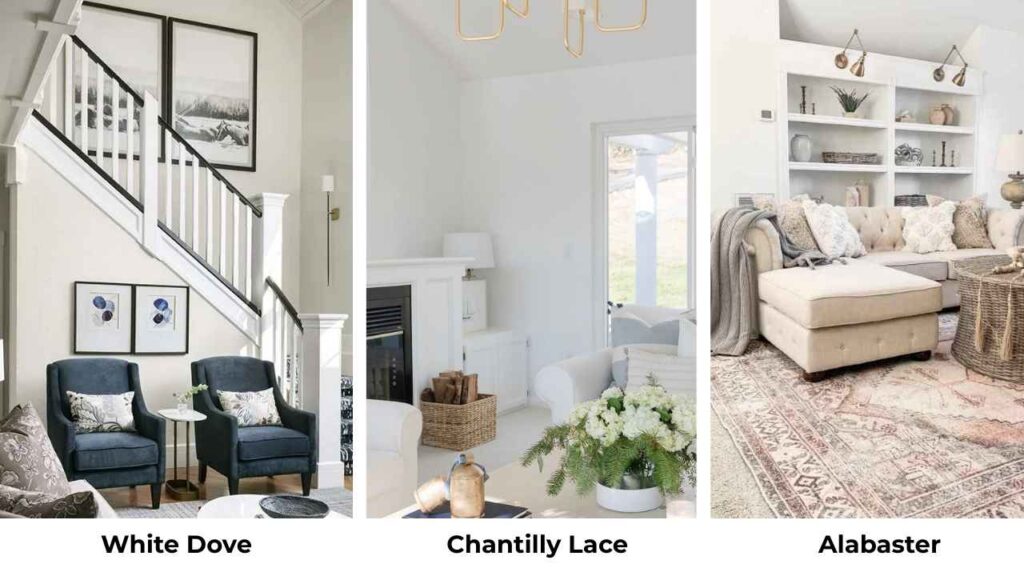
Alabaster (SW 7008) is a Sherwin Williams color with an LRV around 82, darker than both White Dove and Chantilly Lace.
It has cream and yellow warmth than either of them. White Dove is soft and less creamy, Chantilly Lace is cool and bright.
Alabaster is for people who want warmth and aren’t afraid of it.
White Dove Vs Swiss Coffee
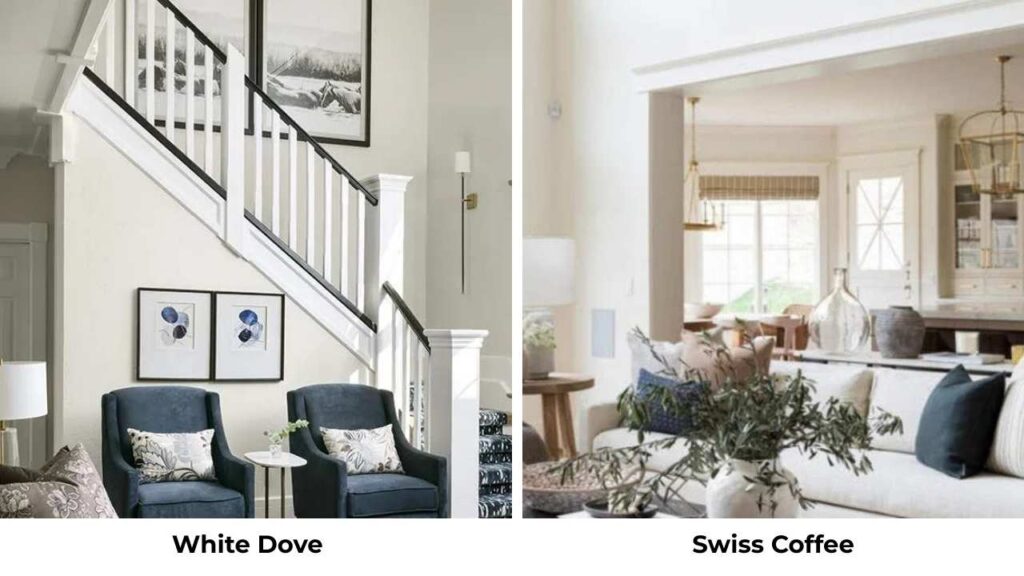
Swiss Coffee (OC-45) has an LRV around 83.93 and stronger yellow-cream undertones than White Dove. It’s the warmest of all.
White Dove is muted and sophisticated, Swiss Coffee is cozy and traditional. If you want less yellow, White Dove is what you should consider.
| Color | Brand | LRV | Undertone | Warmth Level | Best For |
| White Dove | Benjamin Moore | 85.38 | Soft greige | Warm-balanced | Versatile, works warm or cool spaces |
| Chantilly Lace | Benjamin Moore | 90.04 | Minimal cool gray | Cool-crisp | Modern kitchens, trim, bright spaces |
| Simply White | Benjamin Moore | 89.52 | Clean yellow | Warm-bright | Brighter alternative to White Dove |
| Cloud White | Benjamin Moore | 87 | Creamy yellow | Very warm | Traditional, cozy spaces |
| Swiss Coffee | Benjamin Moore | 83.93 | Strong cream-yellow | Warmest | Cozy traditional interiors |
| Alabaster | Sherwin Williams | 82 | Cream-yellow | Warm | Popular SW alternative to White Dove |
White Dove Color Palette
White Dove goes well with almost everything because the balanced greige undertone doesn’t fight. But here’s what I’ve paired it with:
For walls when White Dove is trim: Benjamin Moore Revere Pewter, Edgecomb Gray, Gray Owl, Pale Oak, all these greiges work beautifully.
Chelsea Gray or Kendall Charcoal for dramatic contrast. Soft blues and greens like Palladian Blue or Saybrook Sage.
For accent colors and decor, go with warm woods like oak, walnut, maple, brass and gold hardware, warm grays and taupes, soft blues, sage greens and some blush pinks.
Black accents work great for contrast. Natural textures like linen, jute, rattan all complement the warmth.
For trim and doors when White Dove is on walls: you can go Chantilly Lace or Simply White for bright contrast, or use White Dove on trim too for a monochromatic soft look.
Chantilly Lace Color Palette
Chantilly Lace needs cool companions or warm elements to balance its freshness.
For walls when Chantilly Lace is trim: cool grays like Benjamin Moore Stonington Gray, Gray Owl, or Wickham Gray.
Modern navies like Hale Navy and true blacks like Black Iron for high contrast modern spaces.
For cabinetry pairings: cool quartz countertops like white, gray, marble-look, white or gray subway tile, stainless steel appliances, chrome or polished nickel hardware.
Cool-toned wood floors or white oak.
For decor and accents: stainless steel, chrome, black metal, cool grays, navy,or some charcoal.
If you want warmth, bring it in with natural wood furniture or warm textiles, but keep the fixed finishes cool.
Conclusion
Look, White Dove Vs Chantilly Lace both are great whites but they’re completely different.
White Dove is a soft, warm, versatile color that works in most spaces and forgives your lighting.
Chantilly Lace is a fresh, modern, show-stopping white that demands the right conditions but gives an impact.
Choose White Dove if you want warmth, versatility, traditional or transitional style, or if your room has challenging light.
Choose it for walls, trim, cabinets when you want soft-white character.
Choose Chantilly Lace if you want clean, fresh, modern brightness, if you have cool-toned fixed finishes, or if your room has warm abundant light to prevent it feeling cold.
Choose it for trim, modern cabinets, contemporary spaces.
Test both in your space. Buy samples, paint large swatches, look at them at different times of day.
Because choosing between White Dove vs Chantilly Lace can be a bit confusing but if you consider all the details carefully before committing with one then it’ll look good.
FAQs On White Dove Vs Chantilly Lace
Neither is better, they serve different purposes. White Dove is better for warm, versatile, forgiving applications. Chantilly Lace is better for fresh, modern, high-contrast applications.
Yes, this is a common pairing, Chantilly Lace on trim with White Dove on walls, or Chantilly Lace on cabinets with White Dove on walls. The brightness difference creates nice contrast without being harsh.
Don’t use White Dove if you need a true bright white for modern spaces with cool finishes, it’ll look too warm and soft. Don’t use it next to harsh white tile or quartz where it’ll look out of place by comparison.
Chantilly Lace stays TRUE. It’s one of the few whites that doesn’t shift cream or yellow or dingy next to bright white finishes. The high LRV and minimal undertone make it perfect for modern kitchens and trim where you need white, not soft-white. It’s bright without being harsh.
White Dove Vs Chantilly Lace: Which One Works Best in Your Home?