

So you’re staring at paint swatches trying to figure out between Anew Gray Vs Agreeable Gray.
These two Sherwin Williams colors look the same but they are not.
Both have become popular in modern and transitional homes because they give you the perfect greige balance.
These two shades may look similar, but their undertones and feel are quite different.
Agreeable Gray looks warm and cozy, then Anew Gray feels purple in another. Lighting changes everything and the room size too.
So, here are the real color profiles of Anew Gray Vs Agreeable Gray, how their LRV and undertones play in real spaces, how lighting goes with them, and which rooms they work best in.
I’ll also compare them against other popular greiges because you should know the options. Also, coordinating colors and the pros and cons.
Here are my other blogs that you can also read:
- Dover White Vs White Dove
- Tricorn Black Vs Iron Ore
- Soft Chamois Vs Swiss Coffee
- Hunter Green Vs Emerald Green
- Ballet White Vs White Dove
Color Profile of Anew Gray (Sherwin Williams SW 7030)
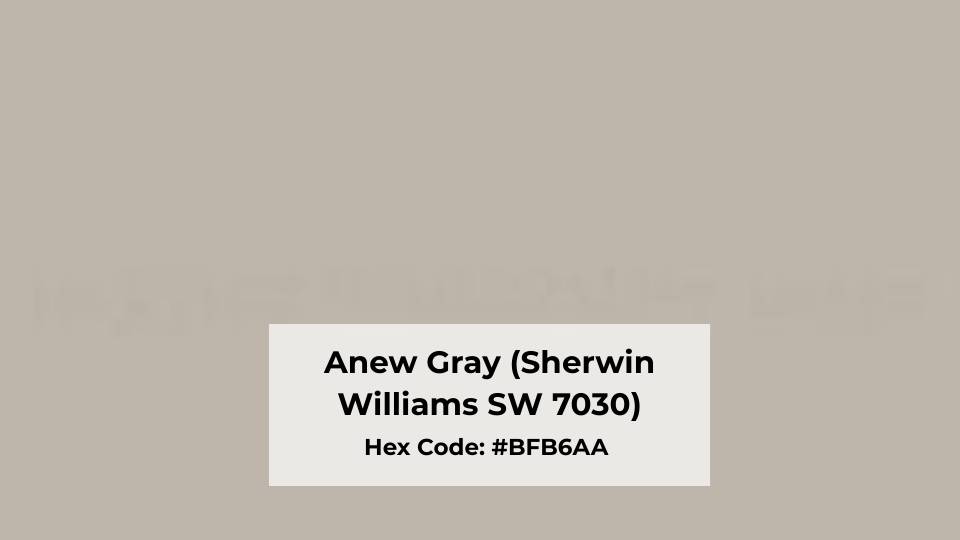
Anew Gray SW 7030 is a warm greige with a hint of taupe. It has a rich appearance that makes it feel substantial rather than washed out.
The LRV is at 47, which means it’s in the medium-tone range, not light, not dark and in the middle, but the depth is where it has its character.
What I love about Anew Gray is how it manages to feel airy and modern without being harsh.
It’s neutral that you’re not stuck with one design style, but it has warmth so that it doesn’t look cold.
The taupe keeps it grounded. When I use this in living rooms, bedrooms, or bathrooms, it creates a calm, sophisticated backdrop.
For exteriors, Anew Gray has is my go-to recommendation for modern farmhouse or transitional styles.
It has the presence to make a statement without looking for attention. It pairs well with white trim and black or bronze accents.
The warmth in it keeps the exterior from feeling cold or flat.
Homeowners and designers keep coming back to this one because it’s versatile without being bland. But it can show purple undertones in some lighting conditions.
Color Profile of Agreeable Gray (Sherwin Williams SW 7029)
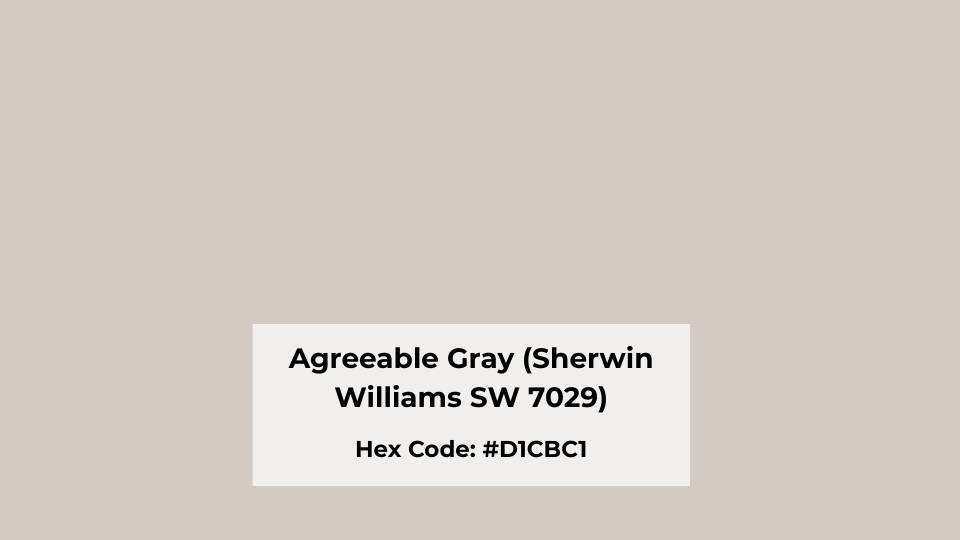
Agreeable Gray SW 7029 is the most talked-about greige. It’s a medium-light shade that balances gray and beige that it’s become the safe choice for everything.
It has an LRV of 60 means it reflects more light. That brightness is why it works in many different spaces.
This is one of Sherwin-Williams’ best-selling paint colors. It’s forgiving and it adapts.
You can put it in a north-facing room or a sun-drenched south-facing space and it’ll work well in both.
The beige keeps it warm and inviting without feeling yellow or out of place.
I’ve used Agreeable Gray in living rooms, bedrooms, kitchens, bathrooms, hallways and everywhere.
It’s the kind of color that flows through an open-concept home without creating visual breaks. For exteriors, it gives you the soft, welcoming look that feels cozy but modern.
The thing about Agreeable Gray is that it not only causes problems. It does not have hidden undertones.
Anew Gray Vs Agreeable Gray: Key Differences
So, here’s where we get into reality, the differences that matter when you’re choosing between Anew Gray Vs Agreeable Gray.
On the paint swatch, they look the same but on your walls they’ll look and feel different.
So, let’s break down why these two greiges are not interchangeable, they’re both warm neutrals in the same family.
LRV (Light Reflectance Value)
Light Reflectance Value is about measuring how much light a paint color reflects back into the room.
The scale goes from 0 (pure black) to 100 (pure white). Anew Gray has an LRV of 47, while Agreeable Gray comes in at 60.
Agreeable Gray is bright and airy. It opens up spaces and makes rooms feel large. Anew Gray absorbs light, which gives it the deep, rich, moody feel.
If you’re working with a small room with limited natural light, Agreeable Gray is the smart choice.
But if you have a large, bright space and you want depth and coziness, Anew Gray is what you should go for.
Undertones
Anew Gray has dominant warm taupe undertones with subtle brown, but it also has secondary violet or purple undertones that are hidden and come suddenly.
In some lighting like low light or cool light, the purple shows up and your warm greige looks off.
Agreeable Gray is more warm beige with soft green undertones. The green is subtle, less visible than Anew Gray’s purple situation.
Agreeable Gray rarely looks muddy or weird.
Side by side, Agreeable Gray looks bright and beige. Anew Gray looks deep and taupe-forward.
If you want true neutral flexibility, Agreeable Gray is what you should go for. If you want color and character, Anew Gray is the best.
Lighting Behaviour
Lighting is where Anew Gray and Agreeable Gray show their personalities.
Anew Gray performs best in bright natural light, like south-facing rooms or spaces with windows.
In good light it looks warm, sophisticated, and balanced. But in a north-facing room or a space with limited natural light, the violet undertones come out and it can feel heavy or dark.
Also, artificial lighting can make it look muddy too.
Agreeable Gray is adaptable in any lighting condition whether it is north, south, east, west, it maintains its balance.
This is why it’s a popular whole-home color because you don’t have to worry about it looking different from room to room.
I always tell people to test both colors in their space at different times of day, from morning light, afternoon light, evening with your lamps on.
Style and Best Uses
Anew Gray works well in transitional, traditional, rustic, and warm modern interiors. It pairs well with warm woods, stone, and earthy textures.
I love it for accent walls, dining rooms, bedrooms, office spaces, and cabinets when you want contrast and depth.
Agreeable Gray looks nice in transitional, modern farmhouse, contemporary, and minimalist styles.
It’s the neutral which works in open-concept spaces, living rooms, hallways, and kitchens.
It’s the safe, flexible choice for when you need a color that won’t cause problems.
For trim and white pairings, both work with SW Pure White, SW Alabaster, and SW Extra White. But Agreeable Gray is forgiving with bright whites.
Anew Gray pairs best with soft, warm whites to avoid harsh contrast.
| Feature | Anew Gray (SW 7030) | Agreeable Gray (SW 7029) |
| LRV | 47 | 60 |
| Color Lean | Warm taupe/greige | Warm beige/greige |
| Undertones | Taupe, brown, violet/purple | Beige, soft green |
| Lighting Needs | Best in bright natural light | Adaptable to any light |
| Visual Weight | Deep, rich, moody | Light, bright, airy |
| Best Rooms | Bedrooms, dining rooms, offices, accent walls | Whole-home, living rooms, open concepts |
| Style Match | Transitional, traditional, warm modern | Modern farmhouse, contemporary, minimalist |
How Does Anew Gray and Agreeable Gray Look in Different Rooms?
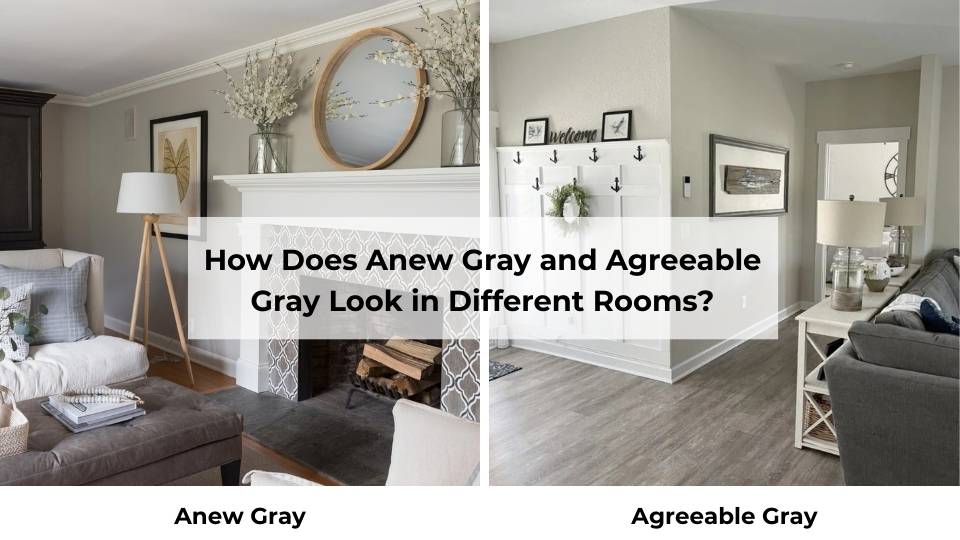
Both Anew Gray and Agreeable Gray look differently depending on the space, the light, the size, and what you’re pairing them with.
I’ve used both in every room type, so here’s what happens when you commit to these colors in different spaces.
Living Room
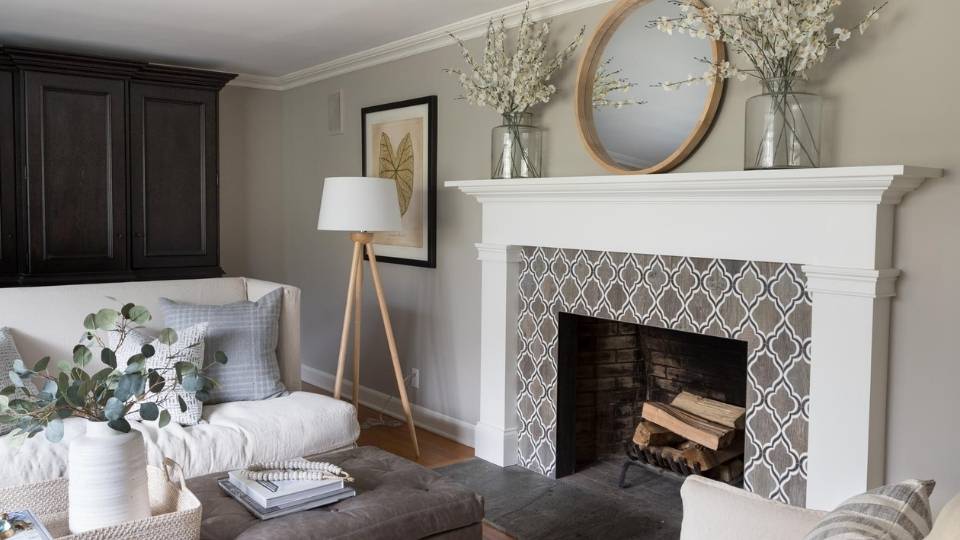
Anew Gray in a living room creates a sophisticated, grounded feeling. If your living room has good natural light.
I used it in a south-facing living room with windows and it looked incredible, warm, rich, cozy without being dark.
But I’ve also seen it in a living room with only one small window and it felt heavy. The violet undertones came and made the space feel small.
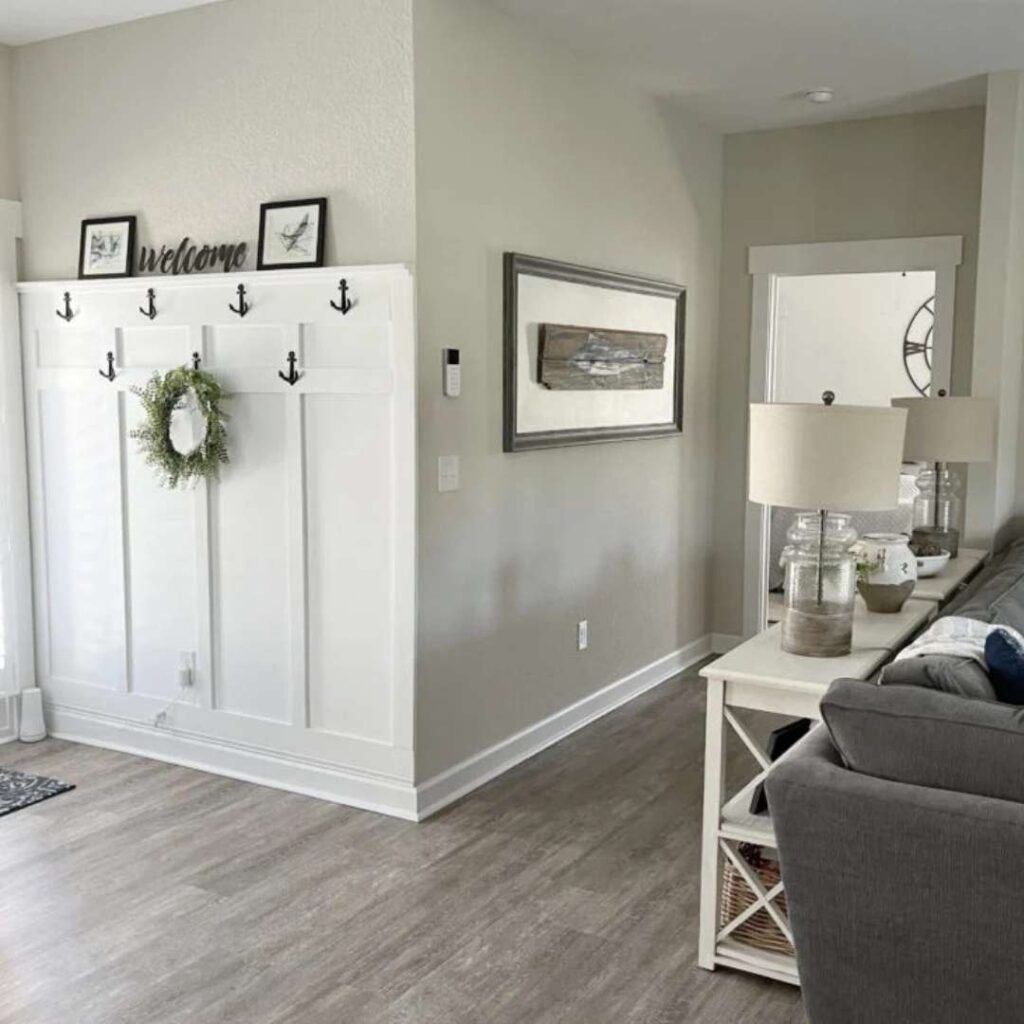
Agreeable Gray in a living room is always safe. It brightens the space, makes it feel open and airy, and creates the neutral backdrop that lets your furniture and decor shine.
It works in open-concept layouts where your living room flows into the kitchen and dining area.
The consistent warmth carries through without creating stuffed color shifts.
Bedroom
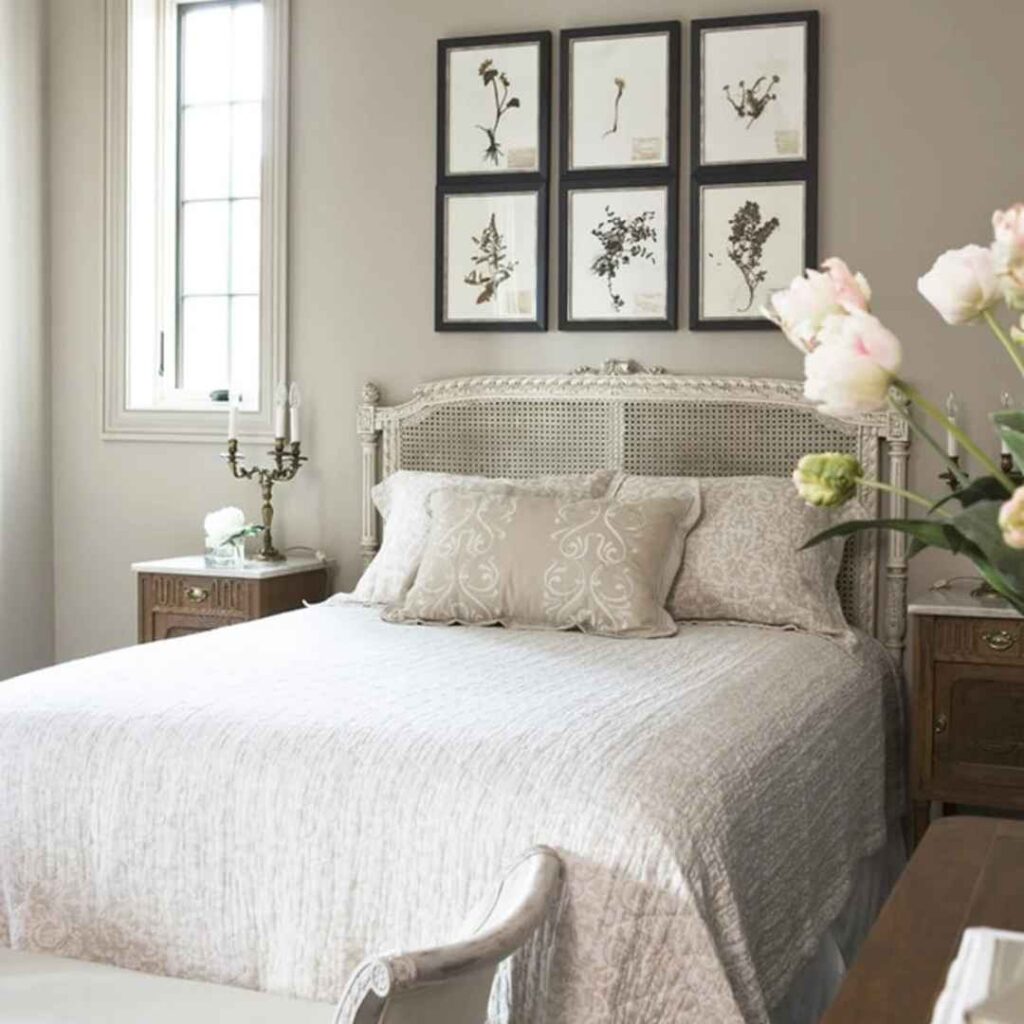
Anew Gray in the bedroom is one of my favorites. Bedrooms don’t need to be bright and airy, you want the cozy, cocoon-like vibe.
The deep tone of Anew Gray creates a restful, sophisticated feel.
I’d make sure you have decent natural light during the day, but the richness works well in a space meant for relaxation.
Pair it with soft warm whites on the trim and warm wood furniture.
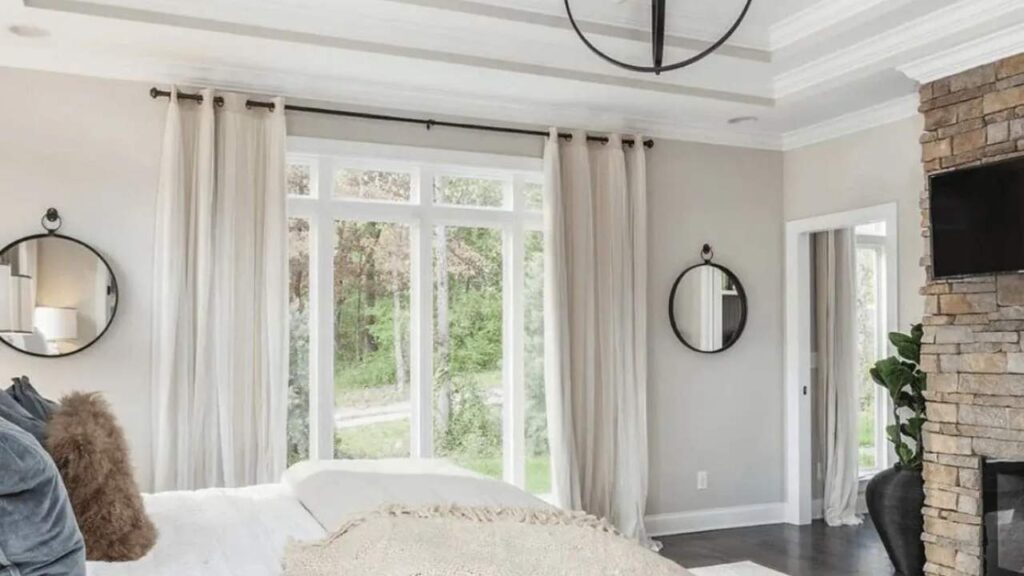
Agreeable Gray in bedrooms gives you a serene, spa-like feel. It’s light and peaceful, which some people go for sleeping spaces.
It’s forgiving if your bedroom has limited light. I think it’s safe for a bedroom like you could push for something with personality.
Bathroom
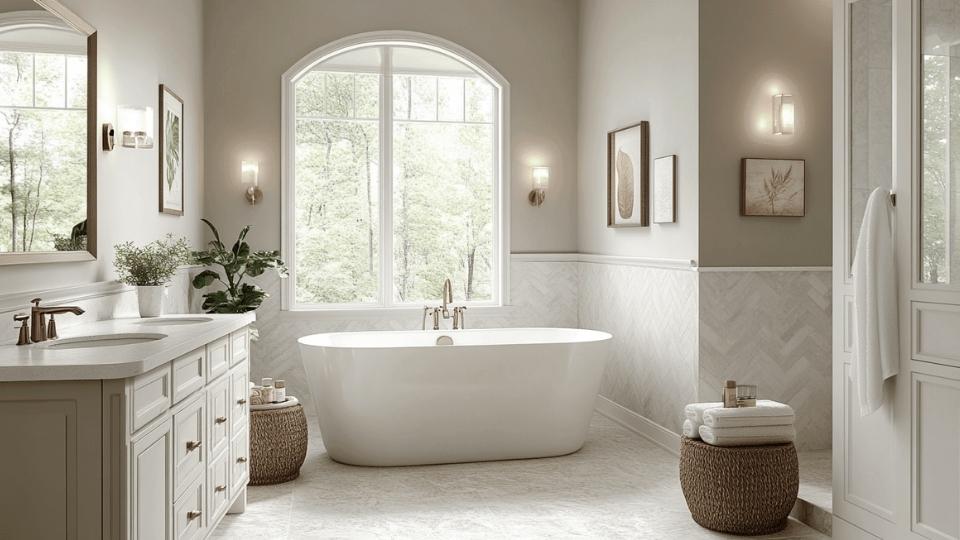
Anew Gray in bathrooms can go either way. In a bathroom with good natural light, it looks elegant and modern.
But in a windowless bathroom with only artificial light, the purple undertone can make it look weird.
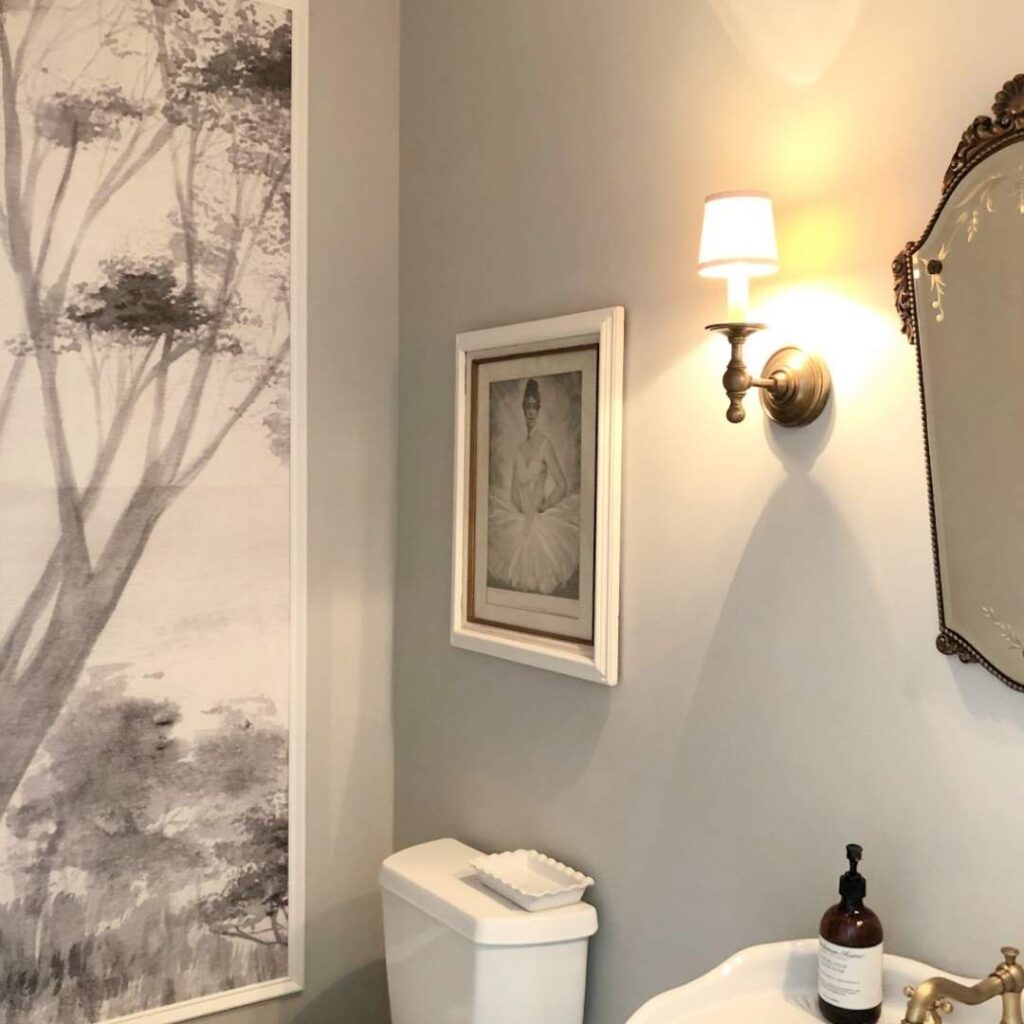
Agreeable Gray in bathrooms works consistently. It feels clean and fresh without being harsh white.
It pairs well with white fixtures, marble or quartz countertops, and with any tile. The beige warmth keeps it from feeling cold like gray can in bathrooms.
This is the safe choice for bathrooms, if you don’t have great natural light.
Kitchen
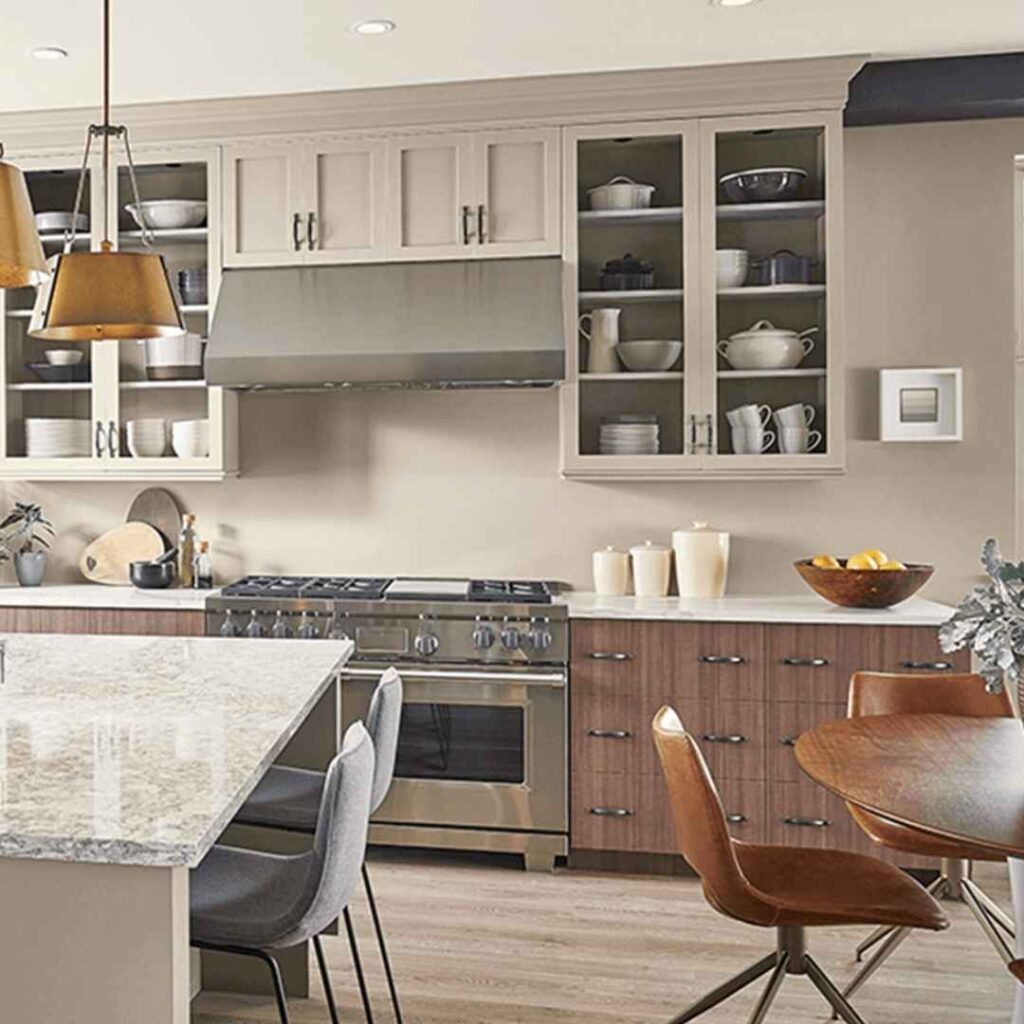
Anew Gray in kitchens gives you depth and contrast. If you’re going for the modern, sophisticated kitchen with depth, Anew Gray cabinets look rich and intentional.
They pair well with white or light countertops and backsplashes. Kitchens have varied lighting and Anew Gray can look different.
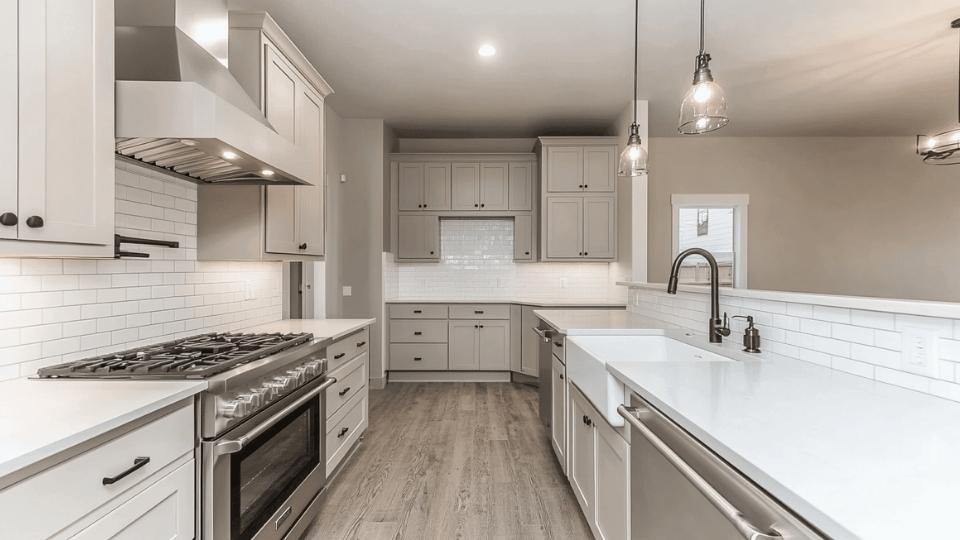
Agreeable Gray in kitchens is popular for a reason. It works on walls AND cabinets.
It’s light to keep the kitchen feeling open and clean, but warm to feel inviting.
It pairs with most countertop and backsplash options. It is common that it may feel generic, but functionally it’s hard to replace.
Exterior
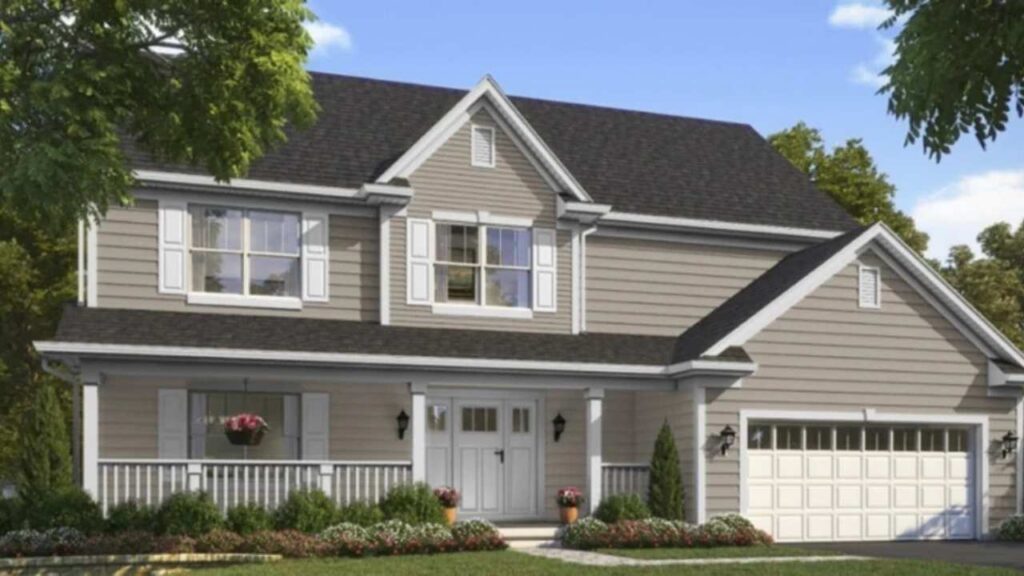
Anew Gray on exteriors makes a statement with warmth and depth. It has richness to create visual interest without being bold or trendy.
It works well with white trim, black windows, and warm wood accents. The taupe warmth keeps it from feeling modern or commercial.
I love it in modern farmhouses and transitional style homes.
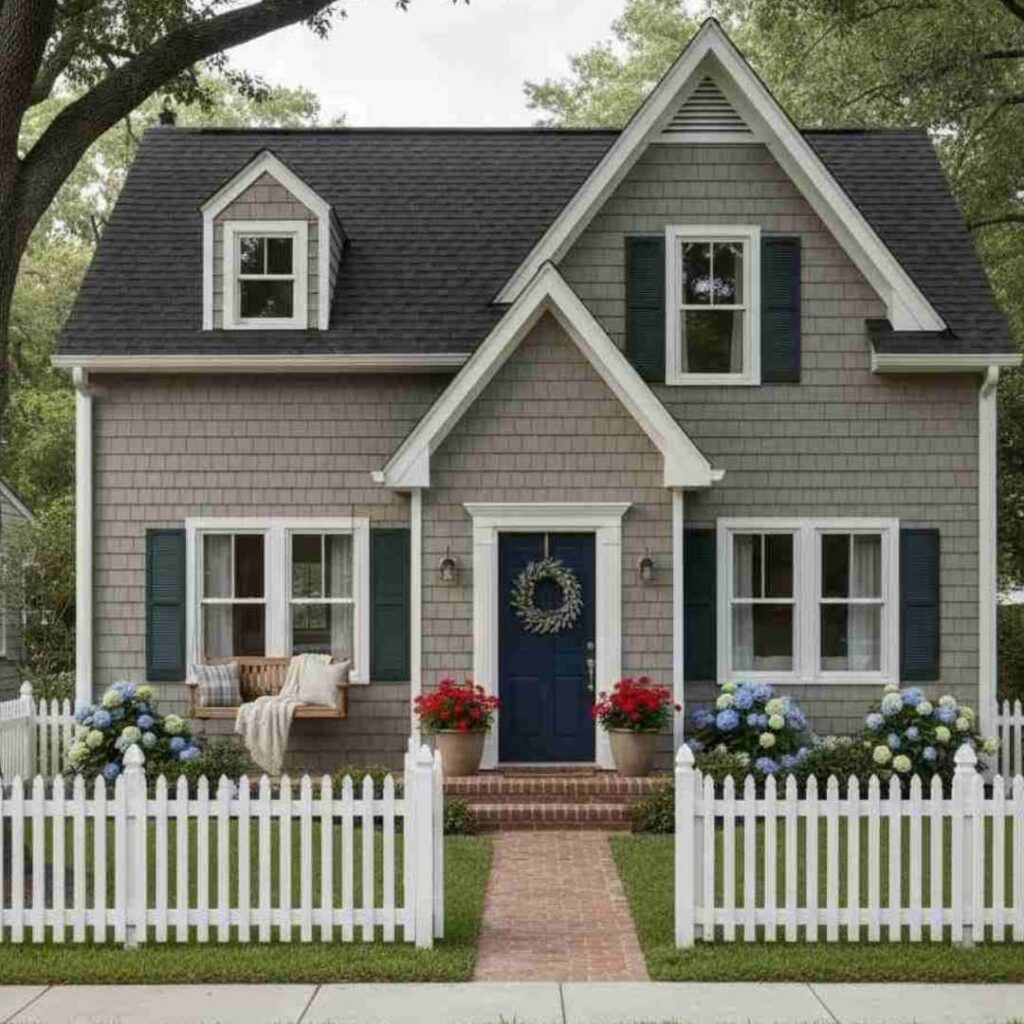
Agreeable Gray on exteriors creates the soft, welcoming, cozy look that feels balanced and current.
It’s light, so it makes homes feel large and open and it works on any architectural style.
It’s become common in new construction, which can be a pro or a con depending on how you feel about popular choices.
Anew Gray Vs Agreeable Gray Vs Other Colors
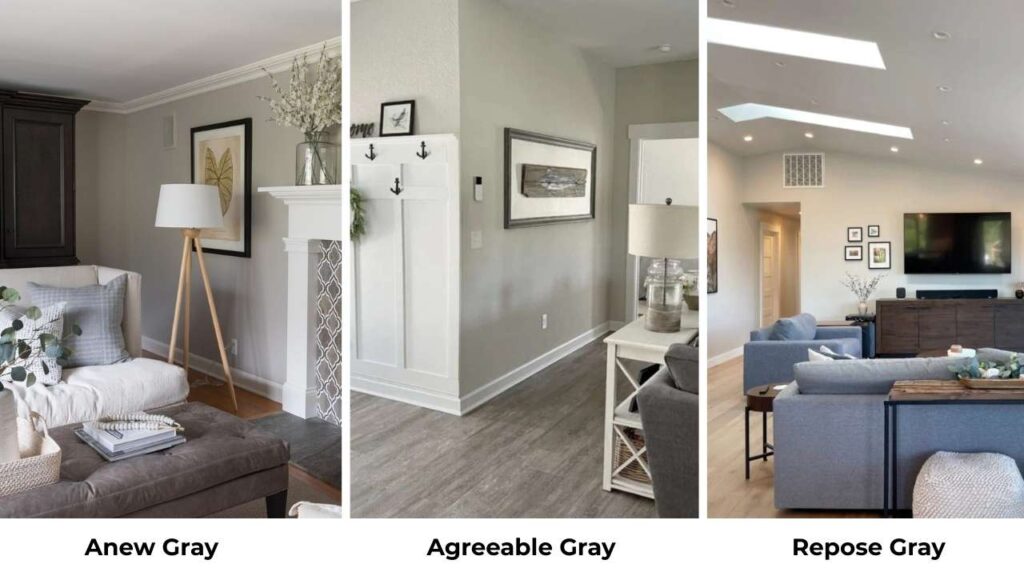
Alright, so you’re wondering how these two are against other greiges and grays that are also in paint swatches.
Let me walk you through how Anew Gray and Agreeable Gray compare to the other colors in the greige game.
Some of these are there to tell the difference, others are different in that they solve different problems.
Anew Gray Vs Agreeable Gray Vs Accessible Beige
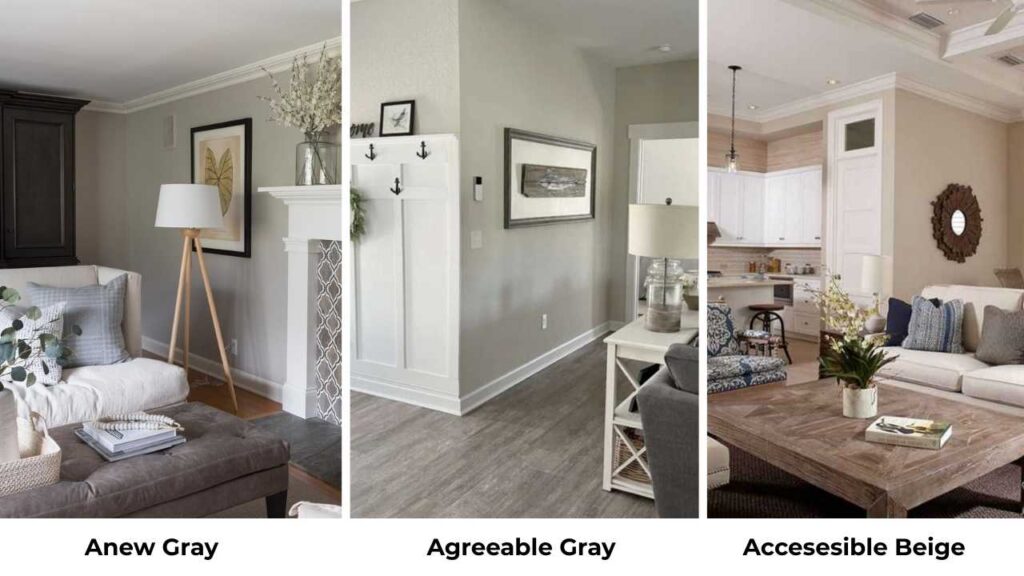
Accessible Beige SW 7036 is warm and beige than both Anew Gray and Agreeable Gray.
It has an LRV of 58, so it’s close to Agreeable Gray in brightness but is more into the beige family.
If Agreeable Gray feels too gray for you, Accessible Beige is what you should answer.
Anew Gray is deep and neutral compared to Accessible Beige’s warmth.
Anew Gray Vs Repose Gray
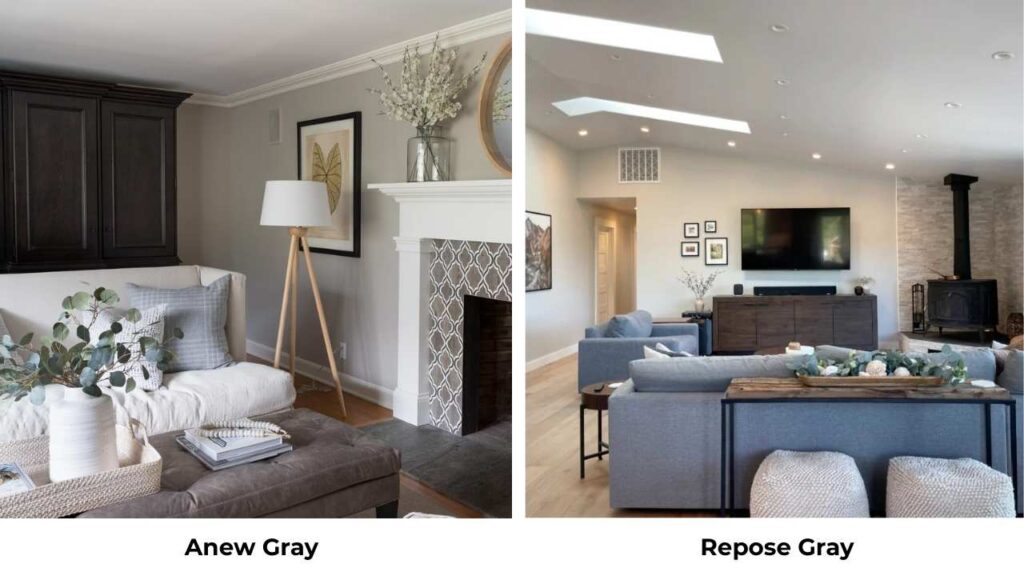
Repose Gray SW 7015 is cool and more gray than Anew Gray. LRV of 58 makes it light too.
Repose has more true gray with a hint of warmth, while Anew Gray is a greige with those taupe and brown undertones.
If you want something cool and light, Repose is the best. If you want warmth and depth, go with Anew Gray.
Anew Gray Vs Amazing Gray
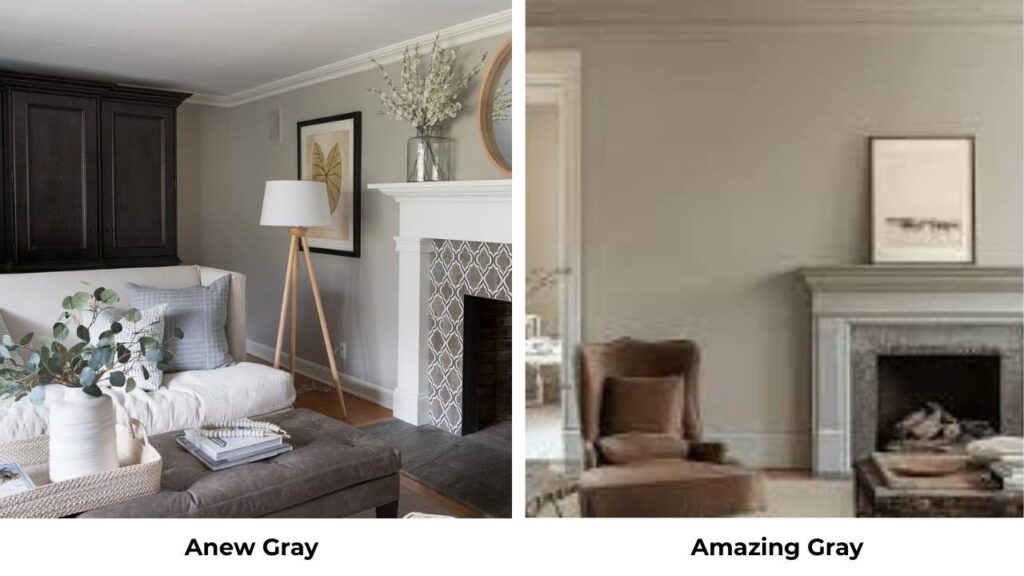
Amazing Gray SW 7044 has the same LRV of 47 as Anew Gray, so they’re similar.
Amazing Gray has black and green undertones, while Anew Gray has taupe with the purple undertone.
They’re close that your lighting and surrounding finishes will matter more than the color difference.
Anew Gray Vs Revere Pewter
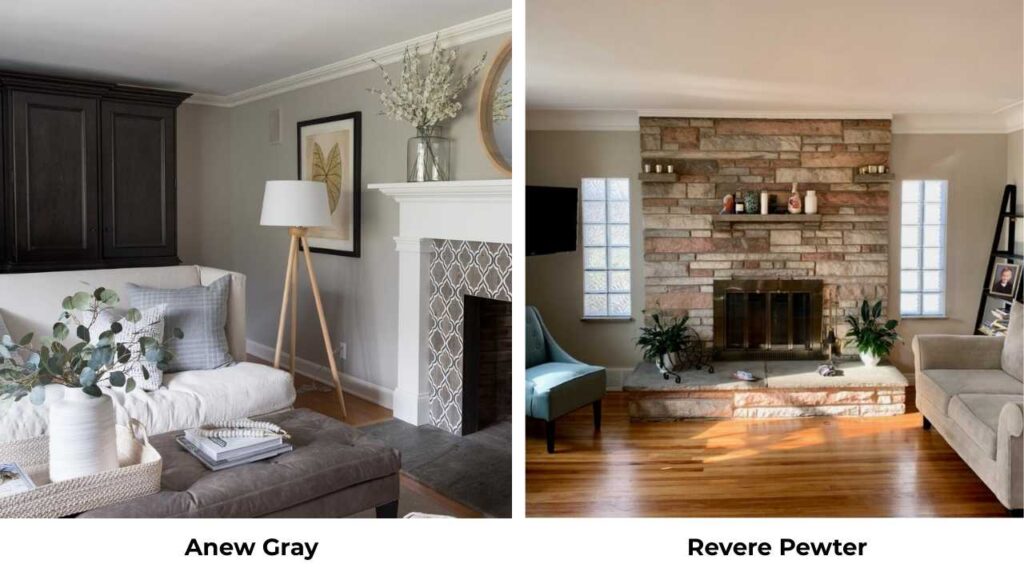
Revere Pewter Benjamin Moore HC-172 is lighter than Anew Gray and has yellow undertones.
It’s one of the best greiges which is warm, balanced, and versatile. Anew Gray is deep and cool by comparison.
Revere Pewter is also loved and proven, so if you want a safe bet from a different brand, that’s your option.
Anew Gray Vs Perfect Greige
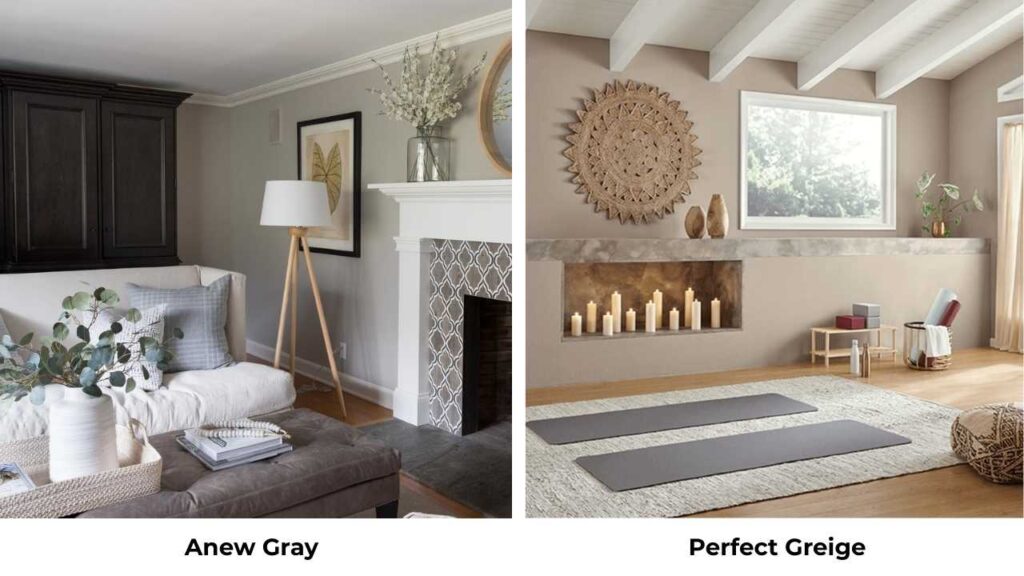
Perfect Greige SW 6073 is warm and lighter than Anew Gray. It’s a true middle-ground greige without any of the purple undertones that Anew Gray can show.
If the purple thing worries you but you want similar depth, Perfect Greige is worth going for.
Anew Gray Vs Mindful Gray
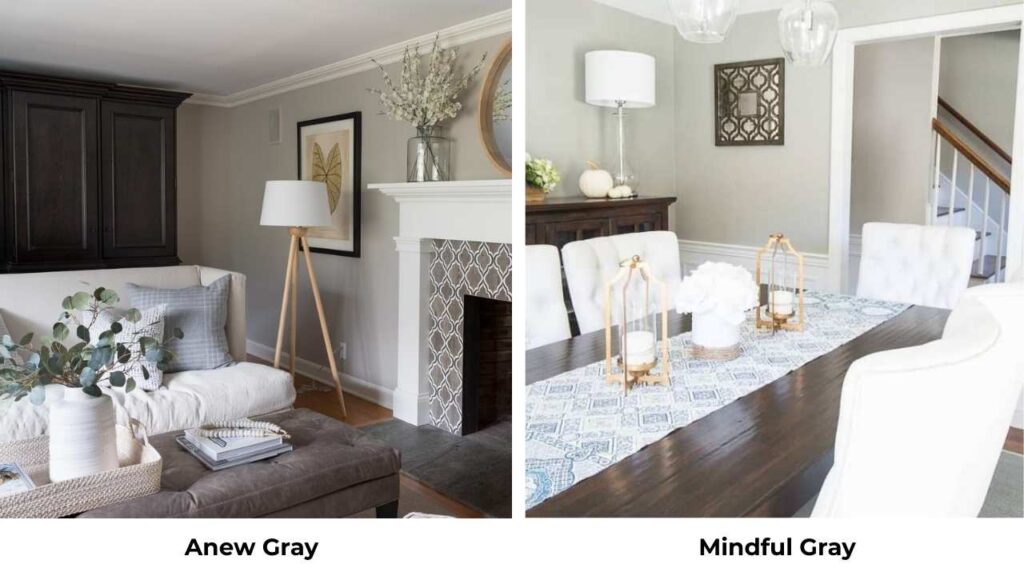
Mindful Gray SW 7016 is cool, gray-leaning, and lighter than Anew Gray.
It’s a popular choice for people who want gray with a hint of warmth, not greige. Anew Gray is warm and taupe hints.
| Color | LRV | Undertones | Compared to Anew Gray | Compared to Agreeable Gray |
| Anew Gray | 47 | Warm taupe, brown, violet | — | Deeper, more taupe, darker |
| Agreeable Gray | 60 | Warm beige, soft green | Lighter, more beige, brighter | — |
| Accessible Beige | 58 | Warm beige, yellow | Warmer, more beige | Warmer, similar brightness |
| Repose Gray | 58 | Cool gray, minimal warmth | Cooler, lighter, more gray | Cooler, similar brightness |
| Amazing Gray | 47 | Gray, green, slight black | Very similar, more green | Darker, cooler |
| Revere Pewter | 55-56 | Warm greige, yellow | Light, more yellow | Slightly dark, more yellow |
| Perfect Greige | 50 | Balanced greige | Warm, no purple | Dark, similar warmth |
| Mindful Gray | 51 | Cool gray, subtle warmth | Cool, less taupe | Dark, much cooler |
Anew Gray Coordinating Colors
Pairing colors with Anew Gray needs more planning than Agreeable Gray because of the undertones.
You want colors that either complement the warmth or provide contrast without making that purple undertone stand out.
I’ve paired Anew Gray with everything from whites to deep navies, and some combinations work better than others.
Warm whites like SW Alabaster, SW Creamy, or Benjamin Moore White Dove keep things soft and cohesive.
Pure White can work but the contrast is sharp. For accent colors, warm and earthy like terracotta, rust, warm olive greens, soft golds.
These go into the taupe warmth beautifully. If you want drama, navy blues or charcoal create contrast without clashing.
Remember to avoid cool pastels or icy blues because they’ll bring out the purple undertone and make everything feel off.
Wood tones should lean warm rather than cool grays or whitewashed finishes.
Agreeable Gray Coordinating Colors
Agreeable Gray is forgiving that you can pair it with anything and it’ll look fine.
To make it shine, pair it with bright whites like SW Pure White or SW Extra White for clean, modern contrast.
If you want warmth, then go with Soft creams, warm beiges, and taupes layer beautifully.
For accent walls or decor, sage greens, soft blues, warm blush pinks, or deep charcoal work.
The beige warmth in Agreeable Gray means it goes well with both warm and cool accent colors, which is rare.
Brass, gold, black, and chrome work for hardware and fixtures. Wood tones are flexible too from light blonde woods to dark espresso.
The versatility is the main thing of this color. It’s the neutral that gets along with every color.
Pros and Cons of Anew Gray and Agreeable Gray
Anew Gray Pros:
- Creates depth and richness without being too dark
- Warm taupe undertones feel sophisticated and grounded
- Works well in spaces with bright natural light
- Great for creating moody, cozy spaces
- Pairs well with warm woods and earthy tones
Anew Gray Cons:
- Can show purple and violet undertones in certain lighting
- Not ideal for low-light or north-facing rooms
- Dark LRV makes small spaces feel small
- Less versatile than light greiges
- Requires careful coordination with trim and accents
Agreeable Gray Pros:
- Extremely versatile across lighting conditions
- High LRV brightens spaces and makes them feel large
- Works as a home color without weird transitions
- Shows problematic undertones
- Pairs easily with most colors, finishes, and styles
- Proven track record as best-seller
Agreeable Gray Cons:
- SO common it may feel generic or boring
- Less depth and character than dark greiges
- Can show slight green undertone in some lights
- Might be too safe if you want personality
Conclusion
Look, choosing between Anew Gray Vs Agreeable Gray comes to your space and what you want it to feel like.
Agreeable Gray is the safe, versatile, goes-with-everything choice that works in any room with any lighting. It’s popular for a reason because it works.
Anew Gray brings depth, warmth, and character, but it needs better lighting and more thoughtful pairing.
If you have bright spaces and want something rich, go with Anew Gray. If you want flexibility and light, Agreeable Gray is the best to go with.
Test both in your space. Live with the samples for a few days. Watch how they change throughout the day.
The right choice will become once you see them in YOUR light with YOUR furniture and YOUR life happening around them.
FAQs On Anew Gray Vs Agreeable Gray
Yes, Anew Gray has an LRV of 47 compared to Agreeable Gray’s LRV of 60. That 13-point difference makes Anew Gray visibly deep, rich, and dark. Agreeable Gray reflects light and feels bright and airy in spaces.
Don’t use Anew Gray in rooms with limited natural light, north-facing rooms, or small spaces where you want to maximize brightness. The low LRV and the purple undertones can make dark spaces feel dark and a bit muddy.
Yes, It’s one of Sherwin Williams’ top sellers and I don’t see that changing. Some people avoid it because it’s popular, but there’s a reason it’s everywhere because it works.
Anew Gray is a warm greige. It is in the middle tone range with dominant warm taupe and brown undertones, with secondary violet or purple undertones that show up in some lighting. It’s warm and deeper than true gray but neutral than straight beige.