

Ballet White vs White Dove are two of Benjamin Moore’s trusted warm white paint colors.
They look identical when you’re looking at the small paint swatches.
Both are in off-white which everyone wants, they are not-too-white, not-too-cream that feels warm but fresh.
Ballet White (OC-9) is into a soft greige-cream territory with some undertones that shift according to the light.
White Dove (OC-17) is a bit clean but warm, but close to what most people think of when they visualize “soft white.”
Both colors can go with modern farmhouses, traditional colonials, and transitional spaces.
Choosing the wrong undertone can change how your space feels.
I’ve seen homeowners considering it “simple white” to realize it is too pink in their north-facing living room or too gray or too creamy.
So here are the differences between Ballet White Vs White Dove, LRV, undertones, how lighting creates an effect, and which rooms benefit from each color.
I’m also breaking down how they compare to other whites.
Here are my other blog posts that you can also read:
- Perfect Greige Vs Agreeable Gray
- White Dove Vs Alabaster
- Woodlawn Blue Vs Palladian Blue
- Wythe Blue Vs Palladian Blue
- Tricorn Black Vs Iron Ore
About Ballet White (OC-9)
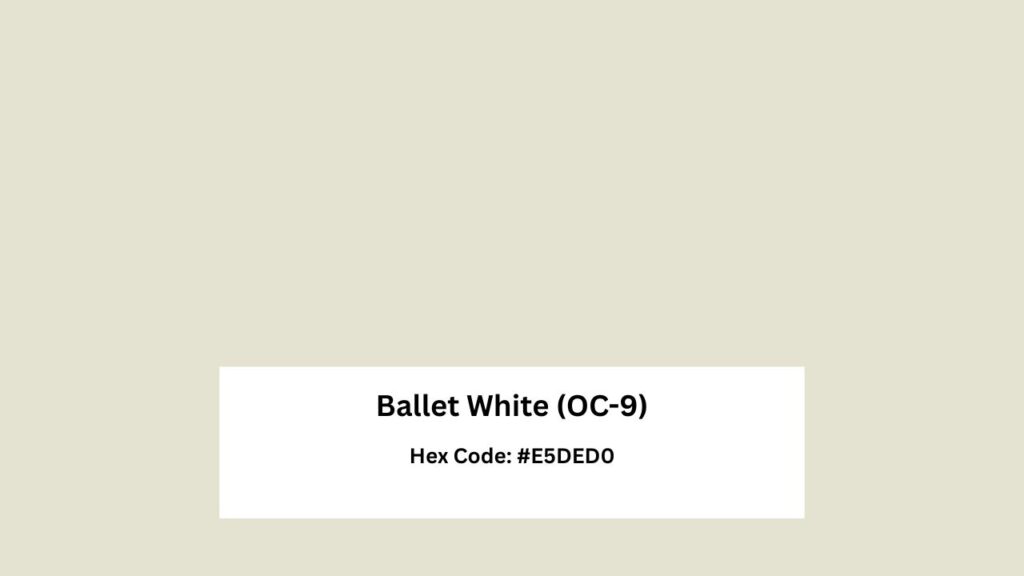
Ballet White is in this space between off-white and light greige. It’s not a true white.
The LRV (Light Reflectance Value) is 72, which means it reflects a good amount of light but has depth.
So Ballet White is dark, warm, grounded.
The undertone is warm beige with a secondary pink or purple cast that comes depending on your lighting and what you pair it with. Some people call it a “dirty cream”.
In spaces with warm lighting or south-facing windows, Ballet White looks creamy and soft.
It has this muted quality that makes it feel cozy without being dark.
In north-facing rooms or next to cool gray finishes, the pink and purple undertones comes.
This is a chameleon color. What you see in one room won’t be what you get in another.
Ballet White works beautifully in interiors with warm wood tones like oak floors, wood cabinets, natural wood trim.
For exteriors, Ballet White is great.
It appears light in natural light.
It’s warm to feel inviting but not creamy because it looks outdated against brick or stone.
About White Dove (OC-17)
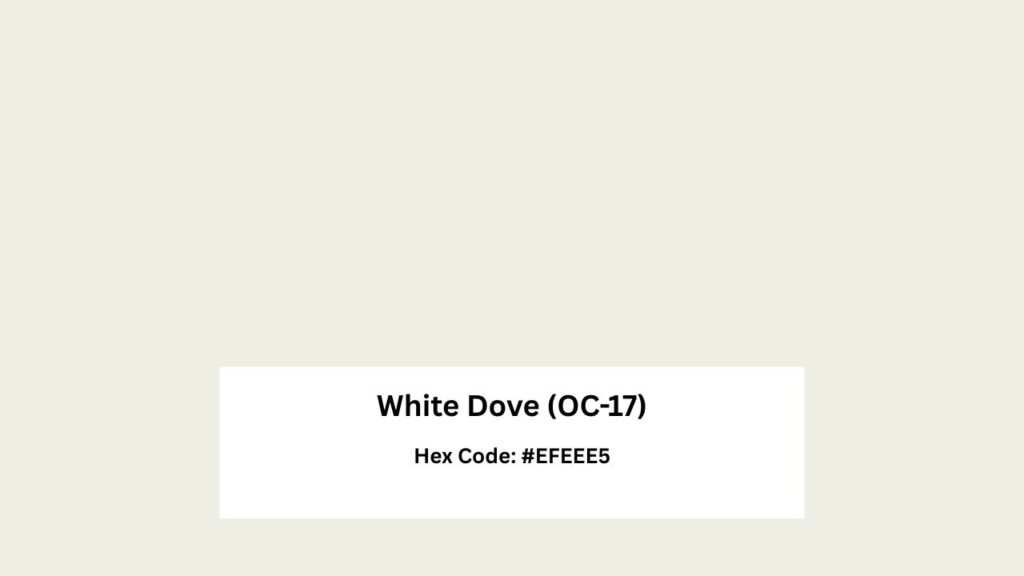
White Dove is one of the colors that works.
It’s a soft, creamy white with warm gray undertones, sometimes called greige, but closer to white than greige colors like Revere Pewter.
The LRV is around 85, so it’s bright and more reflective than Ballet White.
The warmth in White Dove is subtle.
It doesn’t have the yellow or beige that makes some whites look cream.
It’s a balanced, soft white that is clean but not bright.
In natural light, White Dove stays consistent.
It doesn’t shift undertones like Ballet White.
Morning light, afternoon light, overcast days, it holds its softness without looking purple or too gray.
In artificial lighting, mainly warm LEDs or incandescent bulbs, White Dove gets warmer but never looks yellow.
It feels cozy. Under cooler daylight bulbs, it looks neutral and fresh.
This color has range. It works as a wall color, trim color, cabinet color, ceiling color.
You can use it in a house and it won’t feel boring because it has warmth to prevent looking sterile.
White Dove pairs well with almost everything like warm woods, cool grays, marble countertops.
If you’re working with fixed elements like tile or countertops, White Dove is safe to consider.
For exteriors, White Dove is classic.
It’s bright without being blinding, warm without looking vintage.
It complements both traditional and modern architecture.
Works with brick, stone, dark roofs, light roofs, all of it.
What Is The Difference Between Ballet White and White Dove?
In comparing Ballet White Vs White Dove, the difference is obvious.
These two colors are at different points on the warm white spectrum, and understanding LRV, undertones, and lighting behavior.
LRV
LRV (Light Reflectance Value) measures how much light a color reflects.
The scale is from 0-100. Zero is pure black, 100 is pure white.
Ballet White has an LRV of 72. It’s light, but it has depth.
In high-contrast settings like paired with bright white trim the depth becomes obvious.
The walls look dark, warm, and grounded.
White Dove is around LRV 85 which is bright.
It reflects light, which means rooms feel airy and open.
It’s close to a true white, but the warm undertones keep it from feeling cold.
The 13-point LRV difference matters. In a room with limited natural light, Ballet White can feel heavy.
White Dove keeps things lifted. If you’re trying to make a small or dark room feel big, then go with White Dove.
Undertones
Ballet White has warm beige with secondary pink or purple undertones.
The pink and purple notes are subtle in conditions like warm light, warm surroundings.
Some people love the softness it brings.
White Dove has warm gray or greige undertones with almost no yellow. It’s warmer than a bright white like Chantilly Lace, but it doesn’t go beige.
The gray keeps it neutral and balanced.
The undertone consistency is what makes White Dove popular.
It behaves predictably, which is rare for a warm white.
Lighting Impact
Ballet White in warm light, looks creamy, soft, buttery.
The beige undertones show up in a good way.
Ballet White in cool light (north-facing rooms, daylight bulbs): The pink and purple undertones emerge.
It can look grayish or slightly mauve.
If you have cool-toned materials in the room like gray countertops, cool tile this gets amplified.
White Dove in warm light: Stays soft and warm but never tips into yellow or cream territory. It feels cozy.
White Dove in cool light: Remains neutral and balanced.
You may notice the gray undertone more, but it doesn’t shift into a different color.
Direct sunlight washes out both colors, but Ballet White loses its character because the LRV is low.
White Dove maintains its presence in the afternoon sun.
For testing, always sample both colors on multiple walls.
A single swatch won’t show you how the color behaves in the room or in different lighting.
Style and Best Uses
Ballet White styling:
- Pairs with warm white trim like White Dove, Simply White, or Pure White
- Works with wood tones, brass fixtures, warm metals
- Best in rooms with warm lighting
- Feels cozy and grounded, not airy
- Great for bedrooms, living rooms with south or west light, exteriors
White Dove styling:
- Works as walls or trim
- Pairs with any accent color like Hale Navy, Sea Salt, Revere Pewter, Kendall Charcoal
- Complements both warm and cool materials
- Versatile across all rooms and lighting situations
- Ideal for trim, cabinets, kitchens, bathrooms, house color
Comparison Table
| Factor | Ballet White (OC-9) | White Dove (OC-17) |
| LRV | 72 | ~85 |
| Undertones | Warm beige, pink/purple | Warm gray/greige |
| Brightness | Noticeable dark | Bright, reflective |
| Warmth Level | Warm, creamy | Warm, balanced |
| Undertone Stability | Shifts with lighting | Stays consistent |
| Best Trim Pairing | Soft whites (Simply White, White Dove) | Can be trim or paired with itself |
| Best For | Cozy, warm spaces with warm finishes | Versatile like walls, trim, cabinets, whole house |
Ballet White Vs White Dove: How Do They Look in Different Rooms
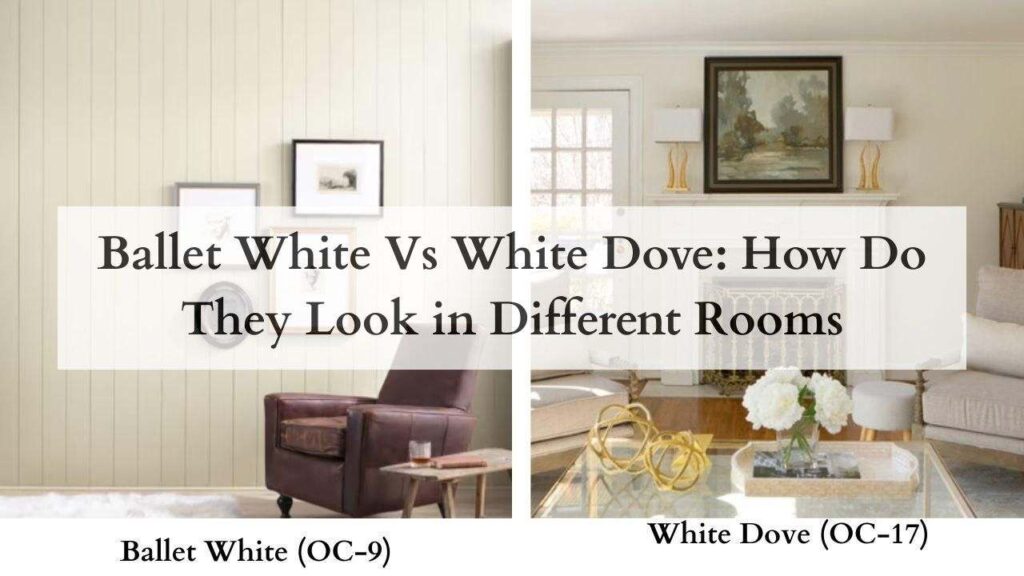
The same paint color can feel different depending on where you use it.
Room size, natural light direction, fixed finishes, it affects how Ballet White and White Dove looks.
Living Room
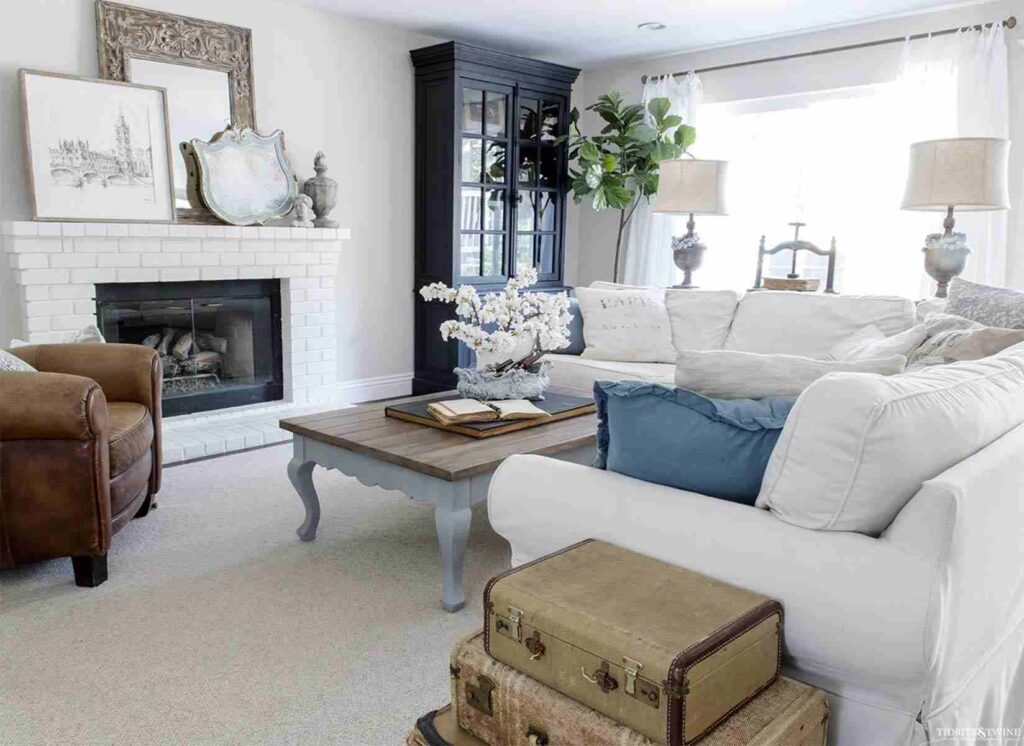
Ballet White in a living room works best if you have south or west-facing windows.
The warm natural light brings the creamy without the pink undertones.
If you’ve got wood floors, a brick fireplace, or warm-toned furniture, Ballet White enhances the coziness.
But in a north-facing living room, Ballet White can look flat or a bit purple.
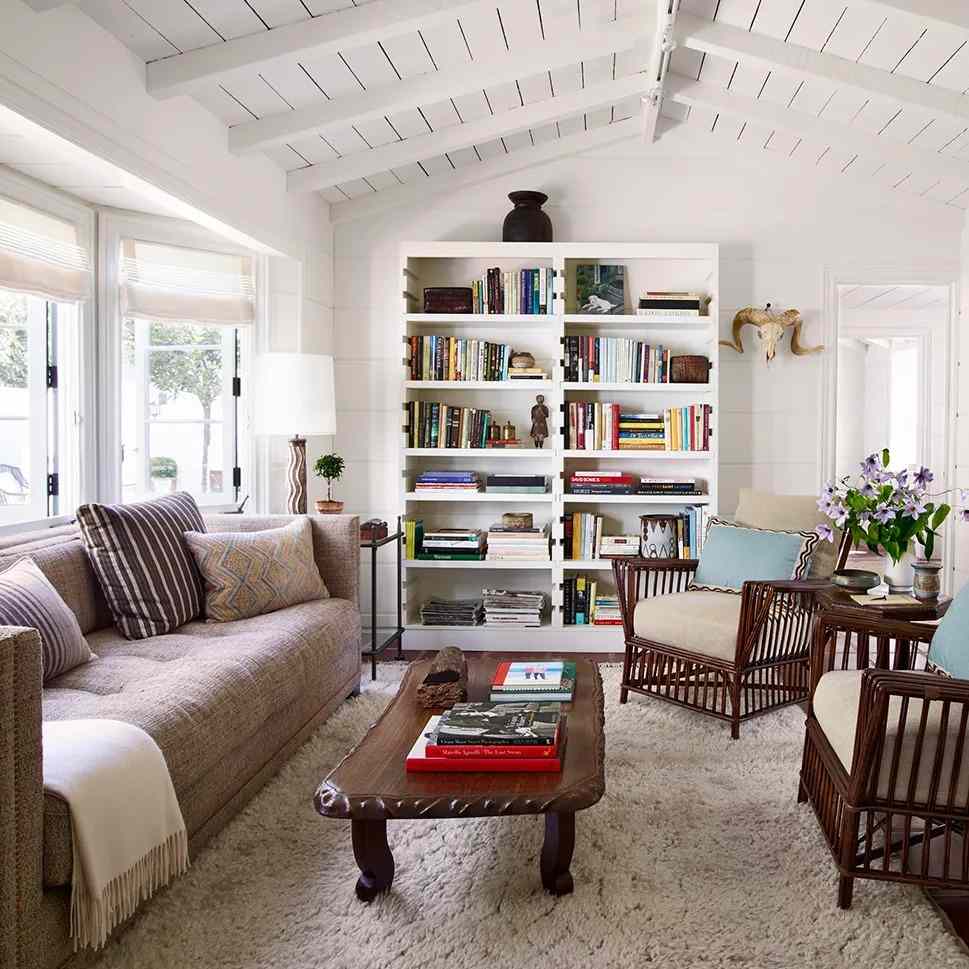
White Dove is forgiving. It brightens without feeling cold, so in lower-light living rooms, it keeps things feeling open.
It’s a better choice if you have a mix of warm and cool elements like gray sofa, wood coffee table, marble accents.
Bedroom
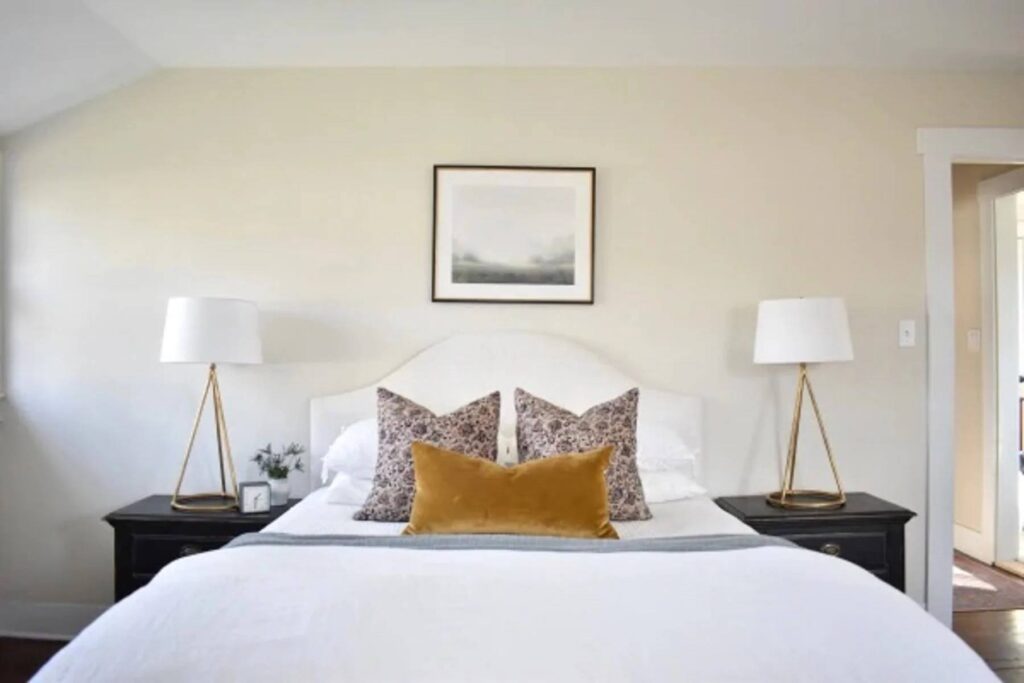
Ballet White creates a soft, cocoon vibe people want in bedrooms.
The low LRV and creamy undertones feel restful. It’s warm without being dark.
If your bedroom has warm lighting like table lamps with soft white bulbs then Ballet White looks beautiful.
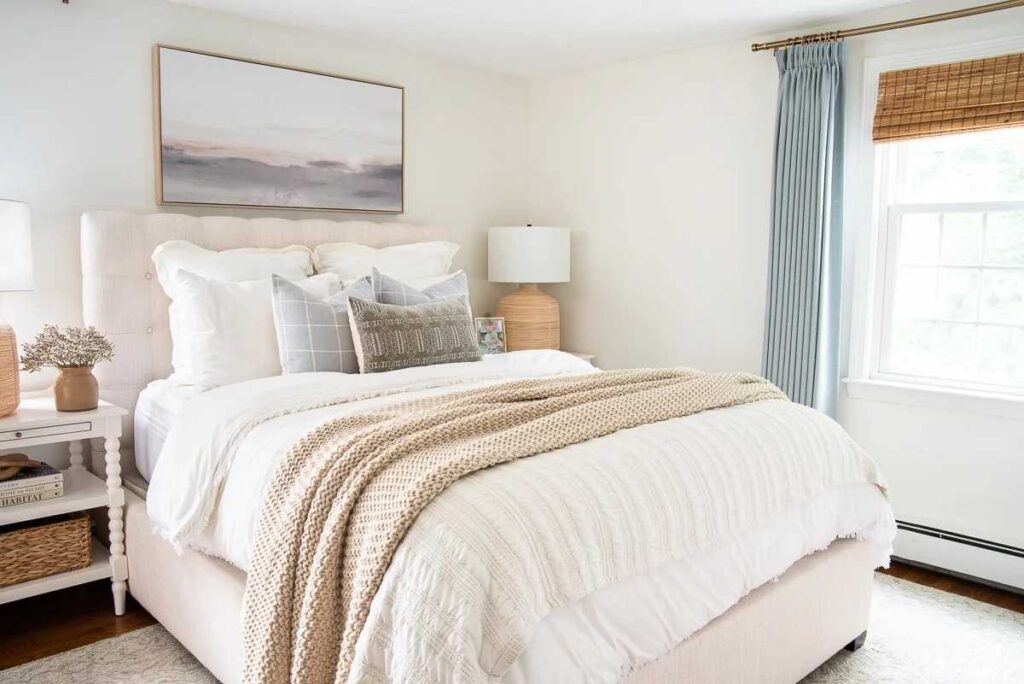
White Dove in the bedroom feels clean and serene. It’s warm to be inviting, but it won’t feel heavy or too cozy.
If you like bright, airy bedrooms that feel spa-like, White Dove is what you should go for.
It also works if your bedding and decor change seasonally.
Bathroom
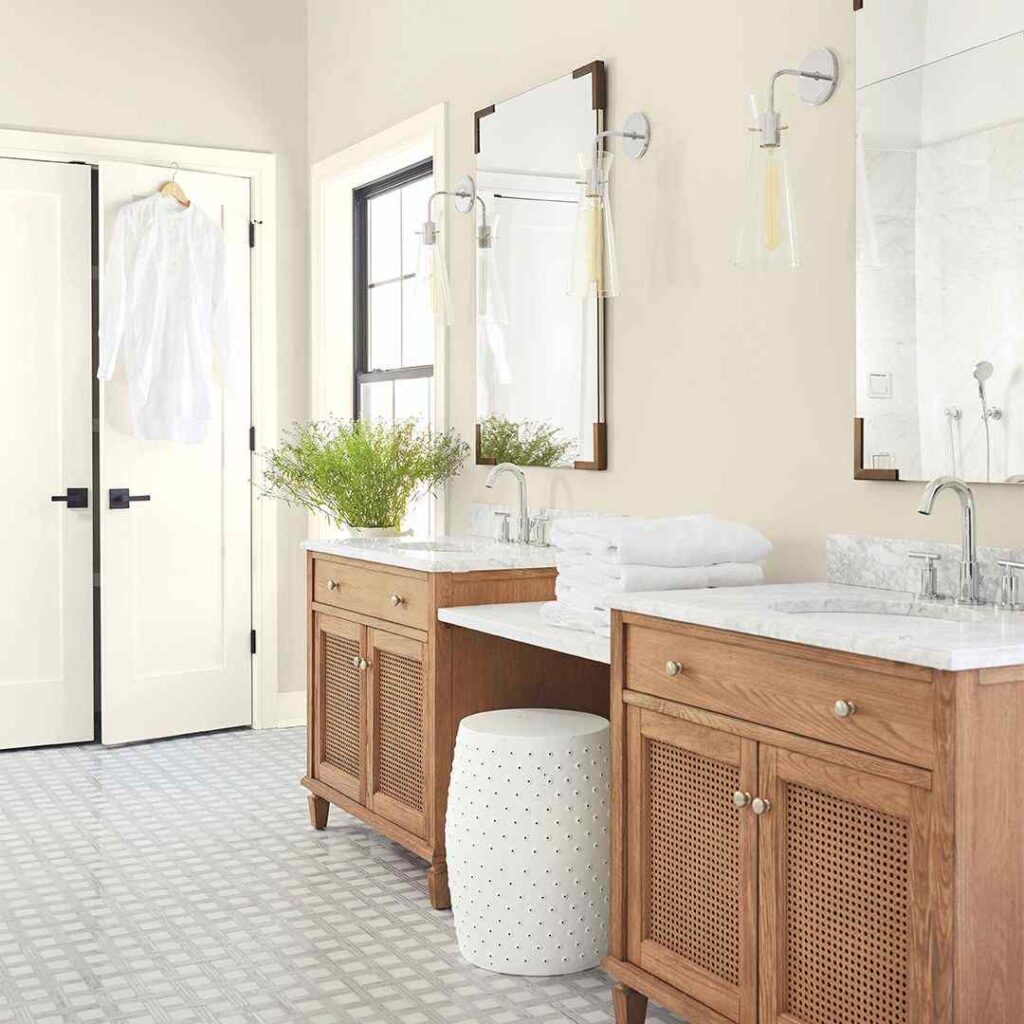
Bathrooms are tricky because of artificial lighting and reflective surfaces.
Tile, mirrors, countertops, they bounce light and color around.
Ballet White in a bathroom with warm stone or beige tile works well.
It ties everything together but if you have white subway tile or marble countertops, Ballet White can look dingy by comparison.
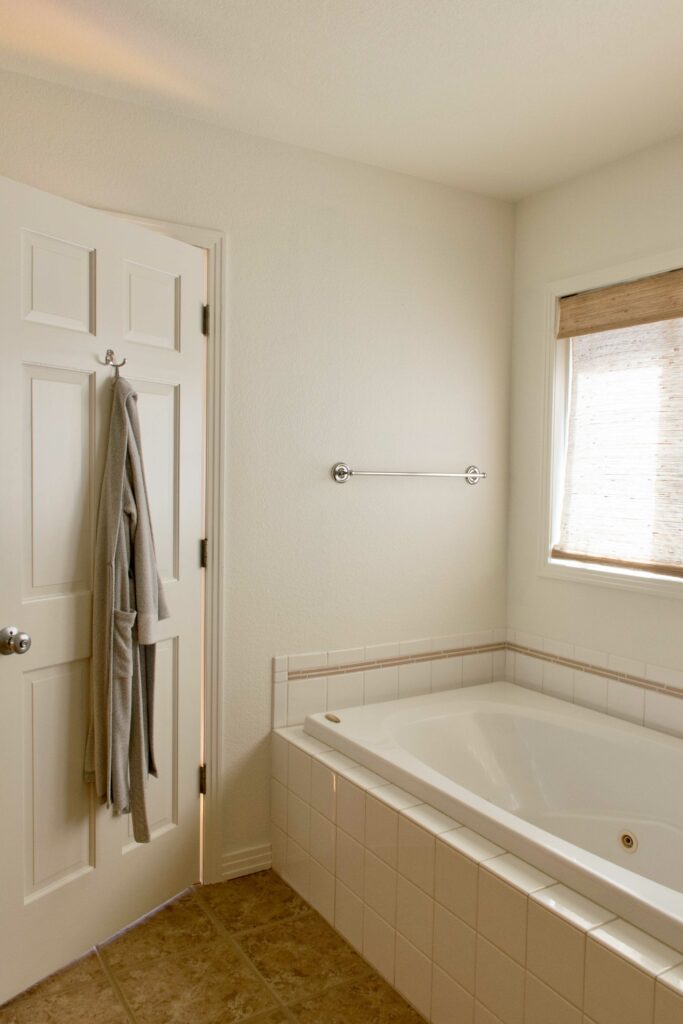
White Dove is a safe bathroom choice. It’s bright to feel clean but soft to avoid that cold, commercial restroom vibe.
It works with white tile, marble, quartz, and warm wood vanities.
Kitchen
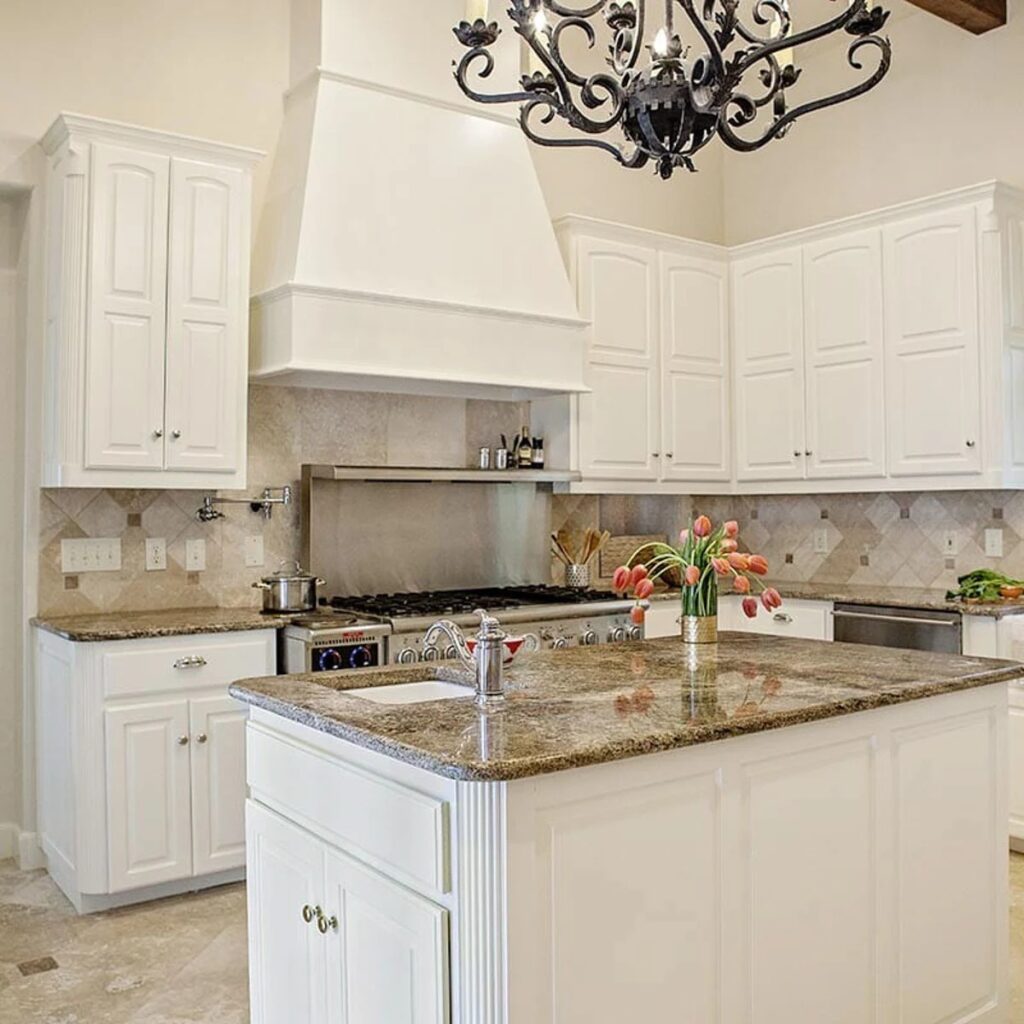
Ballet White on kitchen walls works if you have wood cabinets or warm countertops.
Butcher block, cream subway tile, beige quartz then Ballet White enhances the warmth.
For cabinets, Ballet White gives an off-white look without yellow.
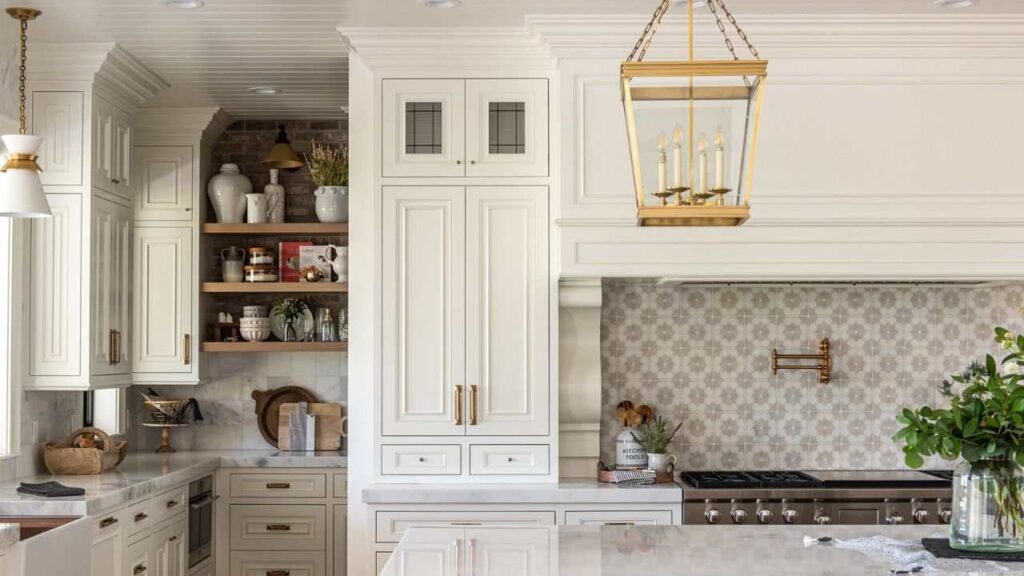
White Dove is popular kitchen white for a reason. It works on cabinets, walls, or both.
Pairs well with gray countertops, white marble, stainless steel, and any backsplash.
It’s bright to make kitchens feel clean but warm to feel homey.
Exterior
For exteriors, natural light changes everything.
Colors look different in full sun than they do indoors.
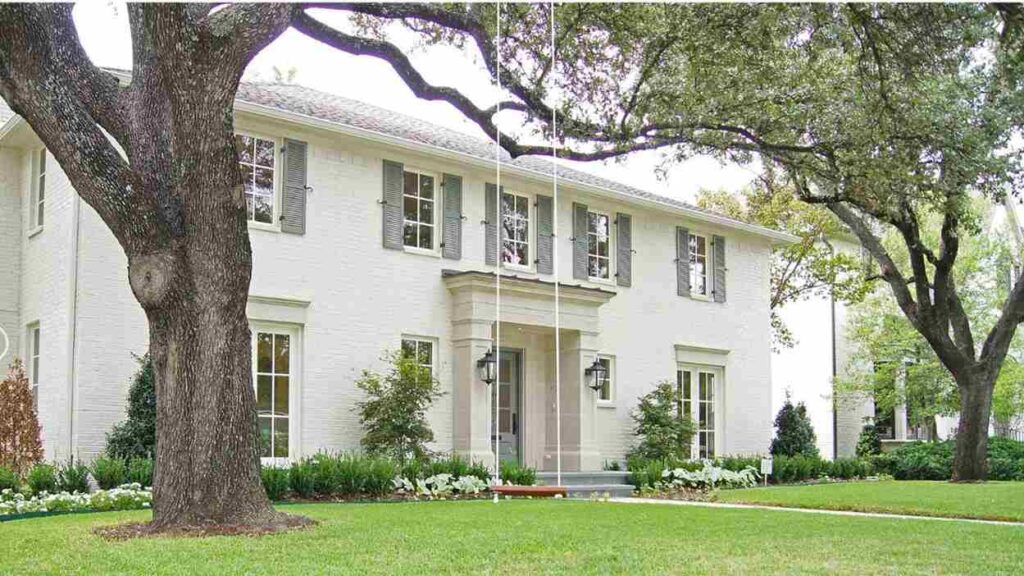
Ballet White on exteriors appears light and less creamy. The depth and warmth show, but it’s subtle.
It works well on farmhouses, cottages, and traditional homes.
Looks great with wood shutters, brick accents, and warm roofing.
If your landscaping is cool or your roof is gray, Ballet White’s undertones can clash.
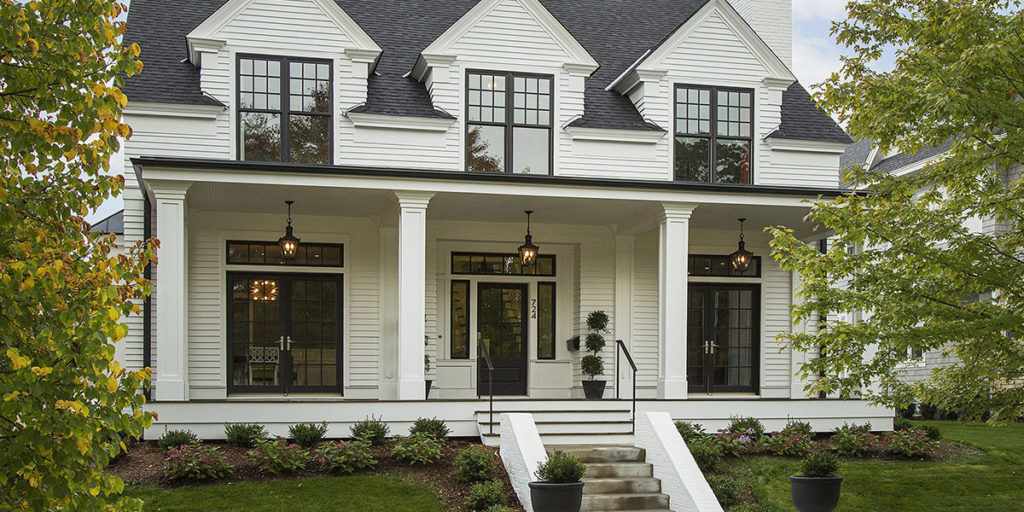
White Dove on exteriors is classic and versatile.
It’s bright, clean, and works with any architectural style like modern, traditional, transitional.
It complements both dark and light roofs, works with stone or brick, and stays looking fresh.
Ballet White Vs White Dove Vs Other Colors
Once you start comparing whites, you can’t stop.
Here’s how Ballet White and White Dove goes against other popular warm whites.
Ballet White Vs Swiss Coffee
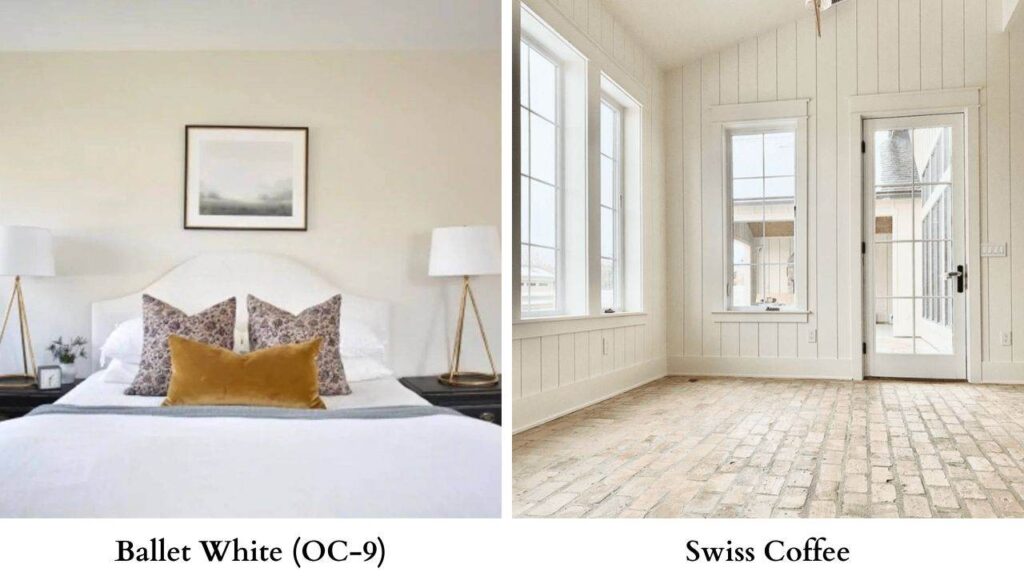
Swiss Coffee is creamy and has more visible yellow than Ballet White.
Ballet White is more muted that “dirty cream” effect while Swiss Coffee is clean.
If you want warmth without beige then Ballet White is the better pick.
Ballet White Vs Dove Wing
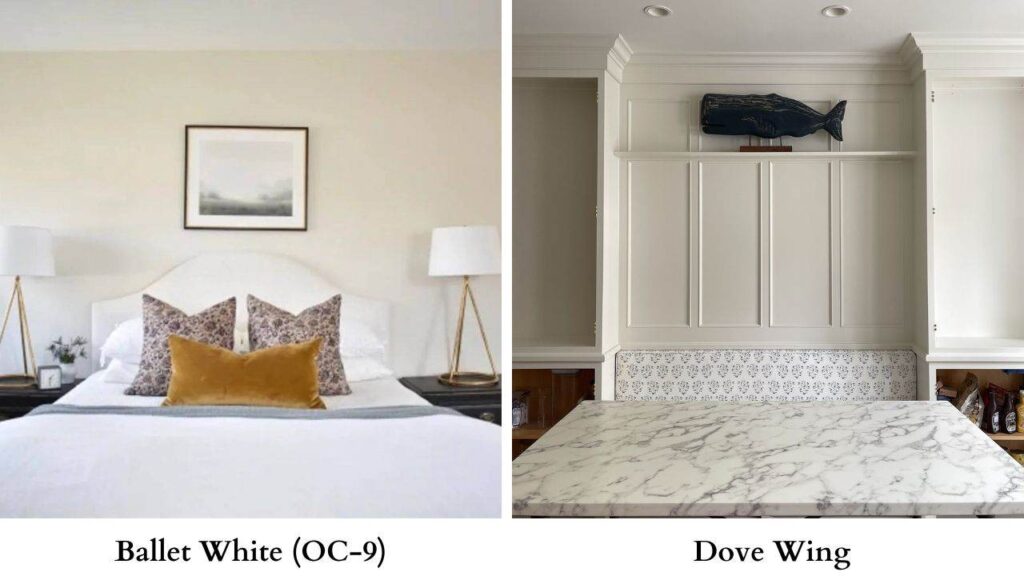
Dove Wing is light and cooler than Ballet White. It’s soft, but it leans more gray than beige.
Ballet White feels warm and grounded.
Dove Wing is better for spaces where you want softness without warmth.
Ballet White Vs Edgecomb Gray
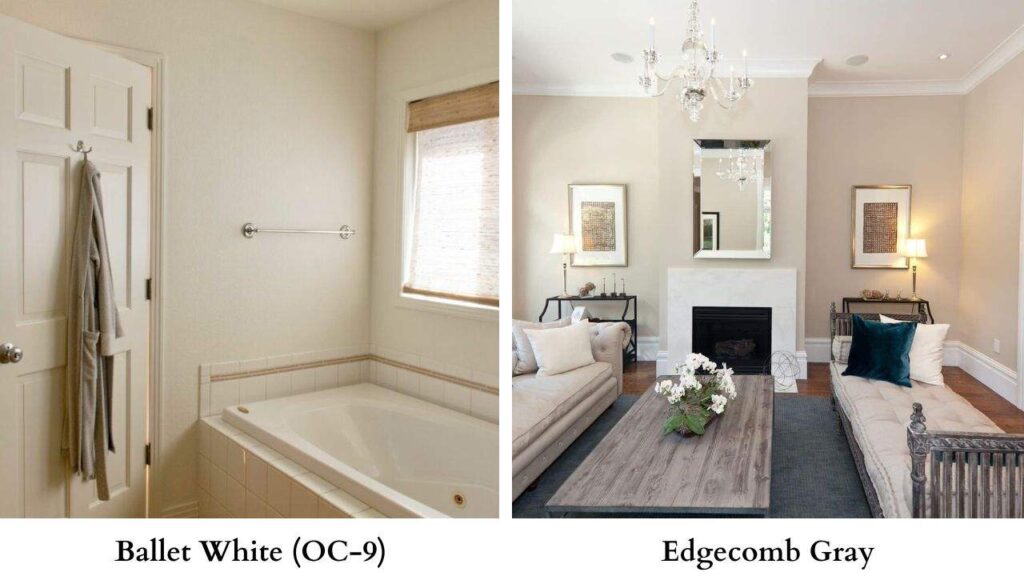
Edgecomb Gray is a true greige, more gray than Ballet White.
Ballet White is closer to off-white; Edgecomb Gray is close to a neutral tan-gray.
If you want color but not white, go Edgecomb.
Ballet White Vs Alabaster
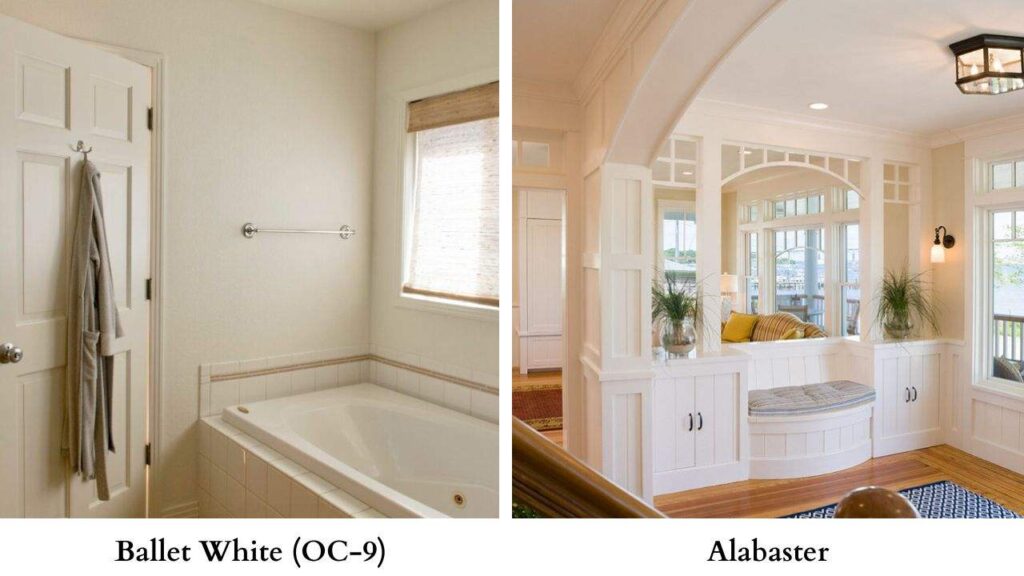
Alabaster is similar in warmth to Ballet White but a bit creamy.
Ballet White has more gray toning it down, so it feels muted.
Alabaster is a bit of a straightforward cream.
Ballet White Vs Simply White
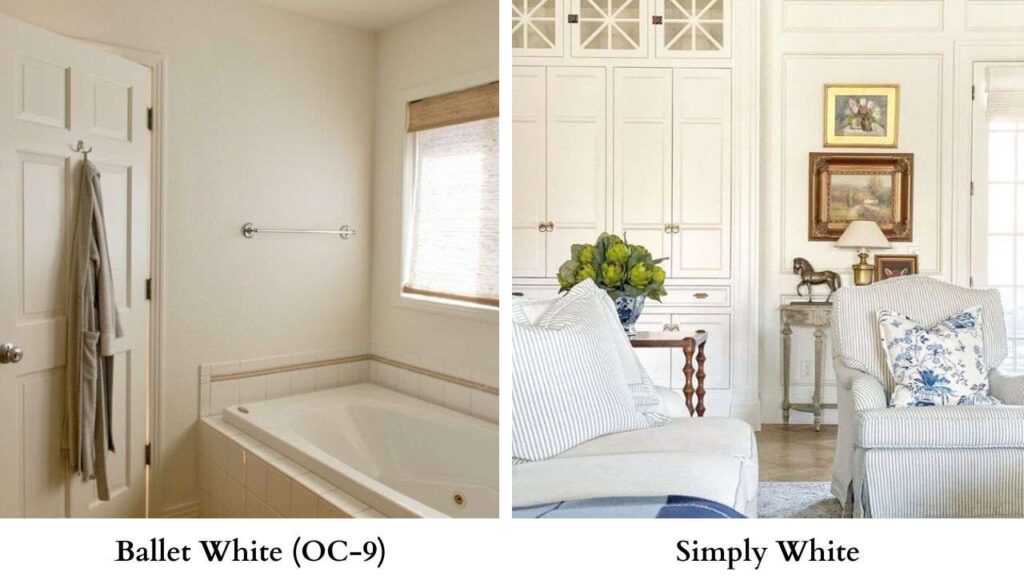
Simply White is bright and clean. It’s close to White Dove in vibe but warm, but without the beige depth of Ballet White.
Simply White works well as trim with Ballet White walls.
Ballet White Vs Shoji White
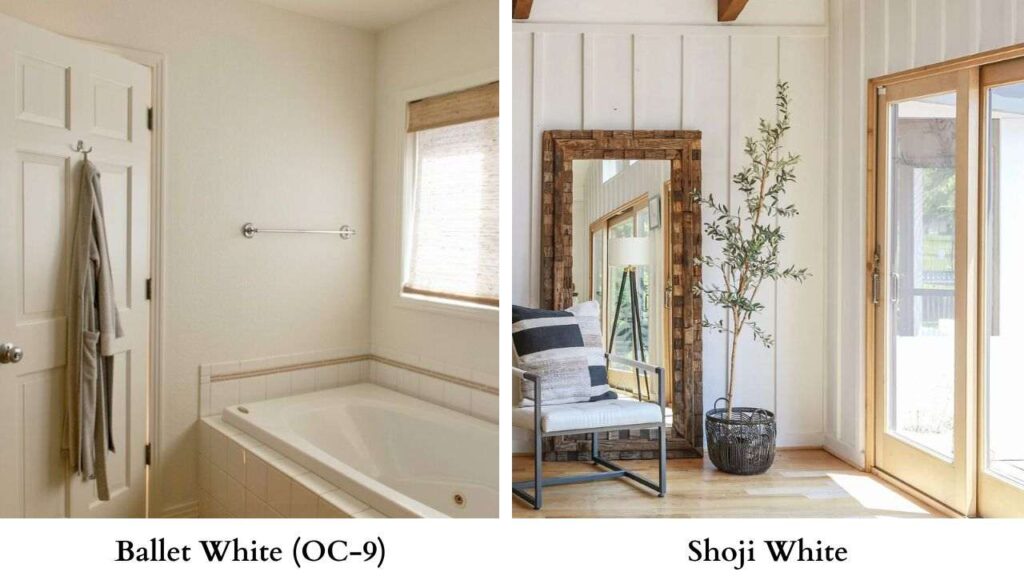
Shoji White has a pink undertone similar to Ballet White, but it’s a bit lighter.
If Ballet White feels deep, Shoji White can be considered.
Both have that soft, warm, unpredictable quality.
Conclusion
So, Ballet White Vs White Dove, comparing these two colors can be a bit difficult or confusing but once you get a clarity about them then they are most easy to go with.
Choose Ballet White if:
- You want warmth and depth
- Your space has warm finishes
- You’re okay with undertones that shift depending on light
- You want cozy over bright
Choose White Dove if:
- You need versatility and predictability
- You’re using it on trim, cabinets, or multiple rooms
- Your space has mixed warm and cool elements
- You want a color that works in any lighting
Both are beautiful. Both are popular for good reasons.
But they’re not interchangeable, undertones matter, LRV matters.
So, test them both. Live with the samples for a few days.
See how they look in morning light, afternoon light, evening with lamps on.
Because the difference between Ballet White Vs White Dove may look easy on paint swatches but on your walls but it changes everything.
FAQs on Ballet White Vs White Dove
What is the undertone of ballet white?
Does ballet white pair well with white dove?
What undertone is white dove?
When to not use white dove?