

So you’re stuck between acacia haze vs evergreen fog? This is common because both are gorgeous, muted Sherwin-Williams greens that are in trend and considered for designs.
They’re earthy, calm, not-too-green-but-green colors which works for any room you’re trying to make feel modern and nature-inspired.
But they look similar on the small paint swatches.
I’ve worked with both colors in real spaces, and honestly? The confusion is reasonable.
They’re both soft and gray-green.
But their undertones are different depending on your lighting, and that’s where homeowners and designers end up second-guessing.
Pick the wrong undertone for your space can make your space look muddy or flat.
So, here I’m breaking down the differences between Acacia Haze Vs Evergreen Fog.
how they look in different rooms, which lighting situations make each one shine or fall flat, and how to pair them with your space.
Here are my other blogs that you can also read:
- Bm White Dove Vs Sw Alabaster
- Woodlawn Blue Vs Palladian Blue
- Peppercorn Vs Iron Ore
- Shoji White Vs White Dove
- Clay Saga Vs Evergreen Fog
Overview of Sherwin Williams Acacia Haze (SW 9132)
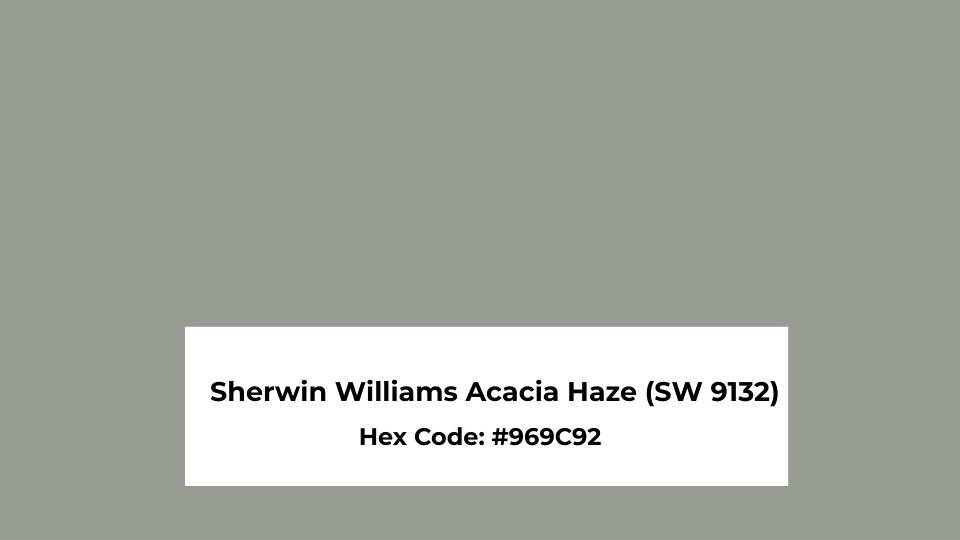
Acacia Haze is a soft, muted green that is heavily into gray territory.
It has that cool influence that keeps it from being too warm or olive-ish.
The LRV (Light Reflectance Value) is at 32, which puts it in mid-toned range. Not dark, not light.
This is a usable middle ground that doesn’t overwhelm but has presence.
What I love about Acacia Haze is how it shifts. In some lights it is a green-gray, in others it’s sage.
It never quite commits to being one thing, which sounds annoying but makes it versatile.
The gray influence keeps it grounded and modern.
I’ve used it in living rooms where clients wanted something calming but not boring. Bedrooms where they needed a color that felt grown-up and sophisticated.
Even bathrooms where the goal was spa-like without going blue or white.
It works with many design styles like modern, transitional, and contemporary interiors, and I’ve seen it on exteriors too where it looks fresh, natural-but-elevated choice.
The reason designers keep coming back to it is because it’s cool to work with both warm and cool accents.
You’re not locked into one temperature palette, which gives you more freedom when you’re styling your space.
Overview of Evergreen Fog Color (SW 9130)
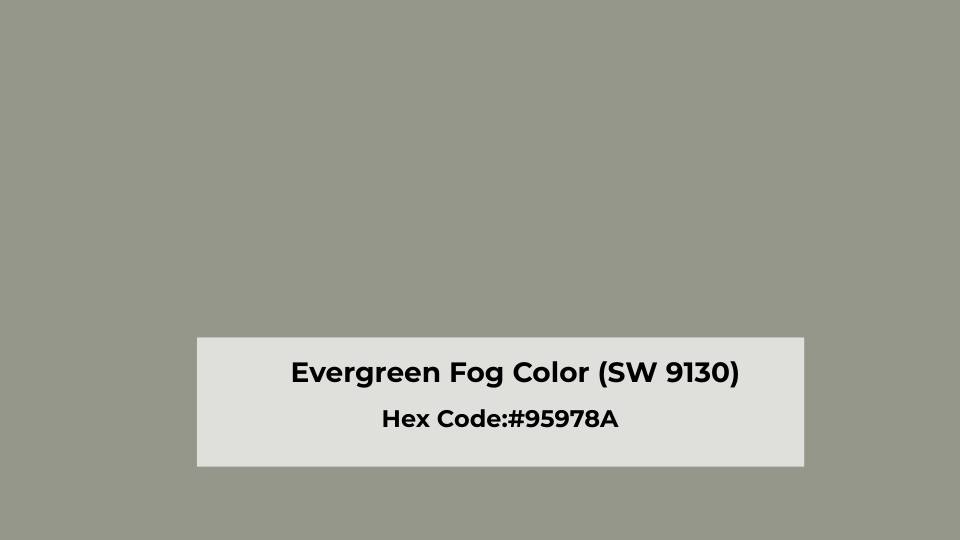
Evergreen Fog was Sherwin-Williams’ Color of the Year in 2022, which means it’s been everywhere.
And honestly, it deserves the hype.
It’s a soft green-gray but with subtle blue undertones which give it a hazy, atmospheric quality.
The LRV is around 30 which is darker than Acacia Haze but close enough that you wouldn’t notice in a paint swatch.
It’s lighter and muted, which is why it works so well for the modern, calming, airy aesthetic.
Here’s the thing to remember : Evergreen Fog reads more gray than green in low light or shadowed spaces.
I’ve seen it in north-facing rooms where it gives up on being green and is there looking like a tinted gray.
But in the right light, it’s beautiful, soft and adaptable.
It works in modern spaces, transitional homes, contemporary exteriors where you want something that feels current but not trendy.
Homeowners love it for living rooms because it’s approachable.
Designers go for it for bedrooms when clients want something that feels restful but has more personality than beige.
Acacia Haze Vs Evergreen Fog: Key Differences
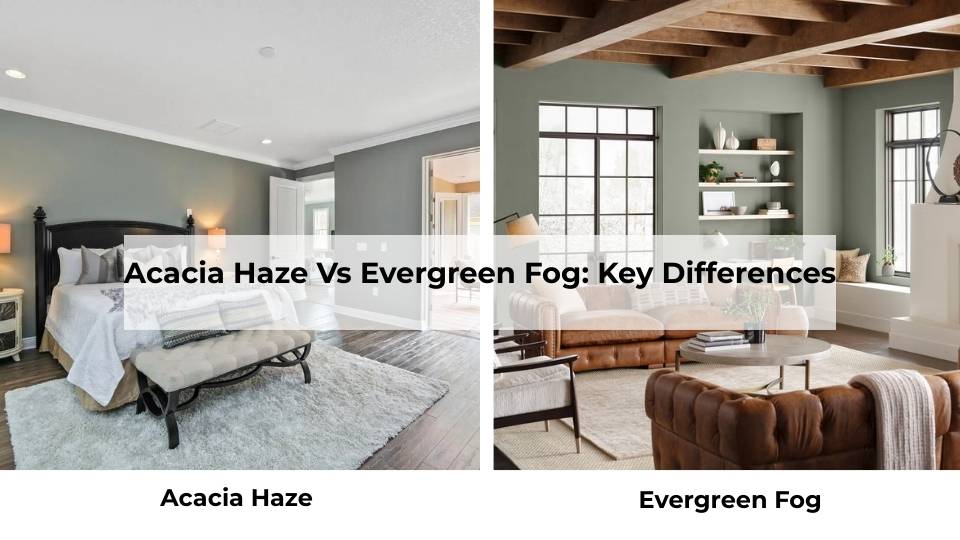
Okay so, Acacia Haze Vs Evergreen Fog are similar but different, which can be confusing but it’s true.
The differences are subtle until they’re not, and it comes down to undertones, lighting, and how much depth you want on your walls.
LRV
Acacia Haze has an LRV of 32, while Evergreen Fog is at 30.
In theory, Evergreen Fog feels darker because it’s reflecting less light. In practice, you won’t notice a two-point difference unless you paint them side by side.
Both are mid-toned colors that have depth to feel intentional but aren’t so dark that they make a room cave in on itself.
The LRV matters when you’re thinking about room size and natural light. Both colors will work in medium to large rooms with decent light.
In small, dark spaces, both can work but you need to be careful, so test them first because mid-toned colors can go either sophisticated or plain gloomy.
Undertones
This is where the real difference is.
Acacia Haze has cool undertones, there’s a gray-green thing happening with a hint of blue that keeps it fresh and modern.
It doesn’t go warm or olive. It’s not trying to be cozy, it’s trying to be sophisticated.
In bright light, the green comes through clean and fresh.
In lower light, the gray comes but it’s a cool-toned gray.
Evergreen Fog has blue and beige undertones mixed in with the green-gray base.
The beige is what makes it feel warm and softer than Acacia Haze. It’s less bright but more hazy.
There’s a warmth there that makes it feel more inviting and less designed.
Others find it indecisive, because it is like it can’t commit to being green or gray or beige.
If you’ve got cool-toned finishes in your space like chrome, bright white trim, cool grays, then Acacia Haze is the better fit.
If your home is more warmer like wood tones, cream trim, warm grays or beiges, then Evergreen Fog will blend in naturally.
Lighting Effect
Both colors are chameleons, but in different ways.
Acacia Haze in north-facing rooms can look gray and muted but the green fades back and you’re left with a soft, cool gray which is pretty but may not be what you signed up for.
In south-facing rooms with natural light, the green wakes up and you get that fresh sage-ish quality that makes the color feel alive.
On the other hand, artificial warm lighting softens it but doesn’t change its character.
It stays consistent.
Evergreen Fog is variable. In north-facing or low-light rooms, it can look gray with barely any green.
I’ve seen it in basements where clients were disappointed because they wanted green but got gray.
In south-facing rooms or spaces with good natural light, the green and warmth come and it looks like what you imagined.
Under warm artificial light, the beige undertones start to show up and it looks warm and cozy.
But if your room doesn’t get great natural light, Evergreen Fog is not what you should go for. Acacia Haze holds onto its identity better in challenging lighting, though it’ll shift toward gray.
Style and Best Uses
Both colors work with white trim.
Acacia Haze pairs beautifully with bright whites like High Reflective White or Snowbound if you want contrast.
With creamy whites like White Flour or Alabaster, it works but the contrast is soft.
Evergreen Fog is forgiving with warm cream trim because it has the warmth built in.
Pair it with Alabaster or a warm greige on trim and ceilings, and it all blends together in the cohesive, calm way.
For furniture and accent colors, Acacia Haze loves natural wood, black accents, brass hardware, and soft pinks or terracotta if you want to warm things up.
It’s cool that warm accents create nice contrast without clashing.
Evergreen Fog works better with warm wood tones, cream and beige fabrics, bronze or aged brass, and earthy accents like terracotta or rust.
The warmth in the color means you can go into a warmer palette.
| Aspect | Acacia Haze (SW 9132) | Evergreen Fog (SW 9130) |
| LRV | 32 | 30 |
| Undertones | Cool gray-green with subtle blue | Green-gray with blue and beige |
| Temperature | Cool | Warm |
| Best Lighting | South-facing, bright rooms | South-facing, warm light |
| Challenging Lighting | North-facing | Low light/north-facing |
| Trim Pairing | Works with any white; best with crisp whites | Best with cream or warm whites |
| Style Compatibility | Modern, contemporary, transitional | Transitional, modern farmhouse, organic modern |
| Accent Colors | Brass, black, natural wood, soft pink, terracotta | Warm woods, bronze, beige, cream, rust |
| Overall Vibe | Sophisticated, crisp, intentional | Soft, approachable, cozy |
Acacia Haze Vs Evergreen Fog: Room-By-Room Suitability
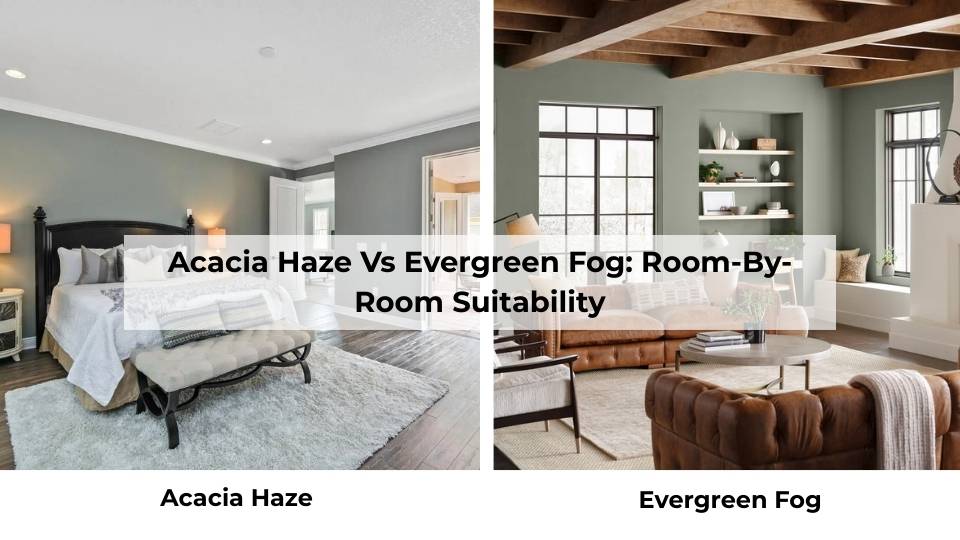
Choosing between these two depends on what room you’re painting and what you’re trying to achieve there.
Not every color works in every space, and these two have their spots.
Living Room
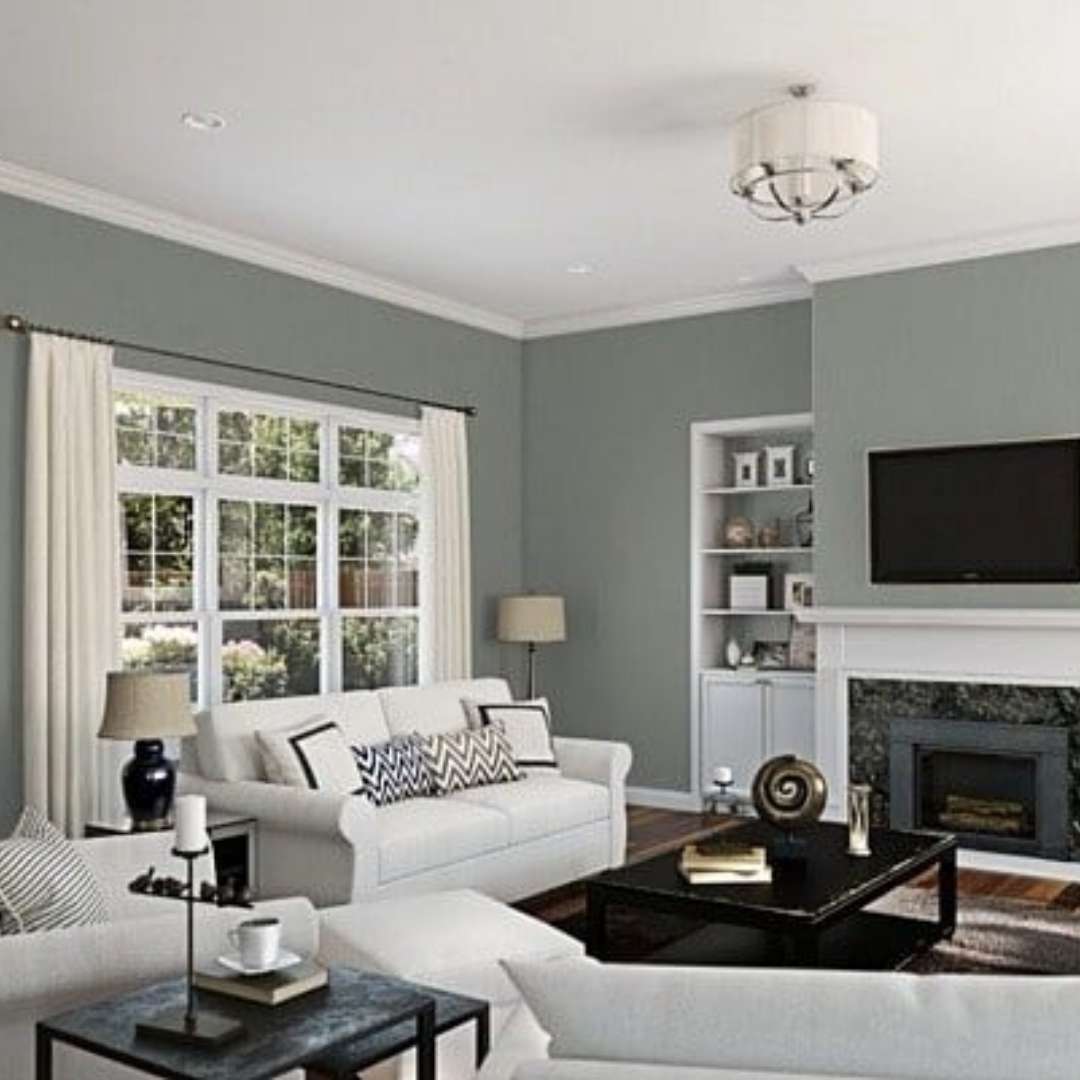
Acacia Haze in a living room creates a grounded, sophisticated vibe. It’s not trying too hard but it’s making a statement.
It works great if you’ve good natural light and you want the space to feel modern and pulled-together.
I’ve used it in living rooms with windows where the color shifts from green to gray and back because it keeps the space interesting and pairing it with natural textures creates an organic modern look.
The impact is calm but intentional.
It’s not boring, but it’s also not demanding.
Good for open-concept spaces where you want the living room to feel distinct but flow with the rest of the home.
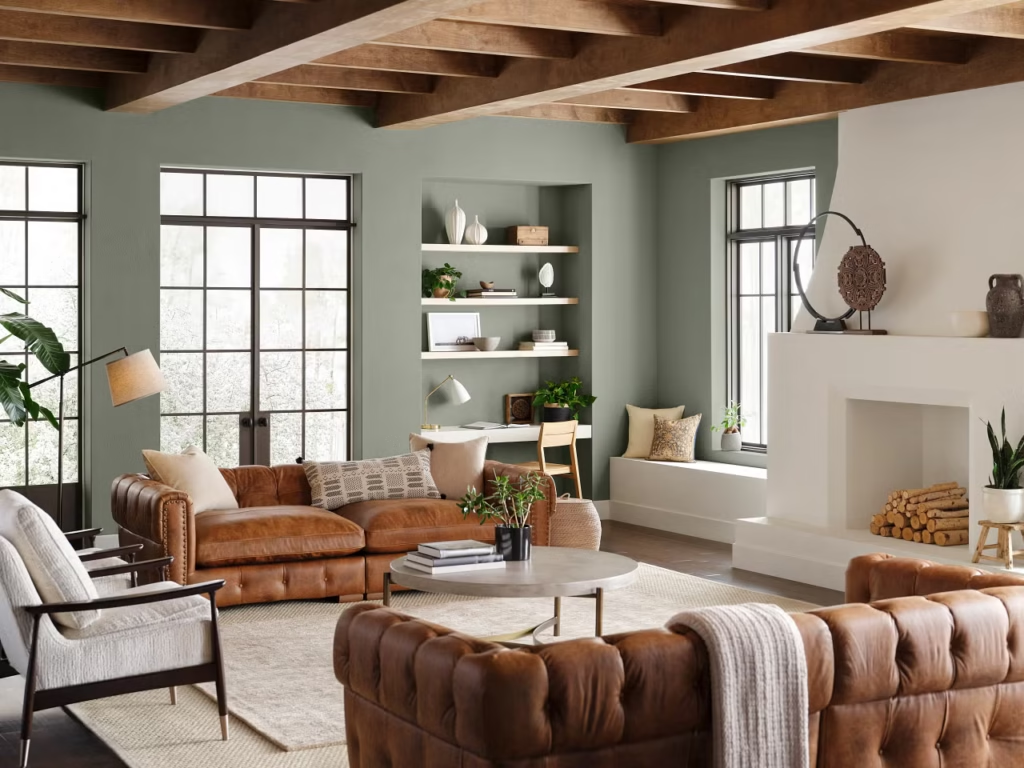
Evergreen Fog in a living room feels more inviting and cozy, especially if your living room doesn’t get light or if you’re working with warm finishes.
It’s softer and less bright than Acacia Haze, which some people prefer for a space where you’re trying to relax and hang out.
Impact-wise, it creates a serene, cohesive backdrop.
It doesn’t create contrast with warm wood floors or cream sofas, everything blends together in that curated-but-effortless way.
Bedroom
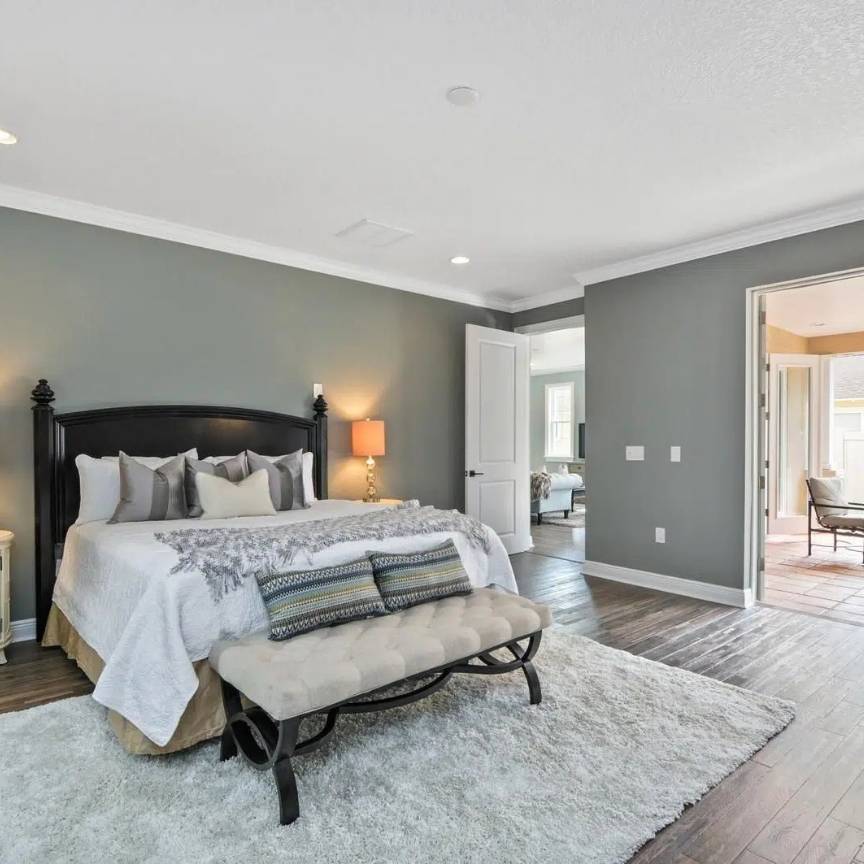
Acacia Haze in the bedroom is good. The coolness keeps the space feeling fresh and airy but there’s gray and depth.
I’ve done bedrooms with Acacia Haze where we painted the walls and the trim the same color, full color-drench situation and it created a cocooned, sophisticated vibe.
The impact is restful but elevated.
You’re not painting your bedroom “a color”, you’re creating a mood.
Works well in bedrooms with good closet storage and minimal clutter because the color becomes the focal point.
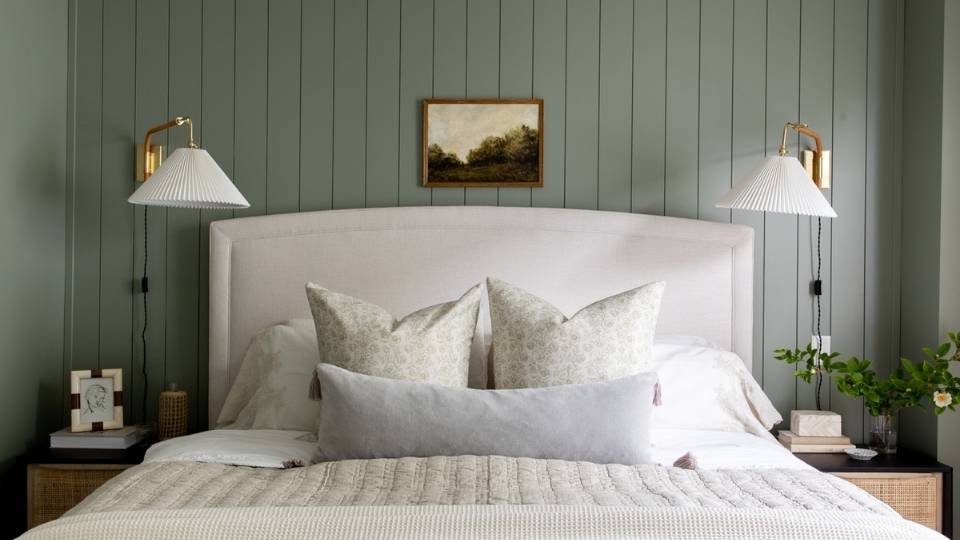
Evergreen Fog in a bedroom is the safe, cozy choice. It’s warm, which many people prefer for sleeping spaces.
The beige undertones make it feel enveloping in a gentle rather than a dramatic way.
The impact is peaceful and grounding.
It doesn’t wow you, but it makes you feel comfortable.
Good for bedrooms where you’ve got warm wood furniture or you’re working with cream bedding and you want everything to feel cohesive.
Bathroom
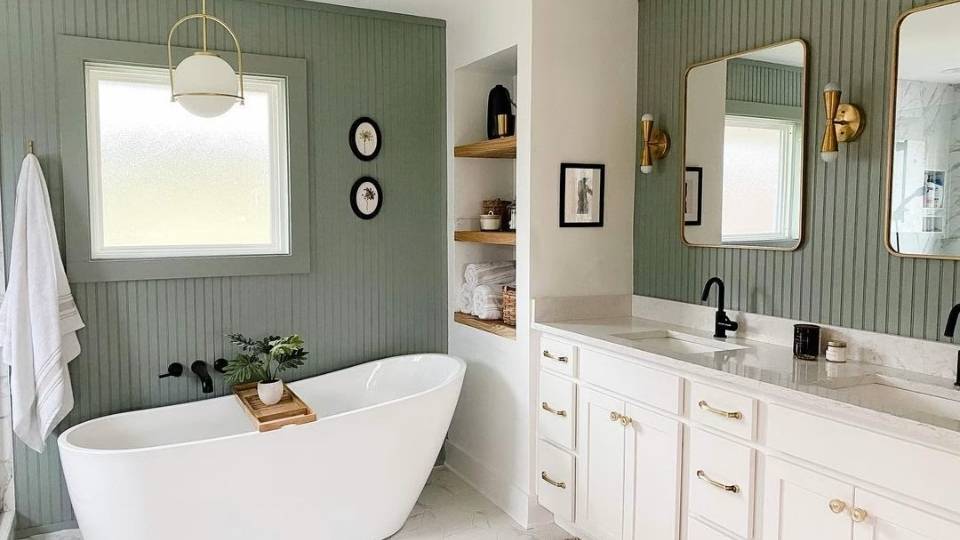
Acacia Haze in a bathroom works well, especially in bathrooms with good lighting.
The cool-toned green feels clean and spa-like without going all white-and-blue.
I’ve seen it on beadboard in bathrooms where it creates texture and interest while feeling fresh.
The impact it creates is modern and clean and it works well in bathrooms with white fixtures, white or light countertops, and chrome or brushed nickel hardware.
The coolness makes everything feel fresh.
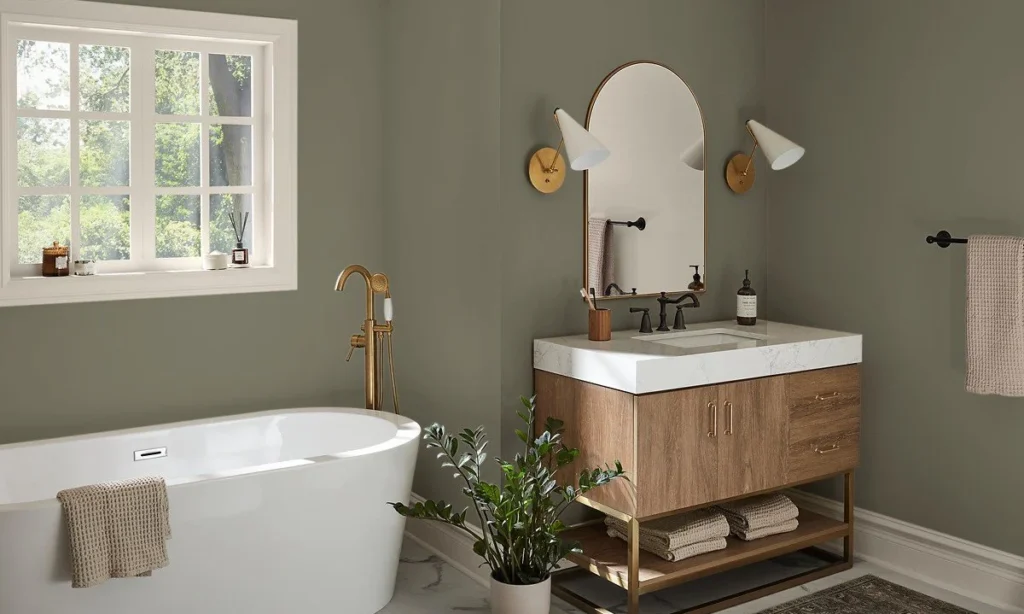
Evergreen Fog in a bathroom can go either way.
In a well-lit bathroom with windows, it’s lovely, soft and calming with the spa vibe but warm and less harsh than other bathroom colors.
In a bathroom with no windows or limited light, it can fall flat and off.
The impact it creates is when it works, it’s soothing and elegant.
When it doesn’t work, it’s disappointing.
Test this one if your bathroom is on the dark side.
Kitchen
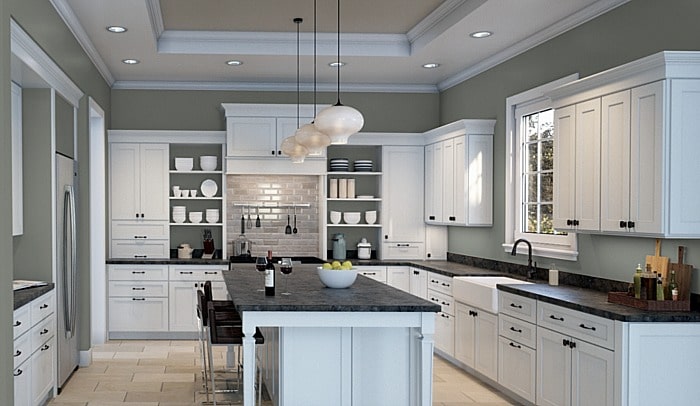
Acacia Haze in kitchens is having a moment, mainly on cabinets.
I’ve seen it on lower cabinets paired with white uppers, and it’s this perfect balance of color and neutral that feels fresh but not trendy.
The cool-toned green pairs well with white quartz countertops, white or cream tile, stainless appliances, and brass or black hardware.
On walls, it creates a fresh, modern backdrop that doesn’t compete with everything else.
The impact is clean and intentional, your kitchen looks designed but not overdone.
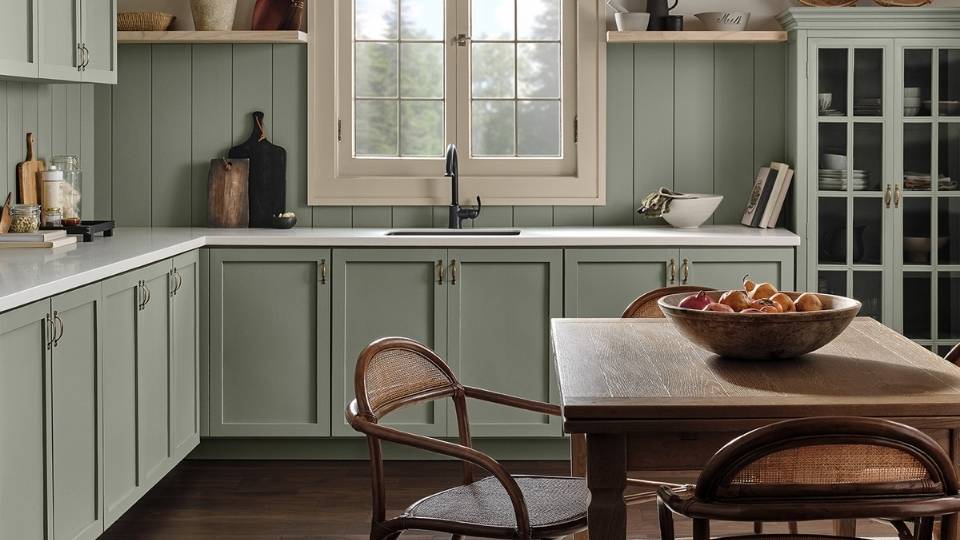
Evergreen Fog in kitchens works best on walls rather than cabinets.
On cabinets, the warmth and beige undertones can feel good, if you’ve warm wood floors or cream countertops, too much warmth and not contrast.
But on walls with white cabinets, it’s nice, it is soft and calming, which is a nice contrast to how chaotic kitchens can feel functionally.
The impact it creates a serene backdrop that makes the kitchen feel less utilitarian and more livable.
Exterior
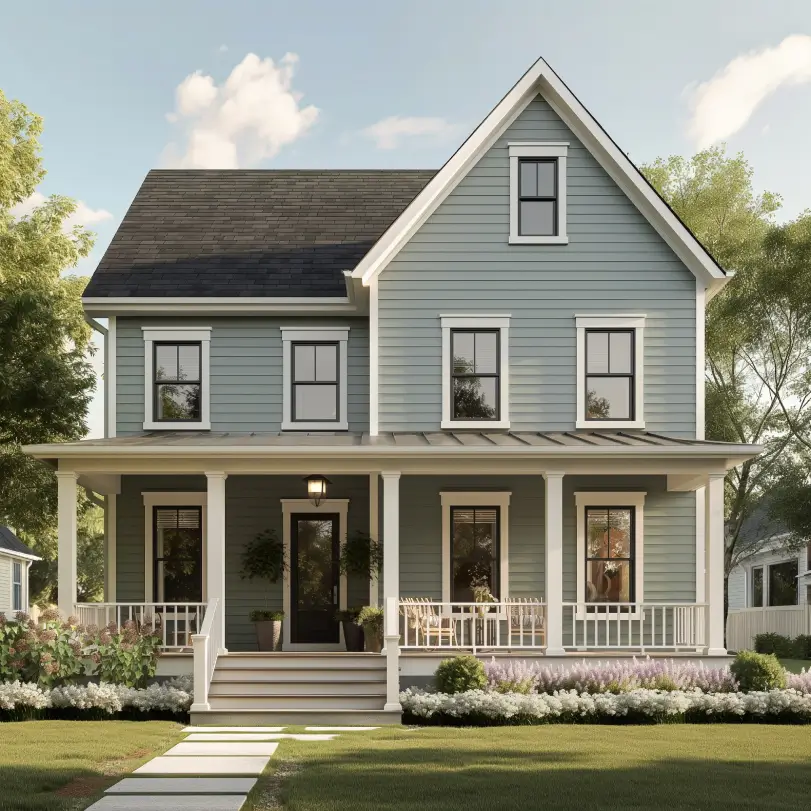
Acacia Haze on exteriors makes a statement without being bold.
I’ve seen it on front doors paired with gray or white siding, and it adds a fresh, natural element that feels modern but not trendy.
The mid-tone LRV means it has depth to hold up against other exterior colors without disappearing.
On exterior siding, it’s less common but it can work on modern or contemporary homes where you want something different from the usual gray or white but you’re not ready to commit to a true color.
The coolness keeps it from feeling too earthy.
The impact is fresh, elevated, nature-inspired without looking like you’re trying hard.
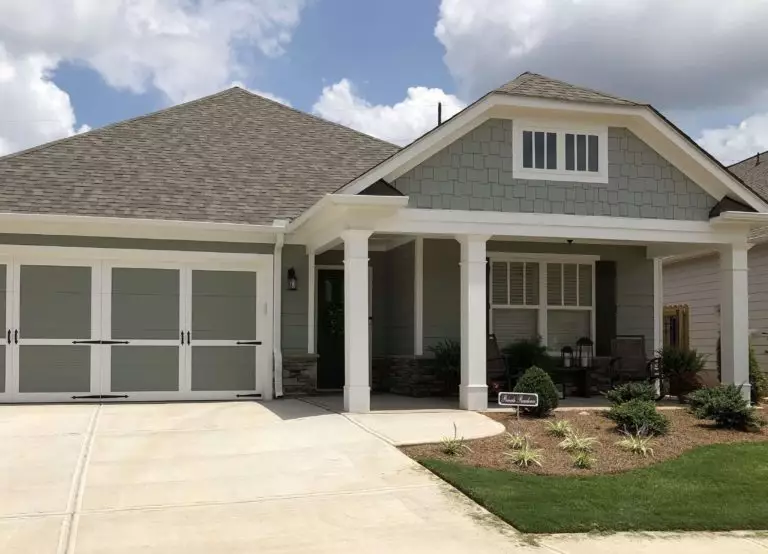
Evergreen Fog on exteriors feels cozy and balanced.
It’s warm that it works on traditional or farmhouse-style homes where a cool green feel out of place.
On the front doors, it’s inviting and soft, not as much contrast as a true green or blue, but more interesting than gray or black.
On siding, the warmth makes it feel grounded and natural.
It pairs well with white or cream trim, natural wood accents, and stone or brick.
Acacia Haze Vs Evergreen Fog Vs Other Colors
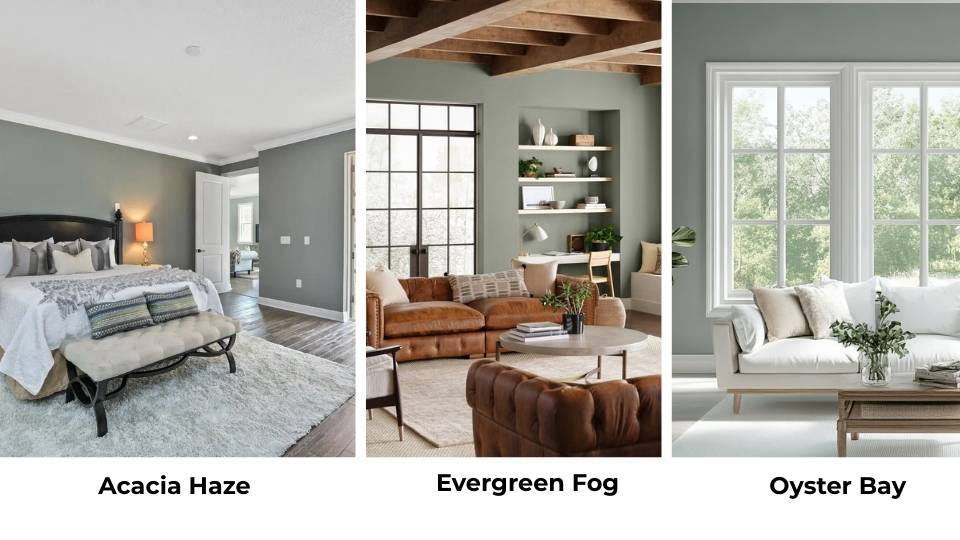
Because you’re also considering three other colors and losing your mind trying to decide, let’s talk about some other popular comparisons.
Acacia Haze Vs Oyster Bay
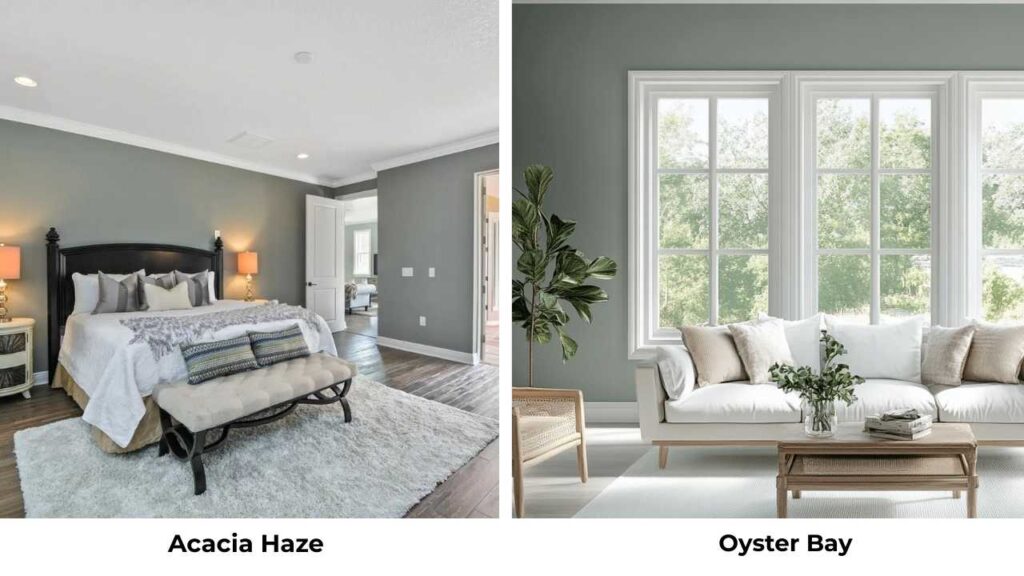
Oyster Bay (SW 6206) is on the same color strip as Acacia Haze, lighter with the LRV of 44 compared to Acacia Haze’s 32.
It’s in the same gray-green family but is airier and softer because of the high LRV.
If Acacia Haze feels too dark or moody for your space, Oyster Bay gives you a similar vibe with more lightness.
It’s better for small rooms, dark spaces, or if you prefer light colors in general.
The undertones are similar, cool-toned, not too warm but Oyster Bay can be more blue-gray than green depending on your light.
Acacia Haze Vs Retreat
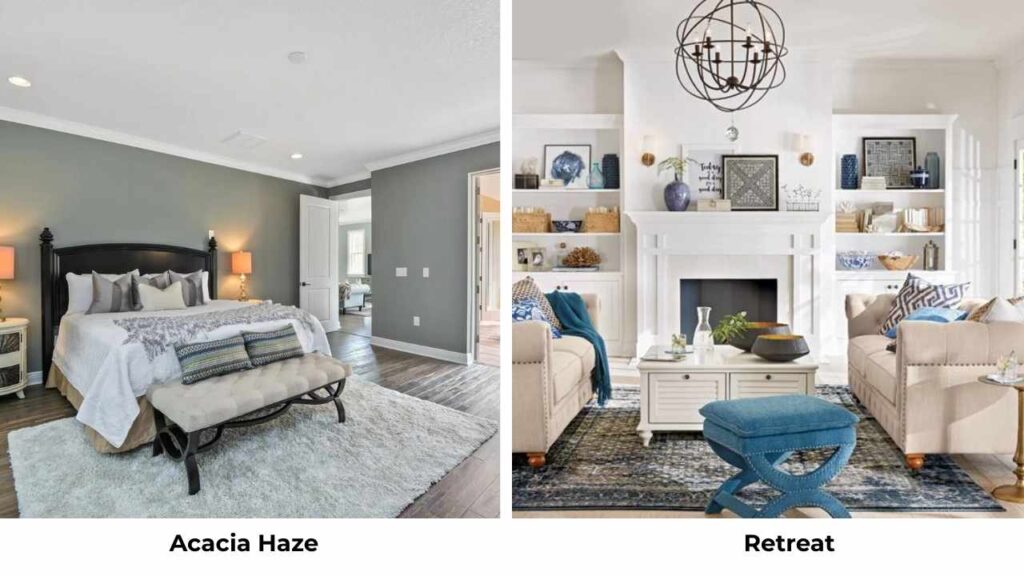
Retreat (SW 6207) is the dark on that same color strip, with the LRV around 21.
It’s moody, intensely green, and definitely makes a statement.
If you tried Acacia Haze and thought “I want more,” Retreat is your answer.
It’s gorgeous in spaces with natural light or where you’re going for drama.
Bedrooms, dining rooms, powder rooms, places where dark colors create atmosphere instead of making the space feel small.
The undertones are similar to Acacia Haze but with a dark value.
| Color | LRV | Undertones | Compared to Acacia Haze |
| Evergreen Fog (SW 9130) | 30 | Green-gray with blue and beige; warmer | Slightly darker, warmer, softer, less crisp |
| Oyster Bay (SW 6206) | 44 | Cool gray-green with blue | Much lighter, airier, reads more blue-gray |
| Retreat (SW 6207) | 21 | Cool green-gray, more intensely green | Much darker, moodier, stronger green presence |
Acacia Haze Color Palette
If you’re going with Acacia Haze, here’s what it works with:
Whites: Go with fresh, clean whites if you want contrast.
High Reflective White and Snowbound both work well for trim and ceilings.
If you want something soft, White Flour is a creamy white that doesn’t fight with the cool undertones.
Neutrals: Agreeable Gray is a greige that pairs well, the warmth in Agreeable Gray plays well against the coolness in Acacia Haze.
You can also use it with warm taupes and beiges if you’re trying to warm up the palette.
Accent Colors: This is where it gets fun.
Soft pinks like dusty rose, not bubble gum create a sophisticated, unexpected combo. Terracotta and rust tones add warmth and earthiness.
Black adds drama and definition.
Brass and aged gold in hardware and fixtures look incredible.
For a full palette: Acacia Haze on walls, White Flour trim, natural oak or walnut furniture, terracotta accents in pillows or art, brass lighting and hardware, and a soft blush or rust in textiles.
Conclusion
Here’s the conclusion: Acacia Haze Vs Evergreen Fog are beautiful colors.
Neither one is objectively better.
It comes down according to your space, your lighting, and what vibe you’re going for.
Choose Acacia Haze if you want something cool, fresh, and intentionally modern.
If your space has good natural light, cool-toned finishes, and you want a sophisticated green that feels designed.
If you love the idea of a color which shifts between green and gray throughout the day.
Choose Evergreen Fog if you want something warm, soft, and more approachable.
If your home has warm wood tones, cream or beige finishes, and you want a color that feels inviting and cozy rather than sleek.
If you need something that plays well with existing warm elements.
And, sample both in your space before you commit. Paint large swatches on different walls, look at them throughout the day in different lighting, live with them for a few days.
The color that makes you feel good, comparison between Acacia Haze Vs Evergreen fog can be difficult but a bit confusing.
FAQs on Acacia Haze Vs Evergreen Fog
The main differences are undertone temperature and depth. Acacia Haze (LRV 32) has cool gray-green undertones with subtle blue influence, making it fresh and modern. Evergreen Fog (LRV 30) has warm undertones with beige mixed into the green-gray base, making it soft and inviting.
Yes, it can. In rooms with limited natural light or north-facing exposures, Evergreen Fog is more gray than green. The green undertone fades back and what you’re with is a soft, slightly tinted gray. In bright, well-lit spaces, mainly south-facing rooms, the green comes clearly.
Yes, Acacia Haze works well in bedrooms. The cool-toned green-gray creates a calm, sophisticated atmosphere that feels restful without being boring. It has depth (LRV 32) to create a cocooning effect but isn’t so dark that it makes the room feel small or heavy. It pairs well with white bedding, natural wood furniture, and brass or black accents.
Evergreen Fog pairs best with warm neutrals and soft accents. For trim and ceilings, use warm whites like Alabaster or cream tones. For furniture and floors, warm wood tones look beautiful. Accent colors that work well include terracotta, rust, warm pink/blush, cream, beige, and soft gray. Bronze, aged brass, and gold hardware complement the warm undertones.