

So, you’re looking at paint swatches trying to decide between these two paint colors. These two Benjamin Moore colors are gorgeous, popular, and look almost identical.
But these colors behave differently when they’re on your walls. Balboa Mist and Pale Oak are the neutrals that look simple until the light changes and undertones show up.
They’re calm without being boring, both work with warm design elements, both play nice with cool finishes, and both give you the soft greige vibe.
When two colors are almost similar and flexible, choosing between them feels a bit tough. I’ve watched clients getting confused on this for weeks.
In this post, I’m breaking down everything you need to know about Balboa Mist Vs Pale Oak. We’re talking color profiles, LRV differences, how they act in different rooms, what undertones pop up, and which similar colors you want to test alongside.
I’ll also share the mistakes I see people make with these colors ALL the time.
Here are my other blogs that you can also read:
- Peppercorn Vs Iron Ore
- Wythe Blue Vs Palladian Blue
- Acacia Haze Vs Evergreen Fog
- Oyster White Vs Shoji White
- Oatmeal Color Vs Beige
Color Profile of Balboa Mist (Benjamin Moore OC-27)
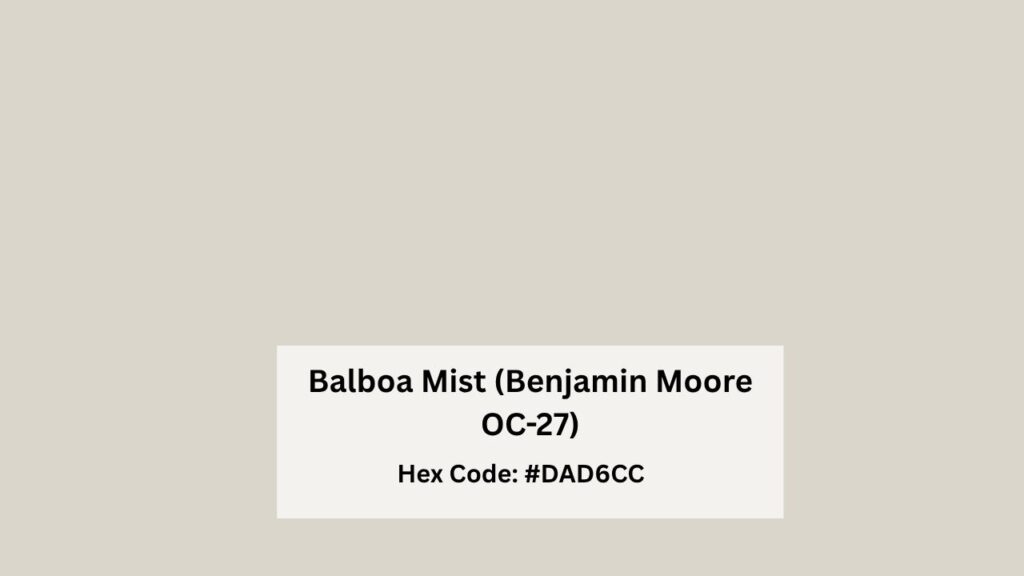
Balboa Mist is a light greige with a soft, powdery quality that looks beautiful but is moody. The base leans beige, sure, but it’s restrained beige.
Not the warm, cozy kind but like beige that’s been toned down with gray and then had a hint of violet mixed in.
The violet undertone is subtle, but it’s there in it. I’ve seen it in north-facing rooms where it goes from greige to slightly purple-gray.
Balboa Mist looks as neutral-leaning with gentle warmth, but it can flip cool depending on what’s around it.
With white oak floors, it gets warm and with cool gray tile, it’ll pull gray. The LRV is 67, which means it reflects a decent amount of light and keeps rooms feeling airy.
I think Balboa Mist works best in homes with good natural light like south-facing living rooms, open-concept spaces where light moves through the room the whole day, bedrooms with multiple windows.
It’s beautiful in the settings because the violet stays subtle and the greige-beige balance feels intentional. In dark rooms or spaces with north light is a bit tough
For exteriors, Balboa Mist can work but, I prefer it as a trim color on exteriors rather than the main. It’s too light and shifts with changing outdoor light.
Color Profile of Pale Oak (Benjamin Moore OC-20)
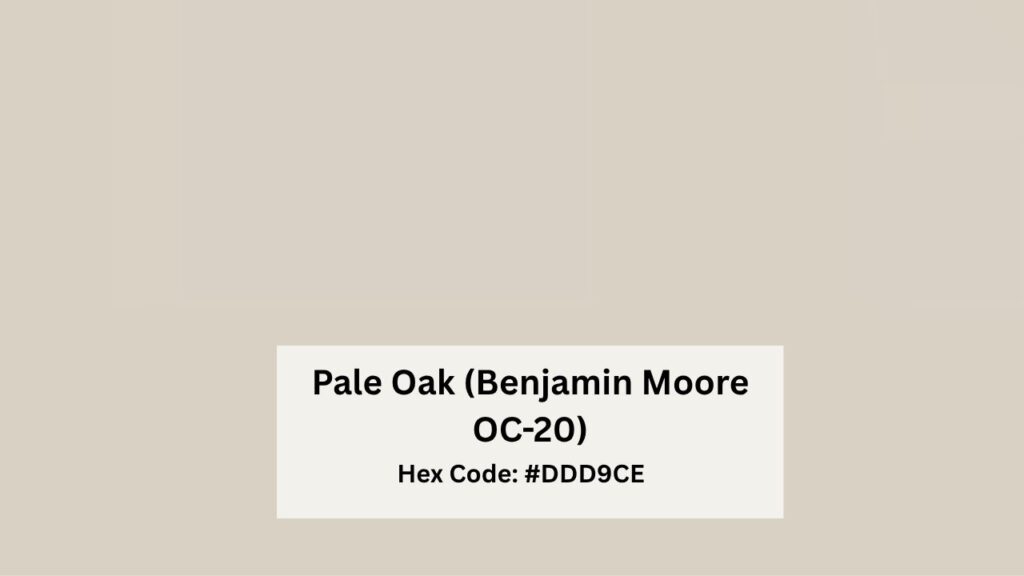
Pale Oak is a light greige, but warm and beige-forward than Balboa Mist. The base is beige-taupe, and while it does have undertones, they don’t dominate like they can with Balboa Mist. This color feels creamy, soft and forgiving.
The LRV is around 69-70, so it reflects more light than Balboa Mist. But Balboa Mist looks bright because of the gray.
Pale Oak looks warm even if it’s reflecting more light. The warmth is the defining thing about this color. It maintains it in rooms where you’d expect colors to go flat.
North-facing rooms, low-light spaces, rooms with minimal windows, Pale Oak handles all of that better.
I’ve used Pale Oak in bedrooms where clients wanted something calming but not cold. It gives the room a soft, slightly peachy-beige feeling.
In living rooms, it creates warmth without needing wood tones or warm textiles.
But pink undertones can come but they’re not dark pink, but in cool LED light at night, you can see hints of it.
Bathrooms are great for Pale Oak, if you have white fixtures and want the walls to feel warm against all the bright white.
Kitchens too, it pairs beautifully with both white and wood cabinets, and it won’t shift when you open the fridge and fluorescent light hits it.
Balboa Mist Vs Pale Oak: LRV, Undertones and Uses
Both Balboa Mist and Pale Oak are in the greige spot, where they are not too gray, not too beige, not too dark, not too light.
But the differences may sound small but they are different in your space. And it is important to understand when you are committing some color for your space.
LRV
Light Reflectance Value is how much light a color reflects back, measured on a scale of 0 (pure black) to 100 (pure white).
Balboa Mist is at an LRV of 65-67, while Pale Oak is at 69-70. Pale Oak will make a room feel light and open, while Balboa Mist creates a touch of depth and shadow.
I don’t obsess over LRV, but in this it matters because these colors are so close. If your room is small, dark, or doesn’t get great natural light, Pale Oak’s high LRV gives it an advantage.
If your room is large and bright, Balboa Mist’s lower LRV adds dimension.
Undertones
The undertones are why these colors feel different even though they’re greige. Balboa Mist has violet undertones, sometimes described as purple-pink, sometimes gray-violet.
It depends on the light and what’s surrounding it. The violet can look elegant and sophisticated in the right setting, or it can look cool and almost out of place.
Green flashes can show up too in some lighting conditions.
Pale Oak’s undertones are beige and taupe with soft pink mixed in. The pink is gentle, it looks warm, not pink walls. The beige undertone is what keeps Pale Oak grounded and consistent.
If you want cool and neutral, Balboa Mist is what you should go for. If you want warm and stable, Pale Oak is the best consideration.
Lighting Behaviour
Both colors are light-sensitive but in different ways. Balboa Mist is reactive. In north-facing rooms, it can look gray or emphasize the violet undertone until it looks lavender.
In south-facing rooms with warm sunlight, it balances out and the greige-beige hybrid comes. East and west light will shift it throughout the day, more beige in morning light, gray in afternoon shadows.
Pale Oak is consistent across lighting situations, which is why it’s forgiving. In low light or northern exposure, it stays warm and soft.
In bright southern light, it glows without losing the warmth. Cool artificial light can bring out the pink undertone, but it will remain subtle.
Warmth and Depth
Pale Oak is warm. The beige-taupe base creates coziness and warmth without needing support from furnishings.
It makes rooms feel inhabited and welcoming. Balboa Mist is neutral-cool in comparison. It has warmth, but it’s restrained warmth.
It feels modern, gallery-like and intentional. Pale Oak feels lived-in. Balboa Mist feels curated.
Balboa Mist creates more gray. It has more shadow and dimension, mainly in eggshell or satin finishes. Pale Oak is soft and creamy with less depth, which can be good or bad depending on what you’re going for.
Styling and Best Uses
For trim, both colors work best with warm whites like White Dove or Simply White. Do NOT pair these with harsh cool whites like Chantilly Lace on the trim, it’ll make the walls look dirty.
Ceiling-wise, you can take both colors up onto the ceiling if you want a cocooning effect, or keep the ceiling white for traditional contrast.
I’ve done Balboa Mist on walls with White Dove on trim and ceiling and it’s clean and fresh. Pale Oak on walls with Simply White trim creates warmth without feeling too matchy.
Furniture and accent colors, both are flexible. Warm woods, soft taupes, greige stone, linen textures, looks gorgeous with both colors.
Balboa Mist can handle cool accent colors better because it looks neutral-cool. Pale Oak is better with warm accent colors since it’s warm.
| Aspect | Balboa Mist | Pale Oak |
| LRV | 65-67 | 69-70 |
| Undertones | Violet, gray, minimal beige | Beige, taupe, soft pink |
| Warmth | Neutral-cool leaning | Warm |
| Best Light | South-facing, bright rooms | North-facing, low-light rooms |
| Color Stability | Reactive, shifts with light | Consistent, stable |
| Best Trim | White Dove, Simply White | White Dove, Simply White |
| Overall Feel | Elegant, modern, airy | Cozy, creamy, warm |
How Do Balboa Mist and Pale Oak Look In Different Rooms?

Room matters with these colors. I’ve seen both look incredible and both look mediocre depending on where they’re used.
The light, the function, the furnishings, everything plays with how these greiges perform. So, let’s get into it and see how Balboa Mist and Pale Oak will look in different rooms.
Living Room

Balboa Mist in a living room works beautifully if you have natural light coming in.
Open-concept living rooms, spaces with large windows, rooms facing south or getting multiple exposures throughout the day, which is where Balboa Mist creates a bright, airy, modern backdrop.
It makes the room feel large because of the gray influence, and it doesn’t compete with your furniture or art.
I used it in an open-concept living and dining space with vaulted ceilings and it was perfect. The violet undertone stayed subtle, the greige quality came, and the whole space felt cohesive and calm.
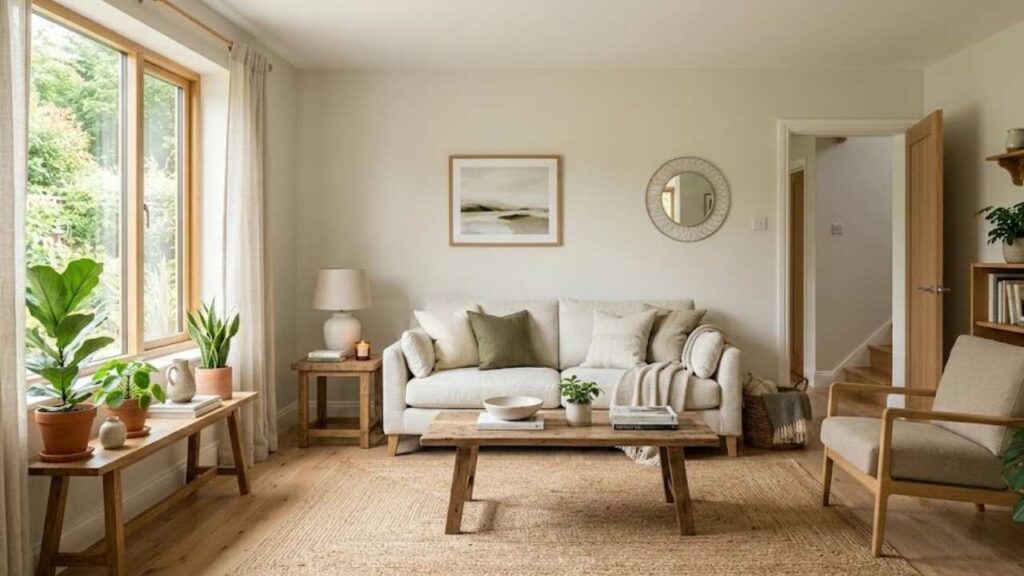
Pale Oak in a living room creates warmth and coziness. If your living room is where your family lives, TV on, kids playing, general chaos, Pale Oak wraps the space in the soft, forgiving warmth that makes everything feel comfortable.
It’s good if your living room doesn’t get great light or if it’s north-facing. The beige undertones prevent it from feeling cold or flat, and it pairs beautifully with both leather and fabric furniture.
Bedroom
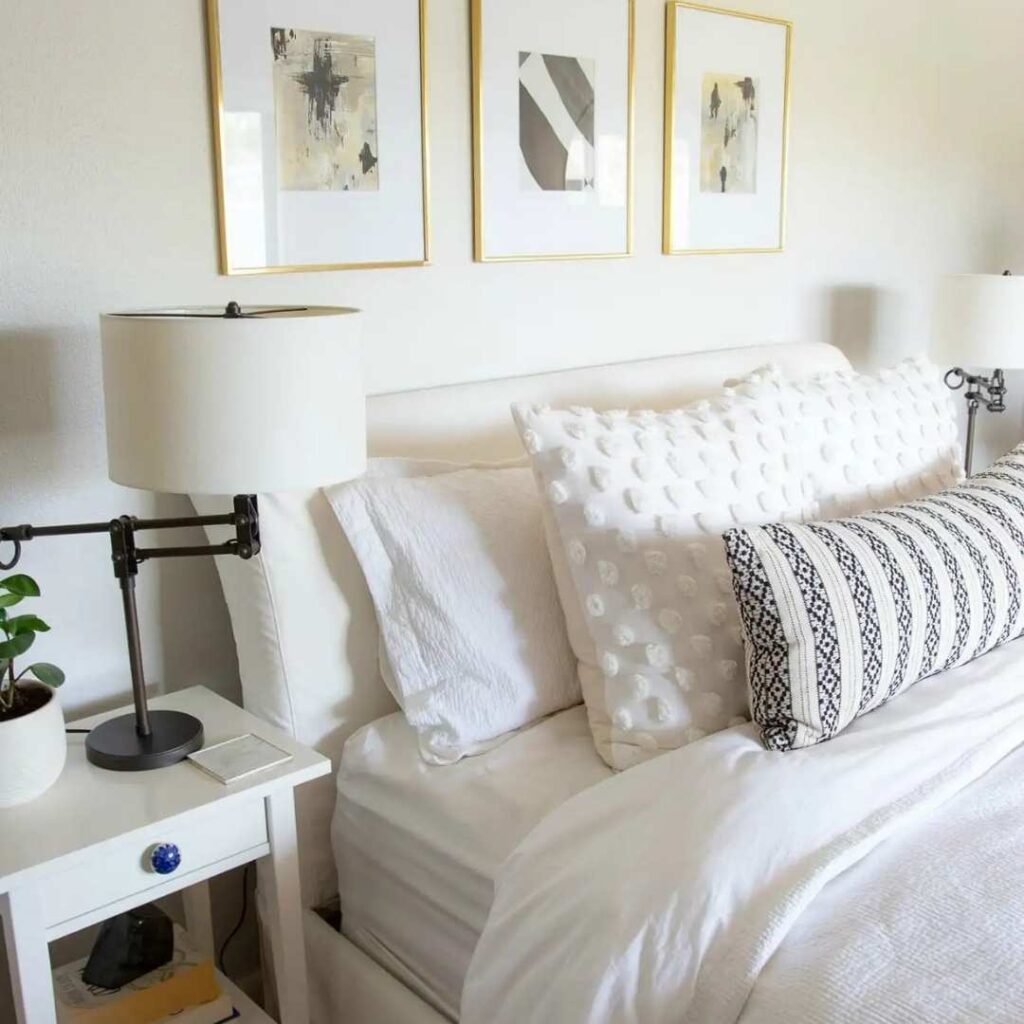
Balboa Mist in a bedroom is lovely if you want something calm and serene without being cold. I’ve used it in primary bedrooms with good light and white bedding, and it creates a hotel-like, restful feeling.
I wouldn’t use it in a bedroom without windows or with only north-facing exposure, it can look flat and grayish in these situations.
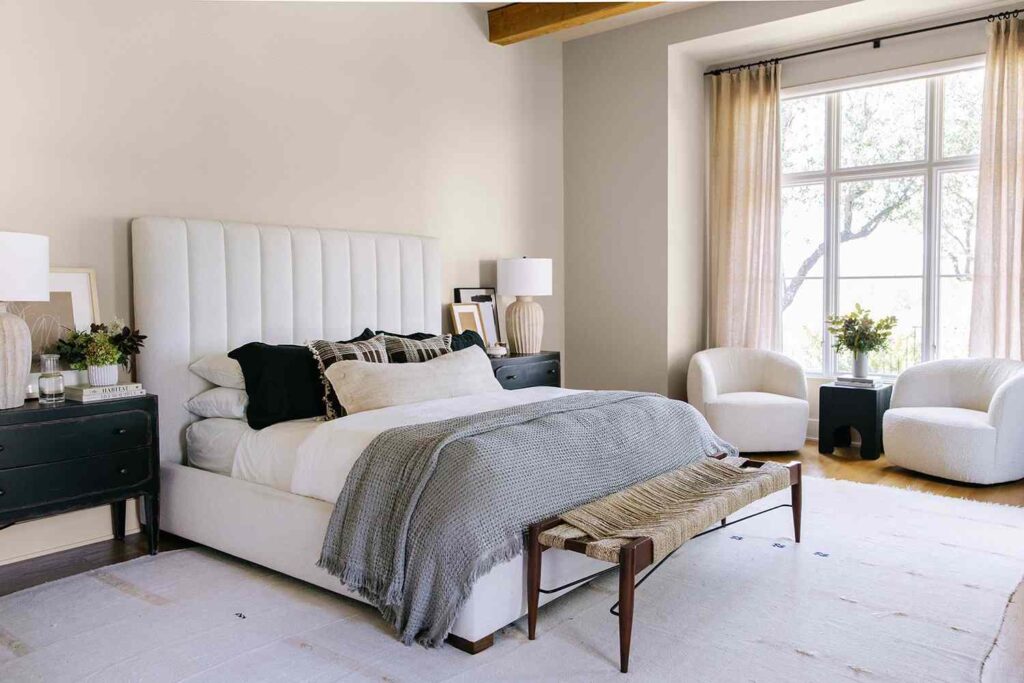
Pale Oak in a bedroom is one of my favorite applications. The warmth is perfect for bedrooms because it creates a cozy, restful environment without any coolness.
It works in north-facing bedrooms, small bedrooms, guest bedrooms. The soft pink undertone is visible but adds warmth that the room never feels cold.
Bathroom
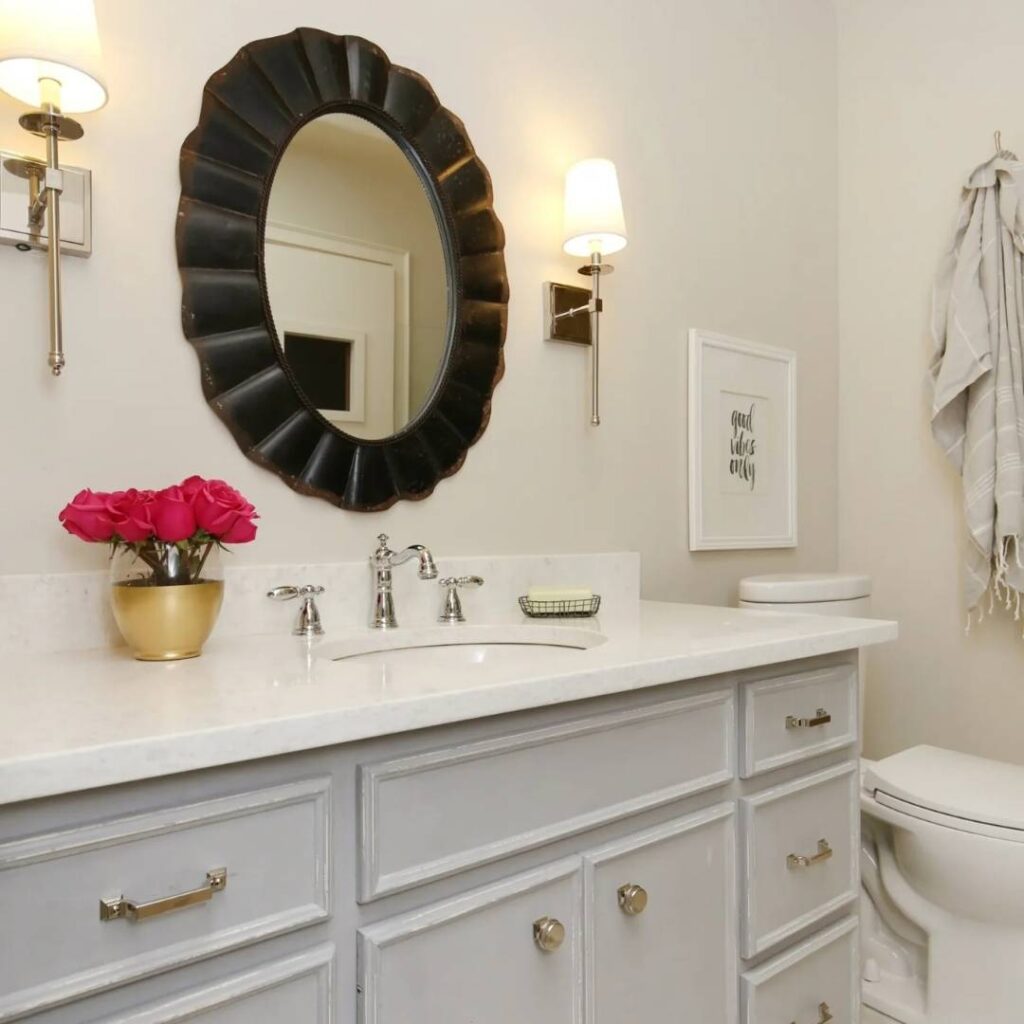
Balboa Mist in a bathroom can be a bit tough. If you have a bright bathroom with natural light, white fixtures, and good ventilation, it can look elegant.
But in a windowless bathroom with builder lighting, it looks grayish and sad. I tried it in a powder room with no window and had to repaint.
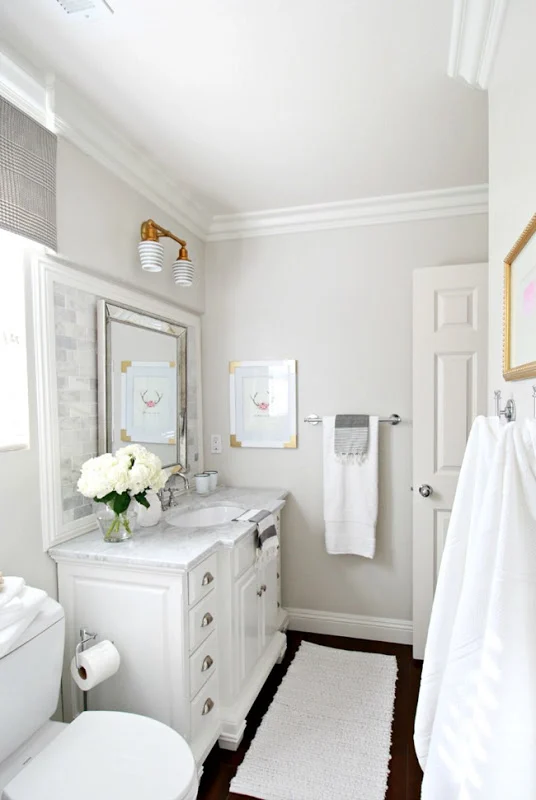
The Pale Oak in the bathroom is reliable. The warmth prevents the cold, clinical feeling that can happen with light neutrals in bathrooms.
It works with white subway tile, it works with marble, it works with warm wood vanities. Even in bathrooms without great natural light, Pale Oak maintains its soft, warm feeling.
Kitchen
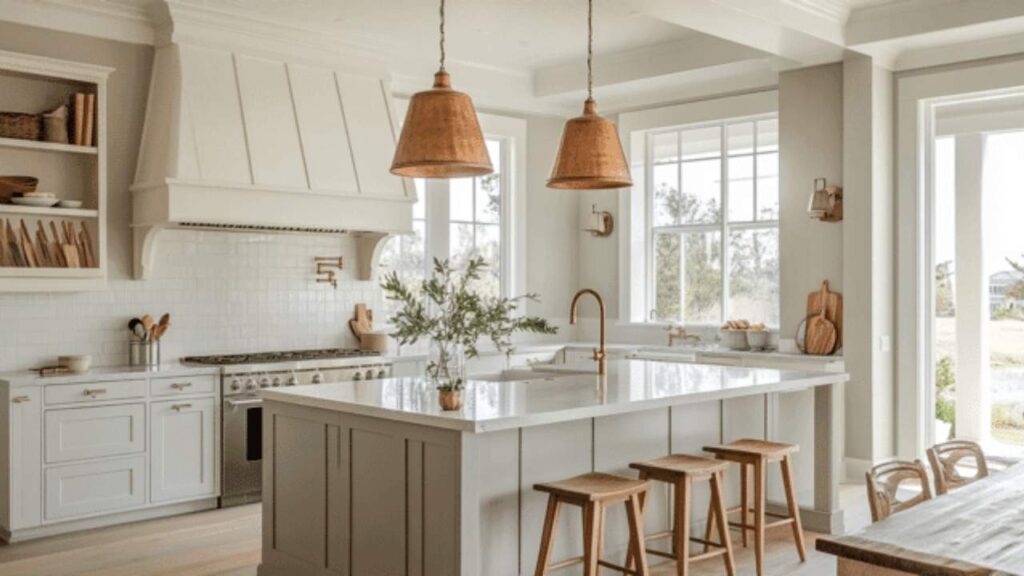
Balboa Mist in a kitchen works if you’ve white or light cabinets and good natural light. It’s clean and modern against white shaker cabinets, especially with white subway tile backsplash.
But if your kitchen is dark or has wood cabinets, Balboa Mist can pull gray or cool against warm elements and create a weird contrast.
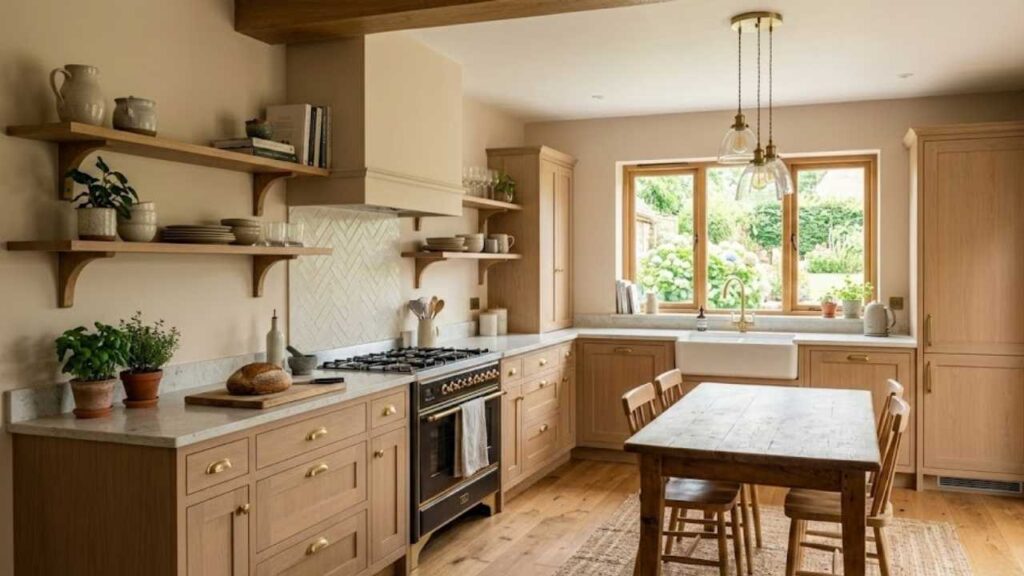
Pale Oak in a kitchen is versatile. It works with white cabinets, it works with wood cabinets, and it handles the mixed lighting situations that kitchens have.
The warmth prevents it from feeling cold, which can happen in kitchens with hard surfaces and reflective materials.
Similar Colors to Balboa Mist Vs Pale Oak
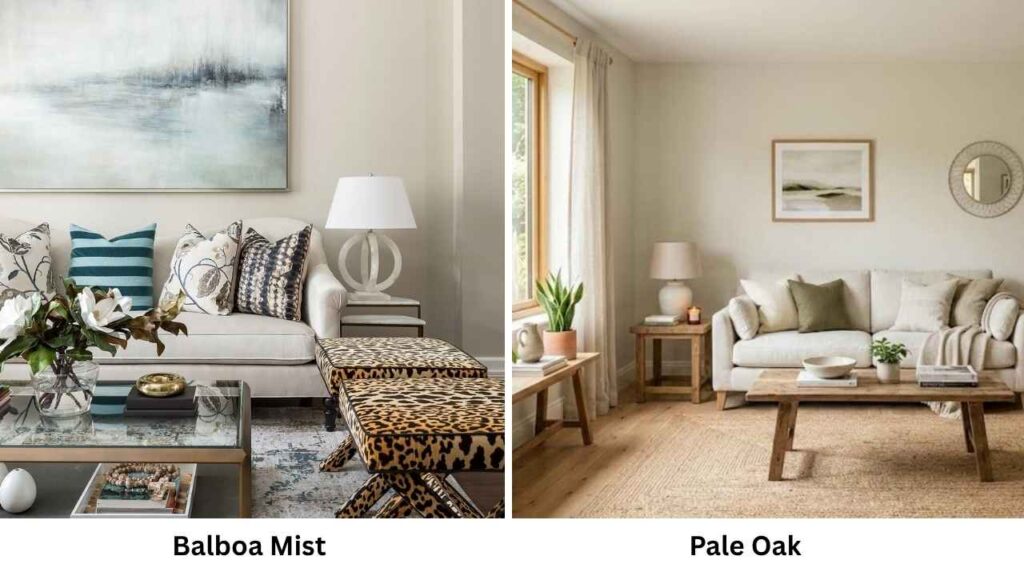
If you’re testing Balboa Mist Vs Pale Oak, you should test a few others alongside them.
Sometimes comparing three or four similar shades helps you see which undertones and warmth levels work best in your space.
I always recommend getting samples of colors because it forces you to look at the differences instead of hoping one will work.
Balboa Mist Vs Pale Oak Vs Edgecomb Gray

Edgecomb Gray HC-173 is warm and darker than both Balboa Mist and Pale Oak, with an LRV around 63. It has strong beige undertones and creates a cozy, enveloping feeling.
If both Balboa Mist and Pale Oak feel too light or cool in your space, Edgecomb Gray is the best. It’s definitely beige-forward, so if you want the greige hybrid quality.
Balboa Mist Vs Drift of Mist
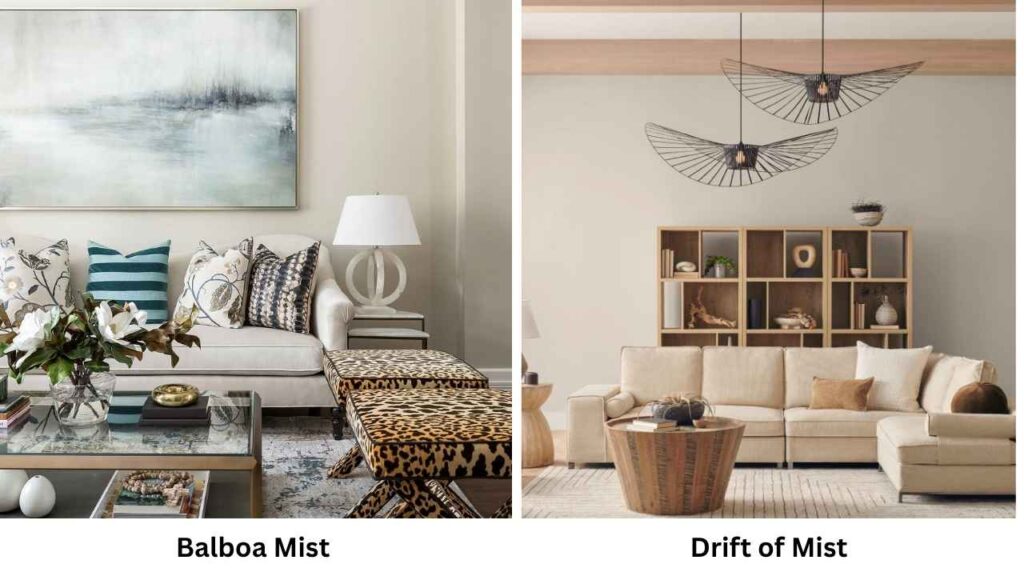
I don’t have specific LRV data on Drift of Mist off the top of my head, but it’s compared to Balboa Mist as a slightly soft, less violet-leaning option.
If you love the idea of Balboa Mist but worry about the violet undertones, Drift of Mist can be worth considering.
Balboa Mist Vs White Dove
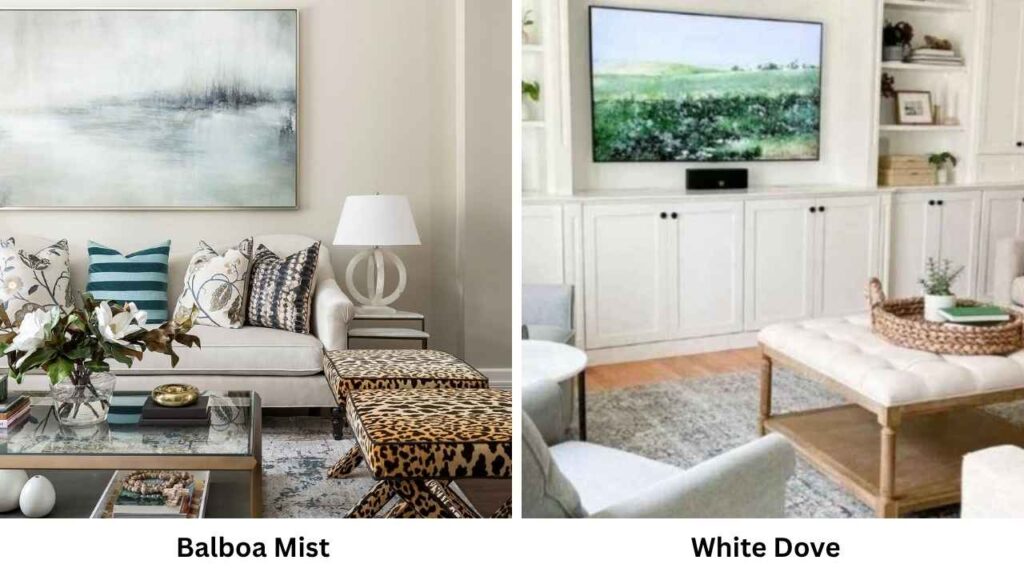
White Dove is light and warm, it’s an off-white rather than greige. If Balboa Mist feels too gray or moody in your space, White Dove offers warmth and lightness without undertones that shift dramatically. I
use White Dove for trim, but it also works beautifully as a room color if you want something lighter than Balboa Mist.
Balboa Mist Vs Revere Pewter
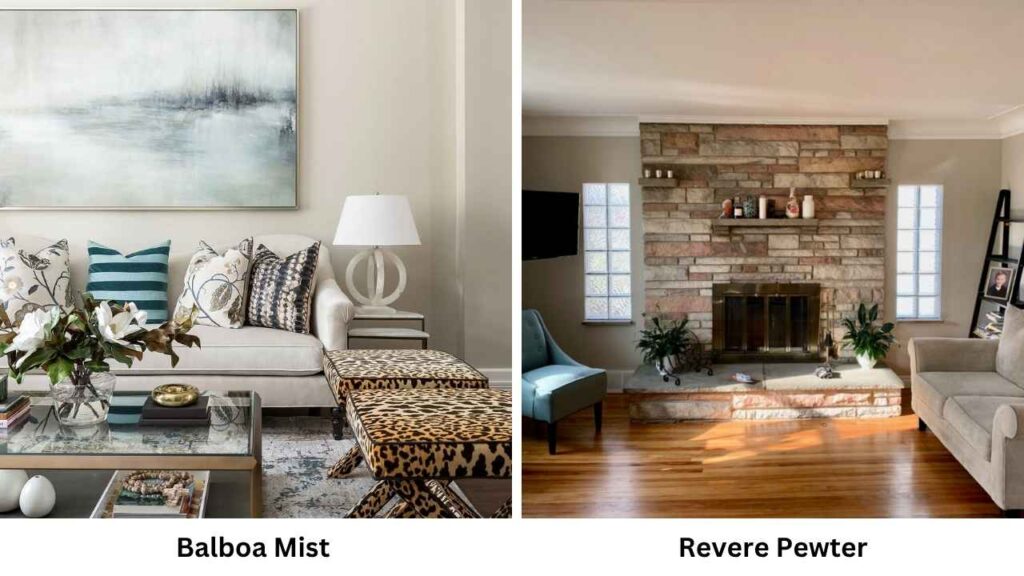
Revere Pewter is dark and more taupe-greige. It has presence and depth, so it’s not a substitute for Balboa Mist. It’s one of the colors everyone’s used at some point, and for good reason but it’s darker.
Balboa Mist Vs Classic Gray
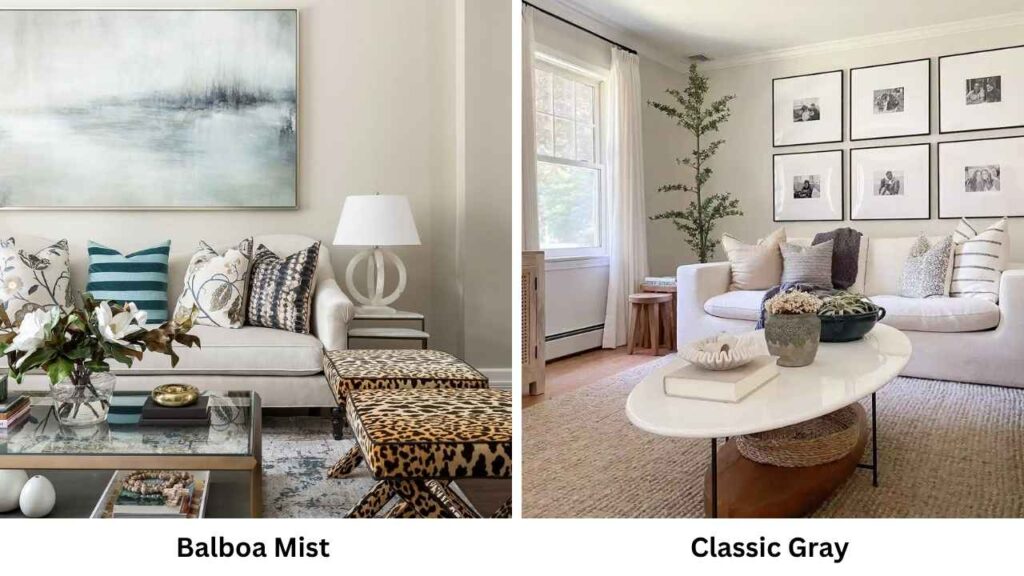
Classic Gray OC-23 has an LRV around 74, so it’s lighter than Balboa Mist. It’s also warm and less violet-leaning.
If Balboa Mist feels moody or gray, Classic Gray gives more warmth and lightness while giving you the soft neutral quality.
Balboa Mist Vs Pale Oak Vs Agreeable Gray
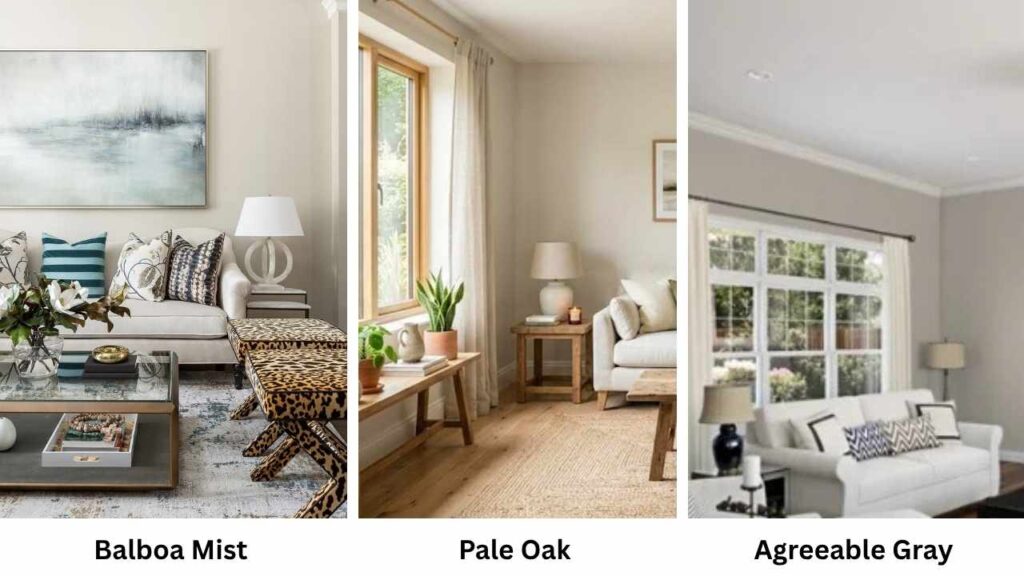
Agreeable Gray Sherwin Williams has an LRV of 60, so it’s darker than both Benjamin Moore colors. It’s warm greige with beige undertones, similar to Pale Oak but with depth.
If you’re considering Sherwin Williams instead of Benjamin Moore, Agreeable Gray is a good option, but it’ll feel darker and more saturated than Balboa Mist or Pale Oak.
Pale Oak vs Balboa Mist vs Collingwood

Collingwood (OC-28) has an LRV around 61-62, making it darker than both Pale Oak and Balboa Mist.
It has similar violet-gray undertones to Balboa Mist but with depth. If you want that same tonal quality but with presence, Collingwood is worth going for.
| Color | LRV | Undertones | Compared to Balboa Mist & Pale Oak |
| Edgecomb Gray | 63 | Warm beige | Warmer and cozier than both |
| Classic Gray | 74 | Warm neutral | Lighter and warmer than Balboa Mist |
| Collingwood | 61-62 | Gray-violet | Darker with similar undertones to Balboa Mist |
| Agreeable Gray (SW) | 60 | Warm greige-beige | Darker and warmer than both |
| White Dove | 83 | Warm off-white | Much lighter, good trim option |
Common Mistakes To Avoid While Choosing Balboa Mist and Pale Oak
I’ve seen people mess these colors up in predictable ways, and I want to save you from making the same mistakes.
Most of these are avoidable if you test properly and think about your space instead of how the color looks online.
• Not testing samples on YOUR walls in YOUR light. The tiny paint chips lie. Sample pots exist for a reason. Paint large swatches on multiple walls and live with them for several days.
• Pairing with the wrong white trim. Cool, harsh whites make both these colors look dingy. Use warm whites like White Dove or Simply White for trim.
• Choosing Balboa Mist for dark or north-facing rooms. The violet undertones will dominate and it’ll look gray-purple. Use Pale Oak instead.
• Expecting Pale Oak to be truly neutral. It’s warm. If you want cool-neutral, you’re looking at the wrong color.
• Ignoring surrounding finishes. Your flooring, countertops, tile, and cabinets will all affect how these colors look. Balboa Mist next to cool gray tile will pull gray. Pale Oak next to honey oak floors will pull pink.
• Rushing the decision because they’re both “safe” neutrals. They’re different in that picking the wrong one for your space will bother you.
• Using them in rooms with weird mixed lighting without testing. If your room has multiple types of light sources, see how both colors perform under all of it before deciding.
Conclusion
Look, both Balboa Mist Vs Pale Oak, both are beautiful colors. There’s no wrong choice, only the wrong choice for your specific space and your specific goals.
If you want something bright, modern, and neutral-cool with subtle elegance, Balboa Mist is the best to go with.
If you want warmth, consistency, and a forgiving greige that works in challenging lighting, Pale Oak is safe to go with.
But TEST FIRST. Buy sample pots, paint swatches on your walls, and live with them. Watch how they change throughout the day.
See how they interact with your floors, your furniture, your lighting. It’s the only way to know for sure.
FAQs On Balboa Mist Vs Pale Oak
Pale Oak is warm with beige-taupe undertones and an LRV of 69-70. Balboa Mist is cool with violet-gray undertones and an LRV of 65-67. Pale Oak is consistent across lighting while Balboa Mist shifts depending on light conditions.
Yes, Balboa Mist is popular and has been for a long time. It’s a go-to neutral for designers and homeowners who want soft greige without committing to full beige or gray. Its versatility and elegant quality make it my favorite.
Neither is better but it depends on your space. Pale Oak is better for low-light or north-facing rooms where you want warmth. Balboa Mist is better for bright, well-lit spaces where you want a modern, airy feel.
Don’t use Pale Oak if you want a cool neutral or if you’re trying to avoid any warmth or beige tones. Also avoid it if your space has very warm, yellow, or orange undertones, Pale Oak will amplify them and make the room feel warm or peachy.