

So, if you’re choosing between Sherwin-Williams Alabaster and Greek Villa, it is common.
These two are some of Sherwin-Williams’ most popular warm whites and they’re both gorgeous.
People use them everywhere like walls, cabinets, trim, and the entire house.
Both are soft, neutral whites that don’t have harshness.
And when you’re looking at sw alabaster vs greek villa, you’re picking between two best options.
They look similar on the small paint swatches, but their undertones, brightness, and how they look in different lighting create visible differences that can make or break your space.
I’ve seen both work well in modern homes, traditional spaces, farmhouse kitchens, and transitional living rooms.
But homeowners and designers struggle to choose between them because the differences are subtle.
But putting the wrong color can make your space feel off.
Here in this post, I’m breaking down everything you need to know about SW Alabaster Vs Greek Villa.
We’ll look at their undertones, Light Reflectance Value (LRV), how they look in natural and artificial light.
Which rooms they work best in, and how they compare to other popular whites.
Here are my other blogs that you can also read:
- City Loft Vs Alabaster
- Tricorn Black Vs Iron Ore
- Clary Saga Vs Evergreen Fog
- Light French Gray Vs Agreeable Gray
- Perfect Greige Vs Agreeable Gray
What You Need To Know About SW Alabaster (SW 7008)

Alabaster is a warm white with visible beige and creamy undertones.
It’s soft, cozy, and has an inviting quality that makes spaces feel lived-in rather than out of place.
Alabaster can look darn yellow or off-white in some lighting conditions.
I’m talking about bright south-facing rooms, spaces with warm LED bulbs, or rooms with natural afternoon light.
The thing about Alabaster is it has a soft, cozy appearance that works well when you want warmth without creamy effect.
It creates less contrast against warm trim, beige flooring, and honey-toned wood finishes.
So if your home already has warm oak cabinets, travertine tile, or the beige carpet, then Alabaster goes well.
I see Alabaster used in traditional and farmhouse-style interiors.
People love it for living rooms where they want the welcoming vibe, bedrooms which feel restful, and bathrooms paired with white subway tile.
The LRV is at about 82, which means it reflects a good amount of light but not like bright whites.
For exteriors, Alabaster works when you want a creamy, classic look.
It’s popular on farmhouse exteriors, mainly when paired with dark shutters or natural wood accents.
But know that the beige undertones will show more outdoors in full sunlight.
The big thing designers consider with Alabaster is lighting conditions and existing finishes.
If you have south-facing rooms with natural light, Alabaster’s warmth comes up.
It can start going with more beige than white and in spaces with less light or when you’re working with cool finishes and need to warm things up, then this is what you should go for.
What You Need To Know About Greek Villa (SW 7551)
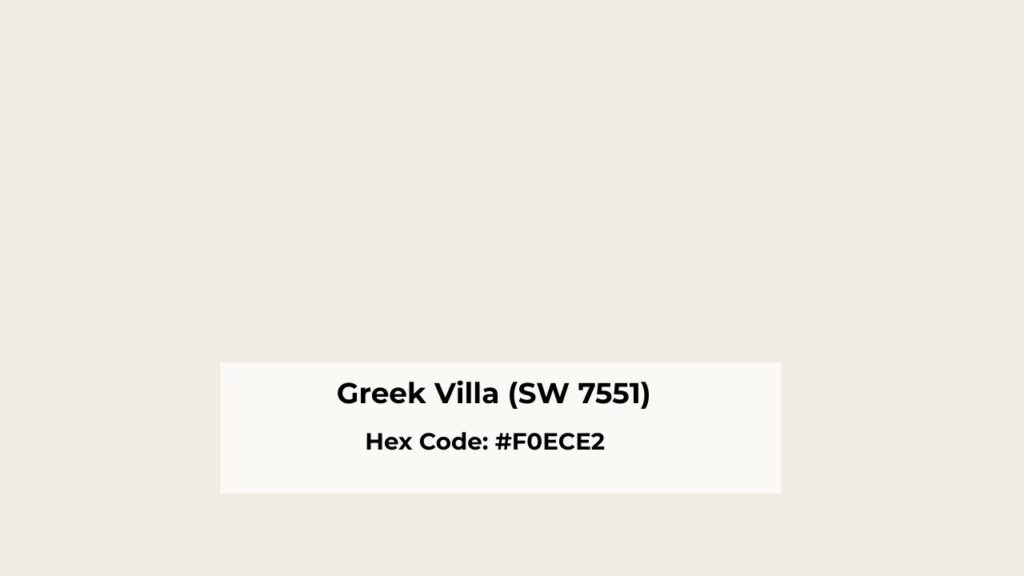
Greek Villa is also a warm white with subtle beige undertones, but it’s a bit bright and fresher than Alabaster.
The undertones are more a yellow-beige rather than Alabaster’s creamy beige.
The difference is small but it’s noticeable when you see them side by side.
Greek Villa has an LRV of about 84, so it reflects more light than Alabaster and appears fresh.
What I like about Greek Villa is how it feels neutral and fresh, mainly in well-lit spaces.
It doesn’t go as creamy-yellow as Alabaster can.
There’s something about the way Greek Villa handles light that keeps it looking clean.
In bright conditions it maintains the soft white appearance without going in cream territory.
Greek Villa works well in modern, transitional, and minimalist interiors where you want warmth but also need a clean, airy feel.
It’s become a popular house white because of its versatility.
I’ve seen it used in open floor plans where you need one color to flow through multiple spaces with different lighting exposures.
North-facing rooms benefit from Greek Villa because its subtle warmth compensates for the cool, bluish natural light.
For living rooms, Greek Villa creates a bright backdrop which makes spaces feel large and open.
In bedrooms it gives a soft white envelope without feeling cold.
In bathrooms, it looks gorgeous, when you want a spa-like freshness.
And for kitchens, Greek Villa on walls works well with both warm wood tones and cool finishes like marble or stainless steel.
Exteriors with Greek Villa look clean and bright while maintaining warmth.
It’s less likely to be as yellow compared to Alabaster.
If you’re going for a fresh modern farmhouse look or a clean contemporary exterior, Greek Villa gives it.
It works with natural wood accents, black trim and warm metals like brass or bronze.
The reason homeowners and designers go with Greek Villa when it comes to consistency.
It performs well across different lighting situations without shifts in appearance.
SW Alabaster Vs Greek Villa: Undertones, LRV, and Best Uses Explained
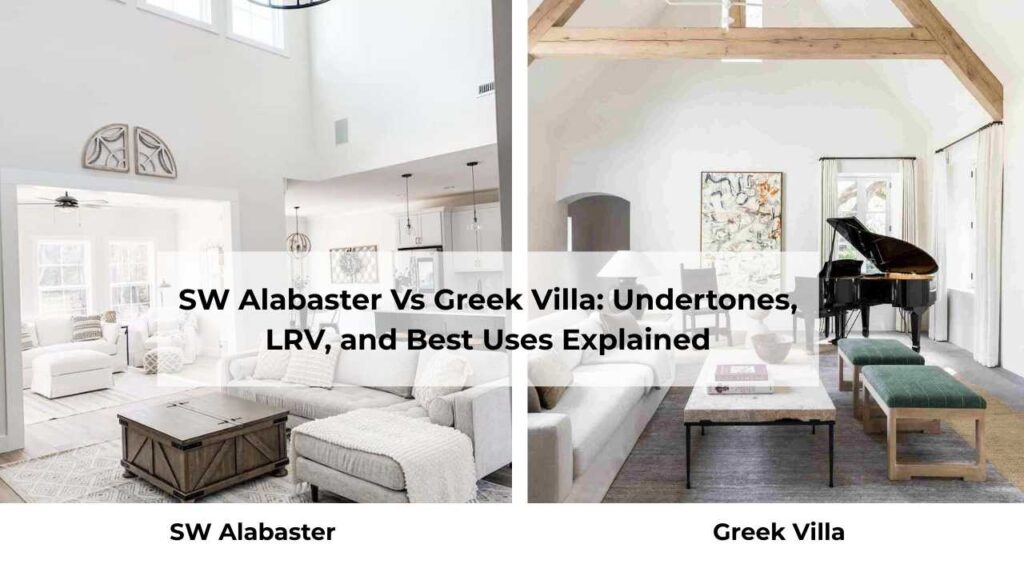
Okay, now we’re getting into the real comparison.
This is where you figure out which white works for your specific situation.
These two are interchangeable but the details matter.
LRV
Light Reflectance Value is how much light a color bounces back on a scale of 0 to 100.
Greek Villa is at LRV 84 while Alabaster is at LRV 82.
The two-point difference means Greek Villa reflects more light and appears bright in many conditions.
Now, two points doesn’t sound much, but when you’re working with similar whites the small differences become visible.
Greek Villa will make a room feel a touch light and open.
Alabaster is a bit darker, has more depth and feels substantial.
Undertones
This is the deciding factor for most people.
Both are warm whites but they get their warmth differently.
Alabaster has strong beige and creamy undertones.
In bright light or warm artificial lighting, the undertones can show yellow.
It is cozy and traditional because of the warmth.
The undertones have a peachy-beige quality that shows against bright white trim.
Greek Villa has yellow-beige undertones that are subtle.
Some people describe them as having an orange-beige quality, but it’s gentle.
Greek Villa is less likely to look yellow and in bright conditions too.
There’s a touch of what I’d call a greige influence which keeps it neutral.
It’s warm, but not like Alabaster.
When you put them side by side, Alabaster looks creamy and Greek Villa looks clean.
That’s the best way to understand the difference.
Lighting Behaviour
How these colors respond to light makes an impact.
Natural light: Greek Villa stays consistent throughout the day.
Morning light, afternoon sun, overcast days, it maintains a soft white character.
Alabaster is reactive. In north-facing rooms with cool light, Alabaster can feel heavy and show more gray.
In south-facing rooms with warm afternoon sun, it can look yellow.
Artificial light: Under warm LED or incandescent bulbs, Alabaster’s warmth intensifies.
It can look beige in evening lighting.
Greek Villa handles artificial light better, staying balanced under both warm and cool bulbs.
Low-light spaces: This is where Greek Villa shines, like basements, hallways, rooms with small windows, Greek Villa keeps the spaces feeling bright and clean.
Alabaster can feel off or flat in low light.
I always recommend Greek Villa for north-facing rooms or spaces that don’t get much natural light.
Warmth and Brightness
Greek Villa is bright and fresh while Alabaster is warm and soft.
If I had to rank them, Greek Villa is more neutral-warm while Alabaster is in the warm-cozy category.
Greek Villa works when you want that modern, fresh look but need some warmth to keep things inviting.
Alabaster works when cozy and traditional is what you’re after.
Neither is a cool white, they both have warmth.
Depth
Alabaster has more depth because of its low LRV and strong undertones.
It feels more grounded and substantial on walls.
Greek Villa feels light and open but can be flat in some conditions because it’s bright.
If you’re pairing with deep accent colors like navy (Naval SW 6244) or rich greens (Pewter Green SW 6208), both work but Alabaster’s depth creates a dramatic contrast.
Greek Villa keeps things feeling light.
Style and Best Uses
Alabaster fits best in:
- Traditional and farmhouse interiors
- Spaces where you want pronounced warmth
- South-facing rooms where you can handle the extra yellow
- Homes with existing warm finishes
- Trim and cabinetry when paired with dark wall colors
Greek Villa fits best in:
- Modern, transitional, and contemporary spaces
- Whole-house applications needing consistency
- North-facing or low-light rooms
- Open floor plans with varying light exposures
- When you want warmth but need a cleaner look
For trim pairings, Alabaster on walls with Extra White trim shows the creamy warmth beautifully.
Greek Villa on walls can handle bright white trim without looking too yellow.
Both work as trim colors themselves, but Greek Villa is versatile for the application.
| Feature | Alabaster (SW 7008) | Greek Villa (SW 7551) |
| LRV | 82 | 84 |
| Undertones | Beige, creamy, yellow | Yellow-beige, subtle orange-beige |
| Brightness | Soft, Muted | Bright, fresh |
| Warmth Level | Warm, cozy | Warm but neutral |
| Light Consistency | Reactive to lighting | Consistent across conditions |
| Best For | Traditional, farmhouse, south-facing rooms | Modern, transitional, north-facing rooms, low-light |
| Depth | Substantial depth | Light, open feel |
SW Alabaster Vs Greek Villa: Room-By-Room Suitability
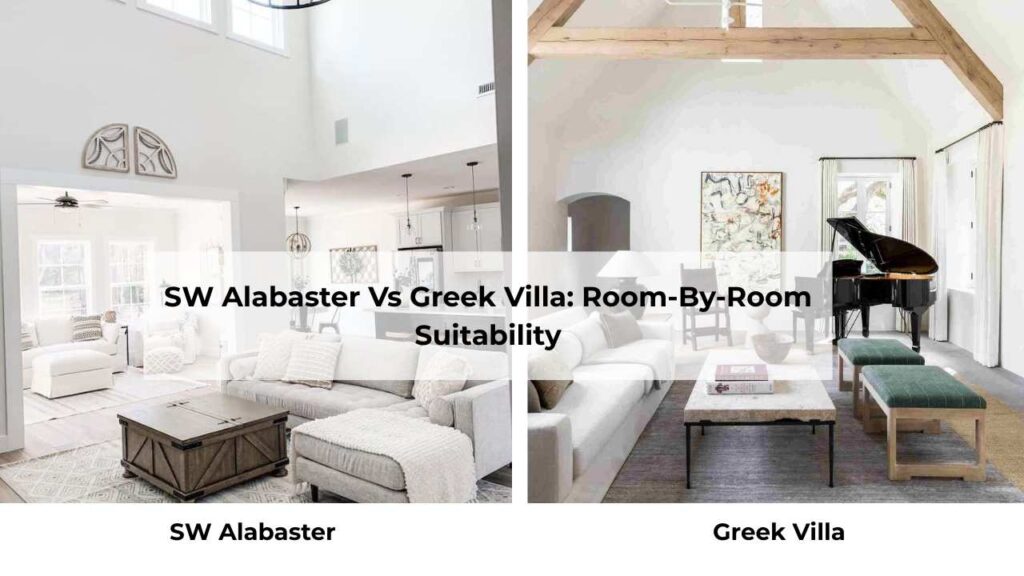
Different rooms have different needs, different lighting, different purposes.
Here’s how these two LOOK where it counts.
Living Room
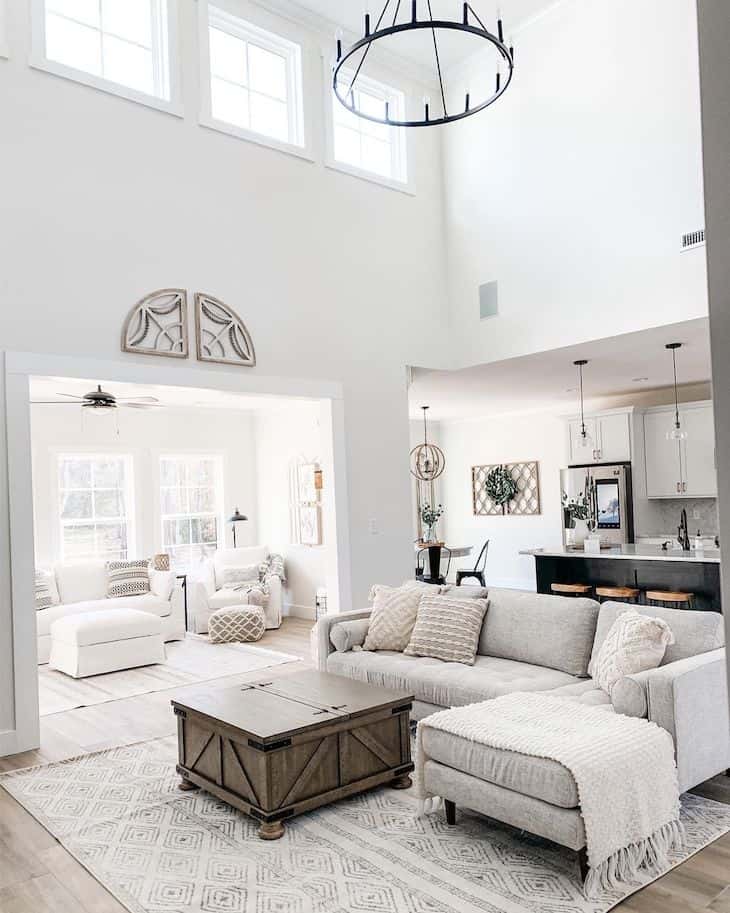
SW Alabaster in a living room creates a cozy, welcoming atmosphere.
If your living room gets good natural light and you have warm hardwood floors, comfortable furniture, and you’re going for the lived-in vibe, Alabaster is what you should consider.
The warmth shows in evening lighting when you have lamps on and everyone’s gathered.
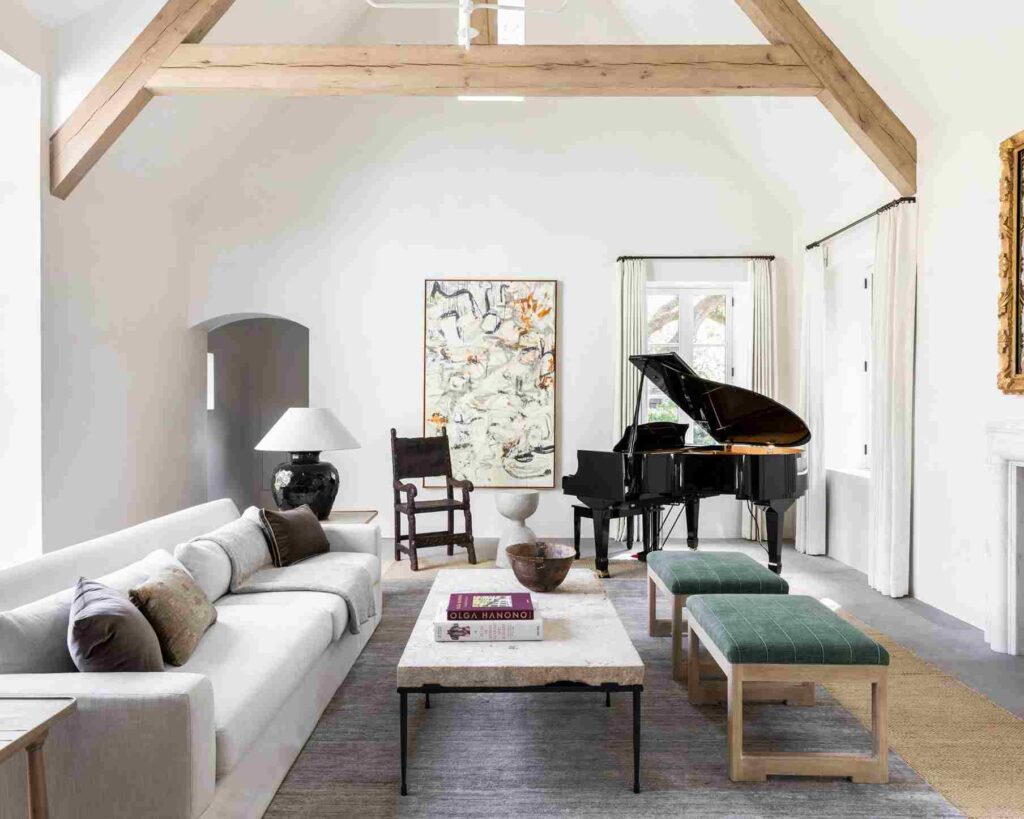
The Greek Villa in the living room feels fresh and open.
It’s perfect for modern or transitional spaces where you want clean lines and an airy feel.
If your living room connects to other spaces in an open floor plan, Greek Villa flows well without looking different as light changes.
It creates a better backdrop for both warm and cool accent colors, so if you’re mixing navy blues, warm wood, cool metals, and greenery.
Bedroom
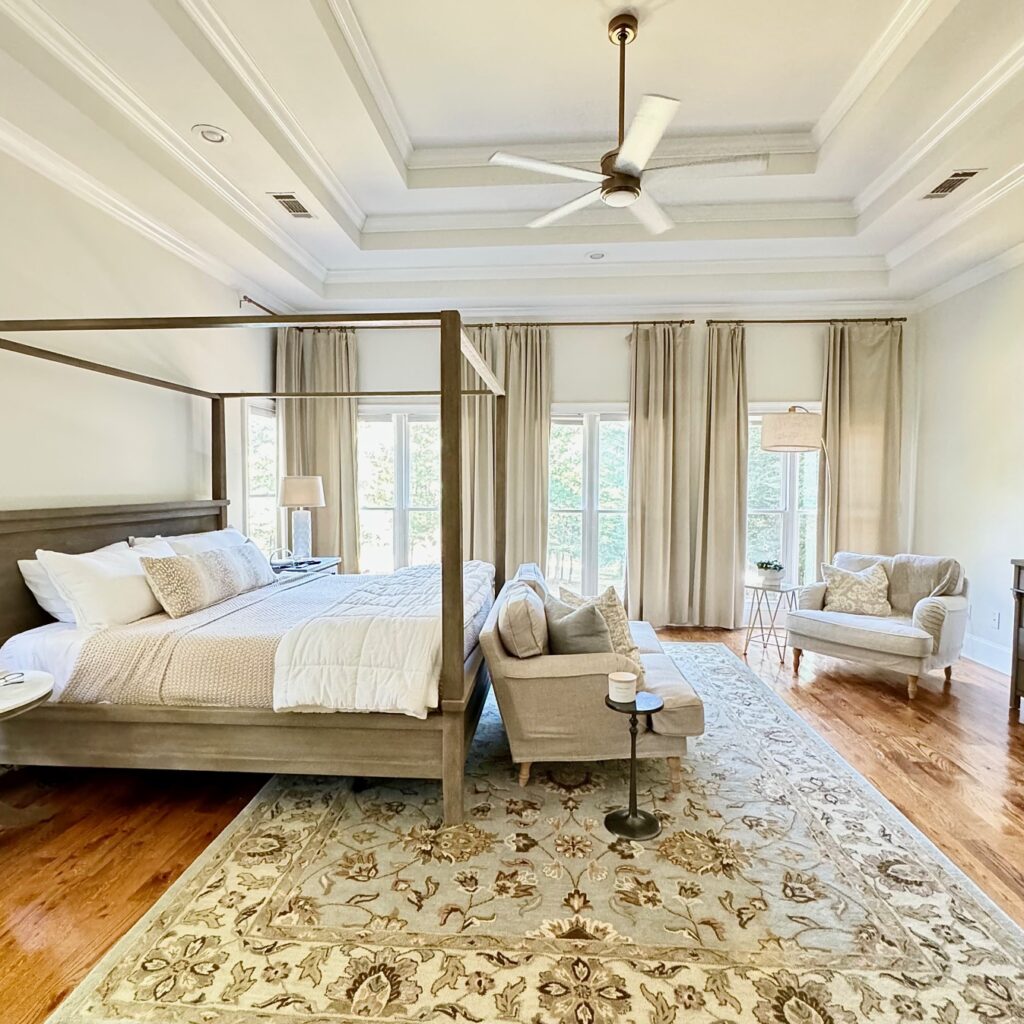
SW Alabaster in a bedroom is lovely if you want warmth and cozy for the restful vibe.
Bedrooms don’t need to feel bright and energizing, so Alabaster’s soft, warm quality works.
It looks gorgeous with warm wood furniture, cream bedding, and soft textures.
In evening lighting, Alabaster feels enveloping.
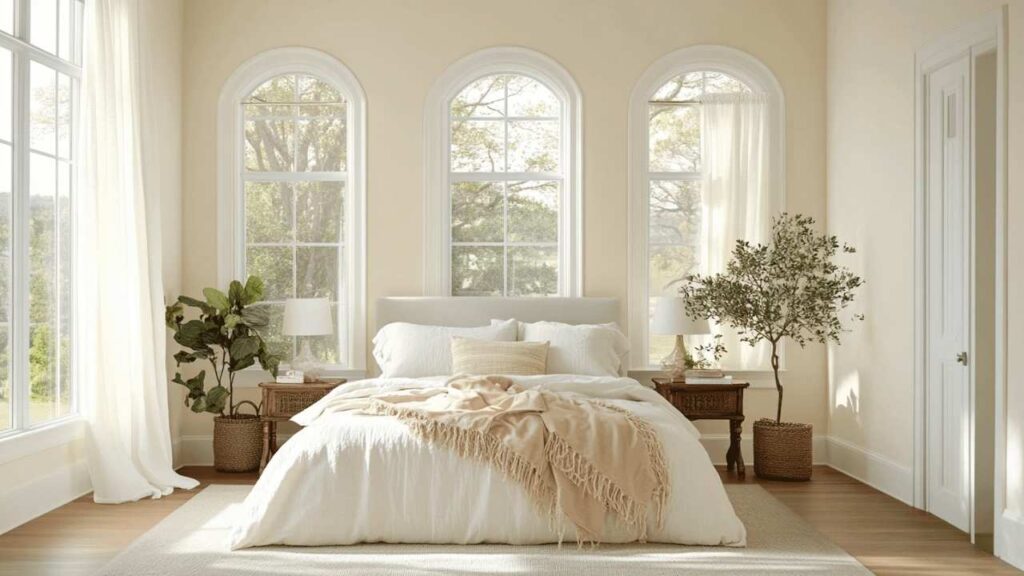
Greek Villa in a bedroom gives you a soft white envelope without going warm.
It’s great for bedrooms that get morning light because it brightens the space without feeling harsh.
If you like a clean, spa-like feel in your bedroom, Greek Villa is what you should go for.
It also works better if you’re mixing cool bedding colors like blues or grays with warm wood tones.
Bathroom
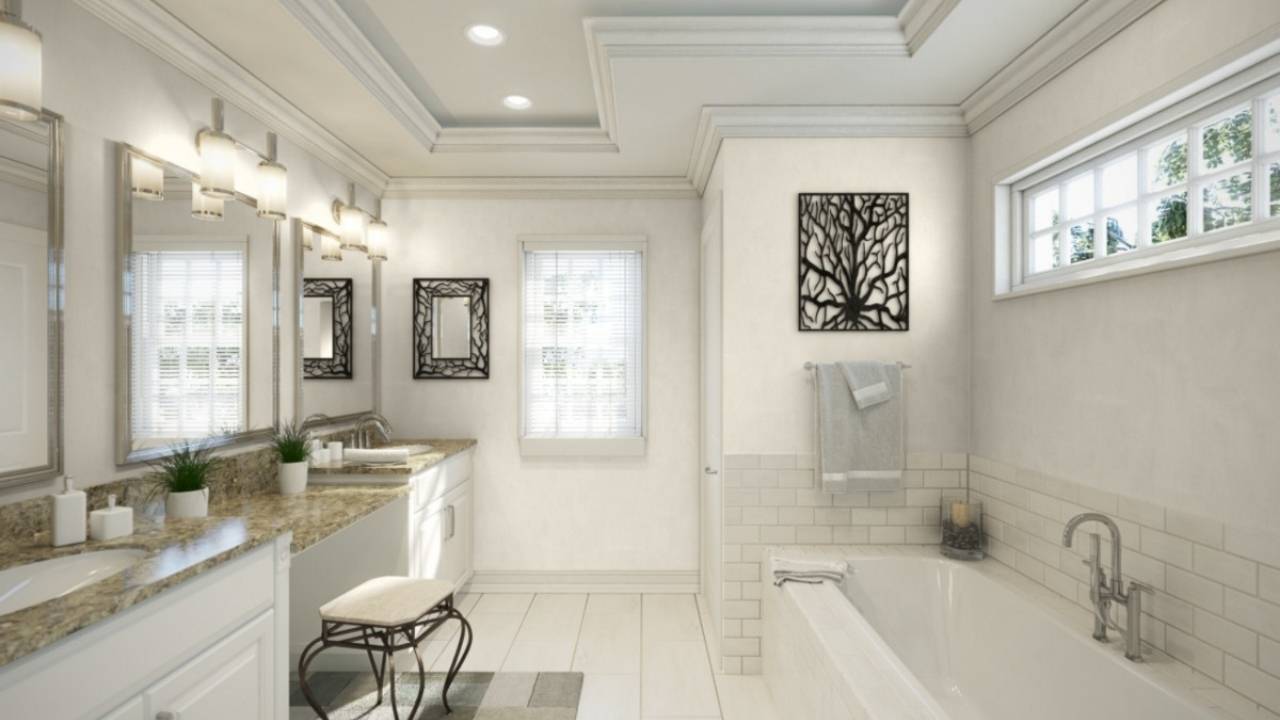
SW Alabaster in a bathroom can be tricky.
If it’s a small bathroom with limited natural light, Alabaster may feel out of place.
But in a large bathroom with good lighting, mainly one with warm finishes like honey oak cabinets or beige tile, Alabaster looks cohesive.
And paired with white subway tile or as wainscoting with a deep color, it works.
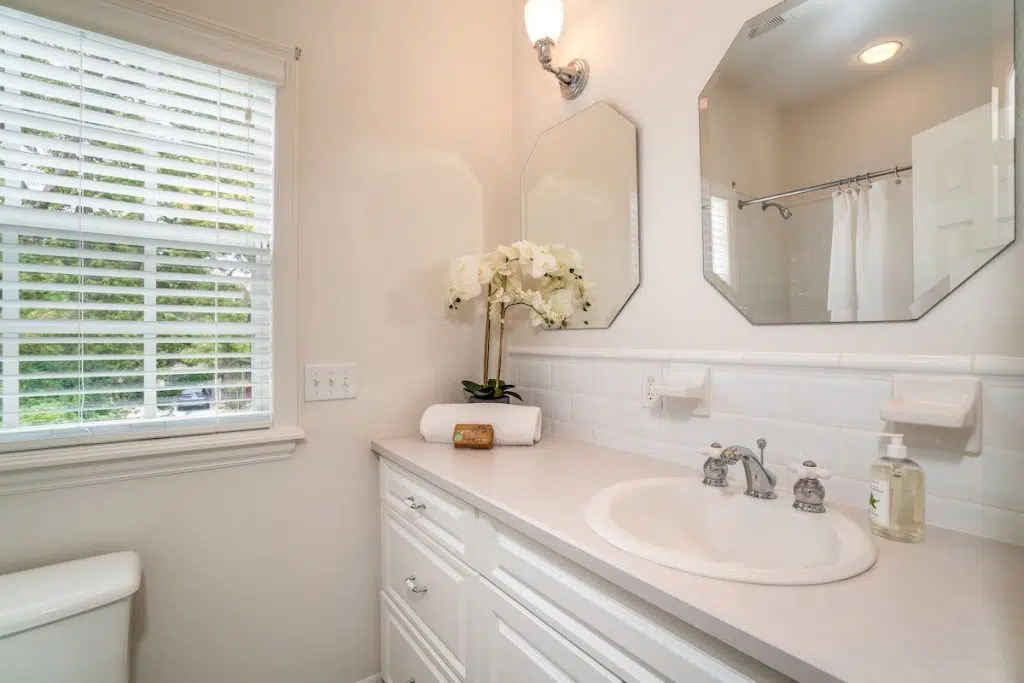
Greek Villa in a bathroom is always a win.
It stays fresh and clean-looking, which is what most people want in a bathroom.
Even in small bathrooms with less natural light, Greek Villa maintains the brightness.
It creates a spa-like feel everyone wants.
It works beautifully with white fixtures, marble, and both warm and cool accent colors.
Kitchen
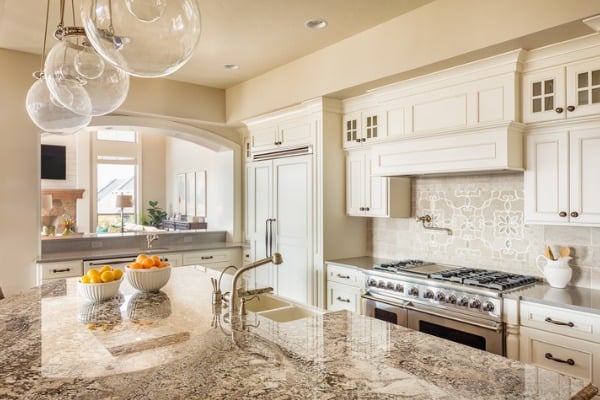
SW Alabaster on kitchen walls can look nice with warm wood cabinets and warm countertops like granite from the early 2000s.
It creates less contrast with the warm finishes.
On kitchen cabinets, Alabaster is popular but you need to be careful.
It shows its warmth strongly on cabinets, mainly on lower cabinets.
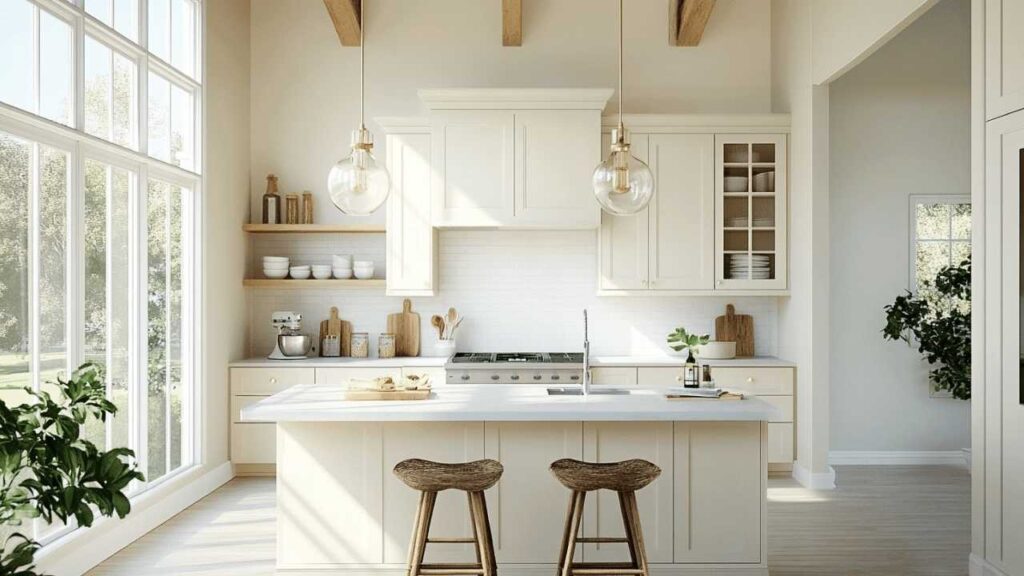
Greek Villa in kitchens is versatile. On walls it stays bright and clean, making the kitchen feel large.
For kitchen cabinets, Greek Villa is preferred because it maintains consistency.
Upper cabinets in bright light and low cabinets in shadow look more uniform with Greek Villa.
It works with warm wood floors, cool marble or quartz countertops, stainless appliances, and brass hardware.
Exterior
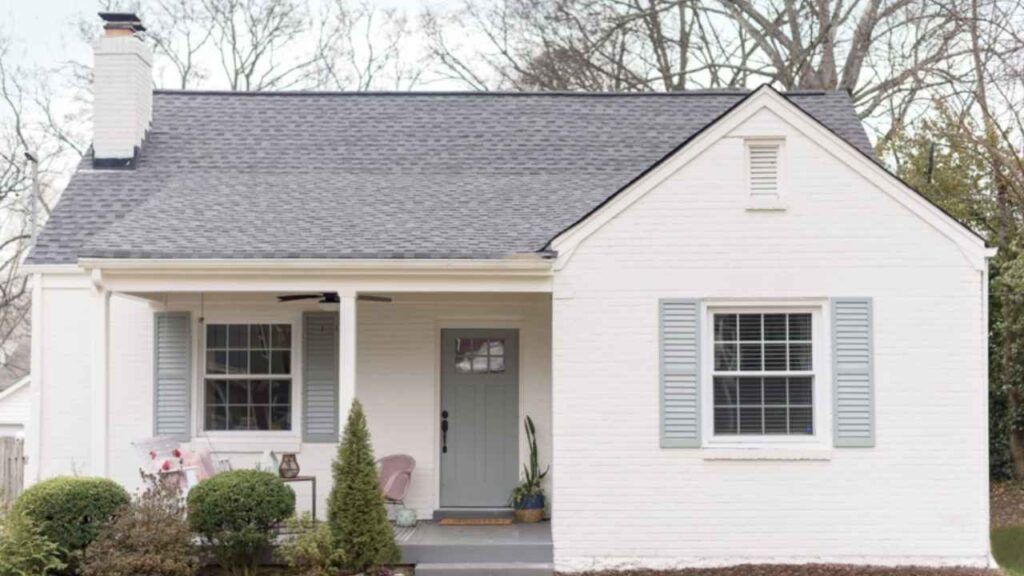
SW Alabaster on exteriors creates a classic, warm look.
It’s creamy and traditional, perfect for farmhouse styles or classic homes.
The beige undertones show on exteriors in full sunlight, so you’re getting a warm, creamy white.
Some people love it, others think it looks too yellow.
It works well with natural wood accents, warm-toned brick, and dark trim colors.

Greek Villa on exteriors looks clean and bright while maintaining warmth.
It’s less likely to look yellow, in direct sunlight too.
For modern farmhouse, contemporary, or clean traditional exteriors, Greek Villa is reliable.
It works with black trim, natural wood, stone, and both warm and cool accent colors.
The consistency factor matters, Greek Villa looks more uniform across different sides of your house.
SW Alabaster Vs Greek Villa Vs Other Colors
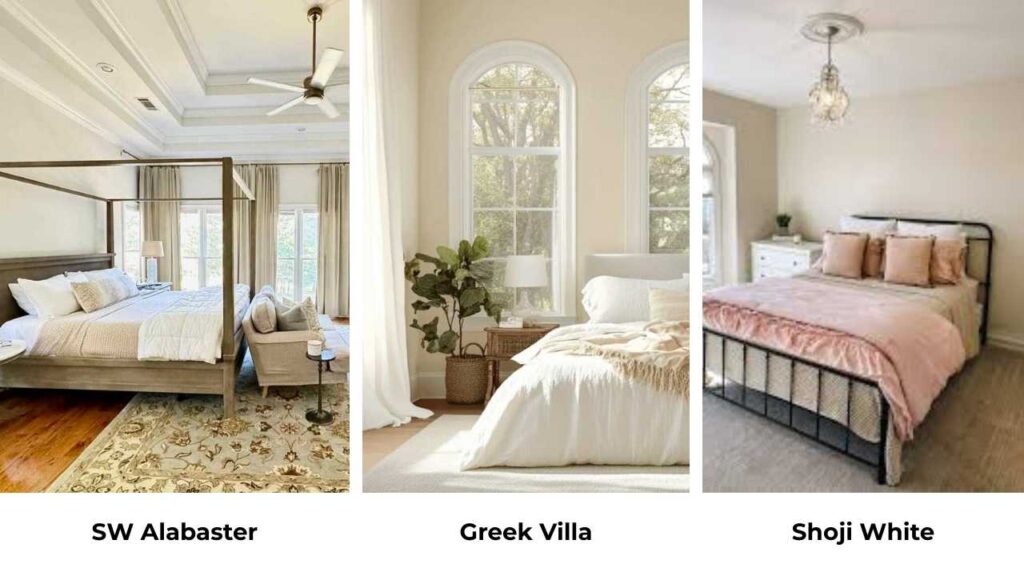
Sometimes you need to see how these look against other popular whites to understand them.
Let me walk through some major comparisons.
Shoji White Vs Alabaster Vs Greek Villa

Shoji White is another warm white but it’s brighter than both Alabaster and Greek Villa.
It has a high LRV and less pronounced undertones.
When you compare all of them, Shoji White is bright and clean, Greek Villa is in the middle with subtle warmth, and Alabaster is warm and creamy.
Shoji White works when you want warmth but need maximum light reflection.
Greek Villa when you want balanced warmth and brightness. Alabaster when you want cozy warmth.
Greek Villa Vs Pure White
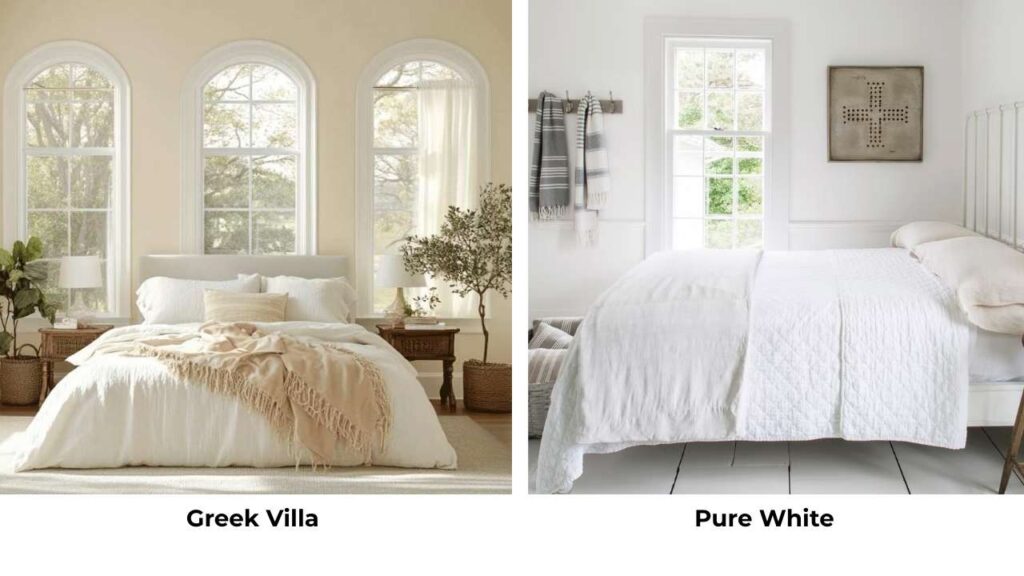
Pure White is a different type of white.
Pure White has an LRV of 84, same as Greek Villa but the undertones are different.
Pure White is a soft white with subtle warm undertones but it is more neutral than Greek Villa.
Put them side by side and Pure White makes Greek Villa look warm.
Pure White is versatile with different finishes but Greek Villa provides warmth.
White Dove Vs Greek Villa
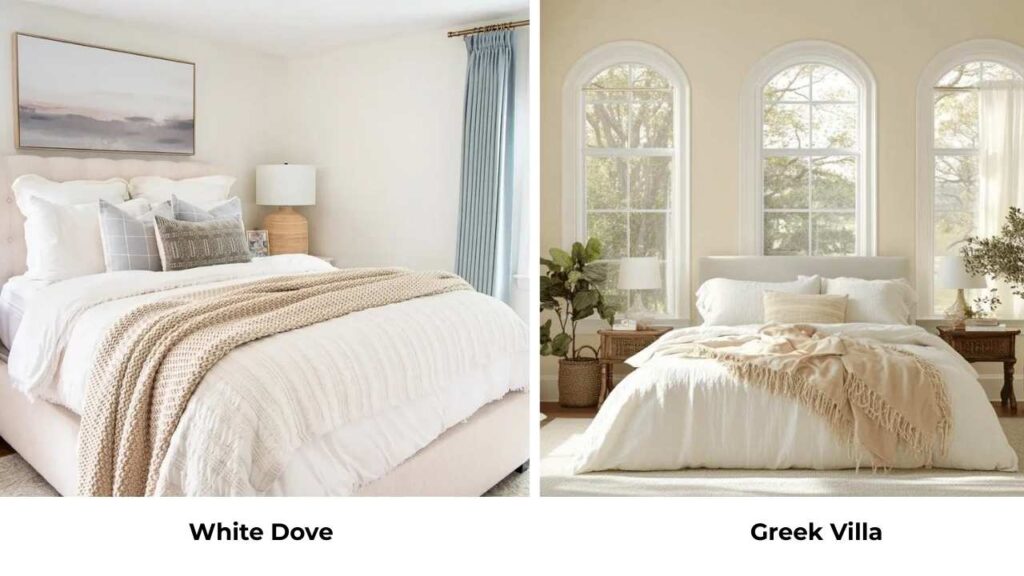
White Dove Benjamin Moore is comparable to Alabaster in warmth but has different undertones, which is more peachy-cream than Alabaster’s beige-cream.
Greek Villa is bright and less creamy than White Dove.
If you’re choosing between White Dove and Greek Villa, consider whether you want the soft, creamy warmth or a bright, fresh warmth, because both are gorgeous but have different aesthetics.
Greek Villa Vs Swiss Coffee
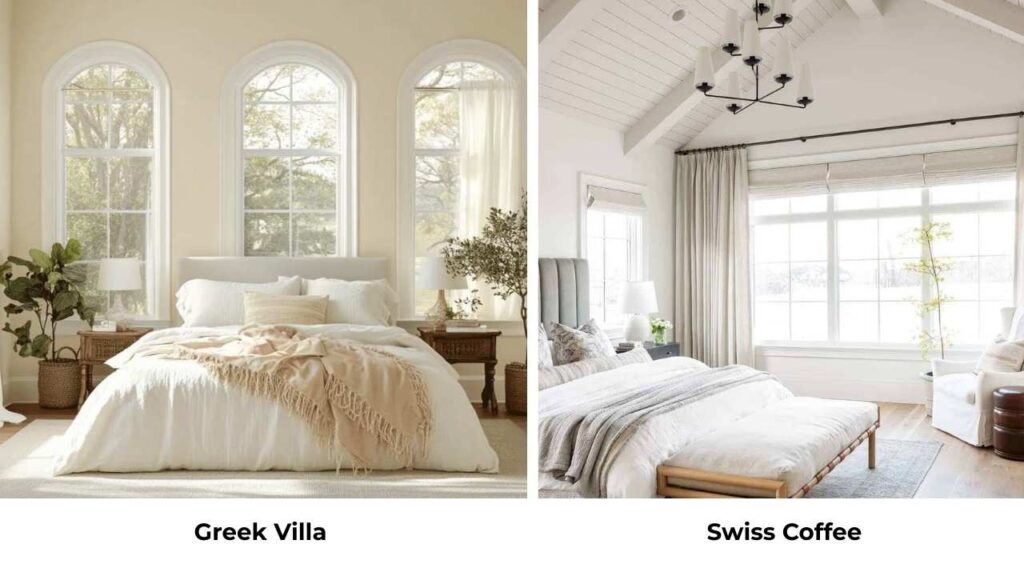
Swiss Coffee Benjamin Moore became popular recently and it’s similar to Alabaster, warm, creamy and cozy.
Greek Villa is bright and less warm than Swiss Coffee.
Swiss Coffee has a touch of green in some lighting, while Greek Villa is more in the yellow-beige family.
| Paint Color (Brand) | LRV (Brightness) | Undertone | Overall Look | Key Difference | Best Uses |
| Shoji White (Sherwin-Williams) | ~74 | Soft warm, very subtle | Bright, clean warm white | Bright and cleaner than Alabaster and Greek Villa; less creamy | Walls in low-light rooms, open layouts, warm modern interiors |
| Greek Villa (Sherwin-Williams) | 84 | Warm beige-yellow | Balanced warm white | Brighter than Alabaster and Swiss Coffee; warmer than Pure White | Whole-house color, walls, bright interiors needing warmth |
| Alabaster (Sherwin-Williams) | 82 | Beige-cream | Cozy, creamy warm white | Warmer and creamier than Greek Villa; softer than Shoji White | Living rooms, bedrooms, traditional or cozy spaces |
| Pure White (Sherwin-Williams) | 84 | Soft neutral-warm | Clean, neutral white | More neutral than Greek Villa; makes Greek Villa appear warmer | Trim, cabinets, modern interiors, pairing with bold colors |
| White Dove (Benjamin Moore) | ~85 | Peachy-cream | Soft, classic creamy white | Creamier and richer than Greek Villa; less bright | Walls, trim, classic and transitional interiors |
| Swiss Coffee (Benjamin Moore) | ~83 | Creamy with slight green (in some lighting) | Warm, cozy white | Warmer and deeper than Greek Villa; Greek Villa appears brighter | Bedrooms, living rooms, north-facing or cozy spaces |
Is Greek Villa or Alabaster More Yellow?
Alabaster is more yellow, mainly in bright light or under warm artificial lighting.
Greek Villa has yellow-beige undertones, yes, but they’re subtle and the high LRV keeps it looking clean.
Alabaster’s beige-cream undertones have much more yellow when light hits it.
In the south-facing rooms or under incandescent bulbs, Alabaster can look yellow.
If you’re worried about yellow undertones showing up, Greek Villa is safe.
It’s warm without going yellow.
Alabaster is the better choice when you WANT the warm, yellow quality because you’re working with warm finishes and want cohesion.
I’ve had people paint Alabaster and then got confused because it looks too yellow.
But it’s in a bright room with natural light and they expected a pure white.
Which is Better, SW Alabaster or Greek Villa?
Neither is “better”, they have different purposes.
But I can help you figure out which is better FOR YOU.
Choose Greek Villa if:
- You need a whole-house white that stays consistent
- You have north-facing rooms or low-light spaces
- You want warmth but need a clean, bright look
- Your home has mixed finishes
- You’re going for modern, transitional, or minimalist style
- You want versatility for future design changes
Choose Alabaster if:
- You want warmth and coziness
- Your home has warm finishes
- You’re creating a traditional or farmhouse aesthetic
- You have south-facing rooms with light and want to embrace the warmth
- You’re using it on trim or cabinets with dark walls
- You want depth and substance over brightness
But, I recommend Greek Villa more because of its consistency and versatility.
It works in situations and causes few “this looks too yellow” moments.
But I’ve seen Alabaster look STUNNING in the right homes with the right lighting and finishes.
The only way to know is to get samples of both and look at them in YOUR space with YOUR lighting and YOUR finishes.
See them in morning light, afternoon light, evening artificial light.
Conclusion
So there you have it, SW Alabaster vs Greek Villa.
Both are gorgeous warm whites from Sherwin-Williams that work well in the right situations.
Greek Villa brings brightness, consistency, and versatile warmth which works with different lighting conditions and styles.
Alabaster brings cozy, deep warmth that creates traditional, inviting spaces.
The key is understanding your lighting, your existing finishes, and the feeling you want to create.
Greek Villa for fresh and bright, Alabaster for cozy and warm.
Neither is wrong but they’re different tools for different jobs.
Sample them both, live with them for a few days, and you’ll know.
Your space will tell you which one belongs, because comparing SW Alabaster Vs Greek Villa can be difficult but it should be understood.
FAQs on SW Alabaster Vs Greek Villa
Alabaster is warm. It has strong beige and creamy undertones that show up, mainly in bright light or with warm artificial lighting. Greek Villa is warm too, but it’s subtle and neutral.
Don’t use Greek Villa when you WANT a creamy, cozy, traditional warmth and you have the lighting to support warm colors. If you have a south-facing room with warm finishes and you want everything cohesive and enveloping, Alabaster is better.
It can be used in low-light situations or north-facing rooms. Alabaster’s low LRV and warm undertones mean it doesn’t reflect much light, so in dim spaces it can appear flat or heavy.
The main differences are brightness and undertone intensity. Greek Villa has an LRV of 84 vs Alabaster’s 82, making it bright. Greek Villa has subtle yellow-beige undertones while Alabaster has strong beige-cream undertones that are warm and more yellow. Greek Villa stays consistent across lighting conditions while Alabaster is reactive.
SW Alabaster Vs Greek Villa: Which White Paint Works Best in Your Modern Home?