

Before we began renovating our basement, we realised how important it was to choose the correct waterproof sealant. The difference between Radonseal vs Drylok became more important than we expected once we understood how much the wrong product can mess with the durability of a product, paint, and surroundings.
Basement waterproofing is imperative while building your home because it helps in preventing structural damage, protects against health hazards like mold, and ensures that the space is more livable. Without proper waterproofing, basements are vulnerable to water intrusion from rain, seepage, flooding, etc.
In this guide, I have made this Radonseal vs Drylok comparison guide, which has all these questions answered – what are these sealants and how do they work, key differences between the Radonseal vs Drylok, and their pros and cons. We will also see how Drylok and Radonseal fare against other variants.
What is RadonSeal?
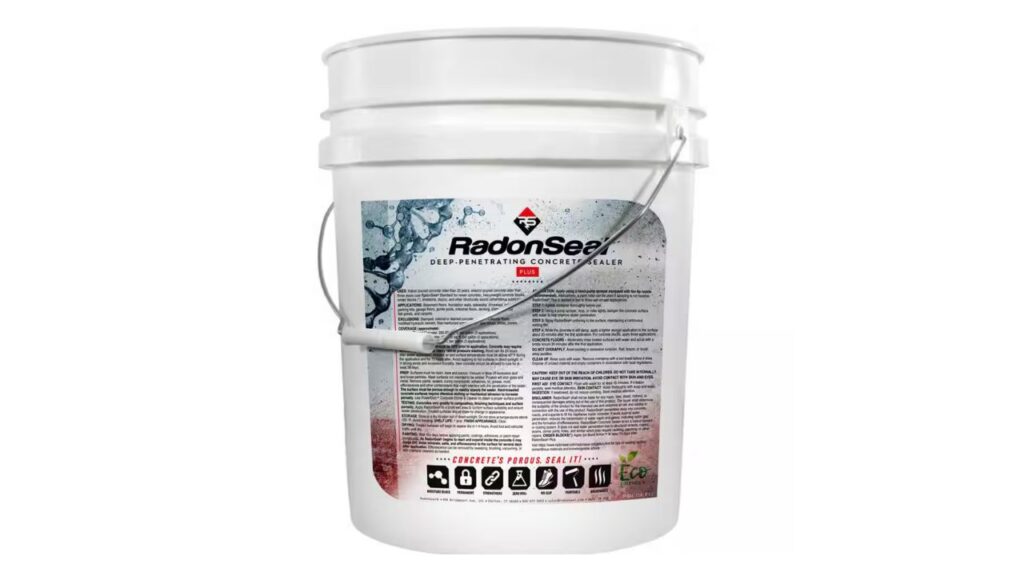
Radonseal is a deep-penetrating silicon sealer that strengthens and waterproofs the concrete from within. The best part of this sealant is that, unlike normal sealants, this does not just sit on the surface of the concrete, but goes 4-inches into the concrete. Filling each tiny space and completely sealing the concrete from within.
So many people that I have met and mentioned if I have used radonseal before and have always asked this one question – “Does RadonSeal work?”. To this I say, yes, it does. Because it goes down to the very core of the concrete and seals it properly from within, it means the concrete is getting full protection.
Radonseal reacts with the lime and alkalis in the concrete to form an unsolvable gel mixture that fills and strengthens the tiny pores within it. This helps in creating a permanent seal that stops water seepage from all sides. Additionally, its primary function is to block the tiny pores that allow radon gas emissions and other such gases to enter the structure. So it is essential for you to seal all larger cracks, gaps, as these are common entry points.
What is Drylok?
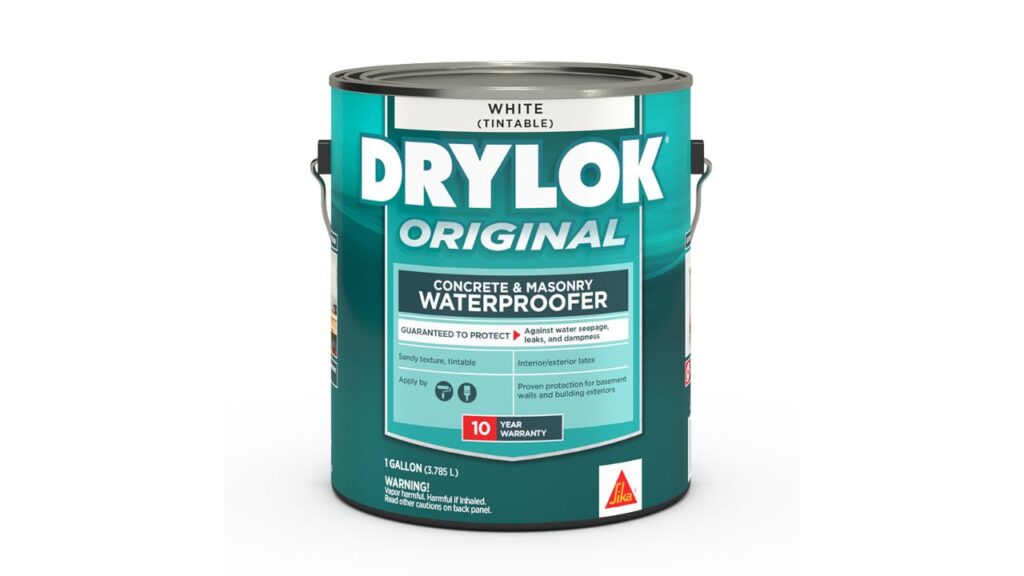
Drylok is a liquid-type masonry waterproofer sealant that helps in creating a waterproof barrier on porous surfaces like concrete, bricks, and stones. It soaks into the pores of the masonry and hardens as it dries, creating a strong, watertight barrier that stops moisture from seeping through. It’s mainly used on basement walls, foundations, and other such materials to keep the water out.
Water damage in the basement weakens structural integrity and causes mold to form. Drylok provides a barrier against water damage, enhancing the foundation’s overall structure and base. It helps preserve the foundation’s strength and longevity, reducing the mildew and mold growth, along with being extremely cost-effective for your wallet. Drylok can be used on painted basement walls, provided that the paint is not oil-based or latex and keeps them in good condition.
Use Drylok when you want an alternative, cost-effective, DIY-style kind of solution. It will help give you a base for interior and exterior masonry surfaces from light, moisture, and dampness. It’s a very user-friendly product and can be used with a simple brush or roller.
Radonseal Vs Drylok: Key Differences Between
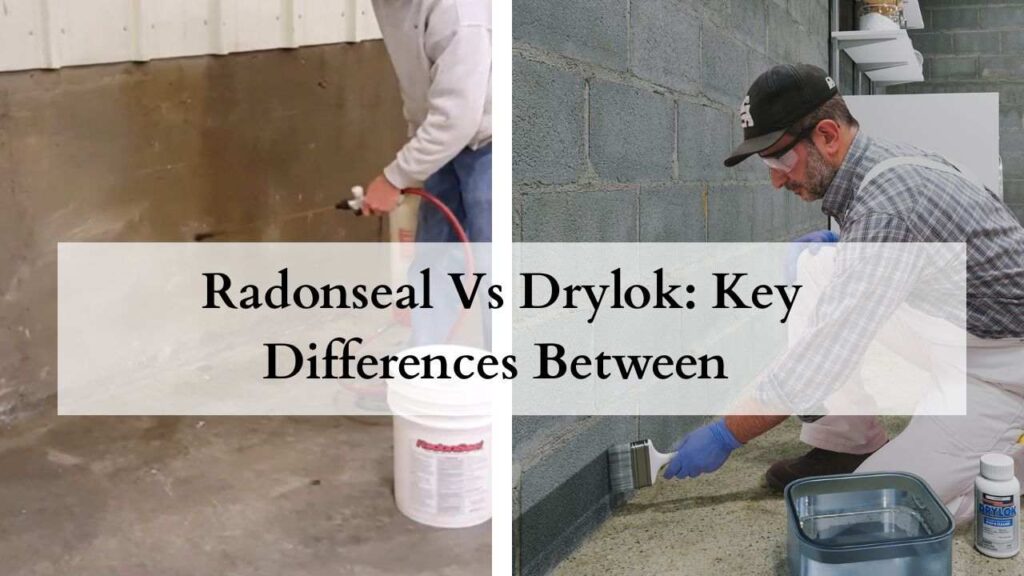
Although both sealants can be used for home projects, there are some core differences that we need to keep in mind before using them. Although both the sealants can be used for home projects, the differences between them become clearer once you see how one interacts with the concrete than the other.
Their durability, usage, application method, along with moisture handling and maintenance, can give you an idea of how they work. Radonseal lasts longer as it strengthens the concrete from within while Drylok is more effective for short-term DIY projects.
Usage
In my experience, homes in the tri-state area need radonseal because of varying soil compositions and old construction architectural styles. Radon levels can fluctuate based on the seasonal changes and even nearby constructions. For this, I recommend you choose radonseal as it will completely penetrate through the concrete to seal it.
As for Drylok, it’s most recommended to use it for home projects during the Spring season, because the ground finally thaws after winter, allowing moisture to seep in. Spring brings ground fluctuations and increased humidity which can also lead to a lot of water seepage problems. Drylok’s best use comes at this time as it is mostly used for waterproofing. It is designed to create a barrier that prevents water from seeping into your basement walls.
Sealant Type
Radonseal is a water-based, silicate sealant for reducing radon. This type of sealant is more suitable as it provides more durability with benefits such as easy application and cleanup, along with creating a strong, breathable barrier that prevents water moisture, and seepage.
Drylok is a paint-like latex product applied on the surface of concrete. This type of sealant can also be used to prevent mold and mildew from entering the basement walls. When dried off, Drylok gives a smoother, paint-like finish. It’s also more affordable because it is used in many DIY home projects.
Durability
Radonseal is more durable – lasts close to 15+ years and rarely needs reapplication. It is mostly being used for reducing radon gas emissions and preventing moisture from seeping in. I had used a sample of it on small part of my basement wall before deciding on it. And within a few days, I could see the following results: The walls looked cleaner, giving off a matte finish to them.
Drylok, on the other hand, lasts mostly between 5-10 years and is more prone to peeling and cracking due to it being a surface coater. This leads to more maintenance and costlier upkeep.
I would suggest that if you want Drylok to last longer than 10 years, apply at least 4-5 coats of it. As it dries, Drylok has a tendency to shrink faster, which can gently start chipping away from the concrete.
Application Method
Both sealants are equally effective when it comes to applying them to the concrete mixture. Drylok is applied like a normal paint coat using a brush or a roller. To apply this, first, thoroughly clean the surface. Then apply 1 coat of Drylok properly and wait for a minimum of 2-3 hours for it to dry. Once the 1st coat has dried off, then repeat the same process at least 4-5 times extensively, before applying the paint.
On the other hand, Radonseal can be sprayed on the concrete mixture. With radonseal, first, clean and repair the concrete area. Once the concrete area is completely repaired and dried, apply two thin even coats using a low-pressure garden hose on the area.
Ensure that each and every layer is covered, not leaving out any section. Then, wait for at least 30-40 minutes before applying the final layer. After that is done, wait for at least 4-5 days so that all of the product is completely absorbed.
Moisture and Seepage
Drylok only acts as a barrier, blocking water seepage, and can handle high water pressure.
Since it is mainly used as a waterproofer, please ensure to check the areas in your basement where the damage is more visible.
Radonseal helps to waterproof the concrete completely by diving deeper into the pores and creating a long-term barrier that resists water pressure, completely locking the concrete from within. This helps in reducing the humidity levels in the basement, along with moisture reduction and ensuring that there is minimal seepage through the walls.
Mold Resistance
Mold usually is a good thing as it helps break down the plant and animal matter in things and is good for the ecosystem, but when allowed to fester in homes, it can lead to hazardous health risks. To prevent that from happening, multiple sealants come with features that help prevent mold in the basement walls.
Radonseal concrete sealer stops the water retention from the core, reducing the risk of mold from within the concrete. This aids in preventing moisture and water seepage in the basement walls.
Drylok has a built-in mold resistance feature in its coating. However, since it is mostly used as a top-up paint on the concrete, it can mostly lock in the moisture by trapping it in minor areas.
Radonseal vs Drylok For Basement Walls: Which One is Better?

When it comes to waterproofing your concrete walls, understanding the process is key. Waterproofing is a highly detailed process that involves careful consideration, precise application, and thorough maintenance.
As I mentioned before, you cannot just use any normal sealant for your basement. An incorrect sealant will not hamper the structural growth of the building; it will also lead to hazardous health issues like respiratory problems, skin allergies, etc. And not to forget the buttload of money it will also cost for insurance.
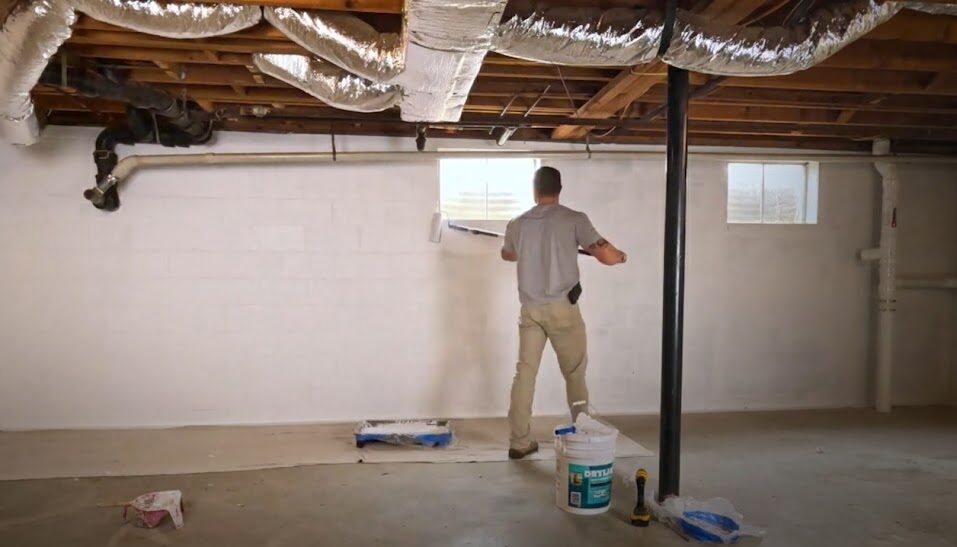
I would always advise you to properly research and check for samples before deciding on using a proper sealant for your home project. By taking out some time and doing these steps, you will be able to save money and your home from water seepage problems.
RadsonSeal Vs Its Other Variants: Which one to choose?
Radonseal is one of the main products of the parent company, Novion Inc., which specialises in concrete and masonry care. While Radonseal is one of its most selling product, it has other variants too, including ‘Standard’, ‘Plus’ for Concerete Sealers, and specialised sealers like ‘Dry Way Water Repellent’, ‘LastiSeal Concrete Sealers’ in Matte and Gloss finish, “Ion Bond Armor Surface Sealer’, along with specialised kits like Radon Test kits, and Vapor test kits.
I have recommended Radonseal products to almost all of my clients, and they have not had any complaints about it. See, Radonseal as a water-based concrete sealer – means that you have to ensure that before applying it, the concrete has to be completely dry, or else it will evaporate along with any moisture.
Here, I will be giving you a breakdown of the differences between Radonseal and its other variants so that you can make an informed decision on which one to choose.
Radonseal vs Radonseal Plus
Radonseal Plus is just a higher version of Radonseal. It’s specifically designed for older porous or indoor concrete surfaces, preferably 20 years or above poured concrete. Radonseal, on the other hand, is beneficial for poured concrete under 20 years, as it can go deeper into the newer – mid-concrete areas more effectively.
Consider this – if you are living in a house that has two basement areas (yes, that is very much possible with areas that have old, structural architecture) – one basement construction that has cinder blocks and pretty much belonged to the 1960s or so, and the other one is relatively new. So while you are repairing the older construction, I would recommend Radonseal Plus, as it can cover larger pore surfaces, and Radonseal in the newer area, as that will help tighten the pores and prevent moisture from coming in.
Radonseal Vs Radonseal Ion Bond Armor
Radonseal is used as a concrete sealer that is sprayed on concrete blocks that are less than 20 years old and very quick-absorbing sealant. It is mostly recommended as a sealer to prevent water seepage, moisture, and mold from the basement walls.
Radonseal Ion Bond Armor isan excellent choice for more challenging concrete conditions, penetrating deeply and bonding securely with the concrete. It is somewhat similar to Radonseal but is chemically very different.
It reacts with the concrete to form a hydrophobic barrier from within. I would definitely suggest using this sealer before installing floors on concrete or cinder blocks.
| Product | Pros | Cons | Best Use Case |
| Radonseal | Absorbs quickly into newer concrete (under 20 years).Helps tighten pores and reduce moisture, seepage, and mold risk.Works well on sprayed concrete block walls. | Not ideal for older, porous concrete.Doesn’t penetrate as deeply as the other two in tougher conditions. | Newer poured concrete or recently built basement walls. |
| Radonseal Plus | Designed for older, more porous surfaces (roughly 20+ years).Covers larger pores effectively.Strong option for aging or indoor concrete that needs deeper sealing. | Not necessary for newer concrete, where regular Radonseal absorbs better. | Older basements, cinder block walls, vintage structures from the mid-20th century or earlier. |
| Radonseal Ion Bond Armor | Penetrates deeply and bonds chemically with concrete. Creates a strong hydrophobic barrier from within.Good for challenging concrete conditions and prep before flooring. | More chemically aggressive and not needed for simpler, younger surfaces.Overkill if moisture issues are mild. | Concrete or cinder blocks that need a stronger internal barrier, especially before laying flooring. |
Drylok Vs Other Sealants
We have covered about Radonseal and its variants in the previous section. Now, we will be diving deeper into Drylok vs other sealants available in the market.
As I mentioned above, Drylok is a liquid-type masonry waterproofer sealant that helps in creating a waterproof barrier on porous surfaces like concrete, bricks, and stones. It soaks into the pores of the masonry and hardens as it dries, creating a strong, watertight barrier that stops moisture from seeping through. It’s mainly used on basement walls, foundations, and other such materials to keep the water out.
If you have apprehensions about using Drylok, then you can consider these alternatives to it. Some of them can be a bit costly, but they are definitely worth a try.
Drylok vs Watertite
Both Drylok and Watertite are masonry waterproofing paints but their formulations differ a lot.
Drylok is a liquid-type latex paint that is used in creating a waterproof barrier on porous surfaces like bricks and concrete. One of the biggest pros of Drylok is that it’s extremely cost-effective and can be used for DIY home projects as well.
Zinsser Watertite is an oil-based paint product that is used to stop water from penetrating a surface. It can withstand water pressure up to 34 psi. Watertite is used mainly in basements and cellars, but can also be used in the outside walls, especially on damp surfaces.
Applying this sealant can take longer than expected, as it is an oil-based paint product, so it has a thick consistency. Additionally, it can take more than two coats for the sealant to be properly set for the concrete.
Drylok vs Kilz
Drylok is designed specifically as a masonry waterproofer. I would recommend choosing Drylok if your main issue is to prevent external water from entering in the walls, and it can be a good choice for waterproofing the basement walls.
Kilz is basically a band of primers with a specific product for masonry and basement waterproofing. I would recommend choosing Kilz if you are looking for a product that can seal existing mold or if you need a product that can be applied over existing paint.
Drylok Extreme vs Original
Drylok Extreme is the smoother version of the original and offers a longer warranty of 15 years. It contains a biocide for mildew prevention and a smoother finish. It also has a greater capacity to withstand water pressure up to 15 psi.
Drylok Original on the other hand has a grainy, sandy texture. It has an inert coating but lacks the biocide for mildew prevention. It is also not recommended for floors as such.
| Product | Pros | Cons | Best Use Case |
| Drylok (Original) | Affordable and DIY-friendly. Creates a waterproof barrier on porous masonry.Good for basement walls. | Grainy, sandy texture.No biocide, so less mildew protection. Not ideal for floors. | General basement waterproofing when budget matters and texture is not a concern. |
| Drylok Extreme | Smoother finish than the original. Includes biocide for mildew control. Higher pressure resistance (up to 15 psi).Longer warranty. | More expensive than the original.It can be used for basement walls and floors. | Spaces that need stronger protection, a cleaner finish, and better mildew resistance. |
| Zinsser Watertite | Oil-based formula that blocks moisture well.Handles heavy pressure (up to 34 psi).Suitable for both interior and exterior damp surfaces. | Thick consistency makes application slower.Usually needs more than two coats. More effort compared to latex-based options. | Basements, cellars, or exterior walls with heavy moisture and high pressure concerns. |
| Kilz (Masonry/Waterproofing Primer) | Good for sealing existing mold.It can be applied over previously painted surfaces.Works as a primer under other coatings. | Not as specialized in masonry waterproofing as Drylok.May need another topcoat for full protection. | When you need to cover mold, prep over old paint, or prime before adding another waterproofing layer. |
Radonseal Reviews: Is It worth the money spent?
We have seen how Radonseal works, what it’s used for, and I have also given you a comparison between Radonseal and Drylok, and Radonseal vs its other variants to help make informed decisions.
By now, it should be clear that I am being a bit lenient towards Radonseal. With the qualities it has, it has only made renovations for me easier to handle. Just a couple of sprays, curing it for a couple of days, removing the extra concrete around the basement walls, and applying a fresh coat of paint, and my basement walls, even after 30 days, are looking fresher than ever. My only qualm with this would be its cost.
If you are also wondering whether to go for Radonseal or not, I will be posting a couple of reviews from the public. Because nothing shows truth better than what the public speaks.
Radonseal Reviews: Reddit
Before you go to watch any movie in the theatres, you check for reviews on the internet, despite its A-list cast. Like how, before trying any new product, you check for reviews from people online to figure out if it’s worth it or not.
I had almost the same expectations while researching for Radonseal as well. So the best place to start my research was none other than Reddit. People tend to be really honest regarding their opinions on pretty much everything, and this was no less.
A Reddit user mentioned that, “Radonseal will help to internally seal the capillaries, restricting water vapor transmission and efflorescence. Acting like an internal primer.”
I was very skeptical about this part. I had heard a lot that Radonseal will seal the capillaries from within, but I was unsure how it could happen. Now that I witnessed it with my own eyes, I can attest to this statement.
Another user on Reddit gave a review of the Radonseal Crack Repair Kit. They mentioned that, “It seems to be working. I’ve had 3 big rainstorms since I patched this crack, and have had no leaks or dampness since.”
I cannot stress more on this. Ever since using this kit, we have had one major thunderstorm in our area, and there have been fewer cracks in my basement, as compared to last year, when we first bought our house.
Radonseal Reviews: TrustPilot
Now, how can I forget TrustPilot? Sometimes, when I can’t find anything satisfactory on Reddit, TrustPilot is my go-to. With an over 4.6-star rating for Radonseal, I knew I could depend on this for some real opinions.
A user on Trustpilot who had bought the Crack Repair Kit for their basement raved about the effectiveness of the product, saying that, “My basement had multiple cracks (no comments about my builder’s skills). This product stopped leaks completely.”
I can definitely attest to this thought. A huge chunk of my basement was filled with cracks, and I had tried pretty much everything to get them filled. My partner ordered the Crack Repair Kit, and after we applied it, there was a visible difference after a couple of days.
Another user also praised the DIY Crack Repair Kit, saying that, “I received the 20′ DIY polyurethane foam kit quickly. When done, I was pleased to see the foam actually filling all the way to the outside of the crack.”
Having witnessed it myself first-hand, I can’t really deny this claim. After we had finished putting the mixture as instructed on the basement walls, I saw that the foam was actually starting to fill in all the way to the outside of the crack.
We were impressed by that and left it off like for a couple of days. After almost 8 days, we had seen that the cracks were completely filled and even the radon levels were less as compared to before.
Radonseal Reviews: Amazon
With everything being available at our fingertips with the click of a button, Amazon has been a boon in disguise for people who can buy the Radonseal products online, if not available at their nearest hardware shop.
So it was imperative for me to check the Amazon reviews for Radonseal. A user mentioned that “RadonSeal was easy to apply, had little to no odor. After 30 days, we’re pretty happy with the results so far. Our moisture readings have gone from yellow to green, with our latest ASTM F1869 test reading 2.14. Our radon readings have gone from regular highs from 10 to 14 over the 3 months prior to the application, to now showing consistent levels between 4 to 6.”
I completely stand by this statement. Ever since I applied Radonseal to my basement walls, it has only shown me positive effects – it has been extremely easy to apply. Within a couple of weeks, when we rechecked the radon levels in our basement, they had improved to a mid-level of 10.
Another customer mentioned that, “I have noticed the humidity seems controlled and the dust in the basement, overall, seems reduced. The product has left a lingering odor that is slowly dissipating.”
I do agree with this. The humidity levels in the basement dropped quite a lot after 6-7 days. That is one thing – you need to be patient for the product to work properly on the basement walls.
I also checked for reviews on the Better Business Bureau (BBB) website, but a company needs to be accredited with them. Since they are not accredited, customers can neither post reviews nor complaints about this brand.
Radonseal vs Drylok: Pros and Cons
Like everything has its positive and negative aspects, so do these two products. We have studied the positive aspects of both; now, let us dig a little into some cons.
For Drylok, improper application can trap moisture inside the walls, potentially leading to mold. Radonseal can also only work when the concrete is completely dry. If it’s wet, the product will just sit inside the water-filled pores and will evaporate along with the water as it dries. Any amount of new rainfall or water pressure will push the water out of the pores.
Similarly, the cost of both is pretty expensive.
| Category | RadonSeal – Pros | RadonSeal – Cons | Drylok – Pros | Drylok – Cons |
| How It Works | Deep-penetrating sealer; strengthens concrete internally. | Only works on completely dry concrete — moisture prevents absorption. | Creates an external waterproof barrier. | It can trap moisture inside walls if applied improperly. |
| Waterproofing & Moisture Control | Reduces water vapor, seepage, humidity, and mold risk from within the concrete. | Won’t seal large cracks unless repaired separately. | Effective basic waterproofing for damp walls; handles water pressure. | Surface-only protection; prone to peeling or cracking. |
| Durability | Very long-lasting (often 15+ years); permanent internal seal. | Needs several days of curing and proper prep. | Good short-term solution; easier to touch up. | Shorter lifespan (5–10 years) and requires multiple coats (4–5). |
| Application | Easy spray-on method; absorbs quickly when the concrete is dry. | Useless on wet/just-rained-on concrete — evaporates with the moisture. | DIY-friendly brush/roller application. | Thick coats take time; it can shrink while drying, causing chipping. |
| Concrete Compatibility | Ideal for newer concrete (<20 yrs). | Less effective for older porous concrete unless using RadonSeal Plus. | Works on old and new masonry surfaces. | Still only coats the surface; it does not penetrate. |
| Radon & Vapor Control | Excellent at reducing radon gas by closing internal pores. | Reduced performance if moisture is present. | Not designed for radon reduction. | Ineffective for radon control. |
| Aesthetic Finish | Leaves a clean, matte natural concrete finish. | Slight odor may linger while curing. | Smooth paint-like finish (especially Drylok Extreme). | Original version has a sandy, grainy texture. |
| Cost | Expensive, but long-term value due to durability. | Higher upfront cost than paint-based options. | More budget-friendly for DIY. | Still expensive considering multiple coats + reapplication needs. |
Conclusion
Until now, we have covered everything about Radonseal vs Drylok. Choosing between the two comes down to what you require in your basement. Both products help to solve moisture issues, but their specs are different. You need to understand properly what your basement needs – otherwise, one wrong move and you might need to shift your home because of high radon levels that can lead to equally horrible health issues.
Radonseal works best if you want long-term protection from within the concrete. It strengthens the structure, reduces radon levels in the concrete, and helps prevent deeper moisture problems. Drylok works for situations where you require a straightforward, surface-level barrier that can be applied quickly with minimal tools.
Whichever option you choose, the main goal remains the same: protect the foundation, prevent mold formation, and create a basement that stays dry and usable.
FAQs
Does Drylok seal out radon?
What is the best concrete sealer for radon?
What is better than Drylok for basement walls?
Drylok Extreme (it has a smoother finish than the original, includes biocide for mildew control, has higher pressure resistance (up to 15 psi), and has a longer warranty).
And Kilz (it is basically a Masonry/Waterproofing Primer, it is good for sealing existing mold. It can be applied over previously painted surfaces, and it works as a primer under other coatings).
What is the difference between RadonSeal and RadonSeal plus?
For Radonseal Plus, it is designed for older, more porous surfaces (roughly 20+ years), it covers larger pores effectively, and it is a strong option for aging or indoor concrete that needs deeper sealing.
What is the downside of sealing concrete?