

Drywall texture might seem like a small detail, but it plays a huge role in how a space feels and ages over time.
In most homes, the choice often comes down to orange peel vs knockdown, especially for walls and ceilings that need both style and practicality.
After years of working on real homes, I have seen how the right texture can elevate a room while the wrong one can hurt the resale value and maintenance.
Two of the most commonly used finishes I work with are Orange peel and Knockdown.
When my clients ask me about orange peel vs knockdown drywall, the main difference I explain is the look – one is more subtle, the other more flattened and rustic.
Both hide flaws well, but they send very different visual signals.
From application time to long-term durability, these finishes don’t perform the same in each home.
So in this orange peel vs knockdown comparison blog, I will break down appearance, cost, labour, ceilings, and real-world use cases, along with reviews from the users, so that you can choose the texture that actually fits your home and lifestyle.
Orange Peel Texture Explained: Look, Feel & Uses
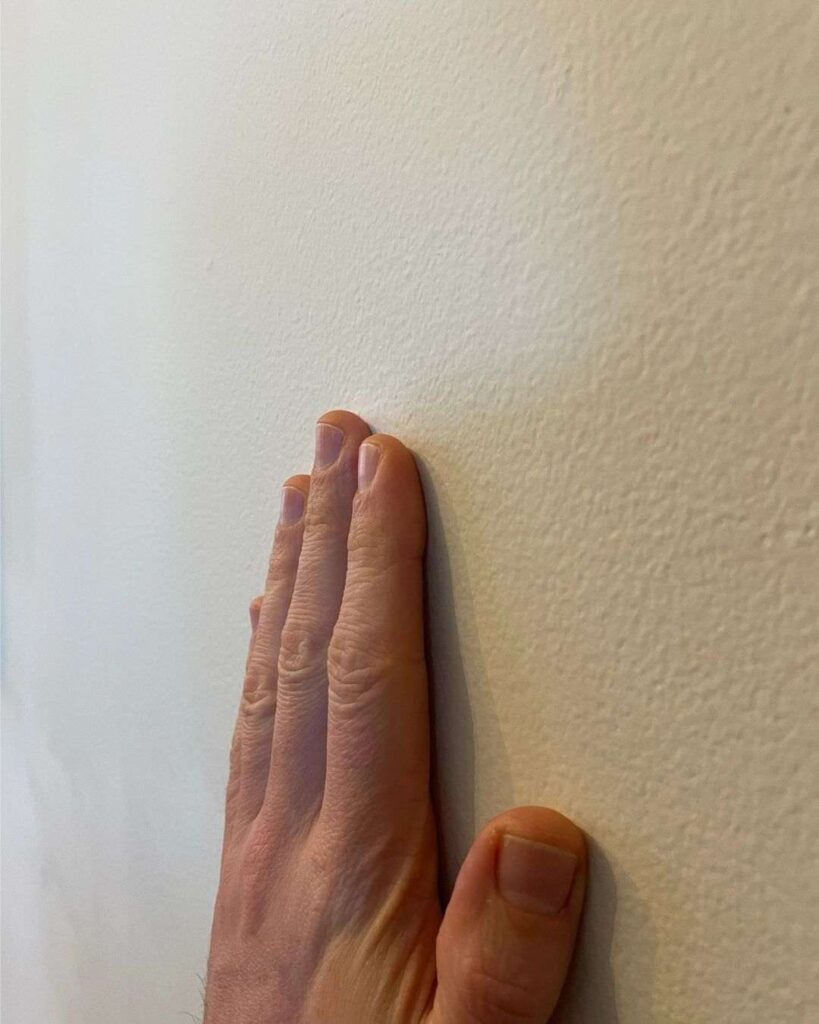
Orange peel is one of the most common drywall finishes I use, especially in modern homes and apartments.
It has a soft, bumpy, dimpled surface that closely resembles the look of an orange peel, hence the name.
A fine orange peel texture looks subtle and smooth, while medium and heavy versions create more visible bumps.
You will often see it on the interior walls in rentals, new constructions, and clean, modern spaces where a uniform look is preferred.
The finish is created by spraying thinned joint compound onto the wall and letting it dry without flattening it.
When it comes to how to apply orange peel texture, I usually describe it as a spray-and-set process.
The thickness of the mix controls if the texture will turn out light or heavy.
One big advantage is that orange peel hides minor drywall imperfections, seams, and small dents very well.
This kind of texture works best when you want something durable, easy to clean, and simple to repair.
If you prefer a neat, consistent finish that doesn’t draw too much attention, orange peel is a solid choice.
| Aspect | Orange Peel Texture Details |
| Texture Appearance | Soft, bumpy, dimpled surface similar to an orange rind |
| Texture Variations | Fine, medium, and heavy orange peel finishes |
| Overall Look | Subtle, uniform, and clean |
| Best Used On | Interior walls, ceilings, rentals, apartments, modern homes |
| Application Method | Sprayed joint compound, left to dry without flattening |
| Ease of Application | Easy to apply; beginner-friendly |
| Ability to Hide Imperfections | Hides minor drywall flaws, seams, and small dents |
| Durability | Durable and resistant to everyday wear |
| Maintenance & Cleaning | Easy to clean; low-maintenance |
| Ease of Repair | Simple to touch up and blend repairs |
| Design Compatibility | Works well with modern, minimalist, and neutral interiors |
| Cost Range | Generally affordable and budget-friendly |
| Best For Homeowners Who Want | A neat, consistent finish that doesn’t draw too much attention |
Knockdown Texture Explained: Finish, Feel & Uses
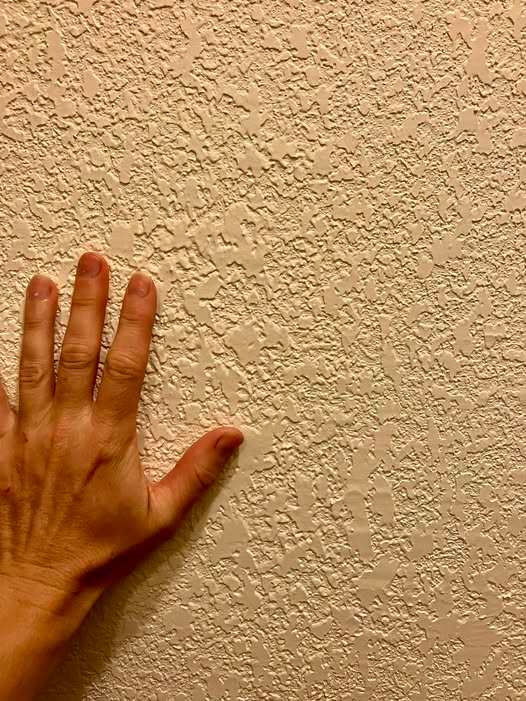
Knockdown drywall finish is the type of finish that adds more depth and movement to a wall or ceiling.
Knockdown texture starts with sprayed splatter that creates raised peaks which are then lightly flattened using a tool.
This results in a streaky, stucco-like look with smooth areas and soft edges.
Compared to orange peel, this has more visual interest and feels less uniform, making the surface look warmer and more lived-in.
The application involves two clear steps – first, thinned drywall mud is sprayed onto the surface using a hopper gun or spray can.
Wait for 10 minutes once the peaks lose their shine but are still soft.
Then drag a wide knife gently across the surface. The timing matters a lot here.
If it is too wet, the texture smears; too dry, and it won’t flatten cleanly.
The finish works well when walls have visible flaws or when a space needs character.
I often recommend using Knockdown for ceilings, family rooms, and casual interiors where a relaxed, textured look feels right and hides major imperfections with ease.
| Aspect | Knockdown Texture Details |
| Texture Appearance | Flattened, irregular texture with soft peaks and smooth patches |
| Overall Look | Streaky, stucco-like, and visually dynamic |
| Texture Depth | Deeper and more pronounced than orange peel |
| Best Used On | Ceilings, family rooms, living areas, older homes |
| Application Method | Sprayed drywall mud followed by flattening with a wide knife |
| Ease of Application | Moderate difficulty; timing-sensitive |
| Ability to Hide Imperfections | Excellent at hiding seams, dents, and uneven drywall |
| Durability | Highly durable and long-lasting |
| Maintenance & Cleaning | Requires light dusting; deeper texture can trap dust |
| Ease of Repair | Repairs are possible but harder to blend seamlessly |
| Design Compatibility | Works well with rustic, farmhouse, Mediterranean, and casual interiors |
| Cost Range | Slightly higher than orange peel due to added labor |
| Best For Homeowners Who Want | Added depth, character, and better flaw coverage |
Orange peel vs Knockdown: Which One is Better?
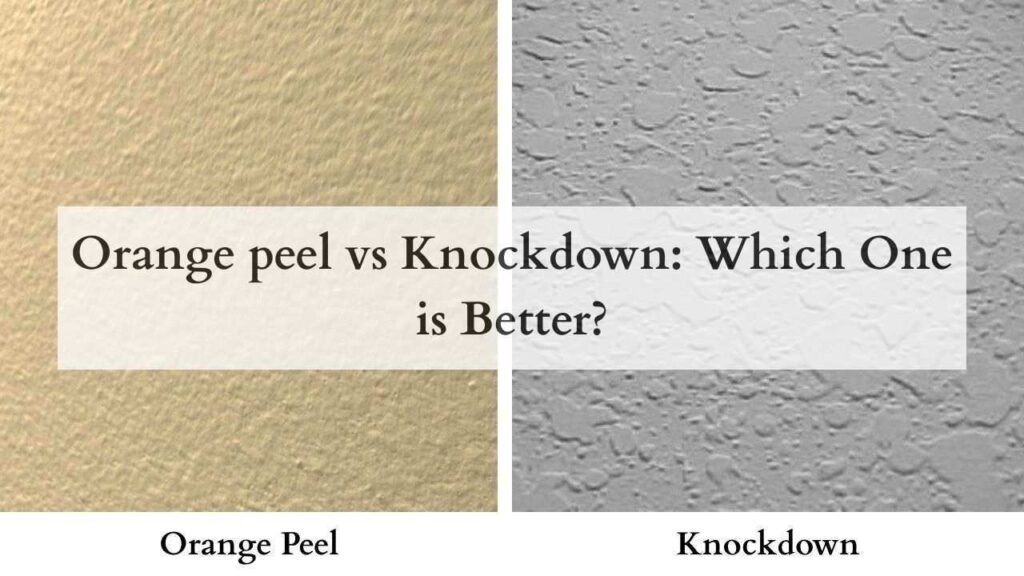
Choosing the right drywall finish affects how a space looks, feels, and lasts, and holds value over a long time.
Within the orange peel vs knockdown comparison, I have seen both work beautifully in the correct setting.
From my experience, orange peel works best in modern homes, rentals, and offices, where a clean, consistent look is important.
It is subtle, easy to maintain, and complements well with most paint colors.
Knockdown, on the other hand, adds depth and character.
I usually suggest it for ceilings, family rooms, or homes with a more relaxed or rustic style.
Both finishes improve durability, protect the wall surface and help hide minor flaws which adds long-term value.
The right choice can prevent future repairs and keep the walls looking polished.
Now, we will get into the key differences between them in detail.
Visual Differences in Texture Depth
Orange peel has a soft, uniform look with small, rounded bumps that resemble the skin of the orange.
Orange peel texture is light and subtle, adding gentle shadows without being too much.
It warms up a space while keeping walls and ceilings looking clean and modern.
Due to the surface being fairly even, it hides minor flaws and is easier to clean.
This makes it a good fit for high-traffic and contemporary homes.
Knockdown, on the other hand, creates a more varied and textured surface.
After the mud is sprayed, it’s flattened to form irregular patterns, noticeable peaks, and smooth patches.
This adds more depth and movement, giving the walls a stucco-like feel.
Knockdown works well in farmhouse, Mediterranean, or transitional spaces and does a better job at hiding larger bumps.
Long-Term Durability and Upkeep
Orange peel is widely used in rentals because it holds up well and is easy to live with.
It hides small repairs like nail holes and screws with a simple spackle, and matching the texture is much easier with flat walls. The surface is durable, resists daily wear, and is easy to clean.
This makes it a smart choice for bedrooms, living rooms, and busy households that require low upkeep.
Knockdown is also a durable finish that holds up well to daily wear.
The uneven surface hides scuffs and small marks better than smooth walls.
On drywalls and ceilings, a properly applied knockdown finish resists scratches and minor damage.
It is built to last for years in homes and commercial spaces.
The maintenance is also fairly simple – light dusting or vacuuming on a daily basis keeps dirt from setting deep into the texture.
While small touch-ups are possible, the larger repairs can be harder to blend because of the irregular pattern.
How Easy Are Texture Repairs?
Knockdown is durable, but it needs a little more care.
Dust can settle into the deeper texture, hence regular dusting of the walls is required. For stains, a damp cloth is usually enough if you avoid harsh cleaners.
The repairs take more effort to blend, and drying time can range from 24 – 48 hours, depending on thickness and conditions.
Orange peel is one of the easiest textures to repair and blend.
Small fixes can be handled mostly by using a lightweight spackle, and for larger fixes sanding, priming, and reapplying texture usually blends well into the surrounding wall.
This ease of repair is also a big reason why orange peel is more preferred in rentals.
How Orange Peel and Knockdown Are Applied
Applying the knockdown texture takes a bit of timing and patience.
The surface is cleaned and primed first to help the texture stick.
Drywall mud is then sprayed or applied to create raised peaks.
Wait for a few minutes and once the wet shine fades, a wide knife is gently dragged across the surface.
This step flattens the peaks and creates a streaky look. Pressure also matters here a lot.
The texture is then left to dry for at least 24-48 hours before priming and painting.
Orange peel is simpler and faster to apply than knockdown.
The wall is cleaned and primed first so that the texture can stick properly and evenly.
A joint compound is mixed with water to make a smooth, pourable consistency, or a ready-made spray can also be used.
The texture is then sprayed/applied to the surface in light, circular motions to form small raised bumps.
There is no flattening step. Once applied, the wall is left to dry fully before priming and painting.
Orange Peel vs Knockdown Cost Comparison
When clients ask about Orange Peel vs Knockdown Cost, the difference usually comes to labour.
Orange peel is faster to apply and typically costs around $1.25 – $1.95 per square foot.
The price can vary depending on how fine or heavy the texture is, but it stays on the lower end of most projects.
Knockdown costs more, around $1.50 – $2.00+ per square foot, due to the extra step of flattening the texture by hand.
Both finishes are still affordable options, but orange peel suits tighter budgets, while Knockdown justifies the cost, with added depth and character.
| Feature | Orange Peel Texture | Knockdown Texture |
| Overall Appearance | Soft, uniform, and subtle | Textured, irregular, and visually dynamic |
| Texture Depth | Light to moderate depth with small rounded bumps | Deeper texture with flattened peaks and smooth patches |
| Visual Style | Clean, modern, and understated | Rustic, warm, and more decorative |
| Best Design Fit | Modern homes, rentals, offices | Farmhouse, Mediterranean, transitional interiors |
| Ability to Hide Imperfections | Hides minor flaws, seams, and small dents | Excellent at hiding larger flaws and uneven drywall |
| Durability | Durable and resistant to daily wear | Highly durable and long-lasting |
| Maintenance & Cleaning | Easy to clean and low maintenance | Requires light dusting; texture can trap dust |
| Ease of Repair | Very easy to repair and blend | Repairs are harder to blend seamlessly |
| Application Process | Sprayed and left to dry (no flattening) | Sprayed, then flattened by hand after setting |
| Application Difficulty | Easy and fast | Moderate; timing-sensitive |
| Drying Time | Shorter drying time | Longer drying time (24–48 hours) |
| Cost per Sq Ft (Avg.) | $1.25 – $1.95 | $1.50 – $2.00+ |
| Best Used On | Interior walls, rentals, high-traffic areas | Ceilings, family rooms, older homes |
| Budget Friendliness | More budget-friendly | Slightly higher cost due to labor |
| Ideal For Homeowners Who Want | A neat, consistent, low-maintenance finish | Added depth, character, and stronger flaw coverage |
Can you Knockdown orange peel texture?
How to match orange peel texture often comes up when homeowners want a slightly flatter, more relaxed look.
Yes, an existing orange peel drywall can be knocked down, as long as the texture is completely fresh.
This approach works best on walls that are either being repainted or repaired.
With the right tools and patience, orange peel can be successfully turned into a knockdown finish.
Now, we shall get into the process step by step.
Applying Thick Orange Peel Texture
Apply a heavy layer of Orange Peel texture using a spray can or a hopper gun.
Adjust the nozzle or the spray tip to release larger droplets so the texture comes out thick and chunky.
Work in slow, even passes and keep some space between sprays.
The goal is to build raised bumps that are full enough to flatten later without drying too fast.
Allowing the Texture to Set
After spraying, wait for a couple of minutes for the texture to set.
We suggest you wait for 5-6 minutes until the surface loses the wet shine and turns a bit matte.
The texture should still feel soft when touched lightly.
This brief waiting period is also very crucial, as knocking it down too soon or too late can ruin the final look.
Flattening the Raised Peaks
Use a clean, flat, drywall knife to flatten the texture.
Hold a wide taping knife at a slight angle and lightly drag it across the raised peaks in one smooth pass.
Use gentle pressure and avoid going over the same area again and again, as this can smear the texture and make it look uneven.
Drying Time and Painting Process
Let the texture dry completely once the knockdown is done.
After it has set, apply the primer and then paint as you normally would.
Remember, timing matters throughout this process.
Knocking it down too early can smear the mud, while waiting too long makes it hard to flatten.
Always work at the perfect matter stage for the best results.
Orange Peel vs Knockdown Ceiling Texture
Both orange peel and knockdown are both commonly used ceiling textures, but they serve different needs.
Orange peel is often chosen for apartments, newer homes, and commercial spaces where a lighter texture helps keep ceilings easy to maintain.
Knockdown is frequently used on larger ceilings, older homes, and spaces where surface flaws need better coverage.
Both textures work on drywall ceilings and can help hide seams and minor imperfections.
Let us now take a look at a few aspects of this.
Orange Peel vs Knockdown Ceiling: Which Looks Better?
When comparing orange peel vs knockdown ceiling finishes, the difference comes down to texture depth and surface detail.
Orange peel vs knockdown ceiling texture shows a clear contrast – orange peel has a finer, even spray with small bumps that keep the ceiling uniform and easy to maintain; knockdown starts in a similar way but is flattened, creating wider patterns and more depth.
Both help hide drywall seams and cover imperfections better and involve more labor, which can affect cost and installation time.
Acoustics and Lighting Impact
Both orange peel and knockdown drywall make a small difference when it comes to sound and light.
Compared to smooth surfaces, both help slightly reduce the echo by breaking up the sound waves, but neither offers real sound control.
For noticeable noise reduction, we suggest you add extra insulation or acoustic materials.
Light also behaves differently on each surface.
Orange peel reflects light more evenly due to its fine, uniform texture.
Knockdown has more depth and variation, which softens the glare and handles harsh lighting better.
Overall, the differences are subtle and secondary to how much texture the surface has.
Low vs High Ceiling Texture Choice
Ceiling height plays a role in how both textures perform in a space.
Orange peel works well in rooms with standard ceiling heights, as its fine texture keeps shadows soft and controlled.
On very low ceilings, a heavy application can slightly reduce the sense of openness, so a lighter texture and lighter paint colors help balance the effect. In higher ceilings, the impact is less noticeable.
Knockdown adds more depth, which changes how height is perceived.
It suits standard and slightly taller ceilings by hiding flaws without feeling heavy.
In very low ceiling rooms, the added textures can feel dense, while high or vaulted ceilings can handle it well when applied in proper scale.
Orange Peel vs Knockdown vs Popcorn
Ceiling and wall textures have changed a lot over the years, and homeowners have better options than before.
For Orange Peel vs Knockdown vs Popcorn texture comparison, the main difference lies in how each finish looks, feels, and performs.
Orange peel has a fine, even bumpy texture like an orange rind that hides small flaws without standing out too much; Knockdown adds more depth with flattened patterns that break up light and seams.
Popcorn, on the other hand, is the roughest of them all and is mostly found on older ceilings.
Popcorn texture has fallen out for the homeowners for several reasons – it traps dust and allergies, and makes rooms feel darker. In older homes, it may also contain asbestos, which raises a lot of safety concerns.
On top of that, repairs are hard to blend, and the look feels dated compared to newer finishes.
In the recent past, knockdown and orange peel have mostly replaced popcorn ceilings.
Knockdown hides imperfections well while looking cleaner and more updated, while Orange peel is used where a lighter, simpler texture is preferred.
Orange peel vs Knockdown: Benefits and Drawbacks
Orange peel and knockdown each bring different strengths to a space, depending on how the walls or ceilings are used.
One offers a cleaner, more uniform texture that is easy to maintain, while the other adds depth and does a better job at hiding larger flaws.
Cost, repair effort, and long-term upkeep also vary between the two.
Understanding these differences helps set the right expectations before starting a project.
Now, we shall dive into the pros & cons of each drywall texture in detail.
Pros
Orange peel: This texture is popular because it strikes a balance between durability, aesthetics, and ease of use.
It conceals small wall flaws, such as dents, nail holes, and taped seams, which reduces the need for perfect surface preparation.
The texture is tough enough for daily wear and is simple to clean.
This makes it ideal for busy homes and rentals.
It works well on both walls and ceilings, and fits many design styles without standing out too much.
Orange peel is also cost-effective, since it applies quickly with sprayers.
Overall, it adds subtle texture while staying practical and low-maintenance.
Knockdown: This texture is valued for its depth and character it adds to walls and ceilings.
It does a great job of hiding larger flaws like dents, patches, and uneven areas.
This makes it a perfect fit in older homes or spaces with imperfect drywall.
The flattened texture creates visual interest without feeling heavy or messy.
It is also durable and holds up very well over time.
It works across many styles, from casual to more polished spaces, and is easier to repaint or update than heavier textures like Popcorn.
Cons
Orange peel: Orange peel texture has a few downsides that are worth considering.
Some homeowners feel it looks dated and prefer smooth walls for a cleaner, more modern feel.
This can affect the resale value. Dust and cobwebs can settle into the bumps, making cleaning more time-consuming.
While small fixes are possible, larger repairs are harder to blend perfectly.
Painting also takes more effort, as the texture absorbs more paint and can lead to uneven coverage. In very minimalist spaces, orange peel may feel out of place.
Knockdown: This texture, too, comes with its own set of challenges.
The uneven surface can trap dust and dirt, making cleaning harder than on smooth walls.
Stains are also difficult to remove without damaging the texture.
Repairs are another issue, since matching the original pattern is rarely perfect.
In very tight and clean spaces, the Knockdown texture can feel harder to update later.
Orange Peel vs Knockdown: What Homeowners Say on Reddit
After comparing how orange peel and knockdown perform in real homes, the differences become more practical.
I have used orange peel in projects where speed and easy maintenance mattered, and Knockdown, where walls needed extra coverage.
Neither texture is perfect, and both come with trade-offs that don’t always show up in contractor descriptions.
That is why it helps to look beyond professional opinions.
Homeowners notice things like dust buildup, repairs, and long-term upkeep.
Those everyday experiences add useful context.
I have read what most of the users have said on their Orange peel vs knockdown reddit threads regarding their thoughts on using these drywalls.
A Reddit user mentioned, “My personal opinion knockdown hides imperfections and blemishes way better. Knockdown is also a little more work. I work in residential construction and I am a finisher. This is what I do all day every day. No one is doing orange peel anymore.”
While I do kind of agree with the opinion that Knockdown is better, but I can’t really deny their claim by saying no one is doing orange peel anymore.
In fact, I have seen more of my close friends and acquaintances give preference to orange peel over knockdown.
Conclusion
Orange peel vs knockdown is not about picking a better texture, but choosing the one that fits your space, budget, and long-term needs.
In this blog, we covered how both textures differ in appearance, depth, durability, maintenance, and repair.
We also walked through application methods, ceiling use, sound and light impact, cost differences, and how each handles real-world wear.
We compared orange peel vs knockdown across walls and ceilings, discussed how popcorn textures fit into the conversation, and even explained why many homeowners move away from popcorn today.
Real reviews and public opinions were also included to balance professional insight.
By understanding orange peel vs knockdown at length, you can make a choice that works not just in the present, but also years down the line.
FAQs On Orange Peel vs Knockdown
What is better, orange peel or knockdown texture?
Is knockdown or orange peel more expensive?
How to tell knockdown from orange peel?
Is orange peel texture outdated?