

The thing about Onyx Color Vs Black is that they’re both in the black family, but they are different once they’re used on your walls. Undertones change everything. Lighting makes or breaks the look.
And the finish is what makes your space worth having.
Onyx Color and Black are the two paint options when people want to consider dark.
You take what looks like a simple black paint, thinking it’ll add drama to your space, but it either looks washed out, too warm against cool-toned furniture, or harsh it feels like you’re living in a cave.
Here, I’m going to walk you through Onyx Color Vs Black, its undertones, its LRV, why it is the way it is.
Then we’ll talk about black and what makes it different, a side-by-side comparison.
We’ll go room by room because a black that works in your kitchen may not work in your bedroom.
Here are my other blog posts that you can also read:
- Tricorn Black Vs Iron Ore
- City Loft Vs Alabaster
- Rainwashed Vs Sea Salt
- Eider White Vs Alabaster
- Manchester Tan Vs Accessible Beige
About Onyx Color
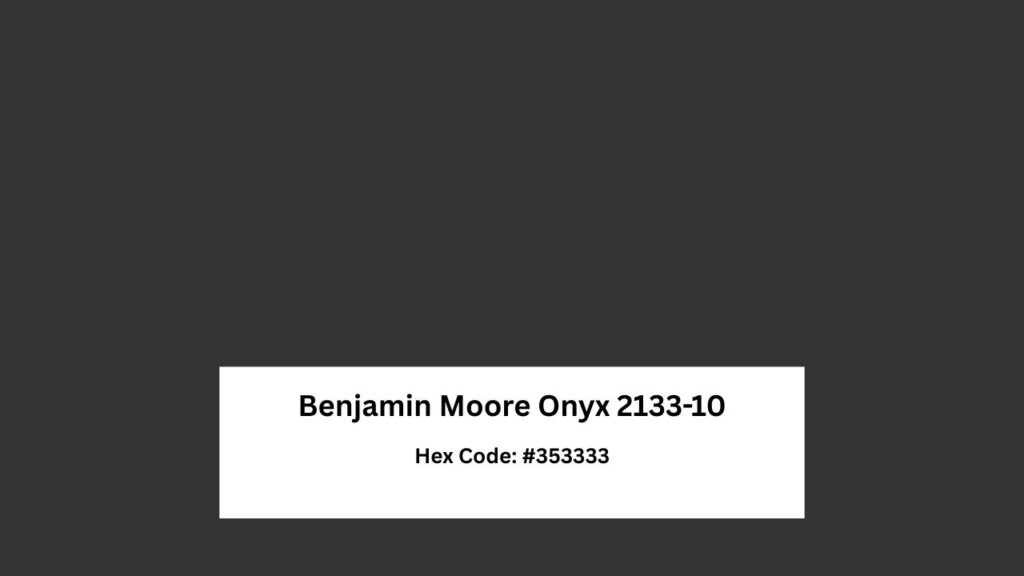
Benjamin Moore Onyx 2133-10 is not harsh, black.
Onyx has a velvet quality. Instead of being a flat, aggressive black, it has depth.
It has subtle gray and green undertones that keep it from going neutral.
The LRV is at 4.99, which means it absorbs the light in the room.
Here’s the thing, in bright natural light, Onyx looks almost like a deep charcoal.
Then in the evening and with warm artificial lighting, it looks like a rich, dark tone.
The green undertone isn’t looking, but it’s there. It is also known as “complex black” because it doesn’t shift.
This is why it’s become popular for modern and contemporary spaces. Homeowners love it for accent walls, interior doors, kitchen cabinets.
Designers look for bathrooms, living rooms, bedrooms when they want something moody but not oppressive.
The warmth of the undertones makes it livable.
The color code of Onyx Color is 2133-10.
Here are my other blog posts that you can also read:
- Balanced Beige Vs Accessible Beige
- Tricorn Black Vs Black Magic
- Oyster White Vs Shoji White
- Peppercorn Vs Iron Ore
- Alabaster Vs Shoji White
About Black
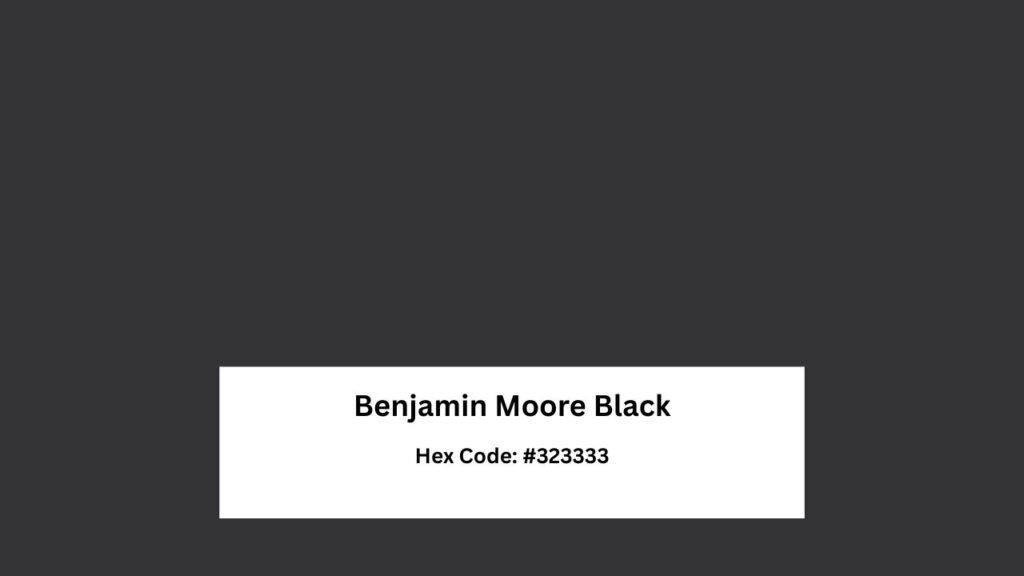
Black is pure, neutral, and does not have any visible undertones.
When you put black on a wall, there’s no confusion about what you’re getting.
It has no undertones which makes it softs, black can feel harsh in interior spaces.
I’ve seen it work amazingly, but I’ve also seen it go wrong. It creates a strong contrast against light contrast.
The thing about black is that it’s heavy. If you use it on all four walls in a small room with limited lighting, it’s going to look cramped.
Black creates a statement in modern, contemporary, and traditional interiors.
I use it for trim work like black window frames or black door frames in a white-wall room, which creates a bright, gallery-like feel.
Designers will specify black for spaces where you want the strong statement.
An accent wall behind a floating media console. Exterior shutters. Kitchen cabinets.
Homeowners are nervous about black, and they should be.
The lack of undertones means it stays consistent across different lighting conditions which is both good and bad.
What Is The Difference Between Onyx Color and Black?
Okay, this is where it gets interesting. Side by side, you may not spot the difference.
But put them on your walls and live with them and you’ll see it.
LRV
Light Reflectance Value is how much light a paint color reflects back.
The scale goes from 0 ( pure black, absorbs everything) to 100 (pure white, reflects everything).
Onyx has an LRV of 4.99.
Black is close to 2 or 3, low depending on the brand.
The difference looks small, but in reality, it’s visible.
Onyx reflects more light, which is why it doesn’t feel as heavy or oppressive as black.
I did a project where we tested both in the same bathroom, Onyx on one wall, black on another.
The Onyx wall had more life to it. The black wall felt flat and lifeless.
Undertones
Onyx has cool-neutral undertones like gray with a subtle green influence.
The undertones become visible depending on your lighting, your finish choice, and what colors are surrounding it.
In a room with natural light, you’ll get the charcoal-gray quality.
Black has zero undertones, it is pure neutral. It’s not warm, not cool, existing as pure black.
What this means: Onyx plays better with other colors.
It has flexibility because of the undertones. Black can clash if you’re not careful with your palette.
Lighting Effect
Onyx responds to light. In bright, south-facing rooms with natural light, it lightens up and is like a deep charcoal.
The undertones become apparent.
In low-light spaces or north-facing rooms, it deepens and looks close to black, but the green undertone can intensify under cool lighting.
Black stays the same regardless of lighting. It’s dark and flat.
You’re not getting much variation, which again, can be a pro or a con depending on what you’re going for.
Reminder, if you’re working with limited natural light, be careful with black. It’s going to absorb what light you have.
Onyx has more breathing room because it has high LRV and the undertones create dimension.
Depth
Depth and saturation, this is about how rich and dimensional the color feels.
Onyx has depth because of its undertones. There’s complexity there.
When light comes at different angles, it has subtle shifts. It doesn’t only have one-note black.
Black is saturated and solid, but it can be flat because there’s no undertone variation to create that layered look. It’s intense, deep.
Style and Best Uses
Onyx works well in:
- Modern and contemporary interiors
- Transitional spaces where you’re mixing styles
- Accent walls where you want drama without harshness
- Kitchen cabinets
- Bathroom vanities
- Interior doors
Pair it with warm whites, natural wood tones, brass or gold hardware, greige or taupe neutrals.
The undertones in Onyx play nice with these.
Black works best in:
- High-contrast modern spaces
- Trim and window frames
- Exterior applications
- Spaces where you want bright, clean lines
- Gallery-style rooms with white
Pair it with pure whites, cool metals like chrome or brushed nickel, and keep your palette clean.
Comparison Table
| Aspect | Onyx Color | Black |
| LRV | 4.99 | 2-3 |
| Undertones | Cool-neutral with gray and green | None |
| Lighting Response | Shifts from charcoal to deep black | Stays consistently black |
| Depth | Dimensional and layered | Flat and intense |
| Feel | Soft, velvet, livable | Harsh, dramatic, stark |
| Best Finish | Satin or semi-gloss for balance | Any, but gloss reduces harshness |
| Ideal Pairings | Warm whites, wood tones, brass | Pure whites, cool metals |
| Room Size | Forgiving in small spaces | Best in large, well-lit rooms |
Onyx Color Vs Black: Room-By-Room Comparison
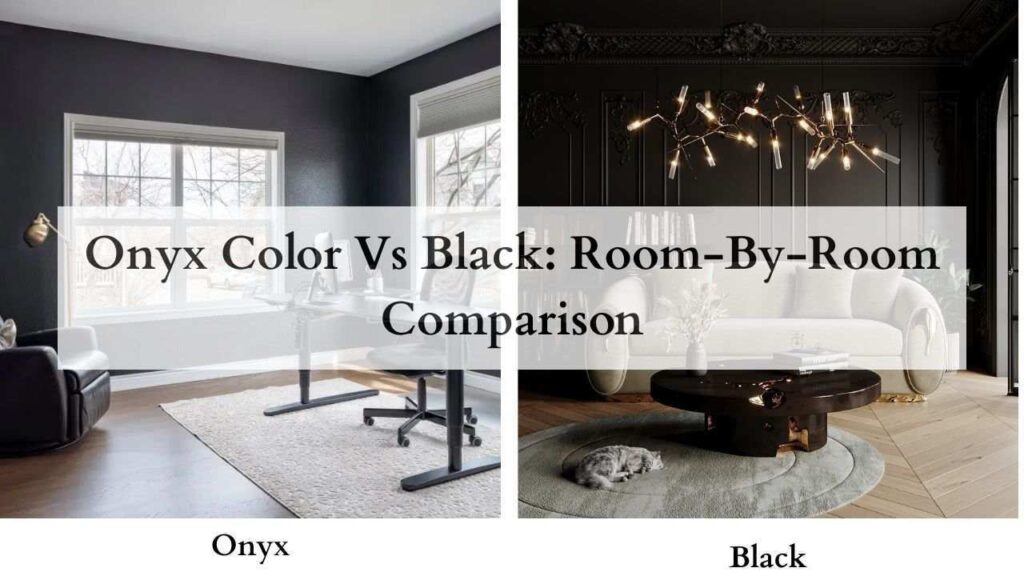
Different rooms have different needs.
What works in your kitchen cannot go in your bedroom, so let’s break these colors according to the space.
Living Room
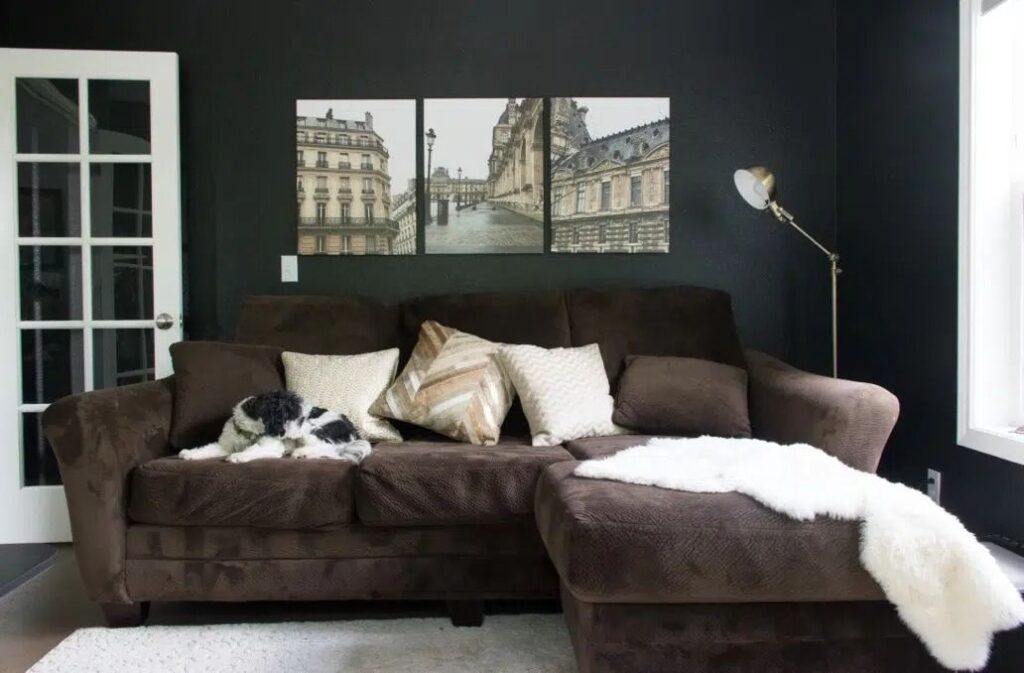
Onyx in the living room is one of my favorites. I used it on an accent wall behind a media console and it transformed the room.
The soft black quality creates a cozy, intimate feel without making the space feel small.
Because living rooms have multiple light sources like natural light from windows, table lamps, overhead lighting.
Onyx shifts throughout the day and that keeps it interesting.
The gray-green undertones work well with the warm wood tones.
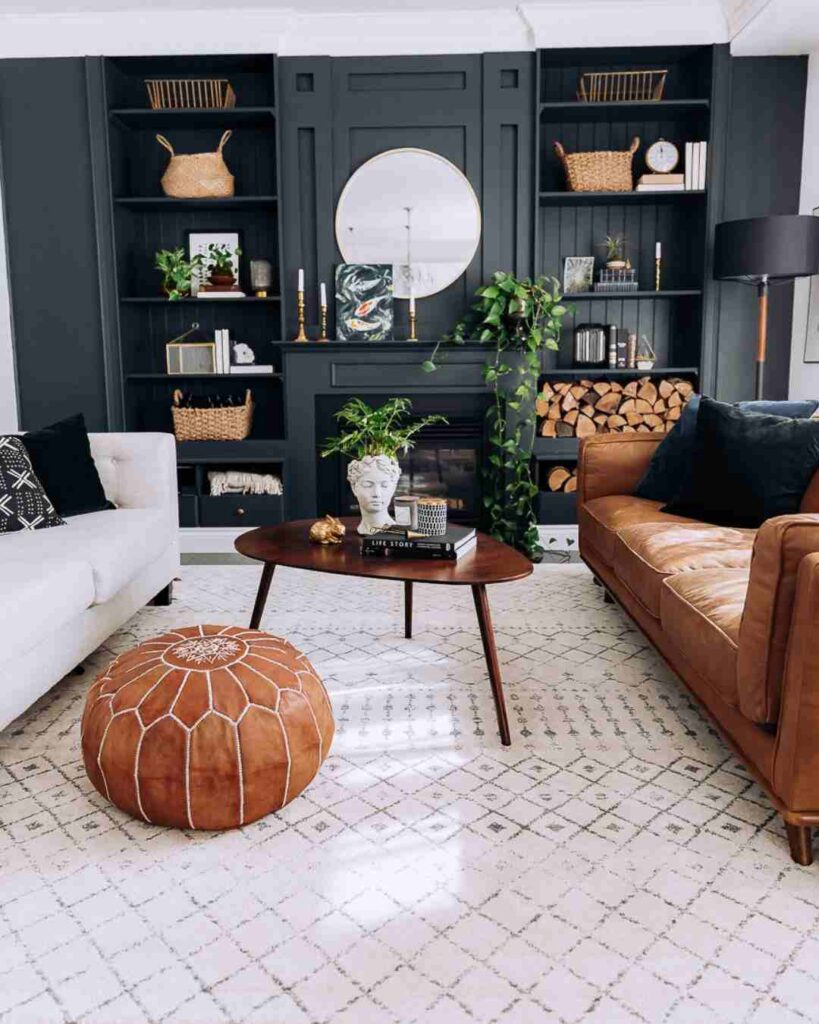
True black in the living room is a bold move. It can work, but you need to be strategic.
I’d only use it if the room is large, has great natural light, and committed to a high-contrast look with white or light-colored furniture.
Black on all four walls is hard, not in many living rooms.
Bedroom
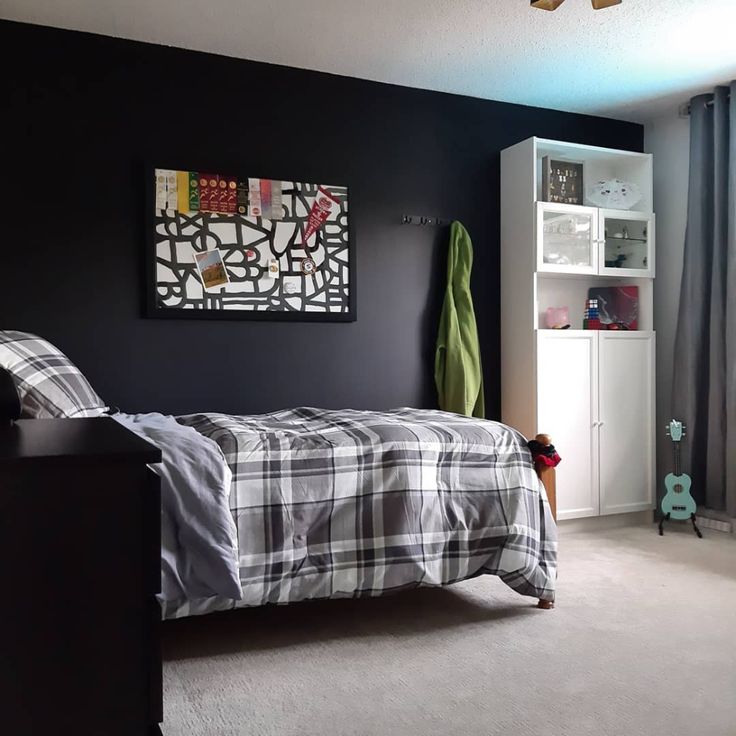
Onyx in bedrooms creates a moody, cocoon-like atmosphere that works for sleep.
I was skeptical but it looks unreasonable to paint a bedroom dark.
But the soft quality of Onyx makes it feel enveloping rather than oppressive.
I painted my bedroom with Onyx on three walls and it’s the best sleep space.
The green undertone is noticeable.
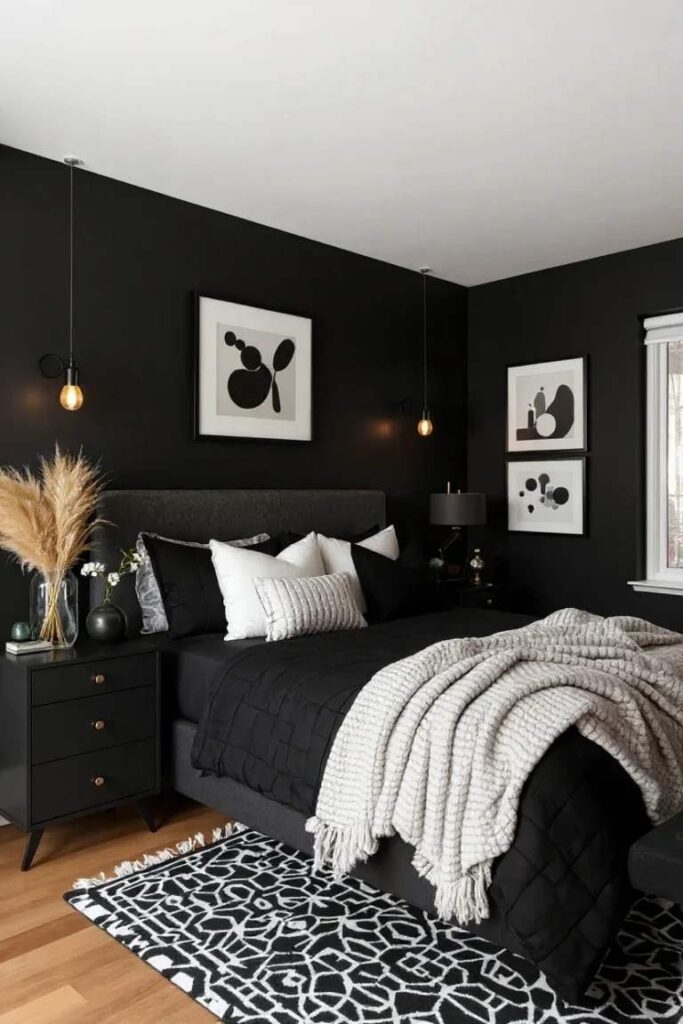
Black in a bedroom is risky. But if you’ve big windows and you’re going for a dramatic aesthetic.
I tried it once in a guest bedroom thinking it would be sophisticated, it felt heavy.
Black doesn’t have the softness you want in a sleep space.
Bathroom
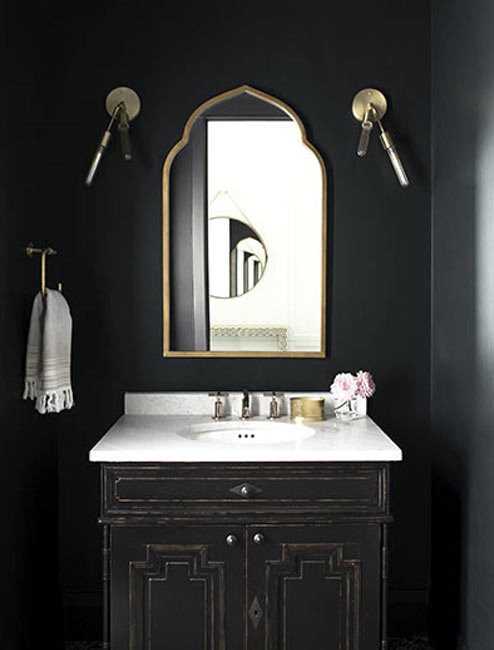
Onyx in bathrooms, on vanities or as an accent wall is popular.
Bathrooms have a mix of lighting and Onyx handles it well. I did a bathroom renovation where we painted the vanity cabinet in Onyx with a semi-gloss finish, and it held moisture and daily use.
The subtle undertones paired nicely with white subway tile and brass fixtures.
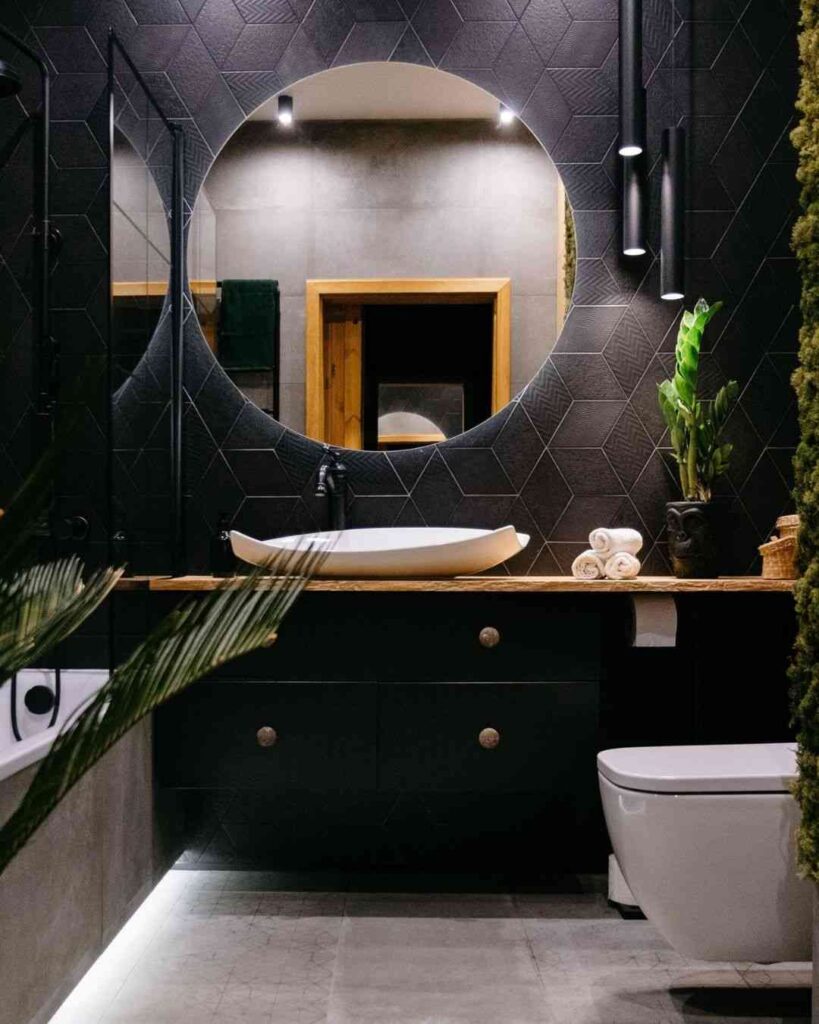
Black in bathrooms can work if the space is large and you’re going for a spa-like, dramatic look.
A small powder room with black walls looks best, that can be harsh for a small space.
But a full bathroom where you’re getting can be too much.
Kitchen
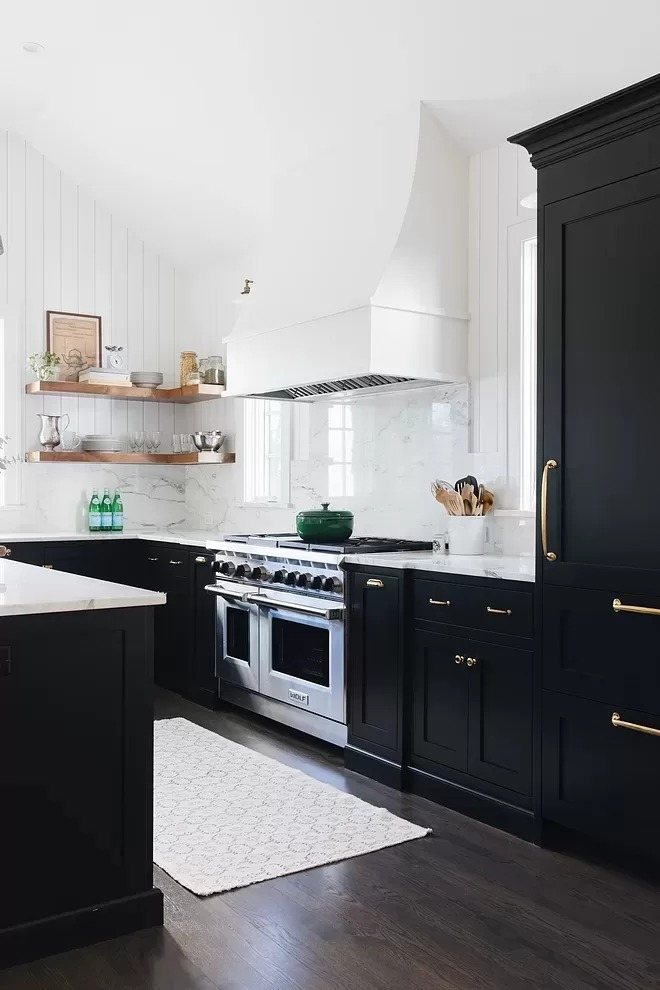
Onyx on kitchen cabinets is something I look out for. The soft black works with many different styles like modern farmhouse, contemporary, transitional.
In a semi-gloss or satin finish, Onyx on cabinets looks expensive.
It hides fingerprints and smudges better than lighter colors, and the undertones mean it doesn’t clash with stainless steel appliances or various countertop materials.
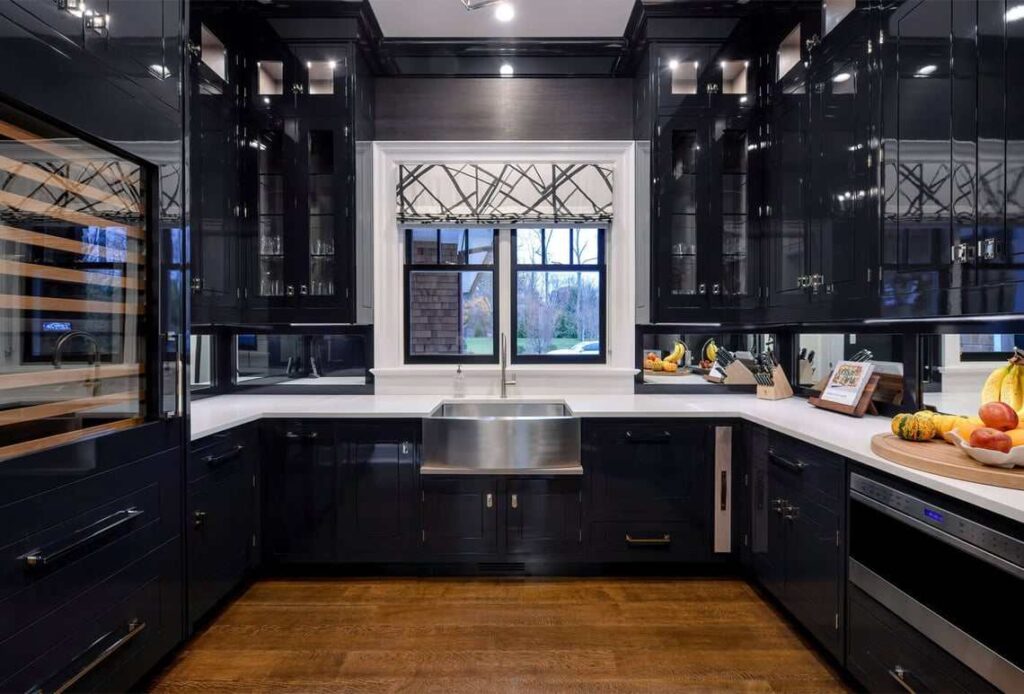
True black in kitchens is less versatile. It can look amazing if you’re doing a sleek, modern kitchen with handle-less cabinets and integrated appliances.
But in a traditional kitchen with raised-panel cabinets then black feels harsh.
Exterior

Onyx on exteriors like siding, front doors, trim creates a sophisticated, modern look.
The subtle undertones mean it doesn’t fade because it’s not a pure black.
I’ve seen houses with Onyx siding paired with white trim and natural wood accents, and it’s stunning.
The color has complexity to not look flat against outdoor landscaping.
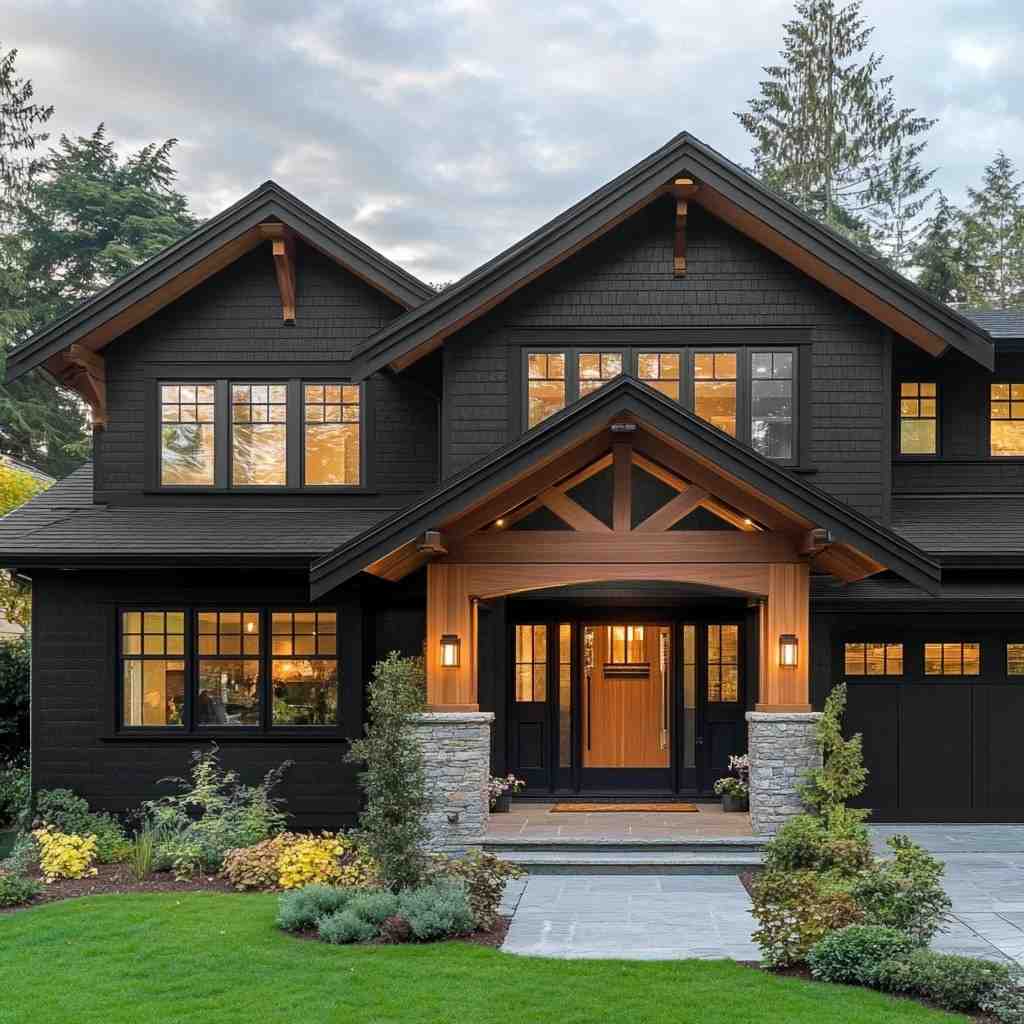
Black on exteriors makes a BOLD statement. Black houses are having a moment, but black can look intense.
It also shows dust, pollen, and weathering more than something like Onyx.
I’ve seen black exteriors but committing to a dramatic look and maintenance.
Onyx Color Vs Black Vs Other Colors
Let’s throw some other popular blacks into the mix because you’re considering these too.
Black Beauty Vs Onyx
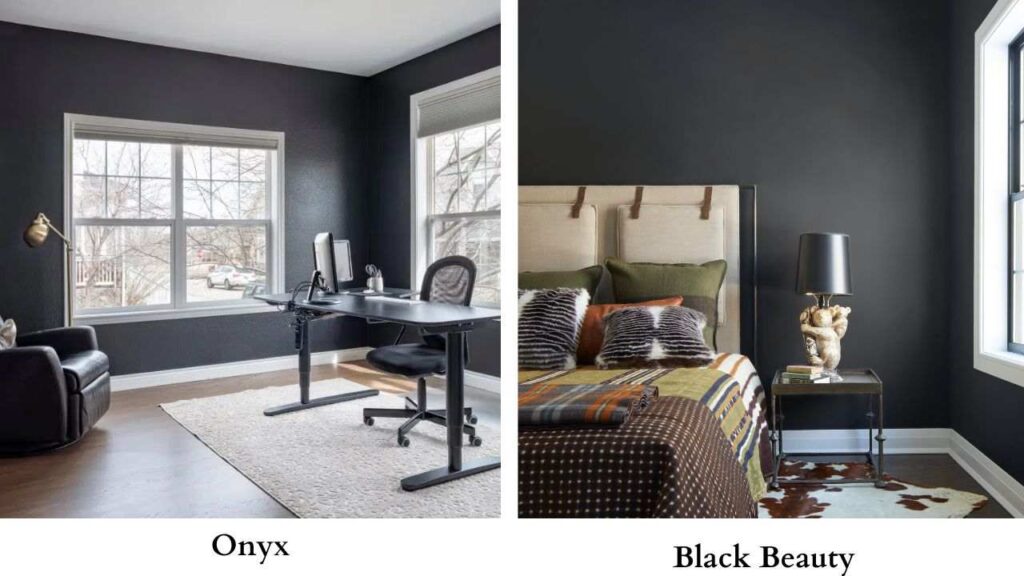
Black Beauty has warm undertones compared to Onyx.
While Onyx leans cool-neutral with gray and green, Black Beauty has a warm, creamy quality to it.
Not cream-colored, obviously, but the undertone warmth is there.
I tested these side by side in a hallway project. Black Beauty is cozy and traditional.
Onyx felt modern and sophisticated. If you’re working with warm wood tones, traditional furniture, or you want a black that feels less contemporary, Black Beauty can be considered.
Wrought Iron Vs Onyx
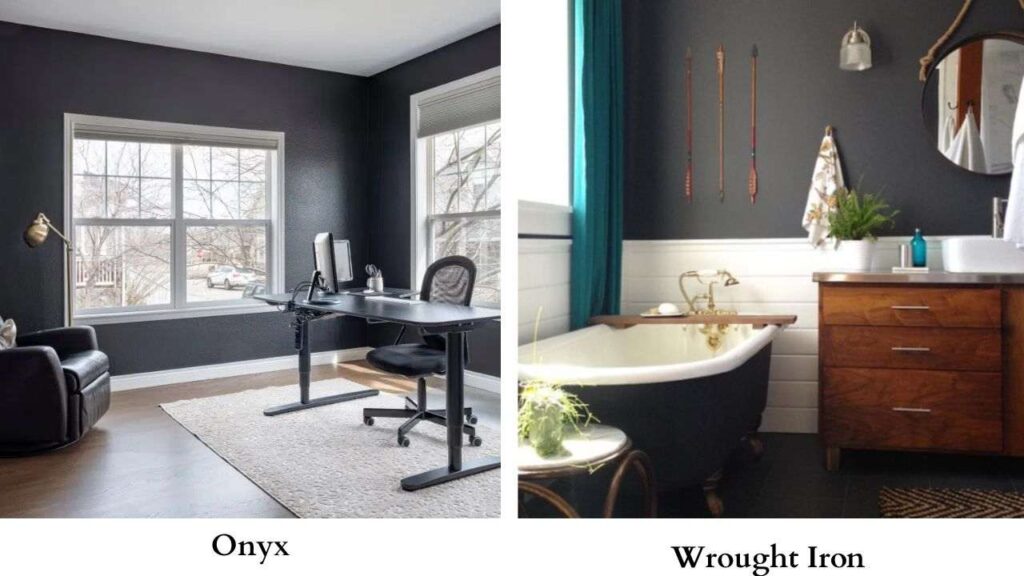
Benjamin Moore Wrought Iron is more of a deep charcoal-gray than a black.
It has subtle blue undertones which make it cooler than Onyx.
When clients are nervous about going “full black,” I suggest Wrought Iron as an alternative.
But here’s what I’ve learned: Wrought Iron can look inconsistent.
In some lights it looks gray, in others it looks black.
I used Wrought Iron on exterior trim and was annoyed by how gray it looked in bright daylight.
Tricorn Black Vs Onyx
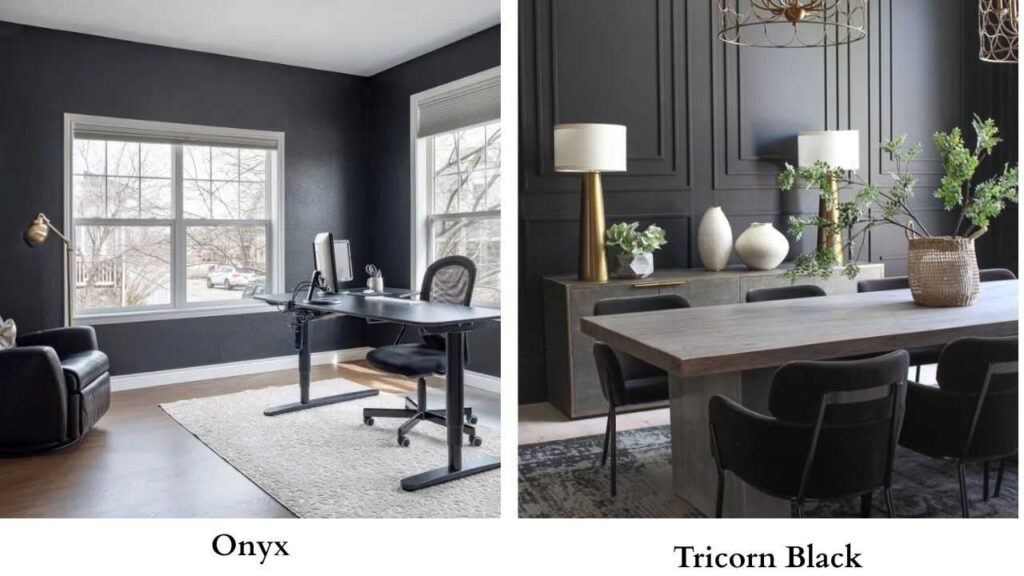
Sherwin Williams Tricorn Black is the definition of black, neutral, no undertones, intense.
This is the comparison I get asked about. Tricorn Black is darker than Onyx because the LRV is low.
It’s harsh, dramatic, and less forgiving. If you want BLACK black, Tricorn is it.
If you want a livable, soft black with dimension, Onyx is the better choice.
I’ve used both. Tricorn Black is best for trim and windows where you want sharp contrast.
Onyx is best for cabinets, doors, and accent walls.
Common Mistakes to Avoid While Choosing Onyx or Black
Here are some things or points that should be avoided or kept in mind when you are considering Onyx color and Black because mistakes can make your space cave-like.
- Not sampling in your space.
- Ignoring undertones.
- Going all-in without testing the finish.
- Using dark colors in rooms with no layered lighting.
- Not considering the room size and ceiling height.
- Forgetting about existing furniture and decor.
- Skipping primer.
Conclusion
Here’s what it comes down to. Onyx Color Vs Black, both are black, but they’re not interchangeable.
Onyx gives you a soft, dimensional black with cool-neutral undertones that make it livable and versatile.
Black gives you drama, intensity, and pure neutral darkness with no undertones.
For interior like cabinets, accent walls, furniture consider Onyx.
It’s forgiving, works with many color palettes, and has a sophisticated depth that black lacks.
For trim, windows, and exterior details where for bright contrast, go for black.
Sample both in your space.
Live with the samples for at least a few days.
Look how they make you feel in the room, not how they look.
Because comparing Onyx Color Vs Black can be difficult and confusing because they both are black but one has undertones but one is pure black.
FAQs on Onyx Color Vs Black
Is onyx darker than black?
What is the color difference between Onyx Color and Midnight Blue?
What color shade is onyx?
What is the difference between black and onyx color?