

Picking between Liveable Green Vs Softened Green feels like choosing between two versions of the same vibe and both are Sherwin Williams muted greens.
They share similar gray undertones and soft, organic depth that makes them popular.
They are great colors because people obsess over Liveable Green Vs Softened Green when they are considering.
These two shades are EVERYWHERE, homeowners can’t get enough and designers are specifying them and renovators are checking them on every wall.
Because muted greens are different.
They feel fresh but grounded, modern but timeless.
But going with the wrong undertone and it makes your whole room too cool, too warm, too washed out, or too much darker.
So here, we’re breaking down Liveable Green Vs Softened Green like with LRV, undertones, how lighting makes an effect.
The practical stuff like which rooms they work in and what they look like when you’re living with them.
Here are my other blog posts that you can also read:
- Manchester Tan Vs Accessible Beige
- Tricorn Black Vs Iron Ore
- Wythe Blue Vs Palladian Blue
- Eider White Vs Alabaster
- White Dove Vs Alabaster
Liveable Green Color Overview (Sherwin-Williams SW 6176)
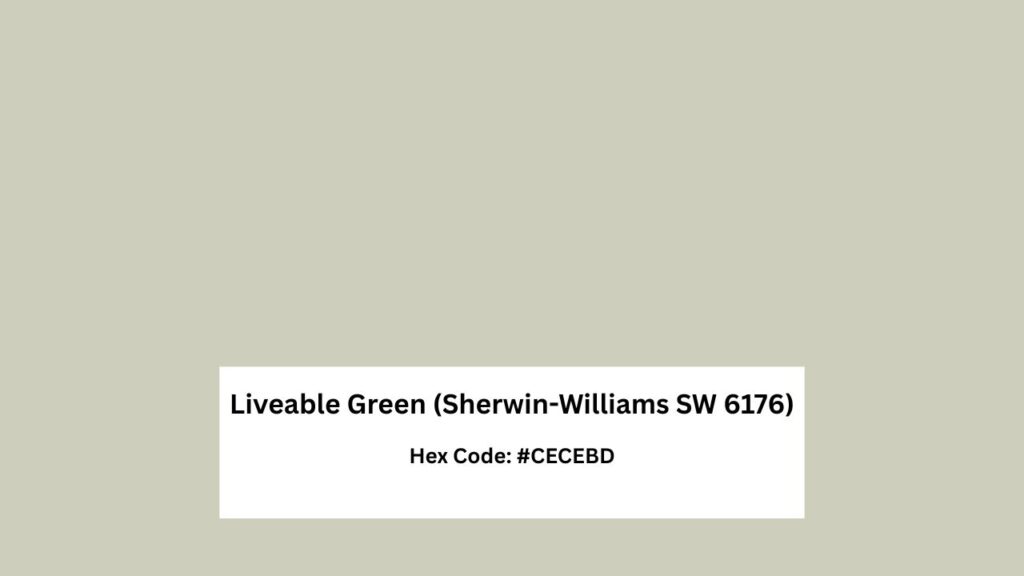
Liveable Green is a soft, muted green with gray undertones which is more earthy than fresh.
It is more like sage that’s been toned down and a bit of a greige.
The LRV is around 60-61. It reflects light to keep a room feeling open but it has depth.
Its primary undertone is gray, with this subtle sage-beige and there’s no strong yellow or blue.
It’s balanced in a way that makes it versatile but also it can shift depending on what’s around it.
This shade has become big in modern and transitional spaces.
Also contemporary exteriors or craftsman-style homes.
It brings an organic, grounded feeling.
You can use it in living rooms where you want calmness.
Bedrooms where you need that nature-connected vibe and bathrooms where it creates a spa-like softness.
The thing about Liveable Green is it behaves like a neutral.
Pair it with warm whites on trim, natural wood tones in furniture because it just works.
Softened Green Color Overview (Sherwin-Williams SW 6177)
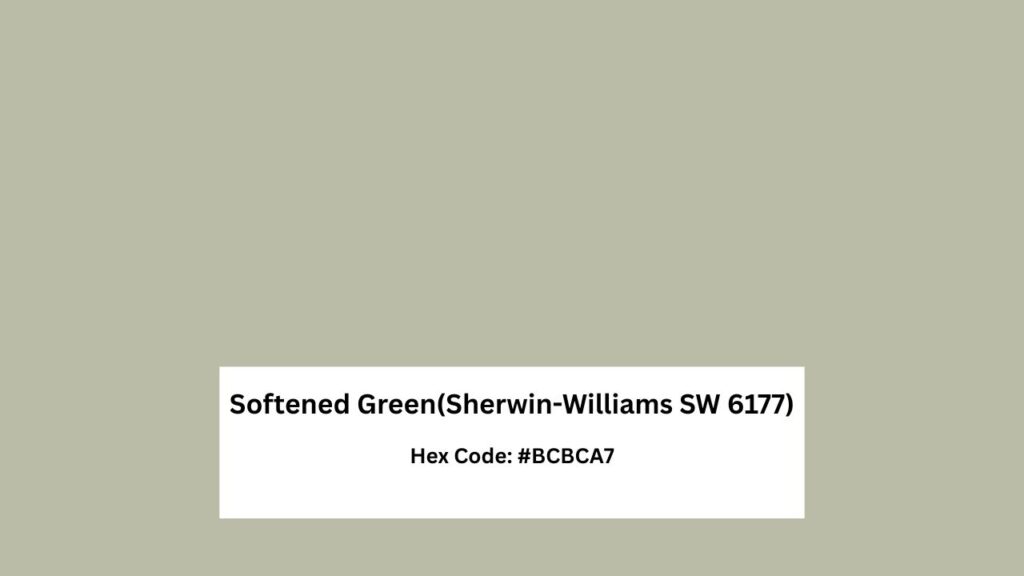
Softened Green is Liveable Green’s light, airy. Where Liveable has presence, Softened whispers.
It’s a subtle green with strong gray undertones to the point where in light it is a more green-tinted neutral than green.
The LRV is around 64, which is higher.
According to Undertone, it is gray as the dominant player with a bit of yellow warmth.
It’s not in sage or olive territory. In bright natural light, Softened Green can disappear into an off-white with a hint of color.
It is popular in modern, transitional, contemporary spaces.
But Softened Green is in rooms where people want the idea of color without the commitment.
Kitchens with white cabinets where you want softer than pure white walls. Bathrooms that need to feel clean.
Bedrooms in small homes where you can’t sacrifice brightness.
It works well in spaces with good natural light because it enhances the airy feeling.
According to design, it pairs like Liveable Green with whites, creams, light woods but because it is light, it can handle bold accent colors without the room feeling stuffy.
Liveable Green Vs Softened Green (Side-By-Side Comparison)
Liveable Green Vs Softened Green make different impacts depending on your room’s layout, light exposure, and finishes.
What works in a south-facing living room with windows will not go in a north-facing bedroom with one small window.
LRV
Light Reflectance Value is the most important to know.
It measures how much light a color reflects on a scale of 0 (absolute black) to 100 (pure white).
Liveable Green’s LRV of 60-61 means it’s in the medium range.
Not dark or not light. You’ll get brightness but there’s depth that the color shows.
Rooms don’t feel dim but they don’t feel washed out either.
Softened Green at LRV 64 is lighter, the 3 to 4 difference matters.
It reflects light back into the space, which makes rooms feel big and bright.
In a small room or a space with limited natural light, the reflection can be the difference between cozy and cramped.
Undertones
Both colors have gray as the primary undertone.
This is what keeps them from being as bright or saturated greens.
But the secondary undertones shift their personality.
Liveable Green has a soft sage-beige tone underneath the gray.
It’s warm and earthy. In south-facing rooms with warm afternoon light, it can look green but not too much green.
In north-facing spaces with cool light, the gray comes and it is neutral.
Softened Green brings a bit of yellow warmth but it’s subtle that the gray dominates.
This one can look like a pale greige with a green tint.
The yellow undertone keeps it from going cold or sterile to liveable.
They change based on what’s next to them.
Put either color next to bright white trim and the green shows up. Put them next to creamy beige and they can look gray.
Lighting Impact
The natural light direction is big. In north-facing rooms, you get cool, indirect light throughout the day.
Liveable Green is gray and subdued but Softened Green is a bit off-white with any green.
If you’re trying to bring warmth to a north-facing room, Liveable Green is better because it has inherent warmth.
South-facing rooms are warm, direct sunlight. Liveable Green shows its true green nature which are earthy, organic, green. Softened Green is enough to be a color rather than a neutral.
East-facing spaces get bright morning light which is cool, then soft light the rest of the day.
Liveable Green looks fresh in the morning light but is cozy. Softened Green is consistent, light and airy.
West-facing rooms can be tricky. The afternoon sun is strong and warm.
Liveable Green can be deep and rich. Softened Green is stable but can make a slight golden cast.
Artificial lighting matters too. Warm LED bulbs will enhance warmth in both colors.
Cool white bulbs make them gray and can kill the green.
Flat or matte finishes absorb light and make colors look dark and rich.
Eggshell or satin finishes reflect light and can make the same color look bright and clean.
Style and Best Uses
Trim colors can go with warm whites or creamy off-whites.
Sherwin Williams Alabaster is a popular choice with both greens because it’s warm and does not create harsh contrast.
Pure bright white can make color look dingy or gray.
Ceiling color, keeping ceilings white opens up the space.
Using the same wall color on the ceiling creates a cozy, wrapped feeling and depends on ceiling height and how much light you have.
Furniture and wood tones both colors love natural wood like light oak, maple, and natural pine.
Medium walnut tones add nice contrast without going against the wall color and dark woods work because the muted green doesn’t compete.
Accent colors for Liveable Green, warm neutrals like beige and taupe, muted blues, soft charcoals, and natural textures in linen and stone.
For Softened Green, you can go bolder because it’s terracotta or rust, navy, black accents.
Here’s a comparison:
| Feature | Liveable Green SW 6176 | Softened Green SW 6177 |
| LRV | 60-61 | 64 |
| Undertones | Gray with sage-beige | Gray with a bit yellow |
| Color Depth | Medium, saturated | Light, subtle |
| Best Light | South-facing, bright rooms | Any exposure, especially low-light |
| Room Feel | Grounded, earthy, present | Airy, soft, barely-there |
| Green Visibility | Reads clearly as green | Reads as neutral-green |
| Best For | Statement walls, large rooms | Small spaces, spa-like bathrooms |
| Pairs With | Warm whites, natural wood, cream | All whites, light neutrals, bold accents |
Which Color Suits the Best in Different Rooms? Liveable Green Vs Softened Green
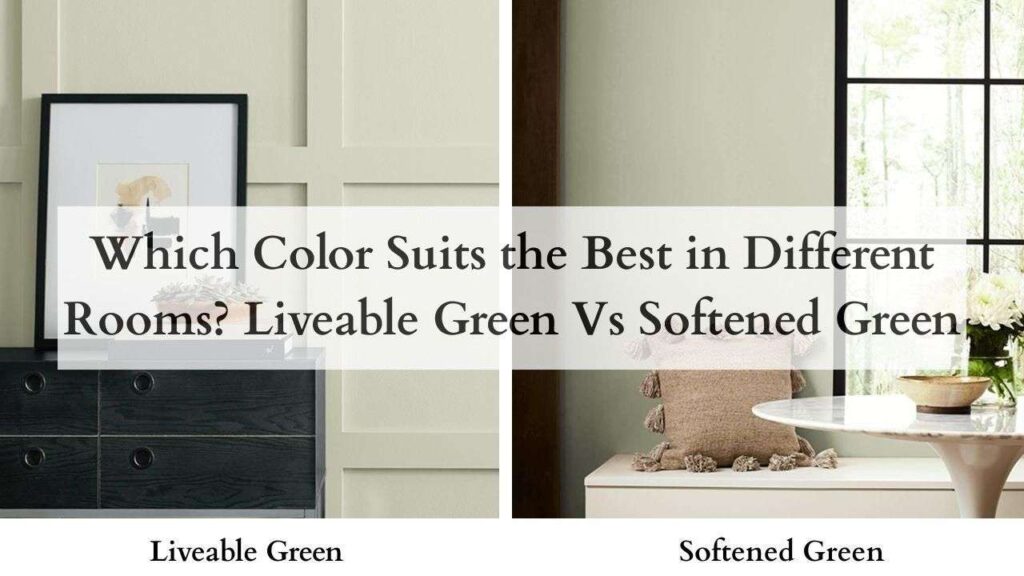
Room function changes everything. What works for sleeping doesn’t work for the kitchen.
What’s calming in a bathroom can be boring in a living room.
So, let’s get specific with the choice according to the rooms and layout.
Living Room
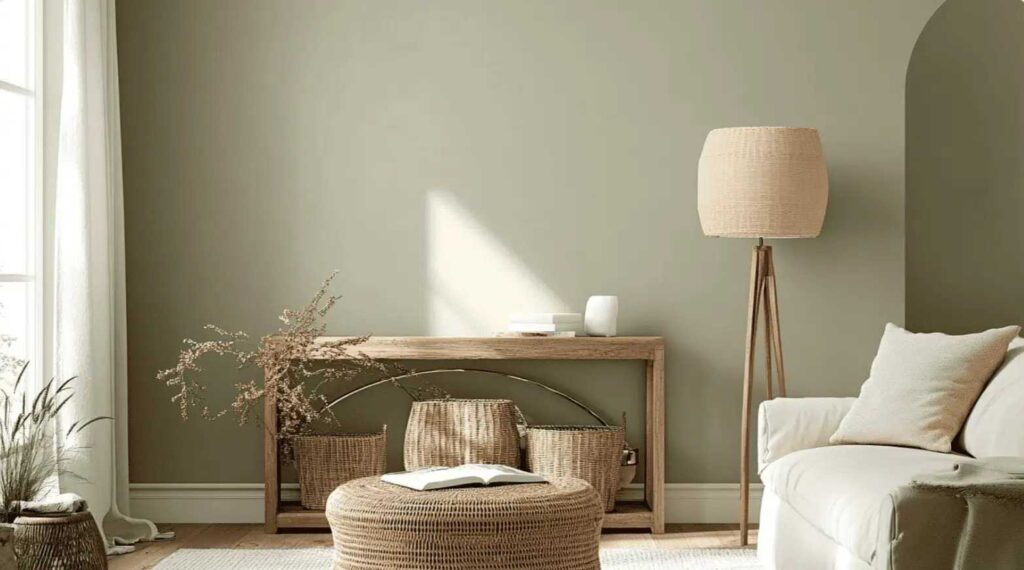
Liveable Green in living rooms creates an organic, grounded atmosphere that feels collected and intentional.
It has enough color presence to make the space feel designed.
In a living room with good natural light mainly south or east-facing, Liveable Green gives you a modern farmhouse or organic modern vibe.
The gray undertones keep it sophisticated.
You can style it with a cream sofa, natural wood coffee table, textured pillows in rust or muted blue, and it feels complete. The color provides interest.
In living rooms that open to other spaces, Liveable Green works as a zoning color.
Paint the living room area and keep adjacent spaces in warm white or beige because it defines the space.
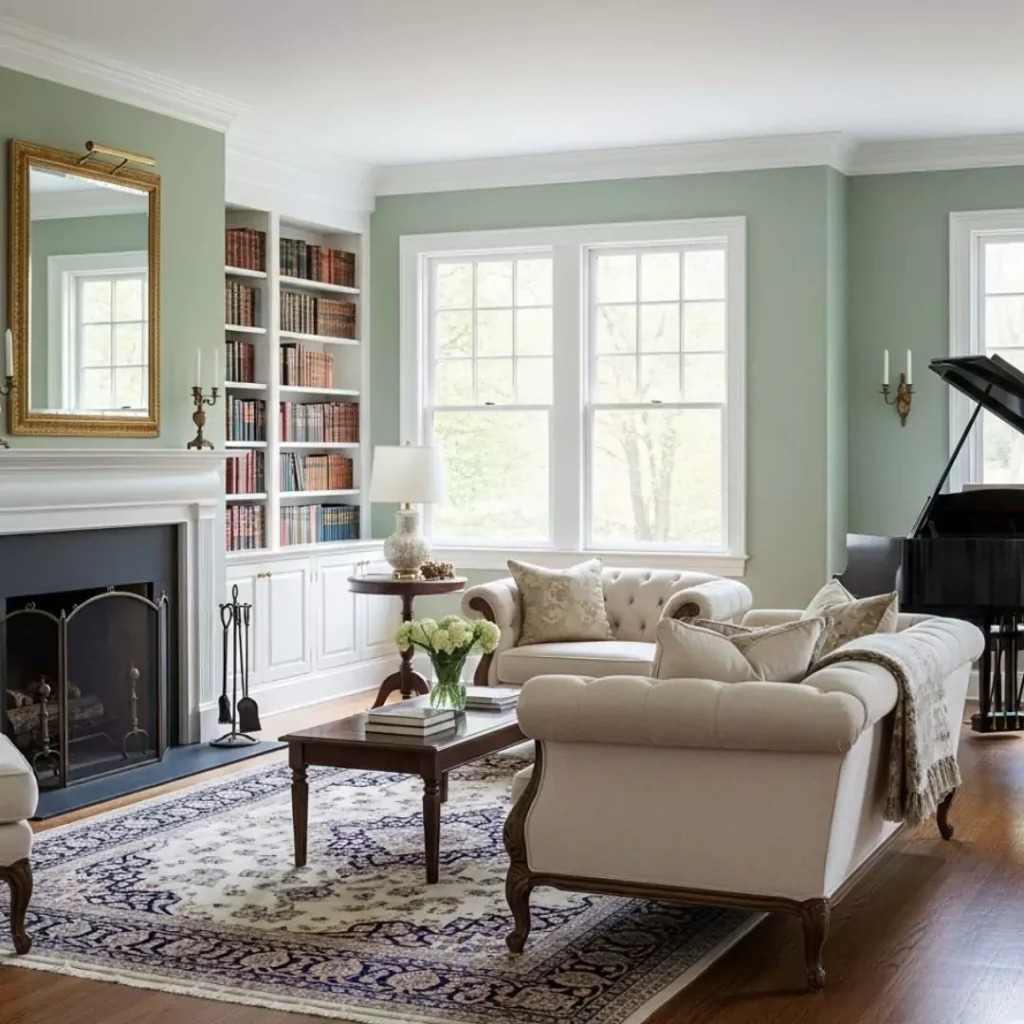
Softened Green in living rooms is tricky. It works well in small living rooms where you need light but not plain white.
But in large, bright living rooms, it can feel washed if there’s too much natural light.
Where Softened Green in living rooms is when you pair it with bold furniture and decor.
Because the wall color is so subtle, it lets everything pop.
The Navy sofa against Softened Green walls looks great and black metal light fixtures look better.
Bedroom
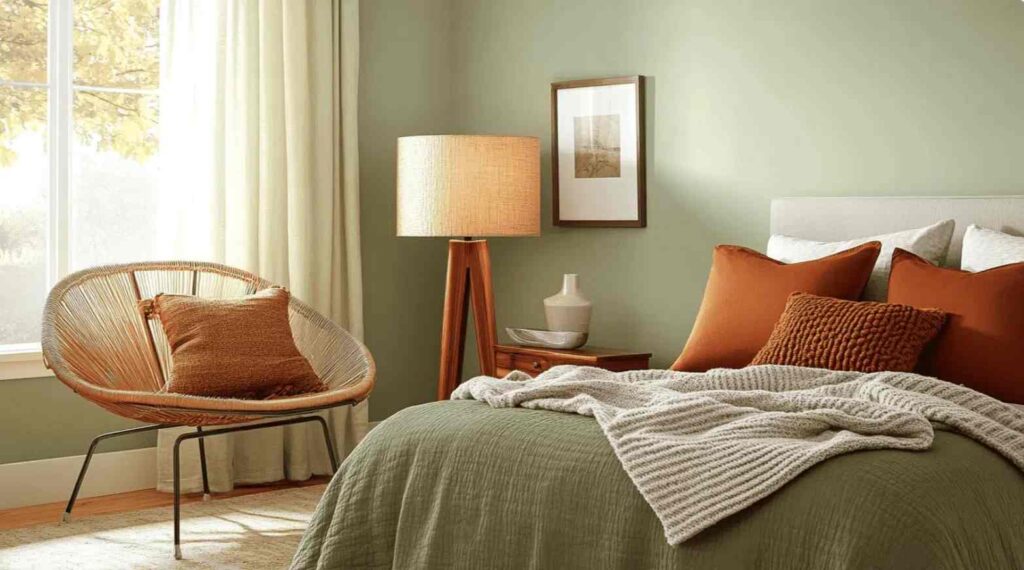
Liveable Green in bedrooms is my go-to recommendation for people who want color but need to sleep well.
That earthy, organic green has a grounding effect and Liveable Green is right in that spot.
The gray undertones keep it from being stimulating.
In a bedroom with warm wood furniture, Liveable Green creates a wrapped, cozy feeling.
I’ve used it in primary bedrooms where people wanted something sophisticated but weren’t going for navy or dark green.
North-facing bedrooms can get a flat with Liveable Green.
The color can be gray in low, cool light but some people want a neutral vibe.
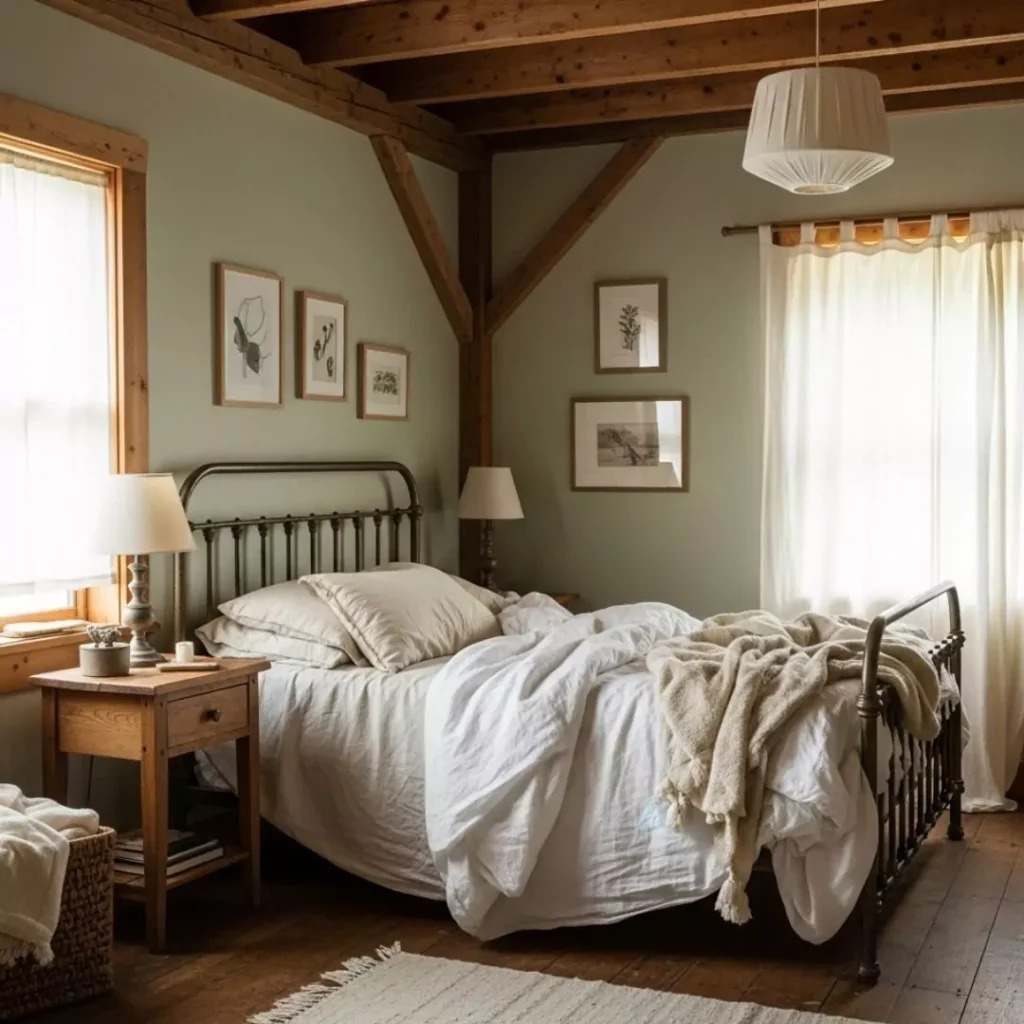
Softened Green in bedrooms is perfect for small bedrooms or rooms where you want brightness.
It keeps the space feeling open and airy while adding a hint of color.
Great for guest bedrooms where you want it to feel fresh and clean.
Also works well in kids’ rooms or nurseries where you want soft and soothing.
The subtle nature of Softened Green means you can change bedding and decor.
White bedding, cream bedding, gray bedding all work.
Bathroom
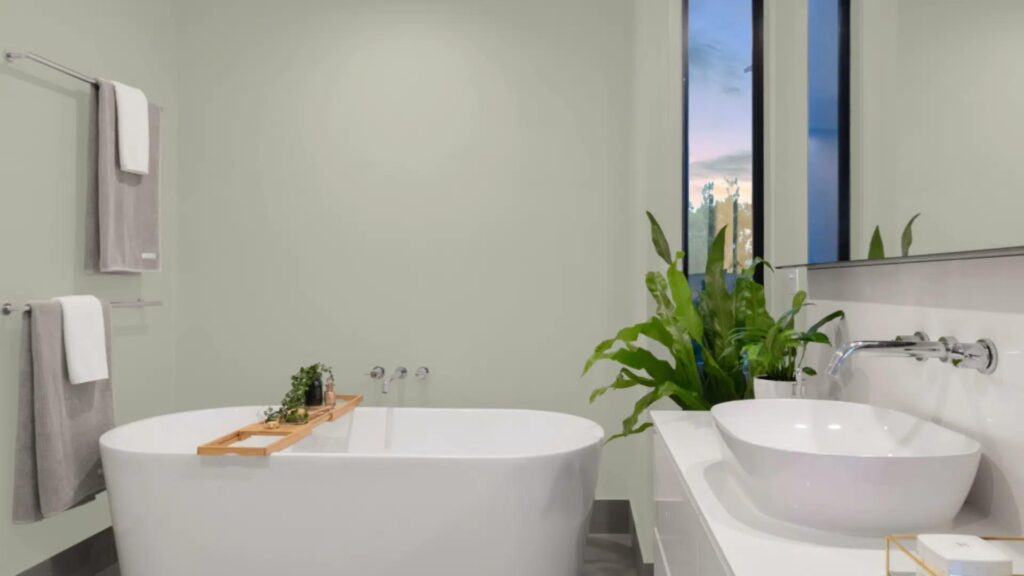
Liveable Green in bathrooms creates a true spa vibe, when paired with white subway tile, marble countertops, and brushed nickel or matte black fixtures.
It’s got color to make the space feel special and intentional. In a powder room, it can be sophisticated.
Bathrooms have less natural light, especially if there’s one small window.
Liveable Green needs decent light to show its green side. In a dim bathroom, it may look gray-green.
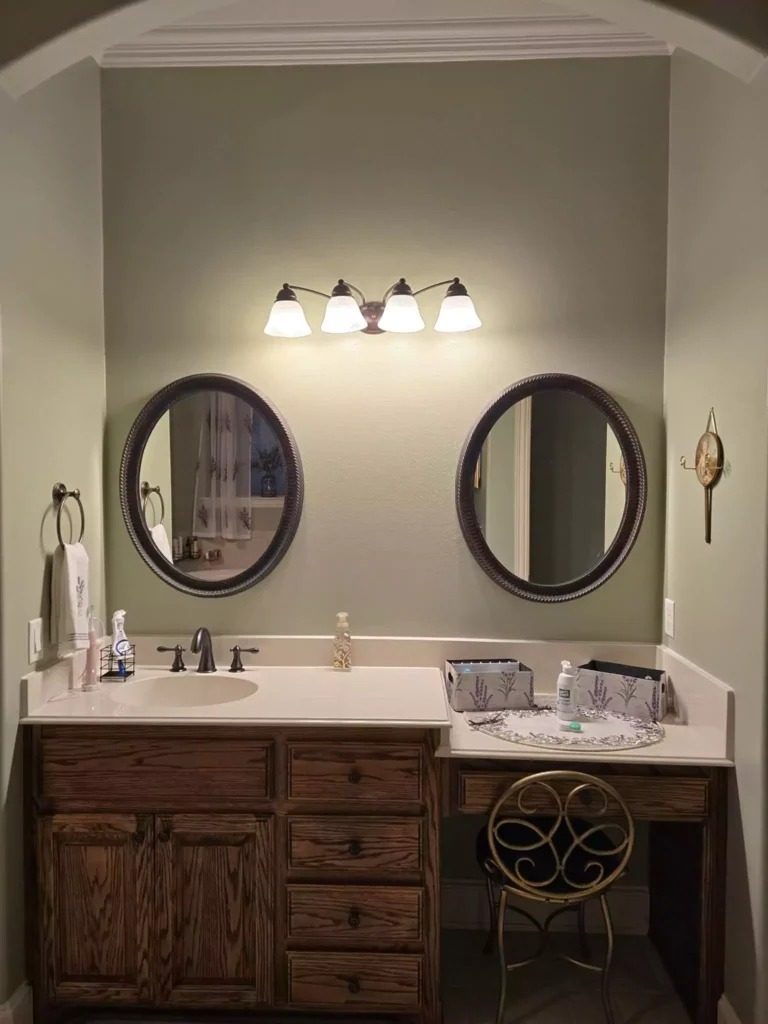
Softened Green in bathrooms is made for this space. It keeps things bright and clean while adding softness that pure white doesn’t give you.
In bathrooms with white cabinets, white tile, white fixtures, Softened Green walls prevent the space from feeling cold.
Small bathrooms benefit greatly from Softened Green because it doesn’t close in the space.
The high LRV means more light bouncing around.
Kitchen
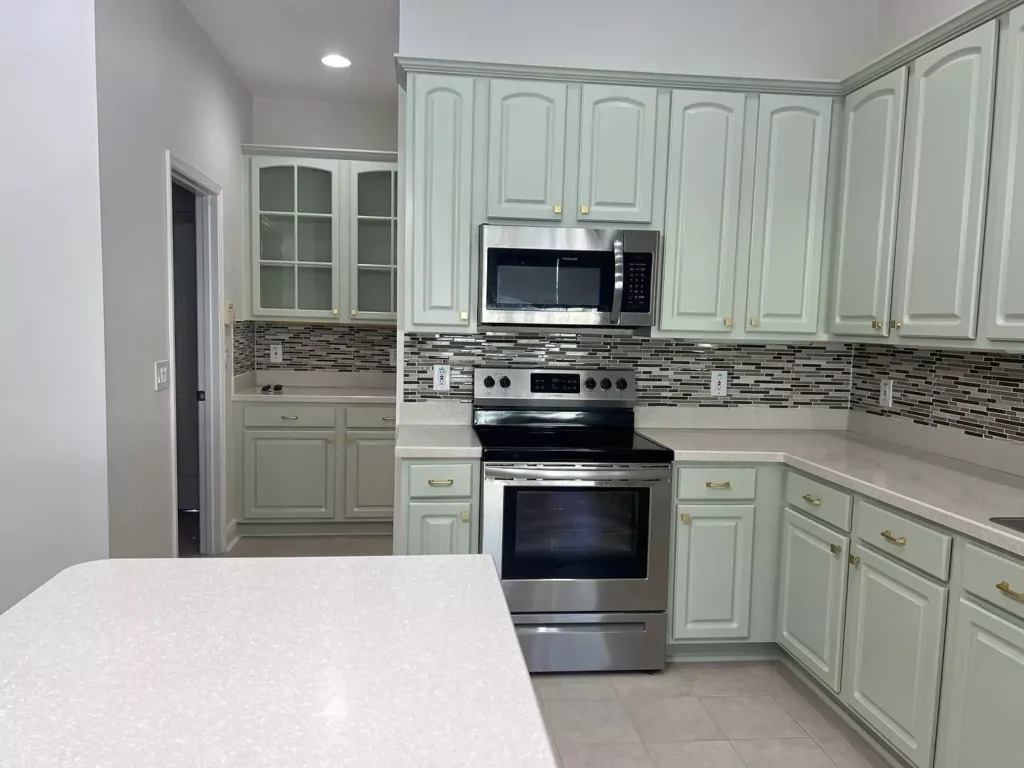
Liveable Green in kitchens works best as a wall color when you have white or cream cabinets.
It provides a soft, organic backdrop that makes the space feel warm and inviting without overwhelming.
I’ve seen it on kitchen islands or lower cabinets with white uppers.
With natural wood countertops or light quartz, Liveable Green feels cohesive and natural but with dark countertops like black granite or dark gray quartz, the contrast can be nice, sophisticated and intentional.
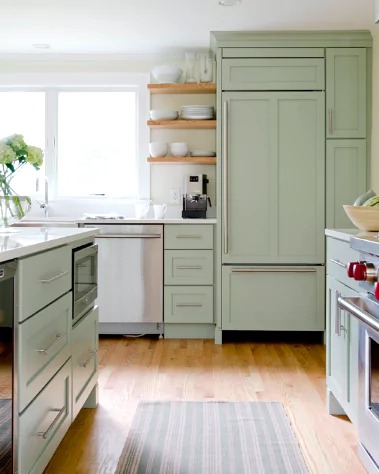
Softened Green in kitchens is safe for low-light because it stays bright.
It pairs well with white shaker cabinets, marble or white quartz counters, and subway tile backsplashes.
In open concept spaces where the kitchen flows into living areas, Softened Green on kitchen walls can create subtle without being harsh.
Because it’s light, it works well with other paint colors like warm whites, beiges, light grays.
Exterior
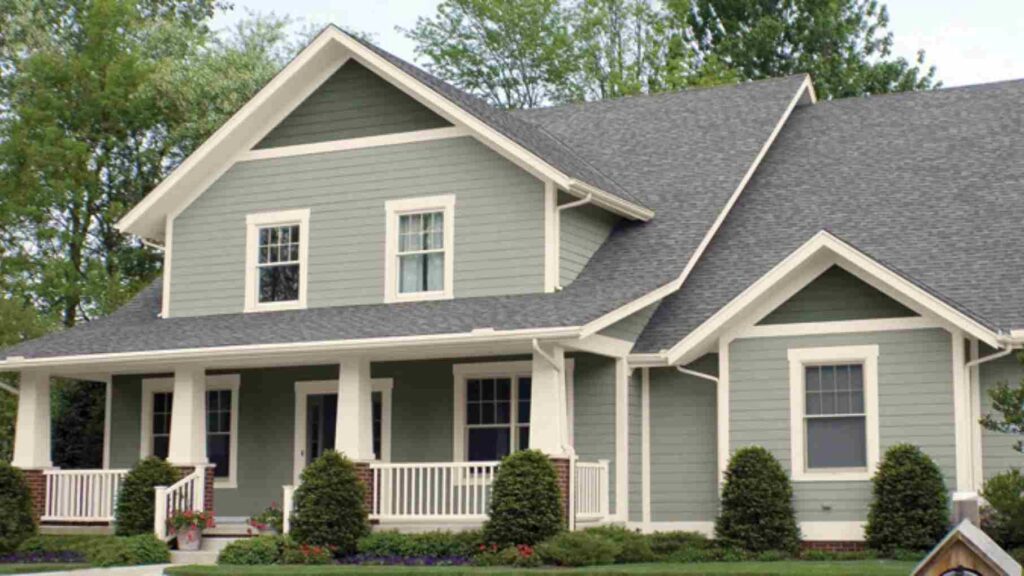
Liveable Green on exteriors has become popular on Craftsman, farmhouse, and cottage-style homes. It’s earthy and organic in a way that feels connected to nature and landscaping.
The color has the presence to make a statement but it’s not bold.
Pair it with white or cream trim, and add black or dark bronze accents on light fixtures, house numbers, and garage doors.
Natural wood front doors look amazing with Liveable Green exteriors too.
The muted quality means it ages well. It’s not a trendy bright color that’ll look outdated and it works with many roofing colors like gray, brown, dark green or blue roofs.
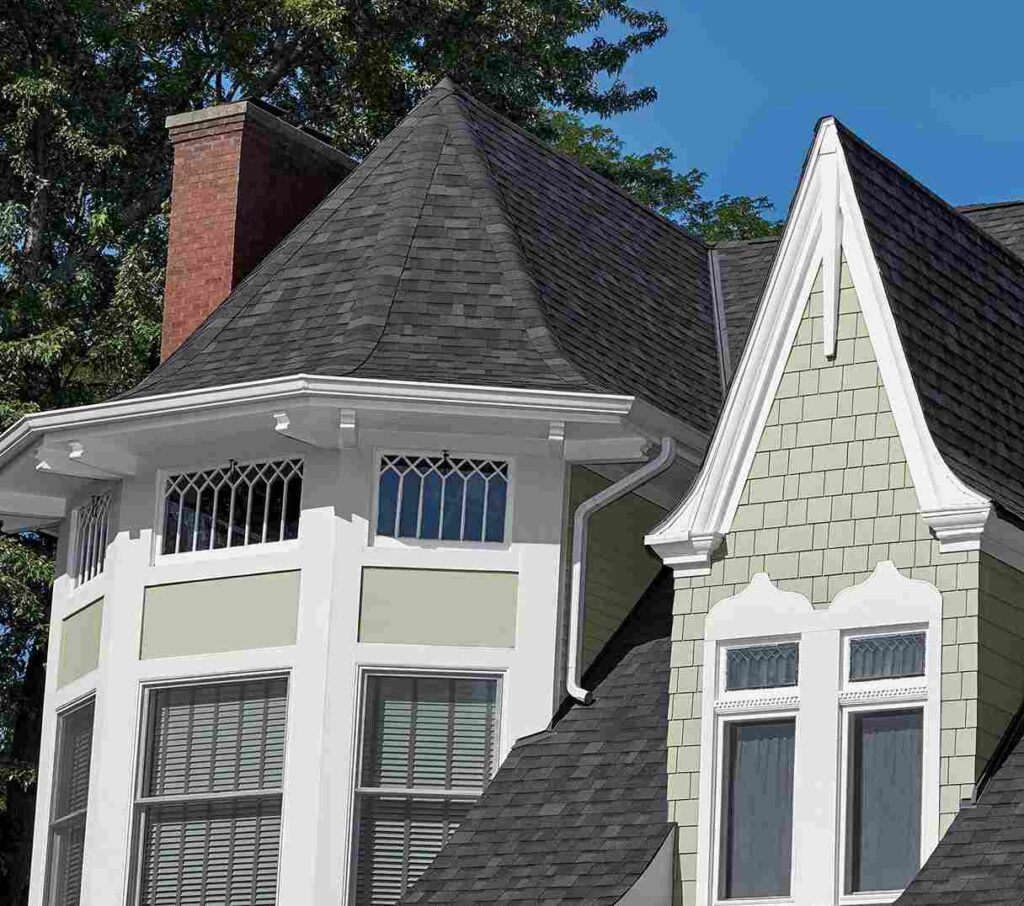
Softened Green on exteriors can be tricky because it’s light.
That’s not necessarily bad, some people want a light, subtle exterior.
Where Softened Green works well is on homes with architectural detail like trim work, gables, brackets.
Both colors pair well with landscaping.
The green tones harmonize with lawns, shrubs, and trees way better than bright white or beige.
Liveable Green Vs Softened Green Vs Other Colors
You’re wondering how these compare to other popular greens.
Let’s look out a few comparisons.
Liveable Green Vs Sea Salt
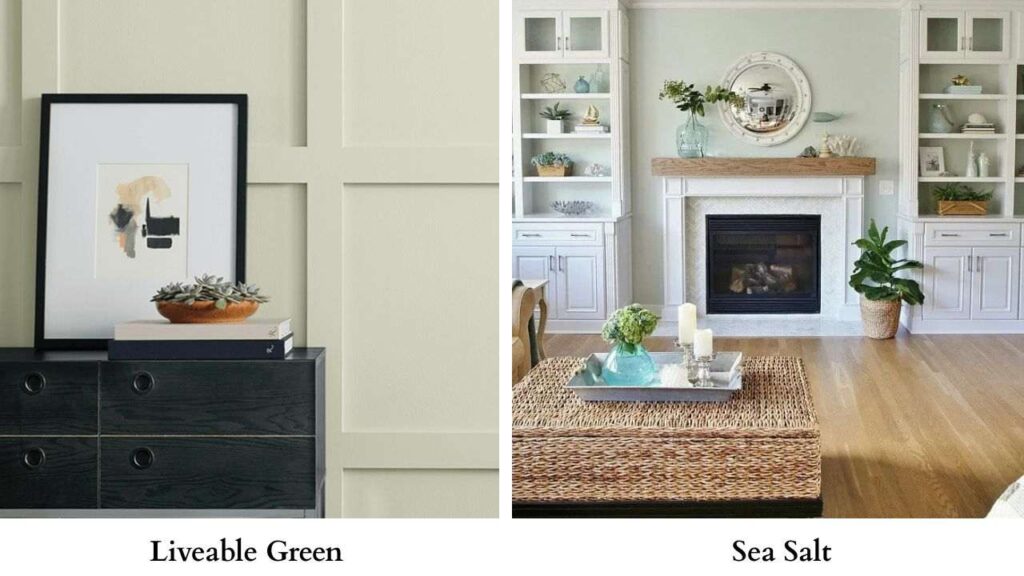
Sea Salt (SW 6204) is the color everyone knows.
It’s Sherwin Williams’ most popular blue-green-gray chameleon. Where Liveable Green is a muted green, Sea Salt shifts between green, blue, and gray depending on light. It’s cool and has blue undertones that Liveable doesn’t have.
Sea Salt works better in spaces where you want a coastal, airy vibe.
Liveable Green Vs Soft Fern
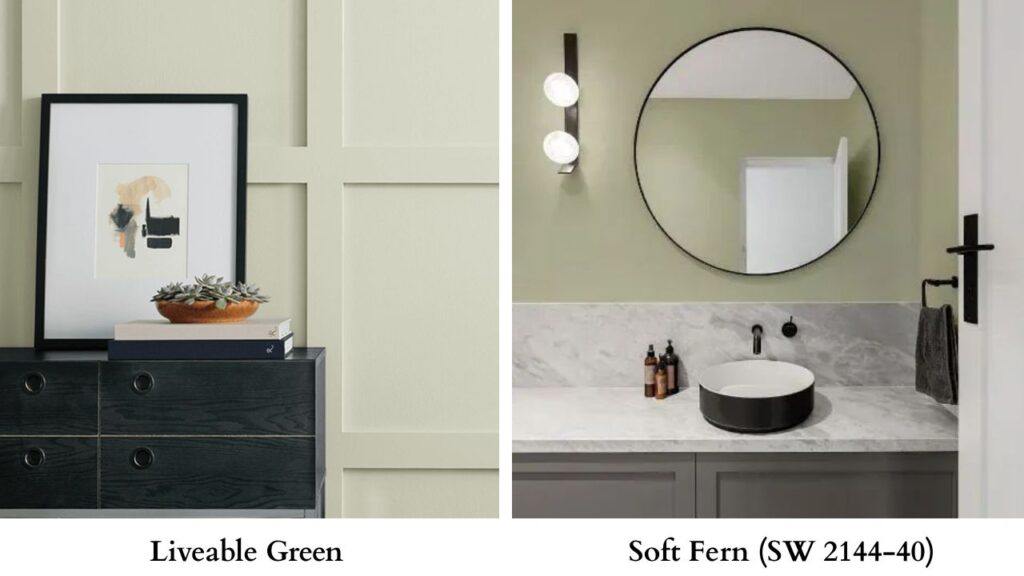
Soft Fern (SW 2144-40) is a Benjamin Moore color, and it’s more saturated than Liveable Green.
Soft Fern has a true green presence with less gray influence, so it is clearly green in lights.
If Liveable Green feels subtle, Soft Fern gives you commitment while being soft and livable.
Liveable Green Vs Soft Sage
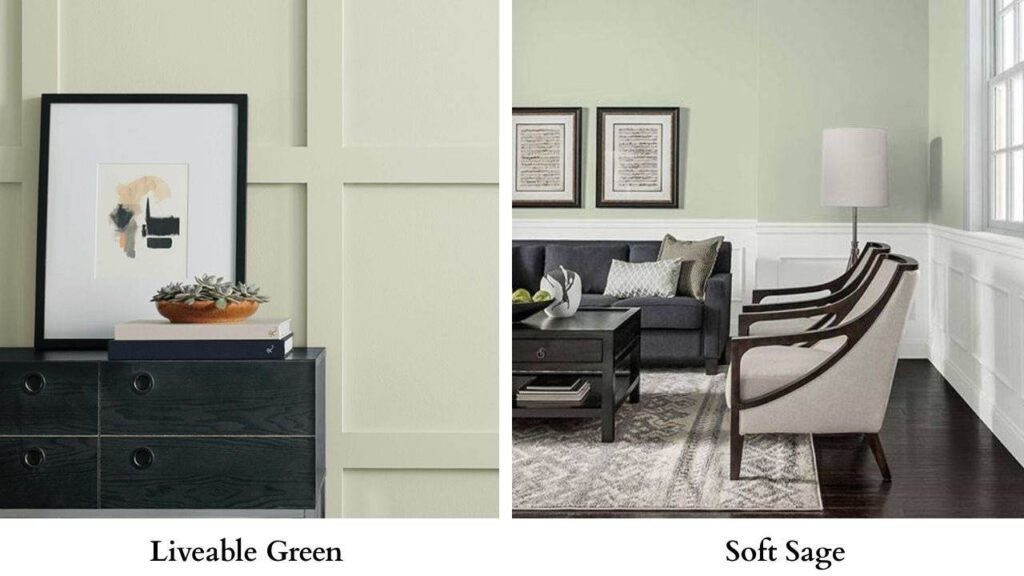
There are multiple “soft sage” colors, but they have brown or beige undertones than Liveable Green.
Sage colors are warm and earthy like dried sage leaves.
Liveable Green’s gray undertones make it cool and modern.
Soft sage colors can feel traditional or rustic.
Soft Green Vs Mint Green
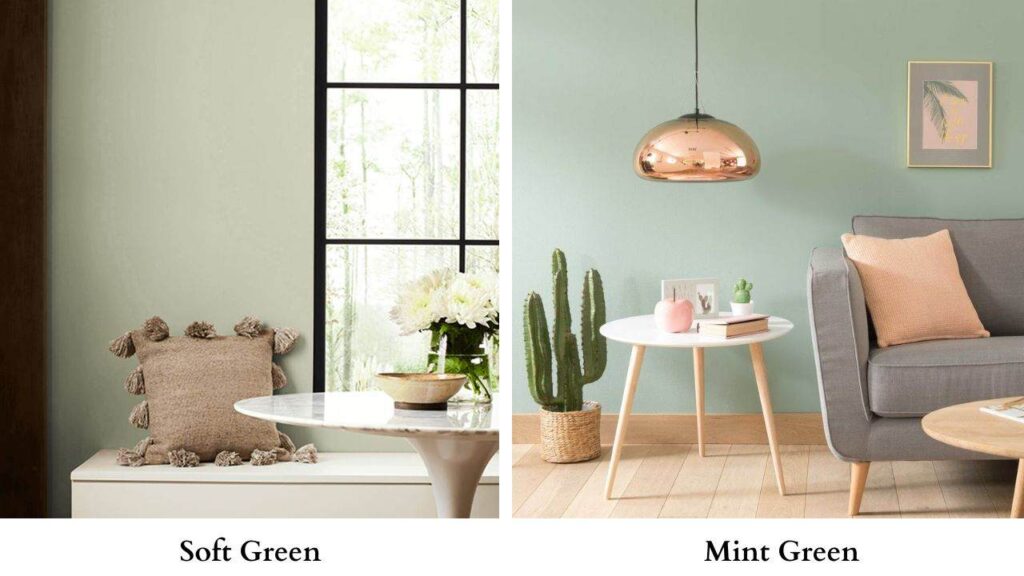
Mint greens are different. They’re bright, cool, and have blue undertones that make them feel fresh and energetic.
Neither Softened nor Liveable Green has mint quality.
They’re both muted, gray-based, and calm. If you want green with pop, go mint.
If you want green that behaves like a sophisticated neutral, go with these two.
Which One to Choose Between Liveable Green and Softened Green?
So here’s how I’d break down the decision.
Choose Liveable Green if:
- You want noticeable green color on your walls
- Your room has good to great natural light
- You’re drawn to earthy, organic, grounded vibes
- You want the paint color to be a subtle feature
- You have warm undertones in flooring, furniture, or finishes
- You’re painting large rooms
Choose Softened Green if:
- You want the idea of green without color commitment
- Your room is small or has limited natural light
- You prefer subtle, barely-there color that is a neutral
- You have bold furniture or decor and need a quiet backdrop
- You want maximum brightness and airiness
- You like flexibility to change decor without repainting
Paint large swatches on multiple walls in the room.
Live with them for a few days. Look at them in morning light, afternoon light, evening artificial light.
See which one makes you feel good and then you can consider.
Conclusion
Liveable Green and Softened Green may look similar on a paint swatch, but they are different in real spaces.
Liveable Green brings grounded, earthy color with presence to feel intentional.
It’s for people who want green that plays well with other colors and styles.
Softened Green whispers instead of speaks, it’s the choice when you want freshness and calm without the commitment of being a noticeable color.
Also, you can go with this if you have bold furniture or want bright and airy space.
Both colors deserve their popularity.
They’re timeless not to feel outdated but current enough to feel fresh.
So, match the color to your room’s light, size, and purpose and the design.
Comparing Liveable Green Vs Softened Green can be a bit confusing but when you get clear about which color to go with then it’s easy to prefer.
FAQs on Liveable Green Vs Softened Green
Does Softened Green look gray?
Is Liveable Green a timeless color?
What is the difference between Liveable Green and Filmy Green?
Is Softened Green warm or cool?